Nucleótidos
Subcategorías de "Nucleótidos"
Se han encontrado 2637 productos de "Nucleótidos"
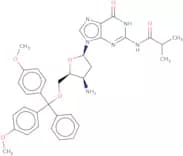
3'-Amino-2',3'-dideoxy-5'-O-DMT-N2-isobutyrylguanosine
a specifically designed building block for introducing a 3'-amino group into oligonucleotides. The dideoxy sugar ensures the amino group is the primary functionality at the 3' end, while the DMT and isobutyryl protecting groups ensure controlled reactivity during oligonucleotide synthesis and subsequent modification steps.Fórmula:C35H38N6O6Pureza:Min. 95%Peso molecular:638.71 g/molN6-Methyladenosine-5'-monophosphate sodium
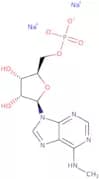
CAS:N6-Methyladenosine-5'-monophosphate sodium is a synthetic nucleoside that has antiviral and anticancer activity. It is an activator of DNA polymerase α, which is involved in the synthesis of DNA. N6-Methyladenosine-5'-monophosphate sodium has been shown to inhibit the replication of human immunodeficiency virus type 1 (HIV-1) in cultured cells and to induce apoptosis in cancer cells. This drug also inhibits the growth of certain bacteria, such as methicillin-resistant Staphylococcus aureus (MRSA) or Mycobacterium tuberculosis. N6-Methyladenosine-5'-monophosphate sodium may be used for the treatment of HIV/AIDS or cancer.Fórmula:C11H16N5O7P·2NaPureza:Min. 98 Area-%Forma y color:White PowderPeso molecular:407.23 g/mol2'-Deoxy-6-O-methyl-guanosine
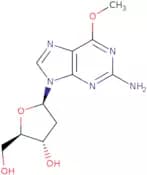
CAS:2'-Deoxy-6-O-methyl-guanosine is a methylated nucleoside that has been shown to inhibit protein synthesis in cancer cells. It does so by inhibiting the synthesis of DNA, which is required for the production of proteins. This compound also inhibits monoclonal antibody production, which may be due to its ability to methylate DNA and prevent dna duplexes from being repaired. 2'-Deoxy-6-O-methyl-guanosine is used as a probe in the detection of human proteins by fluorescence spectroscopy. The sensitivity of this probe has been shown to be greater than 10 ng/mL, making it ideal for use in clinical settings where small quantities of proteins are present.
Fórmula:C11H15N5O4Pureza:Min. 95%Forma y color:PowderPeso molecular:281.27 g/mol2'-O-Methylcytidine-5'-monophosphate triethylammonium salt
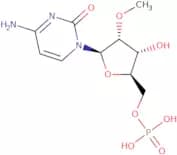
CAS:2'-O-Methylcytidine-5'-monophosphate triethylammonium salt is a synthetic nucleoside that has been shown to be a substrate for DNA polymerase and an inhibitor of RNA synthesis. It has been used in the laboratory as a primer and as a biochemical tool to study viruses. 2'-O-Methylcytidine-5'-monophosphate triethylammonium salt is active against murine leukemia virus, but not against ciliated protozoan parasites such as Tetrahymena pyriformis. This compound has also been shown to inhibit the enzyme form of HIV reverse transcriptase and to be cytotoxic at high concentrations.Fórmula:C10H16N3O8P•C6H15NPureza:Min. 95%Forma y color:PowderPeso molecular:438.41 g/mol3'-O-Acetyl-2'-deoxycytidine
CAS:3'-O-acetyl-2'-deoxycytidine is an activator that can be used in the synthesis of deoxyribonucleosides and nucleosides. It is a novel, modified, and high purity chemical entity that has shown anticancer and antiviral properties. 3'-O-acetyl-2'-deoxycytidine is a monophosphate nucleotide, which can be used in the synthesis of various pharmaceuticals. This product has been synthesized using high quality reagents in order to provide the best possible product for research purposes.Fórmula:C11H15N3O5Pureza:Min. 95%Forma y color:White PowderPeso molecular:269.25 g/mol2'-Amino-2'-deoxyuridine
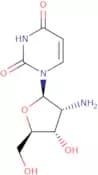
CAS:2'-Amino-2'-deoxyuridine is a modified nucleoside based on uridine. The 2'-hydroxyl group on the sugar is replaced by an amino group. This compound can be used for research purposes
Fórmula:C9H13N3O5Pureza:Min. 98 Area-%Forma y color:PowderPeso molecular:243.22 g/mol5'-Deoxyadenosine
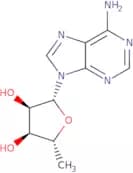
CAS:5'-Deoxyadenosine is a nucleoside that is produced by the enzymatic reaction of glycolaldehyde and ATP. It is found in both DNA and RNA, where it plays an important role in the catalytic subunit of ribonucleotide reductase. 5'-Deoxyadenosine has been shown to be involved in hydrogen bonding with other molecules, such as ethanolamine. It also has a kinetic effect on the enzyme activity of ribonucleotide reductase by forming intramolecular hydrogen bonds with other adenine nucleotides. The analogs of 5'-deoxyadenosine have been shown to inhibit viral replication in cell culture studies using typhimurium virus.Fórmula:C10H13N5O3Pureza:Min. 95%Forma y color:PowderPeso molecular:251.25 g/mol2'-Deoxyguanosine-5'-monophosphate disodium salt
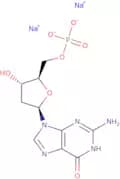
CAS:2'-Deoxyguanosine-5'-monophosphate disodium salt is an inorganic compound that has a furanose ring. It is used as a monofunctional building block for the synthesis of nucleotide derivatives. The conformations of 2'-deoxyguanosine-5'-monophosphate disodium salt are experimentally determined by x-ray data, which shows that the molecule adopts a twisted conformation with two possible orientations: one where the 2'OH group is oriented toward the phosphate group, and another where it is oriented away from it. The nature of these conformers can be confirmed by analyzing their x-ray diffraction patterns.Fórmula:C10H12N5Na2O7PPureza:Min. 98 Area-%Forma y color:White PowderPeso molecular:391.19 g/molUridine 5'-triphosphate disodium
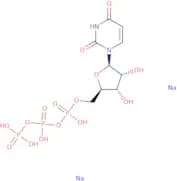
CAS:Uridine 5'-triphosphate disodium salt is a supramolecular complex that binds to gold nanoparticles. The binding of uridine 5'-triphosphate disodium salt to gold nanoparticles can be used for the detection of metal ions through the photometric method. Uridine 5'-triphosphate disodium salt has been shown to inhibit the glutathione-dependent reduction of vitamin B12, which is a key step in methionine synthesis and folate metabolism. This inhibition may lead to a decrease in protein synthesis, ATP production, and cell division.Fórmula:C9H15N2O15P3•Na2Pureza:Min. 95%Forma y color:PowderPeso molecular:530.12 g/mol2'-Deoxycytidine-5'-monophosphate disodium
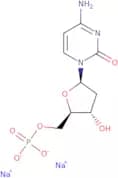
CAS:2'-Deoxycytidine-5'-monophosphate disodium (2DdCMP) is a competitive inhibitor of receptor protein tyrosine kinases. It has been shown to inhibit the growth of various human cancer cell lines in vitro and to reduce tumor size in mice bearing transplanted human tumor xenografts. 2DdCMP inhibits the proliferation of cancer cells by interfering with the expression of growth factors that are involved in mitogenesis. This drug also inhibits the growth of new blood vessels, which is essential for tumor formation and progression. 2DdCMP binds to an allosteric site on receptor molecules, thereby blocking the binding site of other proteins such as growth factors and kinases that may be involved in tumorigenesis.Fórmula:C9H12N3O7PNa2Pureza:Min. 95%Forma y color:White PowderPeso molecular:351.16 g/mol1-(5'-O-Benzoyl-2'-deoxy-2'-fluoro-beta-L-arabinofuranosyl)thymine
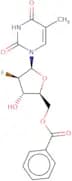
CAS:1-(5'-O-Benzoyl-2'-deoxy-2'-fluoro-β-L-arabinofuranosyl)thymine is a modified nucleoside analog with structural modifications that enhance its biological properties, stability, and pharmaceutical potential. The compound features thymine (5-methyluracil) as the nucleobase, a pyrimidine derivative. The sugar component is 2'-deoxy-2'-fluoro-β-L-arabinofuranose, which includes the L-arabinose configuration, a departure from the natural D-ribose or D-deoxyribose configuration typically found in DNA and RNA, influencing how the molecule is recognized by biological systems. The 2'-fluoro substitution at the sugar position improves the compound's stability and resistance to enzymatic degradation, while also potentially enhancing its antiviral activity. A 5'-O-benzoyl group serves as a protecting group, safeguarding the 5'-hydroxyl group during synthesis.Fórmula:C17H17FN2O6Pureza:Min. 95%Peso molecular:364.33 g/mol2',3'-Dideoxyuridine-5'-triphosphate lithium - 100mM aqueous solution
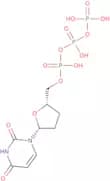
CAS:2',3'-Dideoxyuridine-5'-triphosphate can be used with uracil DNA glycosylase to minimize PCR carryover contamination and enables the kinetics of deoxyuridine 5′-triphosphate nucleotidohydrolases to be investiagated.Fórmula:C9H15N2O13P3•LixPureza:Min. 95%Forma y color:Clear LiquidPeso molecular:452.14 g/mol6-Thio-9-(β-D-arabinofuranosyl)purine
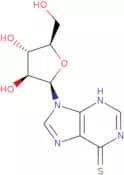
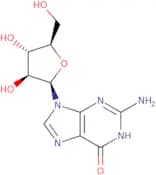
CAS:6-Thio-9-(b-D-arabinofuranosyl)purine is a purine analog that inhibits the enzyme uridine phosphorylase, which is involved in the metabolism of uridine. It has been shown to inhibit the growth of L1210 cells and also to be effective against subcutaneous tumors in mice. 6-Thio-9-(b-D-arabinofuranosyl)purine is active against schistosomiasis in mice, with an LD50 of 1 mg/kg. This drug has also been shown to have potential antitumor activity and was able to inhibit the growth of human lymphocytes and leukocytes.Fórmula:C10H12N4O4SPureza:Min. 95%Forma y color:PowderPeso molecular:284.29 g/mol9-(b-D-Arabinofuranosyl)guanine - Bio-X ™
CAS:9-(b-D-Arabinofuranosyl) guanine is a purine nucleoside in which guanine is attached to arabinofuranose via a beta-N(9)-glycosidic bond. 9-(b-D-Arabinofuranosyl) guanine binds to the phosphate groups in DNA and inhibits the synthesis of DNA causing cell death. It also has antineoplastic properties.Fórmula:C10H13N5O5Pureza:Min. 95%Forma y color:PowderPeso molecular:283.24 g/molInosine 5'-diphosphate trisodium
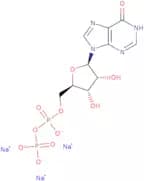
CAS:Inosine 5'-diphosphate trisodium salt is an antiviral compound that is used to inhibit the replication of many viruses, including herpes, influenza, and HIV. It has been shown to be effective against cancer cells in vitro. Inosine 5'-diphosphate trisodium salt is a modified nucleotide that is used as a phosphoramidite for DNA synthesis. This compound can also be used as an activator for deoxyribonucleoside triphosphates. It has been shown to have anticancer activity in vivo and in vitro and also inhibits viral DNA synthesis by preventing the formation of ribonucleotide triphosphates from ribonucleotides. The molecular weight of this compound is 390.4 g/mol and its CAS number is 81012-88-6.Fórmula:C10H11N4O11P2•Na3Pureza:Min. 95%Forma y color:PowderPeso molecular:494.13 g/mol2'-Azido-2'-deoxyuridine
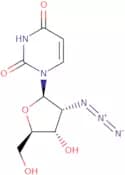
CAS:2'-Azido-2'-deoxyuridine is a synthetic nucleoside analog of uridine in which the 2'-hydroxyl group on the ribose sugar is replaced with an azido group (–N₃), and the base is unmodified uracil. This modification alters the sugar's conformation and chemical reactivity, enabling the use of this analog in bioorthogonal labeling strategies, particularly through azide-alkyne "click" chemistry. Its incorporation into nucleic acids can influence polymerase recognition and chain elongation, making it a useful probe in studies of RNA synthesis, structure, and function.Fórmula:C9H11N5O5Pureza:Min. 98 Area-%Forma y color:White Off-White PowderPeso molecular:269.21 g/molAcetyl hypoxanthine
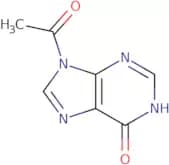
CAS:Acetyl hypoxanthine is an inorganic compound that has a cyclophosphate group. It can be synthesized from the reaction of acetic acid and 6-chloropurine, which is activated with trifluoroacetic acid and irradiated with ultraviolet light. Acetyl hypoxanthine can then be synthesized by ammonolysis of chloroacetone using ammonia or by chlorinating acetylene with chlorine. The advantages of this compound are its high yield and low cost.Fórmula:C7H6N4O2Pureza:Min. 95 Area-%Forma y color:PowderPeso molecular:178.15 g/molCladribine
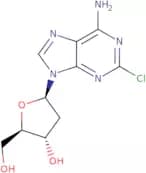
CAS:Deoxyadenosine analog resistant to adenosine deaminase
Fórmula:C10H12ClN5O3Pureza:Min. 97 Area-%Forma y color:PowderPeso molecular:285.69 g/molGemcitabine base
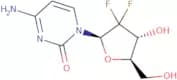
CAS:Gemcitabine is a prodrug that is converted to 5-fluorouracil (5FU) in the body. It has been shown to inhibit the growth of bladder and pancreatic cancer cells by interfering with the synthesis of DNA. Gemcitabine inhibits DNA replication by binding to the epidermal growth factor receptor, which leads to cell death. Gemcitabine also acts as a competitive inhibitor of deoxycytidine kinase, which prevents the formation of deoxycytidine monophosphate from deoxyuridine monophosphate, preventing DNA replication. In addition, gemcitabine can activate apoptosis in some tumor cells by increasing levels of intracellular free calcium, which leads to activation of enzymes such as phospholipases and proteases that degrade proteins, lipids, and nucleic acids.Fórmula:C9H11F2N3O4Pureza:Min. 98 Area-%Forma y color:White PowderPeso molecular:263.2 g/mol2’-Deoxy-2’-fluorouridine 5’-monophosphate triethyl ammonium
2’-Deoxy-2’-fluorouridine 5’-monophosphate triethyl ammonium is a fluorinated nucleotide analog used in biochemical and medicinal researchFórmula:C9H12FN2O8P•C6H15NPureza:Min. 95%Forma y color:PowderPeso molecular:427.36 g/mol