Nucleótidos
Subcategorías de "Nucleótidos"
Se han encontrado 2636 productos de "Nucleótidos"
2'-Deoxy-2'-fluoro-L-uridine
CAS:2'-Deoxy-2'-fluoro-L-uridine is a synthetic nucleoside analog of uridine where the sugar is both fluorinated at the 2' position and in the L-configuration, which is the mirror image of naturally occurring D-nucleosides. This modification makes it structurally distinct and biologically significant for certain applications in drug development and biochemical research.
Fórmula:C9H11FN2O5Pureza:Min. 95%Forma y color:White PowderPeso molecular:246.2 g/molRef: 3D-ND02886
Producto descatalogado5'-O-Trityluridine
CAS:5'-O-Trityluridine is a nucleoside analogue that has been prepared as an oriented, oxidized, hydrogenated, xylene derivative of uridine. It is composed of ribofuranoside and uridine. The orientation is controlled by the use of trityl groups on the 5' and 3' hydroxyl groups. The alkali metal salt isomers are analysed using HPLC and GC. This compound interacts with phosphotriesters and cyclic phosphodiesters.
Fórmula:C28H26N2O6Pureza:Min. 95%Forma y color:White Off-White PowderPeso molecular:486.52 g/molRef: 3D-NT06665
Producto descatalogado2'-Deoxy-5-propynyluridine
CAS:2'-Deoxy-5-propynyluridine is a nucleoside that is naturally synthesized in the body. It is an intermediate in the synthesis of pyrimidine nucleotides and has been shown to be useful for the treatment of cardiac arrhythmias. 2'-Deoxy-5-propynyluridine has also been found to have a stabilizing effect on RNA, enhancing its biological relevance. This compound can be used as a fluorescent probe and can be used to study transcriptional regulation mechanisms.
Fórmula:C12H14N2O5Pureza:Min. 95%Forma y color:PowderPeso molecular:266.26 g/molRef: 3D-ND02838
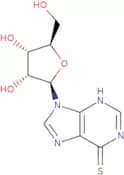
Producto descatalogado6-Thioinosine
CAS:6-Thioinosine is a nucleoside analog that is chemically related to 6-mercaptopurine. It inhibits the polymerase chain reaction and has been shown to inhibit aerobic metabolism in aerobacter aerogenes. It also inhibits the growth of hl-60 cells, which are derived from human leukemia cells. 6-Thioinosine has been shown to have anti-inflammatory properties, which may be due to its ability to inhibit prostaglandin synthesis. It also blocks the activity of certain receptors and has a disease activity against infectious diseases such as systemic candidiasis, bacterial endocarditis, and bowel disease.
Fórmula:C10H12N4O4SPureza:Min. 98 Area-%Forma y color:PowderPeso molecular:284.29 g/mol2'-Deoxycytidine
CAS:2'-Deoxycytidine is a deoxyribonucleotide that is used in the synthesis of DNA. It has been shown to have potent antitumor activity against solid tumours and may be useful for the treatment of leukemic mice. This compound has been shown to inhibit the kinase activity of IL-2 receptor and Toll-like receptor, which are proteins that regulate the immune response. 2'-Deoxycytidine also inhibits DNA polymerase activity and thermal expansion, which may make it a good candidate as an anticancer drug.
Fórmula:C9H13N3O4Pureza:Min. 99 Area-%Forma y color:PowderPeso molecular:227.22 g/mol3'-Deoxyuridine
CAS:3'-Deoxyuridine is a synthetic antibiotic that is used in the treatment of viral infections, such as hepatitis B and C, and HIV. 3'-Deoxyuridine competitively inhibits the synthesis of RNA by binding to the enzyme RNA polymerase. This drug also has antiviral activity against the human cytomegalovirus (CMV) and Hepatitis C virus (HCV). 3'-Deoxyuridine is synthesized from uracil in an organic solvent, trifluoroacetic acid, at low temperatures. The incorporation of deoxynucleoside triphosphates into DNA occurs after cleavage of the terminal phosphate group by water vapor.
Fórmula:C9H12N2O5Pureza:Min. 95%Forma y color:PowderPeso molecular:228.21 g/molRef: 3D-ND05963
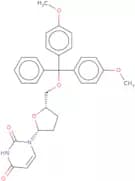
Producto descatalogado2',3'-Dideoxy-5'-O-DMT-uridine
CAS:2',3'-Dideoxy-5'-O-DMT-uridine is a nucleoside for use in research applications
Fórmula:C30H30N4O6Pureza:Min. 95%Forma y color:White To Off-White SolidPeso molecular:514.58 g/molRef: 3D-ND08411
Producto descatalogadoN-Pyrrolo-2'-deoxycytidine
CAS:N-Pyrrolo-2'-deoxycytidine is a nucleoside analog that is used in the laboratory as a template for DNA synthesis. It has been shown to be an effective inhibitor of human pathogens. N-Pyrrolo-2'-deoxycytidine binds to DNA and prevents replication by interfering with the binding of the enzyme polymerase to the template strand, which leads to denaturation of the complementary strand and blocking of DNA elongation. This drug has been shown to bind specifically to sequences that are unpaired in duplexes, such as single-stranded telomeres. N-Pyrrolo-2'-deoxycytidine can also be used as a fluorescence probe for detecting dsDNA duplexes.
Fórmula:C12H15N3O4Pureza:Min. 98 Area-%Forma y color:PowderPeso molecular:265.27 g/molRef: 3D-NP08698
Producto descatalogado(2R,3R,4S,5R)-2-(4-Aminothieno[3,4-d]pyrimidin-7-yl)-5-(hydroxymethyl)tetrahydrofuran-3,4-diol
CAS:(2R,3R,4S,5R)-2-(4-Aminothieno[3,4-d]pyrimidin-7-yl)-5-(hydroxymethyl)tetrahydrofuran-3,4-diol is a nucleoside analog for research purposesFórmula:C11H13N3O4SPureza:Min. 95%Forma y color:PowderPeso molecular:283.3 g/molRef: 3D-FA165910
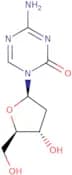
Producto descatalogadoDecitabine
CAS:A synthetic cytosine analogue that incorporates into DNA and prevents DNA methylation via DNA (cytosine-5)-methyltransferase 1 (DNMT1) inhibition. Demonstrated potent anti-leukaemic effects attributed to cell cycle arrest and induction of apoptosis. Has anti-growth effects on solid tumor cell lines.
Fórmula:C8H12N4O4Pureza:Min. 98 Area-%Forma y color:White PowderPeso molecular:228.21 g/mol6-Methylpurine-2'-deoxyriboside
CAS:6-Methylpurine-2'-deoxyriboside (6MPdR) is a nucleoside analog that inhibits viral polymerase activity. It is used in the treatment of bowel diseases, such as inflammatory bowel disease and hepatitis C. 6MPdR can be used to treat cancer by inhibiting cellular proliferation and inducing apoptosis. This drug has been shown to inhibit leishmania growth in cell culture. 6MPdR can be administered orally or intravenously, and is pegylated for greater stability in the blood stream.
Fórmula:C11H14N4O3Pureza:Min. 95%Forma y color:PowderPeso molecular:250.25 g/molRef: 3D-NM46495
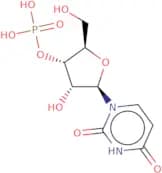
Producto descatalogado3′-UMP
CAS:3′-UMP is a modified nucleoside that has antiviral activity, and is synthesized by the phosphoramidite method. It is a novel compound, which has not been previously reported. 3′-UMP is an activator of ribonucleotide reductase and can be used to treat viral infections. This drug also has anticancer effects and can be used as a chemotherapeutic agent for the treatment of leukemia. 3′-UMP has high purity and high quality.
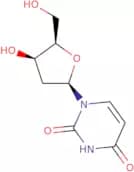
Fórmula:C9H13N2O9PPureza:Min. 95%Peso molecular:324.18 g/mol2'-Deoxyuridine
CAS:2'-Deoxyuridine (2'-dU) is an intermediate in the synthesis of thymidylate, which is a precursor for DNA synthesis. It can be prepared through high-performance liquid chromatography. 2'-dU has been shown to inhibit the enzymatic activity of enzymes responsible for synthesizing uridine and thymidylate, leading to neuronal death. 2'-dU has also been shown to have a protective effect against mitochondrial dysfunction induced by hydrogen fluoride. It is also known to bind with toll-like receptor 4 (TLR4), which is involved in inflammatory responses. 2'-dU has been used as a fluorescence probe for nucleic acids and as a polymerase chain reaction (PCR) substrate.
Fórmula:C9H12N2O5Pureza:Min. 98 Area-%Forma y color:White PowderPeso molecular:228.21 g/molRef: 3D-ND06282
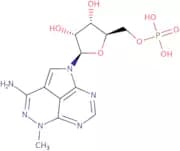
Producto descatalogadoTricyclic nucleoside phosphate
CAS:Akt activation inhibitor
Fórmula:C13H17N6O7PPureza:Min. 95%Peso molecular:400.28 g/molRef: 3D-NT44794
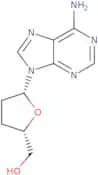
Producto descatalogado2',3'-Dideoxyadenosine
CAS:2',3'-Dideoxyadenosine is a nucleoside analog that inhibits HIV replication and is a competitive inhibitor of adenylyl cyclase. This latter action reduces levels of cyclic adenosine monophosphate (cAMP)
Fórmula:C10H13N5O2Pureza:Min. 95%Forma y color:PowderPeso molecular:235.25 g/mol5-(Methylaminomethyl)-2-thiouridine
CAS:5-(Methylaminomethyl)-2-thiouridine is a nucleotide that is important for both DNA and RNA synthesis. It is the methyl donor in the formation of dTMP, an essential component of DNA. 5-(Methylaminomethyl)-2-thiouridine is synthesized by the enzyme thioredoxin reductase using NADPH and glutathione as cofactors. The synthesis of this nucleotide is regulated by hydrogen bonding, which may be due to its ability to form a cationic surfactant with a molecule such as typhimurium. This activity may be due to the presence of a disulfide bond that can react with other molecules such as guanine nucleotides.
5-(Methylaminomethyl)-2-thiouridine has been shown to have structural analysis and chemical biology applications when used in conjunction with E. coli K-12 cells, MethanobrevibFórmula:C11H17N3O5SPureza:(¹H-Nmr) Min. 95 Area-%Forma y color:PowderPeso molecular:303.34 g/molRef: 3D-NM159475
Producto descatalogadoN4-Ethenocytidine
CAS:N4-Ethenocytidine is a nucleoside analogue that has been synthesized and shown to be an effective inhibitor of the hepatitis C virus. N4-Ethenocytidine prevents the synthesis of viral RNA by attacking the 3'-hydroxyl group of uridine, which is involved in the formation of ribonucleotides. This compound can also inhibit rat liver microsomes through a hydrated attack on carbonyl groups. The reaction products are trifluoroacetic acid and chloride ions. N4-Ethenocytidine's fluorescence properties have been used to identify its reaction intermediates, which include uridylic acid and 4-etheno-N6-isopentenyladenosine.
Fórmula:C11H13N3O5Pureza:Min. 95%Forma y color:White Off-White PowderPeso molecular:267.24 g/molRef: 3D-NE06244
Producto descatalogado2'-Deoxy-2'-fluoro-5-methylcytidine
CAS:2'-Deoxy-2'-fluoro-5-methylcytidine is a nucleoside analog that is a modified version of cytidine, where the sugar (deoxyribose) has a fluoro modification at the 2' carbon and a methyl group is attached at the 5' position of the cytosine base. This modification confers unique properties that can be useful in research and drug development.
Fórmula:C10H14FN3O4Pureza:Min. 95%Forma y color:Off-White PowderPeso molecular:259.23 g/molL-Guanosine
CAS:L-Guanosine is an enantiomer of adenosine. It has been shown to be effective in the treatment of autoimmune diseases and viruses, such as HIV. L-Guanosine is activated by phosphorylation, which leads to its binding with DNA and inhibition of viral replication. L-Guanosine is also a potent inhibitor of mammalian cell proliferation. It binds to the enzyme adenosyltransferase, thereby inhibiting the production of nucleotides, which are necessary for DNA synthesis. This inhibition causes cell death due to lack of DNA synthesis and protein production.
Fórmula:C10H13N5O5Pureza:Min. 95%Forma y color:White PowderPeso molecular:283.24 g/mol2'(3')-O-(4-Benzoyl)benzoyladenosine-5'-triphosphate triethylammonium salt
CAS:2'(3')-O-(4-Benzoyl)benzoyladenosine-5'-triphosphate triethylammonium salt is a nucleoside analog of Adenosine-5'-triphosphate (ATP), a key player in cellular energy transfer. 2'(3')-O-(4-Benzoyl)benzoyl has been added to this molecule as well as a triethylammonium salt which helps to increase the stability of the molecule in solutions. 2'(3')-O-(4-Benzoyl)benzoyladenosine-5'-triphosphate triethylammonium salt has potential use as a tool for understanding how cells use ATP and how changes to ATP affect cellular processes. Other possible uses are in the study of how ATP interacts with enzymes.
Fórmula:C24H24N5O15P3·C6H15NPureza:Min. 75 Area-%Forma y color:White PowderPeso molecular:816.58 g/mol





![(2R,3R,4S,5R)-2-(4-Aminothieno[3,4-d]pyrimidin-7-yl)-5-(hydroxymethyl)tetrahydrofuran-3,4-diol](/_next/image/?url=https%3A%2Fstatic.cymitquimica.com%2Fproducts%2F3D%2Fthumb-webp%2FFA165910.webp&w=3840&q=75)