Nucleótidos
Los nucleótidos son compuestos orgánicos que sirven como building blocks de los ácidos nucleicos, esenciales para la formación del ADN y ARN. Cada nucleótido está compuesto por una base nitrogenada, una molécula de azúcar y uno o más grupos fosfato. Estos nucleótidos se unen para formar largas cadenas, creando el material genético que lleva y transmite la información genética en todos los organismos vivos. En esta sección, encontrará una amplia variedad de nucleótidos cruciales para la investigación en genética, biología molecular y bioquímica. Son fundamentales para estudiar los procesos genéticos, sintetizar ácidos nucleicos y desarrollar herramientas diagnósticas y terapéuticas. En CymitQuimica, ofrecemos nucleótidos de alta calidad para apoyar su investigación científica y aplicaciones, asegurando precisión y fiabilidad en sus experimentos.
Subcategorías de "Nucleótidos"
Se han encontrado 2634 productos de "Nucleótidos"
Ordenar por
Pureza (%)
0
100
|
0
|
50
|
90
|
95
|
100
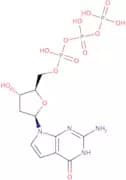
7-Deaza-2'-deoxyguanosine-5'-triphosphate sodium salt - 10mM aqueous solution
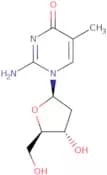
CAS:<p>7-Deaza-2'-deoxyguanosine-5'-triphosphate sodium salt is a cytosolic small molecule that inhibits the activity of telomerase, an enzyme involved in the replication of chromosomes. It also has inhibitory effects on kinase domains and may be used to treat cancer. 7-Deaza-2'-deoxyguanosine-5'-triphosphate sodium salt binds to human mitochondrial DNA and inhibits gene transcription by hybridizing with it. This results in the inhibition of dopamine production, which can be helpful for treating Parkinson's disease. 7-Deaza-2'-deoxyguanosine-5'-triphosphate sodium salt is structurally similar to 2'-deoxyadenosine 5'-triphosphate (dATP) and can be incorporated into DNA by phosphorylation to form a covalent bond that disrupts the dATP/ATP ratio. This causes cellular energy production to decrease and</p>Fórmula:C11H17N4O13P3·xNaPureza:Min. 95%Peso molecular:506.19 g/mol2'-Deoxy-5-methyl-isocytidine
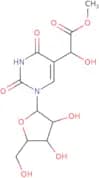
CAS:2'-Deoxy-5-methyl-isocytidine is an analog of cytidine that is used in the synthesis of oligodeoxynucleotides. It has shown to be complementary to dsDNA and to inhibit hepatitis B virus replication in cell culture. 2'-Deoxy-5-methyl-isocytidine is synthesized by solid phase chemistry on a polystyrene support with monomers, depyrimidination, and purification by column chromatography. The chemical stability of this compound has been shown by its ability to withstand heating at 100°C for 10 minutes without decomposition.Fórmula:C10H15N3O4Pureza:Min. 95%Peso molecular:241.26 g/mol5-(Carboxyhydroxymethyl)uridine methyl ester
CAS:<p>5-(Carboxyhydroxymethyl)uridine methyl ester is a modified form of uridine that is used in biochemical reactions. It is found in the ovary, where it interacts with acidic environments to produce the corresponding hydroxymethyl derivatives. The hydroxymethyl derivatives are then converted to the corresponding 5-carboxy-hydroxymethyl derivatives by conjugates and modifications, which can be analyzed using various assays. 5-(Carboxyhydroxymethyl)uridine methyl ester has also been shown to have epigenetic effects on cellular activity and cancer.</p>Fórmula:C12H16N2O9Pureza:Min. 95 Area-%Forma y color:Slightly Yellow Clear LiquidPeso molecular:332.26 g/mol4-Amino-6-hydroxypyrazolo[3,4-d]pyrimidine
CAS:Fórmula:C5H5N5OPureza:>93.0%(HPLC)Forma y color:White to Light yellow to Light orange powder to crystallinePeso molecular:151.135-Amino-1-β-D-ribofuranosyl-1H-imidazole-4-carboxamide
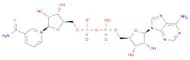
CAS:Fórmula:C9H14N4O5Pureza:95%Forma y color:SolidPeso molecular:258.2313THIONICOTINAMIDE ADENINE DINUCLEOTIDE
CAS:Fórmula:C21H33N7O13P2SPureza:95%Forma y color:SolidPeso molecular:685.5383Ref: IN-DA00BZEP
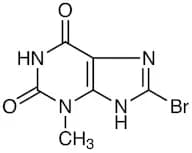
Producto descatalogado8-Bromo-3-methylxanthine
CAS:Fórmula:C6H5BrN4O2Pureza:>98.0%(T)(HPLC)Forma y color:White to Almost white powder to crystalPeso molecular:245.045'-O-DMT-2'-O-methylcytidine
CAS:<p>5'-O-DMT-2'-O-methylcytidine is a monophosphate nucleoside of cytidine. It is used as an antiviral agent and has been shown to have anticancer effects in vitro. 5'-O-DMT-2'-O-methylcytidine is synthesized by modification of the natural deoxyribonucleosides, which are then phosphoramidited to form a 5'-O-DMT-2'-O-methylcytidine monophosphate. The synthesis process also produces diphosphate and triphosphate forms of the nucleoside, which can be used for other purposes.</p>Fórmula:C31H33N3O7Pureza:Min. 95%Peso molecular:559.61 g/mol5-Methylcytidine-5'-monophosphate
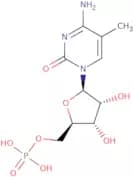
CAS:<p>5-Methylcytidine-5'-monophosphate is a nucleotide that is an intermediate in the synthesis of DNA. It is a neutral form and has been sequenced. 5-Methylcytidine-5'-monophosphate is found in cellular components, such as mitochondria and nuclei. The biochemical properties of this molecule are dependent on its methylation state. This molecule also plays a role in mitochondrial functions and nuclear DNA modifications.</p>Fórmula:C10H16N3O8PPureza:Min. 95%Forma y color:White Off-White PowderPeso molecular:337.22 g/molRef: 3D-NM29555
Producto descatalogadoDiquafosol Impurity 2
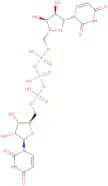
CAS:<p>Diquafosol Impurity 2 is a high-purity phosphoramidite that can be used for the synthesis of DNA, RNA, and deoxyribonucleosides. This product is also a novel activator for phosphoramidites. Diquafosol Impurity 2 has CAS No. 63785-59-1 and a molecular weight of 228.24 g/mol. It is insoluble in water, but soluble in most organic solvents.</p>Fórmula:C18H25N4O20P3Pureza:Min. 95%Peso molecular:710.33 g/molPolyinosinic-polycytidylic acid sodium salt
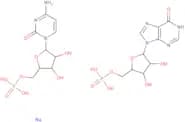
CAS:<p>Polyinosinic acid-polycytidylic acid (Poly I:C), an agonist of TLR3 toll-like receptors, is a synthetic double-stranded RNA analog, consisting of polyinosinic acid (poly I) paired with polycytidylic acid (poly C), forming a stable duplex structure. PolyI:C stimulates the secretion of pro-inflammatory cytokines and type I interferon through its interaction with endosomal Toll-like receptor 3 (TLR-3) and the cytoplasmic receptors melanoma differentiation-associated gene 5 (MDA-5) and retinoic acid-inducible gene I (RIG-I). This immunostimulant activity makes Poly I:C a useful vaccine adjuvant and is used in vaccine formulations. Poly I:C and its stabilized analogs (e.g., poly-ICLC) are also being actively researched for their dual role in oncology: directly targeting tumors and acting as immune potentiators. For example Poly I:C can induce apoptosis in tumor cells and stimulate immunogenic cell death and is therefore being explored alongside chemotherapy, radiotherapy, and checkpoint inhibitors, helping to overcome resistance mechanisms and strengthen treatment outcomes. We can supply PolyI:C to all stages of your project - from R&D and preclinical phases right up to GMP commercial manufacture. Contact our team for custom Poly I:C products.<br>For more on poly I:C read out blog 'Poly I:C: A Vaccine Adjuvant With Oncological Potential.'</p>Fórmula:(C10H13N4O8P)x•(C9H14N3O8P)x•NaxForma y color:White PowderRef: 3D-TP36521
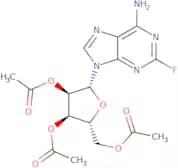
Producto descatalogado2',3',5'-Tri-O-acetyl-2-fluoroadenosine
CAS:<p>2',3',5'-Tri-O-acetyl-2-fluoroadenosine is nucleoside analog of adenosine for use in research. The addition of a fluorine to an adenosine can change adenosine's properties such as its hydrogen bonding ability and how it interacts with water and other biological molecules. It can also increase the stability of adenosine and increase its half-life in biological systems.</p>Fórmula:C16H18FN5O7Pureza:Min. 95%Forma y color:White To Off-White SolidPeso molecular:411.34 g/molRef: 3D-NT09632
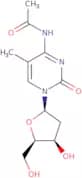
Producto descatalogadoN4-Acetyl-2'-deoxy-5-methylcytidine
<p>N4-Acetyl-2'-deoxy-5-methylcytidine is a novel nucleoside analog of cytidine. It has been shown to be an activator of the immune system, and has antiviral and anticancer properties. This synthetic nucleoside is phosphorylated by kinases in cells to form N4-acetyl-2'-deoxy-5'-methyluridine monophosphate. The phosphate group can be removed by phosphatases in cells to yield N4-acetyl-2'-deoxycytidine, which is a precursor for DNA synthesis.</p>Fórmula:C12H17N3O5Pureza:Min. 95%Forma y color:PowderPeso molecular:283.28 g/molRef: 3D-NA15219
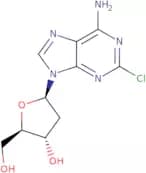
Producto descatalogadoCladribine
CAS:<p>Deoxyadenosine analog resistant to adenosine deaminase</p>Fórmula:C10H12ClN5O3Pureza:Min. 97 Area-%Forma y color:PowderPeso molecular:285.69 g/mol5'-O-DMT-a-thymidine
<p>5'-O-DMT-a-thymidine is a modified nucleoside that is used in the synthesis of DNA and RNA. This product is a high quality and pure monophosphate, which has been modified to reduce its potential for activation by phosphatases. It is suitable for use in anticancer drugs and antiviral agents.</p>Fórmula:C31H32N2O7Pureza:Min. 95%Peso molecular:544.6 g/molRef: 3D-ND146115
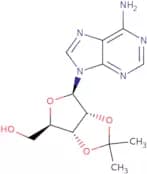
Producto descatalogado2',3'-O-Isopropylideneadenosine
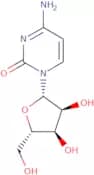
CAS:<p>2',3'-O-Isopropylideneadenosine is a nucleoside that has a possible usage as an organic chemical synthesis intermediate</p>Fórmula:C13H17N5O4Pureza:Min. 98 Area-%Forma y color:White PowderPeso molecular:307.31 g/molL-Cytidine
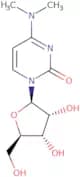
CAS:<p>L-Cytidine is a nucleoside that is found in the body, and is also used as a drug. It is a precursor to other nucleosides, such as cytidine triphosphate, which is involved in DNA synthesis and repair. L-Cytidine has been shown to be effective against HIV infection by inhibiting the activity of the enzyme ns3 protease. This inhibition prevents viral proteins from being released from cells and infecting other cells. L-Cytidine has also been shown to be an inhibitor of creatine kinase and glycosidation, two enzymes that are necessary for cell metabolism. L-Cytidine has also been shown to be reactive with halides, which may lead to unwanted side effects.</p>Fórmula:C9H13N3O5Pureza:Min. 95%Forma y color:PowderPeso molecular:243.22 g/molN4,N4-Dimethylcytidine
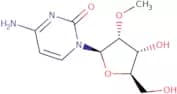
CAS:<p>N4,N4-Dimethylcytidine is a nucleoside that is an analog of cytidine. It has antiviral potency against influenza virus and inhibits the RNA-dependent DNA polymerase. N4,N4-Dimethylcytidine can be used to treat influenza and other viruses that are resistant to other antiviral drugs. This drug can be used in cell culture to inhibit the production of mismatched DNA strands, which is important for the replication of RNA viruses such as influenza. N4,N4-Dimethylcytidine also has been shown to be an inhibitor of miRNA activity in mammalian cells.</p>Fórmula:C11H17N3O5Pureza:(%) Min. 95%Forma y color:White PowderPeso molecular:271.27 g/mol2'-O-Methylcytidine
CAS:<p>2'-O-Methylcytidine is a nucleoside with a hydroxyl group on the 2' carbon. The hydroxyl group makes it an effective inhibitor of viral replication, and it has been shown to be active against HIV-1 in cell culture. 2'-O-Methylcytidine is also metabolized by nucleotide salvage pathways, and the metabolic response can be studied using proton nuclear magnetic resonance (NMR) spectroscopy and x-ray diffraction data. It has been found that 2'-O-Methylcytidine inhibits protein synthesis in cancer cells, and this may be due to its ability to bind to the response element on DNA.</p>Fórmula:C10H15N3O5Pureza:Min. 95%Forma y color:White PowderPeso molecular:257.24 g/mol

![4-Amino-6-hydroxypyrazolo[3,4-d]pyrimidine](/_next/image/?url=https%3A%2Fstatic.cymitquimica.com%2Fproducts%2F3B%2Fthumb-webp%2FA2699.webp&w=3840&q=75)