Nucleótidos
Los nucleótidos son compuestos orgánicos que sirven como building blocks de los ácidos nucleicos, esenciales para la formación del ADN y ARN. Cada nucleótido está compuesto por una base nitrogenada, una molécula de azúcar y uno o más grupos fosfato. Estos nucleótidos se unen para formar largas cadenas, creando el material genético que lleva y transmite la información genética en todos los organismos vivos. En esta sección, encontrará una amplia variedad de nucleótidos cruciales para la investigación en genética, biología molecular y bioquímica. Son fundamentales para estudiar los procesos genéticos, sintetizar ácidos nucleicos y desarrollar herramientas diagnósticas y terapéuticas. En CymitQuimica, ofrecemos nucleótidos de alta calidad para apoyar su investigación científica y aplicaciones, asegurando precisión y fiabilidad en sus experimentos.
Subcategorías de "Nucleótidos"
Se han encontrado 2635 productos de "Nucleótidos"
Ordenar por
Pureza (%)
0
100
|
0
|
50
|
90
|
95
|
100
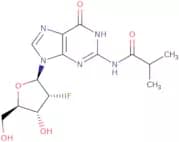
2'-Deoxy-2'-fluoro-N2-isobutyrylguanosine
CAS:2'-Deoxy-2'-fluoro-N2-isobutyrylguanosine is a modified nucleoside analog for research applicationsFórmula:C14H18FN5O5Pureza:Min. 95%Forma y color:White PowderPeso molecular:355.33 g/molPalmitoyl coenzyme A potassium salt
CAS:Palmitoyl coenzyme A potassium salt is a novel, modified nucleoside that has antiviral and anticancer activities. It is a phosphoramidite with a phosphate group at one end and a palmitoyl group at the other. The phosphate group is attached to the 5' position of the sugar, while the palmitoyl group is attached to the 3' position of the sugar. Palmitoyl coenzyme A potassium salt can be used in DNA synthesis.Fórmula:C37H65N7O17P3SKPureza:Min. 95%Forma y color:White PowderPeso molecular:1,044.03 g/mol2'-O-(2-Methoxyethyl)-5-methyluridine
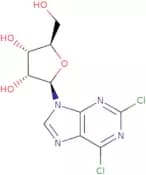
CAS:2'-O-(2-Methoxyethyl)-5-methyluridine is a uridine nucleoside that has been prepared by the reaction of amidite with 5-methyluridine. 2'-O-(2-Methoxyethyl)-5-methyluridine is an important intermediate in the synthesis of oligonucleotides, which are synthesized from phosphoramidites. The phenyl group on the amido group is a reactive group that reacts with other functional groups to form an oligonucleotide. 2'-O-(2-Methoxyethyl)-5-methyluridine has a high yield and can be used as a reagent for organic chemistry.Fórmula:C13H20N2O7Pureza:Min. 98 Area-%Forma y color:White PowderPeso molecular:316.31 g/mol2,6-Dichloro-9-(β-D-ribofuranosyl)purine
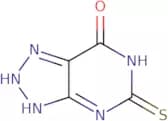
CAS:2,6-Dichloro-9-(β-D-ribofuranosyl)purine is a nucleoside analog composed of a modified purine base and a ribose sugar. It has possible applications as an intermediate in nucleoside chemistry, particularly for the synthesis of functionalized purine nucleosides used in biological and pharmaceutical research.Fórmula:C10H10Cl2N4O4Pureza:Min. 95%Forma y color:PowderPeso molecular:321.12 g/mol8-Aza-6-hydroxy-2-mercaptopurine
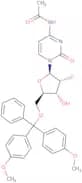
CAS:8-Aza-6-hydroxy-2-mercaptopurine (8AzaMP) is a novel nucleoside analog that is an activator of the thymidylate synthase enzyme. It has been shown to inhibit the replication of many DNA viruses and to inhibit tumor growth in animal models. 8AZA MP has been evaluated in Phase I and II clinical trials for the treatment of various cancers, including malignant melanoma, renal cell carcinoma, and chronic lymphocytic leukemia. This drug has also shown promise as a chemotherapeutic agent for AIDS patients with HIV infection or AIDS-related complex.Fórmula:C4H3N5OSPureza:Min. 95%Forma y color:PowderPeso molecular:169.17 g/molN4-Acetyl-2'-deoxy-5'-O-DMT-2'-fluorocytidine
CAS:N4-Acetyl-2'-deoxy-5'-O-DMT-2'-fluorocytidine is a cytosine analog with high affinity for the T cell receptor. It can be used to generate antibodies against cytosine and as a screening tool for plasmon resonance.
Fórmula:C32H32FN3O7Pureza:Min. 95%Forma y color:White PowderPeso molecular:589.61 g/molCytidine 5'-monophosphate disodium salt
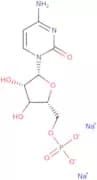
CAS:Cytidine 5'-monophosphate disodium salt (CMPDS) is a prodrug that is converted to cytidine 5'-monophosphate, an active form, in the acidic environment of cancer cells. CMPDS has been shown to inhibit the growth of squamous carcinoma and other solid tumours by binding to survivin, which regulates cell growth and apoptosis. CMPDS also inhibits the activity of matrix metalloproteinases-9 (MMP-9), an enzyme that promotes tumor growth by breaking down connective tissue. This drug can be used as a therapeutic agent for treatment of congestive heart failure due to its ability to increase mitochondrial membrane potential and decrease myocardial infarct size.Fórmula:C9H12N3Na2O8PPureza:Min. 95 Area-%Forma y color:White PowderPeso molecular:367.16 g/molGuanosine 5'-O-(2-thiodiphosphate) trilithium salt
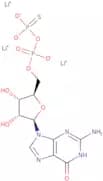
CAS:Guanosine 5'-O-(2-thiodiphosphate) trilithium salt (GTPTS) is a membrane-permeable molecule that hyperpolarizes cells by inhibiting the movement of ions through the cell membrane. GTPTS is activated by extracellular calcium and potassium ions, which are involved in signal transduction pathways. It has been shown to inhibit the release of neurotransmitters, such as acetylcholine, dopamine, serotonin, and norepinephrine. GTPTS also blocks voltage-gated sodium channels, which leads to a reduction in neuronal excitability. The drug has been shown to have analgesic effects in animal models of pain and can be used to treat chronic pain due to nerve damage.Fórmula:C10H12Li3N5O10P2SPureza:Min. 85 Area-%Forma y color:PowderPeso molecular:477.06 g/mol5-Methoxycarbonylmethyl-2-thiouridine
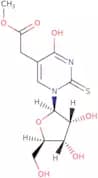
CAS:Nucleoside functionalised on the baseFórmula:C12H16N2O7SPureza:Min. 95 Area-%Forma y color:White Off-White PowderPeso molecular:332.33 g/mol8-(4-Chlorophenylthio)-2'-O-methyladenosine 3',5'-cyclic monophosphate sodium salt
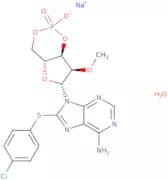
CAS:8-(4-Chlorophenylthio)-2'-O-methyladenosine 3',5'-cyclic monophosphate sodium salt (8-CPT-cAMP) is a cyclic nucleotide that activates adenyl cyclase, which increases intracellular levels of the second messenger cAMP. It also inhibits P2Y receptors and other ion channels. 8-CPT-cAMP has been shown to be effective in activating cells expressing the enzyme camp levels, such as those found in heart muscle cells. This drug is used clinically to lower blood pressure, as it has been shown to activate amp-activated protein kinase and calcium chelator. 8-CPT-cAMP may have clinical applications for the treatment of cancer due to its ability to induce cell cycle arrest and apoptosis.Fórmula:C17H16ClN5O6PS·NaPureza:Min. 95%Forma y color:PowderPeso molecular:507.82 g/mol(R)-N-(2,3-Dihydro-1H-indenyl)adenosine
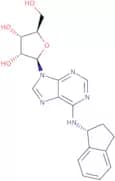
CAS:(R)-N-(2,3-Dihydro-1H-indenyl)adenosine is a purine nucleoside with the attachment of a 2,3-dihydro-1H-indenyl group via a nitrogen atom. This adenosine-based product can be used for research purposesFórmula:C19H21N5O4Pureza:Min. 95 Area-%Forma y color:White PowderPeso molecular:383.4 g/mol5-(Cyanomethyl)-uridine
CAS:5-(Cyanomethyl)-uridine (5-CMU) is a monophosphate nucleoside that is synthetically derived from uracil. This nucleoside has antiviral activity and can be used to treat infections caused by the herpesviridae family, such as herpes simplex virus type 1 and 2. 5-CMU is modified with cyanomethyl groups on the ribose moiety. It is also a phosphoramidite building block for DNA synthesis and can be used in the preparation of oligonucleotides. The CAS number for 5-CMU is 58479-73-5.Fórmula:C11H13N3O6Pureza:Min. 95%Forma y color:PowderPeso molecular:283.24 g/mol5-Fluorocytosine
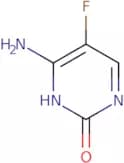
CAS:Flucytosine is an antifungal agent that inhibits the synthesis of DNA by preventing the conversion of deoxyuridine monophosphate to uracil monophosphate. It is used as an antiretroviral therapy in combination with other drugs, such as zidovudine and dideoxyinosine, to treat HIV infections. Flucytosine has been shown to have a strong antitumor response in a model system involving mice with sarcoma 180. This drug can cause serious side effects, including drug interactions and resistance mutations in microorganisms. These side effects are often observed in patients undergoing cancer chemotherapy or immunosuppressive therapy.Fórmula:C4H4FN3OPureza:Min. 95%Forma y color:White PowderPeso molecular:129.09 g/mol3'-Azido-N6-benzoyl-5'-O-DMT-2',3'-dideoxyadenosine
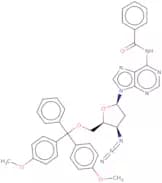
3'-Azido-N6-benzoyl-5'-O-DMT-2',3'-dideoxyadenosine is a nucleoside analog and activator that inhibits the replication of DNA. It is a novel antiviral drug that has antiproliferative properties and may be useful in the treatment of cancer. 3'-Azido-N6-benzoyl-5'-O-DMT-2',3'-dideoxyadenosine is synthesized by reacting an activated phosphoramidite with 2',3'-dideoxyadenosine monophosphate to produce 3',5' dideoxythymidine 5'-monophosphate, which is then converted to 3',5' dideoxyuridine 5'-monophosphate. The last step involves the conversion of 3',5' dideoxyuridine 5'-monophosphate to 3' azidouridine 5'-monophFórmula:C38H34N8O5Pureza:Min. 95%Peso molecular:682.73 g/mol7-Deaza-2'-deoxy-6-methoxyguanosine
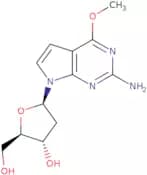
CAS:7-Deaza-2'-deoxy-6-methoxyguanosine is a modified nucleoside and antiviral agent. It has been shown to inhibit the synthesis of DNA, RNA and protein in cells infected with the herpes simplex virus (HSV). 7-Deaza-2'-deoxy-6-methoxyguanosine is also an anticancer agent that has been shown to inhibit tumor growth in animal models. This compound is synthesized by phosphoramidite chemistry and is a novel precursor for the preparation of modified DNA and RNA. The purity of this product is greater than 98%.Fórmula:C12H16N4O4Pureza:Min. 95%Forma y color:PowderPeso molecular:280.29 g/mol3,5-Dichloro-4-pyridone-1-acetic acid
CAS:3,5-Dichloro-4-pyridone-1-acetic acid is a chlorinated derivative of 7-aminocephalosporanic acid that is synthesized from hydrochloric acid and chloroacetic anhydride. It is used in the pharmaceutical industry as a reagent to produce medicines such as antibiotics and anti-inflammatory agents. The product yield of this reaction is high, which makes it an excellent choice for industrial use. 3,5-Dichloro-4-pyridone-1-acetic acid also has a low toxicity profile and can be easily degraded by bacteria in the environment.Fórmula:C7H5Cl2NO3Pureza:Min. 95%Peso molecular:222.02 g/mol3',5'-Di-O-acetylthymidine
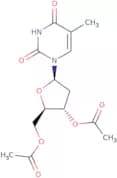
CAS:3',5'-Di-O-acetylthymidine is a pyrimidine nucleoside that has antibacterial activity. It is an anomer of thymidine, which makes it a hydroxymethylated analog of thymine. It can be used in the preparation of uridine for the treatment of human immunodeficiency virus type 1 (HIV-1) infection and to study the mechanism of action of this nucleoside on HIV-1 replication. 3',5'-Di-O-acetylthymidine binds to the ribose moiety of pyrimidines and inhibits bacterial growth by inhibiting DNA synthesis. This compound also inhibits the growth of staphylococcus that are resistant to penicillin. The chemical structure of 3',5'-Di-O-acetylthymidine can be modified with different acetic acid substituents to produce other pyrimidine nucleosides with different antibacterial properties, such as 4-Fórmula:C14H18N2O7Pureza:Min. 95%Forma y color:PowderPeso molecular:326.3 g/molN4-Benzoyl-5'-O-DMT-5-methylcytidine
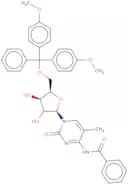
CAS:N4-Benzoyl-5'-O-DMT-5-methylcytidine is a deoxyribonucleoside that has been modified to make it resistant to nucleases. N4-Benzoyl-5'-O-DMT-5-methylcytidine is an antiviral agent, which inhibits the synthesis of viral DNA by inhibiting the activity of viral DNA polymerase. It also acts as an activator for cellular DNA polymerases and phosphoramidites. The drug can be used in the treatment of HIV and other retroviruses, herpes viruses, and certain types of cancer.Fórmula:C38H37N3O8Pureza:Min. 95%Forma y color:White SolidPeso molecular:663.73 g/molN6-Benzoyl-2'-O-tert-butyldimethylsilyladenosine
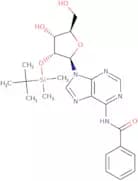
CAS:N6-Benzoyl-2'-O-tert-butyldimethylsilyladenosine (BTS) is a novel phosphoramidate monophosphate nucleoside analog that has been modified to be resistant to the ribonuclease A enzyme. BTS is an activator of DNA synthesis and inactivator of RNA synthesis, which makes it useful for the treatment of cancer and antiviral infections. This drug is synthesized using high quality reagents and can be used for the production of phosphoramidites to produce high purity oligonucleotides.Fórmula:C23H31N5O5SiPureza:Min. 95%Forma y color:PowderPeso molecular:485.61 g/mol7-Deaza-2'-deoxy-7-iodoguanosine
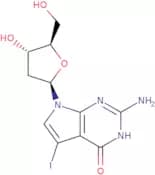
CAS:7-Deaza-2'-deoxy-7-iodoguanosine is a purine nucleoside that is synthesized from guanosine and iodine. It is used as a marker in sequencing reactions because it can be easily detected by UV light at 254 nm. 7-Deaza-2'-deoxy-7-iodoguanosine can be synthesized using the following general equation:
Fórmula:C11H13IN4O4Pureza:Min. 97 Area-%Forma y color:White PowderPeso molecular:392.16 g/mol