Nucleótidos
Subcategorías de "Nucleótidos"
Se han encontrado 2637 productos de "Nucleótidos"
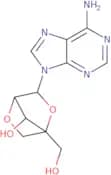
1-(2'-O-4-C-Methylene-b-D-ribofuranosyl)adenine
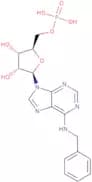
CAS:1-(2'-O-4-C-Methylene-b-D-ribofuranosyl)adenine is an important compound in the field of nucleoside chemistry and has potential applications in researchFórmula:C11H13N5O4Pureza:Min. 95%Forma y color:White PowderPeso molecular:279.25 g/molN6-Benzyladenosine 5'-monophosphate sodium salt monohydrate
CAS:N6-Benzyladenosine 5'-monophosphate sodium salt is a nucleoside that is not identified. It has been shown to be metabolized by adenosine deaminase and may have antitumor activity. N6-Benzyladenosine 5'-monophosphate sodium salt is also a radioactively labeled adenine analog that has been used in the study of metabolic pathways.
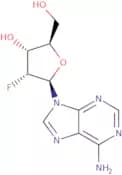
Fórmula:C17H18N5Na2O7P·H2OPureza:Min. 97 Area-%Forma y color:PowderPeso molecular:499.32 g/mol2'-Deoxy-2'-fluoroadenosine
CAS:2’-Deoxy-2’-fluoro nucleosides and nucleotides have been shown to demonstrate anti-viral activity against influenza, SARS and HIV. More specifically the phosphonate of 2'-Deoxy-2'-fluoroadenosine has been evaluated as an inhibitor of Hepacivirus C (HCV).Fórmula:C10H12FN5O3Pureza:Min. 95%Forma y color:White PowderPeso molecular:269.24 g/mol2'-Deoxy-5-methylcytidine HCl
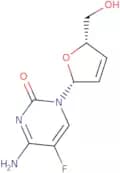
CAS:2'-Deoxy-5-methylcytidine HCl is a cytidine derivative that is used in the synthesis of DNA. It has been shown to have anticancer and antiviral properties, as well as being a synthetic activator for RNA polymerase. The chemical name for 2'-deoxy-5-methylcytidine HCl is 5'-[(2-bromoacetyl)amino]-2'-deoxyuridine 5'-O-(1,3-dithiole-2-thiocarbonyl)-3',5' -diiodo-. It belongs to the class of deoxyribonucleosides. This product may be used in applications such as DNA synthesis, modification of DNA, and antiviral treatment.Fórmula:C10H15N3O4·HClPureza:Min. 95%Forma y color:White PowderPeso molecular:277.7 g/mol5-Fluoro-1-(2',3'-dideoxy-2',3'-didehydro-b-D-arabinofuranosyl)-cytosine
CAS:5-Fluoro-1-(2',3'-dideoxy-2',3'-didehydro-b-D-arabinofuranosyl)-cytosine is an antiviral agent that can be used in combination with other drugs to treat HIV infection. It has been shown to inhibit the activity of p450 enzymes and to bind to receptor sites on cells, preventing the virus from replicating. 5-Fluoro-1-(2',3'-dideoxy-2',3'-didehydro-b-D-arabinofuranosyl)-cytosine has been tested in clinical studies for its ability to reduce levels of HIV in people infected with this virus. This compound also has immunomodulatory effects, which may be due to its ability to inhibit replication of the herpes simplex virus.Fórmula:C9H10FN3O3Pureza:Min. 95%Forma y color:PowderPeso molecular:227.19 g/mol3'-Deoxy-2'-O-methyladenosine
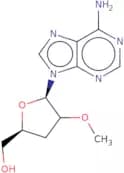
CAS:3'-Deoxy-2'-O-methyladenosine is a nucleoside that has antiviral and anticancer activity. It is a novel chemical compound with a unique structure, which makes it highly reactive. 3'-Deoxy-2'-O-methyladenosine induces DNA synthesis and cell proliferation in cancer cells. It also inhibits the production of viral DNA and RNA in infected cells by inhibiting the enzyme ribonucleotide reductase, which converts ribonucleotides to deoxyribonucleotides. 3'-Deoxy-2'-O-methyladenosine can be used as an antiviral agent against herpes simplex virus type 1 (HSV1), herpes simplex virus type 2 (HSV2) and human cytomegalovirus (CMV).
Fórmula:C11H15N5O3Pureza:Min. 95%Forma y color:Off-White PowderPeso molecular:265.27 g/mol3'-O-Methyladenosine
CAS:3'-O-Methyladenosine (3'OMeA) is a monomethylated adenosine that belongs to the group of nucleosides. It has been found to inhibit the activity of adenosine receptors, which are important for the regulation of blood pressure and central nervous system function. 3'OMeA also inhibits virus replication in human lymphocytes. 3'OMeA is synthesized by reaction with methylamine and purification by column chromatography. The molecule is a potential therapeutic target for HIV/AIDS, as it can be used as a specific agonist in order to block viral entry into cells.
Fórmula:C11H15N5O4Pureza:Min. 95%Forma y color:White PowderPeso molecular:281.27 g/mol1-(2'-Deoxy-2'-fluoro-a-L-arabinofuranosyl)-thymine
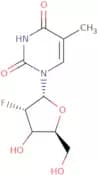
CAS:1-(2'-Deoxy-2'-fluoro-α-L-arabinofuranosyl)-thymine (commonly abbreviated as L-FMAU) is a nucleoside analog. It contains an α-L-arabinofuranose sugar instead of the natural β-D-deoxyribose found in DNA. A fluorine (F) substitution at the 2'-position enhances stability and resistance to enzymatic degradation. The thymine nucleobase allows it to mimic natural thymidine, potentially incorporating into DNA synthesis pathways. It can be research for its potential antiviral activity.Fórmula:C10H13FN2O5Pureza:Min. 95%Forma y color:White PowderPeso molecular:260.22 g/mol5-Methoxycarbonylmethyluridine
CAS:5-Methoxycarbonylmethyluridine is a nucleoside that is a precursor in the synthesis of other nucleotides. It has been shown to have potential as a biomarker for various diseases, such as metabolic disorders and hepatic steatosis. 5-Methoxycarbonylmethyluridine also inhibits the activity of methyltransferases, which are enzymes that catalyze the transfer of methyl groups from S-adenosylmethionine to substrates. It is also used as a model system for polymerase chain reaction in cancer research, because it has been shown to inhibit DNA replication by blocking the incorporation of uracil into DNA. 5-Methoxycarbonylmethyluridine has been found at high levels in fetal bovine serum and eukaryotic cells, but not in prokaryotes or cancerous tissues.Fórmula:C12H16N2O8Pureza:Min. 95%Forma y color:PowderPeso molecular:316.26 g/mol1-(2'-Deoxy-2'-fluoro-b-D-arabinofuranosyl)-5-ethyluracil
CAS:1-(2'-Deoxy-2'-fluoro-b-D-arabinofuranosyl)-5-ethyluracil is a nucleoside analog with modifications to alter its biological activity. It contains a β-D-arabinofuranose sugar instead of the standard β-D-deoxyribose in natural nucleosides and the fluorine (F) at the 2'-position increases resistance to enzymatic degradation and alters its biological activity. The 5-ethyl modification on the uracil ring enhances its interaction with viral polymerases.Fórmula:C11H15FN2O5Pureza:Min. 95%Forma y color:White PowderPeso molecular:274.25 g/molCyclopentenyl cytosine
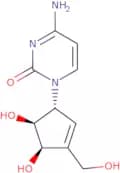
CAS:Cyclopentenyl cytosine is a cytotoxic drug that inhibits the synthesis of DNA, RNA, and proteins. It is a nucleoside analogue that inhibits the enzyme activity of ribonucleotide reductase. Cyclopentenyl cytosine has significant cytotoxicity against hl-60 cells, as well as squamous carcinoma and MDA-MB-231 breast cancer cells. It also has significant activity against cyclopentenyl, dextran sulfate, and mitochondrial functions in vivo in human cells. Cyclopentenyl cytosine binds to the response element on the DNA strand, preventing transcription of genes for protein synthesis and cell division.
Fórmula:C10H13N3O4Pureza:Min. 95%Forma y color:PowderPeso molecular:239.23 g/mol2'-Deoxy-5'-O-DMT-2'-fluorouridine
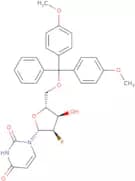
CAS:2'-Deoxy-5'-O-DMT-2'-fluorouridine is a medicament that belongs to the group of antineoplastic agents and is used in cancer treatment. It inhibits the synthesis of DNA by inhibiting the enzyme thymidylate synthetase, which is required for the formation of thymine nucleotides. This drug has been shown to be effective against some cancer cells in vitro and in vivo, but not all. 2'-Deoxy-5'-O-DMT-2'-fluorouridine can also inhibit terminal growth phases and induce programmed cell death. Solid phase synthesis has been used to synthesize this molecule as a phosphoramidite.Fórmula:C30H29FN2O7Pureza:Min. 98 Area-%Forma y color:White PowderPeso molecular:548.57 g/mol2'-Deoxyadenosine-5'-monophosphate disodium salt
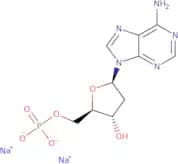
CAS:2'-Deoxyadenosine-5'-monophosphate disodium salt (DAP) is a white crystalline powder. It is soluble in water and insoluble in ethanol. DAP can be neutralised by aqueous solutions of hydroxide, such as sodium hydroxide or ammonium hydroxide. DAP is also reactive with aluminium oxide, which can be used for drying the compound to form anhydrous particles. DAP reacts with chloride ions to form 2',3'-diacetylpyridine-5'-diphosphate dibasic chloride, which has been shown to inhibit bacterial growth and act as an antibacterial agent. Autoclaving may be required for preparation of this drug due to its sensitivity to heat energy.Fórmula:C10H12N5Na2O6PPureza:Min. 99 Area-%Forma y color:White PowderPeso molecular:375.19 g/mol9-(b-D-Arabinofuranosyl)adenine
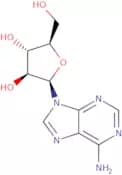
CAS:9-(b-D-Arabinofuranosyl)adenine is a nucleoside that is used as an antiviral agent. It binds to viral RNA and inhibits viral replication. 9-(b-D-Arabinofuranosyl)adenine has been shown to have potent side-effect profiles, including myocardial infarct, neuronal death, and immunological reactions. These effects are due to its ability to inhibit the synthesis of guanine nucleotides in the heart and brain cells, which are essential for energy production and neurotransmitter release respectively. 9-(b-D-Arabinofuranosyl)adenine also binds to toll-like receptors (TLRs), which are proteins found on the surface of cells that recognize invading microbes or foreign substances. This binding leads to activation of immune response pathways.Fórmula:C10H13N5O4Pureza:Min. 95%Forma y color:White PowderPeso molecular:267.24 g/mol2'-O-Methyluridine-5'-triphosphate sodium salt - 100mM aqueous solution
CAS:2'-O-Methyluridine-5'-triphosphate sodium salt is a nucleoside containing a 2'-O-methyl group at the 5' position. It is a novel antiviral and anticancer agent that can inhibit viral replication and induce cell apoptosis. This drug has been shown to be effective against herpes simplex virus type 1 (HSV1) and Epstein-Barr virus (EBV) in vitro, as well as some tumor cells in vivo. 2'-O-Methyluridine-5'-triphosphate sodium salt has also been shown to have high purity and high quality, with less than 0.01% impurities by HPLC, NMR, and elemental analysis analyses.
Fórmula:C10H17N2O15P3·xNaPureza:Min. 95%Forma y color:PowderPeso molecular:498.17 g/molCytarabine hydrochloride
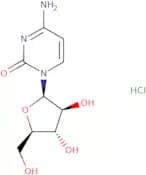
CAS:Anti-viral; anti-neoplasticFórmula:C9H13N3O5·HClPureza:Min. 98 Area-%Forma y color:White PowderPeso molecular:279.68 g/mol2'-Deoxycytidine HCl
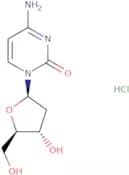
CAS:2'-Deoxycytidine HCl is a nucleoside analogue that is used as a radiation sensitizer in the treatment of tumors. It is converted into 2'-deoxycytidine-5'-triphosphate by incorporation into DNA during replication and inhibits DNA synthesis. This compound has been shown to have anti-leukemic activity against murine leukemia virus (MLV) and murine sarcoma virus (MSV) in mice, although it does not inhibit the proliferation of Swiss-Webster mice. The protonated form of 2'-deoxycytidine HCl has been observed using nuclear magnetic resonance spectroscopy, with a cyclohexane ring as the proton acceptor. The monosodium salt also forms a stable complex with amino groups, which may be due to its acidic ph.Fórmula:C9H13N3O4·HClPureza:Min. 98 Area-%Forma y color:White PowderPeso molecular:263.68 g/molN2-Phenoxyacetylguanosine
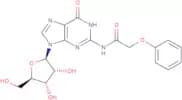
CAS:N2-Phenoxyacetylguanosine is a nucleoside that contains an uridine, phenoxyacetyl, and ribose moiety. N2-Phenoxyacetylguanosine is synthesized from the corresponding 2′-deoxyribonucleoside by coupling to an activated phosphoramidite derivative of phenoxyacetyl. It can be used as a building block for oligonucleotides.Fórmula:C18H19N5O7Pureza:Min. 95%Forma y color:White PowderPeso molecular:417.37 g/mol5-Azacytidine 5'-monophosphate
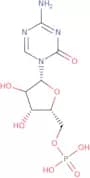
CAS:5-Azacytidine 5'-monophosphate (5-Aza-CMP) is a modified nucleoside that inhibits DNA synthesis by competitively inhibiting the incorporation of deoxycytidine 5'-triphosphate into DNA. It is used as an antiviral and anticancer agent. 5-Aza-CMP has been shown to inhibit the proliferation of human cancer cells in vitro, including T cell leukemia, lymphoma, breast cancer, and melanoma.Fórmula:C8H13N4O8PPureza:Min. 95%Forma y color:White to off-white solid.Peso molecular:324.18 g/mol5-Iodocytidine
CAS:5-Iodocytidine is a nucleoside analogue that has been shown to possess potent antitumor activity. It is also used as a fluorescent probe for detection of uridine in biological samples. 5-Iodocytidine is structurally similar to uridine, which allows it to be taken up by cells and incorporated into RNA. This analog can also be detected with antibody response, as well as with the use of a fluorescence microscope. 5-Iodocytidine may have the potential to treat infectious diseases and autoimmune diseases because it binds to response elements on DNA and activates gene transcription.
Fórmula:C9H12IN3O5Pureza:Min. 98 Area-%Forma y color:White PowderPeso molecular:369.11 g/mol