Nucleótidos
Los nucleótidos son compuestos orgánicos que sirven como building blocks de los ácidos nucleicos, esenciales para la formación del ADN y ARN. Cada nucleótido está compuesto por una base nitrogenada, una molécula de azúcar y uno o más grupos fosfato. Estos nucleótidos se unen para formar largas cadenas, creando el material genético que lleva y transmite la información genética en todos los organismos vivos. En esta sección, encontrará una amplia variedad de nucleótidos cruciales para la investigación en genética, biología molecular y bioquímica. Son fundamentales para estudiar los procesos genéticos, sintetizar ácidos nucleicos y desarrollar herramientas diagnósticas y terapéuticas. En CymitQuimica, ofrecemos nucleótidos de alta calidad para apoyar su investigación científica y aplicaciones, asegurando precisión y fiabilidad en sus experimentos.
Subcategorías de "Nucleótidos"
Se han encontrado 2636 productos de "Nucleótidos"
Ordenar por
Pureza (%)
0
100
|
0
|
50
|
90
|
95
|
100
2-Chloropurine
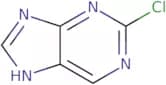
CAS:2-Chloropurine is a halogenated derivative of purine, a bicyclic nitrogen-containing heterocycle that forms the core of many biologically important molecules like DNA, RNA, ATP, and GTP. This molecule has applications in researchFórmula:C5H3ClN4Pureza:Min. 95%Forma y color:PowderPeso molecular:154.56 g/mol7-Deaza-4-Cl-2'-deoxyguanosine
CAS:7-Deaza-4-Cl-2'-deoxyguanosine is a novel antiviral drug that has been synthesized in the laboratory. It is an analogue of deoxyguanosine, a nucleoside that is found in DNA and RNA. 7-Deaza-4-Cl-2'-deoxyguanosine has anti cancer properties because it inhibits the synthesis of DNA by inhibiting the activity of ribonucleoside reductase, an enzyme that converts ribonucleosides to deoxyribonucleosides. This drug has been shown to have potent anticancer activity against human lung cancer cells and mouse leukemia cells.Fórmula:C11H13ClN4O3Pureza:Min. 95%Forma y color:PowderPeso molecular:284.7 g/molXanthosine 5'-triphosphate disodium salt
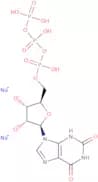
CAS:Xanthosine 5'-triphosphate disodium salt is a nucleotide that is an intermediate in the synthesis of DNA and RNA. It has a hydroxyl group at the 5' carbon atom and two carboxylic acid groups on the 3' carbon atom. Xanthosine 5'-triphosphate disodium salt can be found in many compounds, such as d-glucose, which contains six hydroxyl groups. Xanthosine 5'-triphosphate disodium salt is also used as a building block for other molecules, such as ATP, which contains adenosine with one hydroxyl group on the 2' carbon atom and three phosphate groups.Fórmula:C10H13N4O15P3·2NaPureza:Min. 95%Forma y color:PowderPeso molecular:568.13 g/molDeoxyribonucleic acid sodium salt - (Salmon)
CAS:Deoxyribonucleic acid sodium salt (DNA) is a linear polymer made up of nucleotide subunits. It is the genetic material of most living organisms and plays a role in the storage, retrieval, and transmission of information. DNA is susceptible to attack by electrophilic agents such as aldehydes and nitroaldol, which can lead to the formation of DNA strand breaks. DNA from salmon testes can be used in commercial production of veterinary vaccines.Forma y color:Powder1-Methylpseudouridine
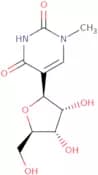
CAS:1-Methylpseudouridine is a substitute for uridine in modified mRNA. This substitution has shown to increase transfection by reducing immuogenicity. The 1-methylpseudouridine substituted mRNA increases protein expression due to low immune stimulation as it evades detection by the edosomal Toll-like receptor (TLR3).Fórmula:C10H14N2O6Pureza:Min. 95 Area-%Forma y color:PowderPeso molecular:258.23 g/molEdU
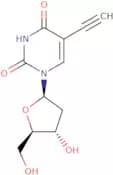
CAS:2'-Deoxy-5-ethynyluridine (5-EdU) is a modified thymidine analogue containing a terminal alkyne group, which is used for nucleotide labelling. 5-Edu is easily taken up by cells and incorporated by metabolic activation during DNA synthesis. By adding an azide conjugated to a fluorophore or a biotin moiety, a click reaction occurs from the labelled nucleotide linked by a triazole group. 5-Edu are employed in cell proliferation assays, to study DNA and RNA localisation, structure and dynamics, in the synthesis of aptamers with the click-SELEX method, and in other applications such as the preparation of oligonucleotide microarrays and nanoelectronic devices.Fórmula:C11H12N2O5Pureza:Min. 98 Area-%Forma y color:PowderPeso molecular:252.23 g/mol9-(2'-Deoxy-2'-fluoro-b-D-ribofuranosyl)-isoguanine
9-(2'-Deoxy-2'-fluoro-b-D-ribofuranosyl)-isoguanine is an oligonucleotide with a fluorinated nucleobase that is used to stabilize DNA duplexes. It is synthesized from 5'-deoxy-5'-fluorocytidine, which is a phosphoramidite, and 2',3',5'-triacetylpyrimidine, which is a substituent. The deprotection of the fluorinated oligonucleotide can be achieved by treatment with sodium hydroxide in ethanol or hydrochloric acid in acetic acid. 9-(2'-Deoxy-2'-fluoro-b-D-ribofuranosyl)-isoguanine has been shown to be stable and antiparallel when incorporated into double stranded DNA molecules.Fórmula:C10H12FN5O4Pureza:Min. 95%Forma y color:White PowderPeso molecular:285.24 g/molN6-Carbamoylthreonyladenosine sodium salt
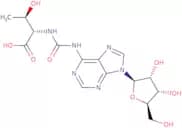
CAS:N6-Carbamoylthreonyladenosine sodium salt is a fatty acid that is found in the bacterial cell wall. It has been shown to be an essential component of the cell wall for Gram-positive and Gram-negative bacteria. N6-Carbamoylthreonyladenosine sodium salt has been used to study the mechanism of protein synthesis in bacteria, especially how enzymes are involved in this process. Chemical biology studies have shown that this molecule can bind to DNA and inhibit bacterial growth. The crystal structure of N6-Carbamoylthreonyladenosine sodium salt has also been determined using x-ray diffraction data. This molecule inhibits the binding of proteins to DNA, which prevents transcription and replication. The reaction mechanism involves hydrogen bonding between the oxygen atoms on N6-Carbamoylthreonyladenosine sodium salt and divalent metal ions such as magnesium or zinc, which are required for protein synthesis.Fórmula:C15H19N6O8·NaPureza:Min. 98 Area-%Forma y color:White PowderPeso molecular:434.34 g/mol3'-O-Propargylcytidine
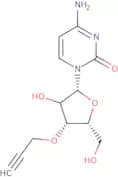
3'-O-Propargylcytidine is a monophosphate nucleoside that belongs to the group of synthetic, novel nucleosides and deoxyribonucleosides. It is a modified form of cytidine with an extra methyl group attached to the 3' position of the ribose sugar. 3'-O-Propargylcytidine has been shown to inhibit cancer cells by binding to DNA and preventing transcription and replication. This compound also inhibits virus replication and has antiviral properties. 3'-O-Propargylcytidine is highly pure and high quality, which makes it a good candidate for use in pharmaceuticals or other applications requiring high purity.
Fórmula:C12H15N3O5Pureza:(%) Min. 97%Forma y color:PowderPeso molecular:281.26 g/molL-Uridine
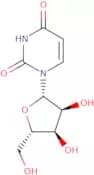
CAS:L-Uridine is a nucleoside that is the major precursor of RNA and DNA. It is also an equilibrative nucleoside, which means that it can act as either an acid or a base. L-Uridine has been shown to have anti-tumor activity in squamous cell carcinoma and human malignancies. It has also been shown to be an active inhibitor of arabinoside, which is a drug used for the treatment of acute myeloid leukemia (AML). L-Uridine may also have antitumor immunity effects by activating natural killer cells.Fórmula:C9H12N2O6Pureza:Min. 95%Forma y color:PowderPeso molecular:244.2 g/molb-Nicotinamide adenine dinucleotide phosphate sodium salt
CAS:Coenzyme and regenerating electron donor in catabolic processesFórmula:C21H27N7NaO17P3Pureza:Min. 95 Area-%Forma y color:PowderPeso molecular:765.39 g/mol3',5'-O-(1,1,3,3-Tetraisopropyl-1,3-disiloxanediyl)cytidine
CAS:Used as a protected cytidine nucleoside in RNA synthesis. Similar to its adenosine counterpart, the 1,1,3,3-tetraisopropyl-1,3-disiloxanediyl (TIPDS or TBDPSi2) group serves as a bulky and selectively acid-labile protecting group for the 3' and 5' hydroxyl groups of the cytidine ribonucleoside during RNA oligonucleotide synthesis.Fórmula:C21H39N3O6Si2Pureza:Min. 95 Area-%Forma y color:PowderPeso molecular:485.72 g/molGuanosine 5'-triphosphate sodium salt hydrate
CAS:Guanosine 5'-triphosphate sodium salt hydrate (GTP) is an energy-rich nucleotide that is synthesized from guanosine and inorganic phosphate. GTP acts as a coenzyme in the synthesis of proteins, lipids, and other biological molecules. It also has been shown to inhibit the growth of murine sarcoma virus by regulating intracellular calcium levels. GTP's binding to a receptor on the surface of cells leads to a cascade of reactions that ultimately lead to the production of proteins. This process can be inhibited by pharmacological agents such as thiostrepton, which blocks GTP's incorporation into proteins.Fórmula:C10H16N5O14P3•Nax•(H2O)xPureza:Min. 95%Forma y color:White PowderPeso molecular:523.18 g/mol3'-Azido-5'-O-benzoyl-3'-deoxythymidine
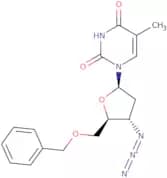
CAS:3'-Azido-5'-O-benzoyl-3'-deoxythymidine is a novel antiviral agent that is synthesized by modifying the structure of thymidine. It has been shown to have high antiviral activity against HIV and other viruses in vitro. 3'-Azido-5'-O-benzoyl-3'-deoxythymidine also inhibits tumor growth in animal models and may be useful as an anticancer drug. This compound is found to be active against a number of cancers, including leukemia, colon cancer, and prostate cancer. 3'-Azido-5'-O-benzoyl-3'-deoxythymidine is phosphoramidites for DNA synthesis, which can be used in the production of ribonucleosides or deoxyribonucleosides.Fórmula:C17H19N5O4Pureza:Min. 95%Peso molecular:357.36 g/molCytidine 3',5'-cyclic monophosphate monosodium
CAS:Cytidine 3',5'-cyclic monophosphate monosodium is a phosphotriester that is used as a building block to synthesize ribonucleosides, uridine, guanosine, and cytidine. The phosphate group in the molecule can be removed by nucleophilic substitution with ammonia or sodium hydroxide to form the corresponding nucleosides. Cytidine 3',5'-cyclic monophosphate monosodium has been shown to inhibit bacterial growth.Fórmula:C9H11N3O7PNaPureza:Min. 95%Forma y color:White PowderPeso molecular:327.16 g/moltrans-Zeatin riboside-5'-monophosphate sodium salt
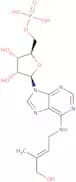
CAS:Trans-zeatin riboside-5'-monophosphate sodium salt is a growth rate inhibitor that inhibits protein synthesis by binding to the 30S subunit of the ribosome. This compound has been shown to inhibit cell growth and proliferation in vitro when applied to tissue cultures of tabacum l. and other plants. Trans-zeatin riboside-5'-monophosphate sodium salt is not active against plant tissues grown in vivo, which may be due to its inability to cross the plasma membrane or cell wall.Fórmula:C15H20N5O8PNa2Pureza:Min. 95 Area-%Forma y color:PowderPeso molecular:475.3 g/mol5-Cyanouridine
CAS:5-Cyanouridine is a pyrimidine nucleoside that is synthesized from uracil. It is a potent inhibitor of the enzyme decarboxylase, which catalyzes the conversion of 5-cytosine to 5-uracil, and has been used for the treatment of malignant lymphoma. 5-Cyanouridine is also a substrate for DNA replication and can be used as a target for antiviral drugs. The drug inhibits viral RNA synthesis by acting on the vesicular stomatitis virus (VSV) in two different ways: first, by inhibiting viral RNA polymerase activity; second, by incorporation into viral DNA. This incorporation can lead to chain termination or to translesion synthesis. 5-Cyanouridine has been shown to inhibit VSV replication in cell culture at concentrations as low as 1 μM.Fórmula:C10H11N3O6Pureza:Min. 95%Forma y color:PowderPeso molecular:269.21 g/mol5,6-Dihydro-5-methyluridine
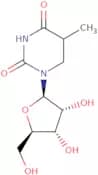
CAS:5,6-Dihydro-5-methyluridine is a nucleoside that is found in the human genome. It is a precursor of uridine and can be used to synthesize 5-methylcytosine, which is an epigenetic modification that occurs in DNA. This modification can affect the expression of genes by changing the structure of chromatin. This drug has been identified as a potential drug target for cancer treatment and other diseases. Structural analysis has shown that this compound has a number of hydrogen bonds with oxygen atoms and hydroxyl groups, which may make it more effective than other drugs currently being studied. 5,6-Dihydro-5-methyluridine forms a phylogenetic tree with other compounds that are also found in the human genome, suggesting that it may have evolved through natural selection.Fórmula:C10H16N2O6Pureza:Min. 95%Forma y color:White Off-White PowderPeso molecular:260.24 g/molAdenosine 5'-phosphosulfate sodium salt, 10 mM in water
CAS:Adenosine 5′-phosphosulfate sodium salt has been used quantify pyrophosphate and in enzyme-linked bioluminescence assay for adenosine triphosphate (ATP).Product provided as 10 mM solution in water.Fórmula:C10H14N5O10PSPureza:Min. 90.0 Area-%Peso molecular:427.28 g/mol5-Carboxyhydroxymethyluridine
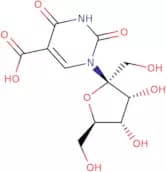
CAS:5-Carboxyhydroxymethyluridine is a hydroxylated nucleoside that is used to study DNA repair. It is a nucleotide analogue that has been modified at the hydroxyl group by methylation. 5-Carboxyhydroxymethyluridine can be converted back to uridine by escherichia coli hydroxylases, but this conversion does not occur in vivo. 5-Carboxyhydroxymethyluridine can be used as a substrate for methyltransferase enzymes, which are involved in DNA repair. The enzyme 5'-methylthioadenosine phosphorylase converts 5-carboxyhydroxymethyluridine into S-adenosylhomocysteine and adenine. This conversion can be reversed by the enzyme methionine synthase. Some homologues of 5-carboxyhydroxymethyluridine have been found in nature and other modifications have been made on theFórmula:C11H14N2O9Pureza:Min. 95%Forma y color:PowderPeso molecular:318.24 g/mol