Nucleótidos
Los nucleótidos son compuestos orgánicos que sirven como building blocks de los ácidos nucleicos, esenciales para la formación del ADN y ARN. Cada nucleótido está compuesto por una base nitrogenada, una molécula de azúcar y uno o más grupos fosfato. Estos nucleótidos se unen para formar largas cadenas, creando el material genético que lleva y transmite la información genética en todos los organismos vivos. En esta sección, encontrará una amplia variedad de nucleótidos cruciales para la investigación en genética, biología molecular y bioquímica. Son fundamentales para estudiar los procesos genéticos, sintetizar ácidos nucleicos y desarrollar herramientas diagnósticas y terapéuticas. En CymitQuimica, ofrecemos nucleótidos de alta calidad para apoyar su investigación científica y aplicaciones, asegurando precisión y fiabilidad en sus experimentos.
Subcategorías de "Nucleótidos"
Se han encontrado 2634 productos de "Nucleótidos"
Ordenar por
Pureza (%)
0
100
|
0
|
50
|
90
|
95
|
100
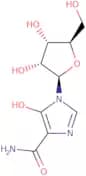
Mizoribine
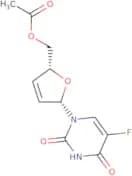
CAS:<p>Inhibitor of heat shock protein Hsp60; immunosuppressant</p>Fórmula:C9H13N3O6Pureza:Min. 95%Forma y color:White PowderPeso molecular:259.22 g/mol1-(5-O-Acetyl-2,3-dideoxy-ß-L-glycero-pent-2-enofuranosyl)-5-fluorouracil
CAS:<p>1-(5-O-Acetyl-2,3-dideoxy-ß-L-glycero-pent-2-enofuranosyl)-5-fluorouracil is a modified nucleoside analog with structural alterations that enhance its biological properties and stability. The compound features 5-fluorouracil as the nucleobase, a fluorinated pyrimidine often used in chemotherapy due to its ability to interfere with DNA replication. The sugar component is 2,3-dideoxy-β-L-glycero-pent-2-enofuranose and has a specific glycerol and enol configuration, which alters its interactions with enzymes involved in nucleic acid metabolism. The compound includes a 5-O-acetyl protecting group at the 5'-position, which shields the hydroxyl group during synthesis.</p>Fórmula:C11H11FN2O5Pureza:Min. 95%Peso molecular:270.21 g/molRef: 3D-NA182971
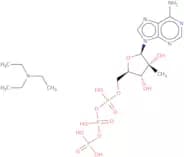
Producto descatalogado2'-C-Methyladenosine 5'-triphosphate triethyl ammonium salt - Aqueous solution
CAS:<p>2'-C-Methyladenosine 5'-triphosphate triethyl ammonium salt is a synthetic nucleotide analog of adenosine triphosphate (ATP), modified at the 2'-carbon of the ribose ring. This molecule has potential applications in biochemical, enzymatic, and antiviral research, particularly in studies involving RNA synthesis and viral RNA polymerases.</p>Fórmula:C35H79N9O13P3Pureza:Min. 95%Forma y color:Colorless PowderPeso molecular:926.98 g/molRef: 3D-NM29122
Producto descatalogado3'-O-Methyluridine
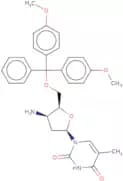
CAS:<p>3'-O-Methyluridine is a nucleoside that is used in the preparation of oligonucleotides and as a substrate for uridine phosphorylase. It is used to study the termination of RNA synthesis, which occurs when there are no more ribose residues in the RNA template strand. When this happens, an adenosine residue is added by polyphosphate kinase to the 3' end of the RNA strand. This addition causes a release of pyrophosphate and leads to end of DNA synthesis. The acid hydrolysis technique can be used to separate 3'-O-methyluridine from other nucleotides. This reaction produces guanosine, which can be detected using polymerase chain reaction (PCR) techniques such as polyacrylamide gel electrophoresis (PAGE).</p>Fórmula:C10H14N2O6Pureza:Min. 95%Forma y color:White PowderPeso molecular:258.23 g/mol3'-Amino-3'-deoxy-5'-O-DMT-thymidine
CAS:<p>3'-Amino-3'-deoxy-5'-O-DMT-thymidine is a specifically designed building block for introducing a 3'-amino group into oligonucleotides, primarily at the 3' terminus. The DMT protecting group facilitates incorporation during standard solid-phase synthesis, and the 3'-amino group provides a versatile handle for post-synthetic modifications and conjugations.</p>Fórmula:C31H33N3O6Pureza:Min. 95%Forma y color:PowderPeso molecular:543.61 g/molCytidyl-3'-5'-uridine ammonium
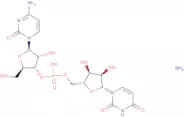
CAS:<p>Cytidyl-3'-5'-uridine ammonium salt is a nucleoside analog that is used as an antiviral and anticancer agent. Cytidyl-3'-5'-uridine ammonium salt inhibits the synthesis of DNA by inhibiting the activity of enzymes such as DNA polymerase, RNA polymerase, or reverse transcriptase. It also has antitumor properties and can be used to treat leukemia and other types of cancer. Cytidyl-3'-5'-uridine ammonium salt has been shown to be more potent than cytidyl-2',4',6'-triaminopyrimidine (CTAP) in inhibiting the growth of lymphocytic leukemia cells.</p>Fórmula:C18H24N5O13P•NH3Pureza:Min. 95%Forma y color:PowderPeso molecular:566.42 g/molRef: 3D-NC07990
Producto descatalogadoGlycinamide ribonucleotide
CAS:<p>Glycinamide ribonucleotide (GAR) is a reactive metabolite that is formed from glycinamide, which is an intermediate in the synthesis of purines. GAR has been shown to bind to intracellular targets and inhibit their enzyme activities. GAR has been shown to inhibit the activity of enzymes that are involved in the synthesis of purines, such as ribonucleotides and nucleoside phosphates. These enzymes have been found in human tissues. GAR also inhibits the polymerase chain reaction (PCR) by binding to DNA and inhibiting its replication. This drug has also been shown to be effective against bowel disease by binding to bacterial dna gyrase, dna topoisomerase, and rna synthesis.</p>Fórmula:C7H15N2O8PPureza:Min. 80 Area-%Forma y color:PowderPeso molecular:286.18 g/molRef: 3D-NG59700
Producto descatalogado5-Methylcytidine
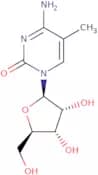
CAS:<p>5-Methylcytidine is a nucleoside that is found in DNA and RNA. It is used in structural biology to probe the structure of DNA. 5-Methylcytidine binds to the enzyme methyl transferase, which catalyzes the transfer of a methyl group from S-adenosylmethionine to produce 5-methyluridine. This reaction occurs in long-term toxicity studies using primary cells, such as lymphocytes and fibroblasts. 5-Methylcytidine has been shown to inhibit tumour growth in mice by binding to nuclear dna polymerase and blocking transcription. The binding site for this drug on the polymerase is located at the same site as that for nucleoside analogues like azidothymidine (AZT) and zidovudine (AZT).</p>Fórmula:C10H15N3O5Pureza:Min. 95%Forma y color:White PowderPeso molecular:257.24 g/molThymidine
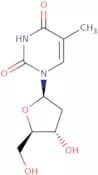
CAS:<p>Thymidine, also known as deoxythymidine (dT), is a pyrimidine deoxynucleoside that pairs with deoxyadenosine (dA) in a double stranded DNA. It’s used as a biochemical modulator of antimetabolites such as 5-fluorouracil (5-FU), 1-beta-D-arabinofuranosylcytosine (Cytarabine) and methotrexate (MTX) in cancer therapy. It’s also the enantiomer of telbivudine, an antiviral drug used to treat hepatitis B virus (HBV) infection.</p>Fórmula:C10H14N2O5Pureza:Min. 99.0 Area-%Forma y color:White PowderPeso molecular:242.23 g/mol5-Chloro-2',3'-dideoxy-3'-fluorouridine
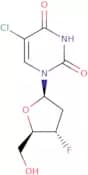
CAS:<p>5-Chloro-2',3'-dideoxy-3'-fluorouridine is a nucleoside analog that inhibits the replication of HIV by competing with other nucleosides for incorporation into viral DNA, thereby inhibiting the production of new viruses. This drug has been shown to have an inhibitory effect on the replication of HIV and has been approved as an antiretroviral agent. 5-Chloro-2',3'-dideoxy-3'-fluorouridine is active against most HIV strains and is able to suppress viral load in patients with chronic hepatitis B or C. It also inhibits the hepatic metabolism of drugs metabolized by cytochrome P450 enzymes, such as CYP3A4 inducers. The effective dose for this drug ranges from 100 mg to 200 mg per day.</p>Fórmula:C9H10ClFN2O4Pureza:Min. 95 Area-%Forma y color:White PowderPeso molecular:264.64 g/mol5-Iodocytidine
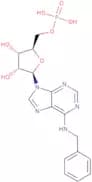
CAS:<p>5-Iodocytidine is a nucleoside analogue that has been shown to possess potent antitumor activity. It is also used as a fluorescent probe for detection of uridine in biological samples. 5-Iodocytidine is structurally similar to uridine, which allows it to be taken up by cells and incorporated into RNA. This analog can also be detected with antibody response, as well as with the use of a fluorescence microscope. 5-Iodocytidine may have the potential to treat infectious diseases and autoimmune diseases because it binds to response elements on DNA and activates gene transcription.</p>Fórmula:C9H12IN3O5Pureza:Min. 98 Area-%Forma y color:White PowderPeso molecular:369.11 g/molN6-Benzyladenosine 5'-monophosphate sodium salt monohydrate
CAS:<p>N6-Benzyladenosine 5'-monophosphate sodium salt is a nucleoside that is not identified. It has been shown to be metabolized by adenosine deaminase and may have antitumor activity. N6-Benzyladenosine 5'-monophosphate sodium salt is also a radioactively labeled adenine analog that has been used in the study of metabolic pathways.</p>Fórmula:C17H18N5Na2O7P·H2OPureza:Min. 97 Area-%Forma y color:PowderPeso molecular:499.32 g/molRef: 3D-NB30216
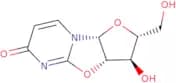
Producto descatalogado2,2'-Anhydrouridine
CAS:<p>The nucleophilic opening of 2,2'-Anhydrouridine represents a novel synthetic approach for elaborating the ring of nucleosides. For example, compounds such as 2-amino-, 2-fluoro- and 2-phenylseleno-2-deoxyuridines are prepared from the nucleophilic opening of 2,2'-Anhydrouridine.Â2,2'-Anhydrouridine inhibits uridine phosphorylase, a key enzyme targeted by some antitumor drugs.</p>Fórmula:C9H10N2O5Pureza:Min. 98 Area-%Forma y color:White Off-White PowderPeso molecular:226.19 g/molRef: 3D-NA05939
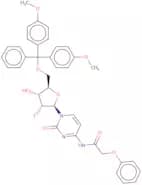
Producto descatalogado2'-Deoxy-5'-O-DMT-2'-fluoro-N4-phenoxyacetylcytidine
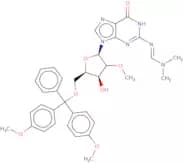
<p>2'-Deoxy-5'-O-DMT-2'-fluoro-N4-phenoxyacetylcytidine is a monophosphate nucleotide analog that is used as an antiviral agent. It inhibits viral replication by inhibiting the activity of DNA polymerase, which is needed to synthesize DNA. 2'-Deoxy-5'-O-DMT-2'-fluoro-N4-phenoxyacetylcytidine has been shown to be effective against HIV and HSV in vitro and in vivo. This nucleotide analog has also been shown to be potent against Hepatitis B viruses and adenovirus type 3.<br>2'-Deoxy-5'-O-DMT-2'-fluoro-N4-phenoxyacetylcytidine is phosphoramidate derivative of cytosine with a fluorine substitution at the 2' position on the sugar moiety, making it a novel compound. The pyrid</p>Fórmula:C38H36FN3O8Pureza:Min. 98 Area-%Forma y color:Yellow PowderPeso molecular:681.71 g/molN2-DMF-5'-O-DMT-2'-O-methylguanosine
CAS:<p>N2-DMF-5'-O-DMT-2'-O-methylguanosine is a novel nucleoside analog that has antiviral, anticancer and immunomodulating properties. It is synthesized from 2′,3′-dideoxyadenosine 5′-monophosphate by the condensation of 2,6-dimethylaniline with methylguanosine 5′-monophosphate and 5,6-dimethylaniline. The modification of the guanine base in N2-DMF-5'-O-DMT-2'-O-methylguanosine to an O6 -methyl group results in increased affinity for the ribonucleotide reductase enzyme (RNR) and inhibition of DNA synthesis.</p>Fórmula:C35H38N6O7Pureza:Min. 95%Peso molecular:654.71 g/molRef: 3D-ND08425
Producto descatalogado7-Cyano-7-deaza-2'-deoxyadenosine
CAS:<p>7-Cyano-7-deaza-2'-deoxyadenosine is a nucleoside analog that inhibits the growth of virus by competing with deoxyadenosine for incorporation into DNA and RNA. 7-Cyano-7-deaza-2'-deoxyadenosine also stabilizes dna duplexes and prevents them from breaking down. It has been shown to be effective against herpes simplex virus, which causes painful blisters on the skin or genitals. This drug has been used in clinical trials as an antiviral agent. 7-Cyano-7-deaza-2'-deoxyadenosine is synthesized from 2',3'-didehydrocytidine under the following conditions:</p>Fórmula:C12H13N5O3Pureza:Min. 95%Forma y color:PowderPeso molecular:275.26 g/molRef: 3D-NC144684
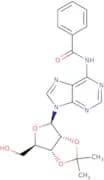
Producto descatalogadoN6-Benzoyl-2',3'-isopropylideneadenosine
CAS:<p>N6-Benzoyl-2',3'-isopropylideneadenosine is a nucleoside that is structurally related to the natural nucleosides adenosine, deoxyadenosine, and deoxyguanosine. It is an antiviral agent that has been shown to be an activator of the enzyme ribonucleotide reductase. N6-Benzoyl-2',3'-isopropylideneadenosine is a modified nucleoside with high purity and high quality. The CAS number for this compound is 39947-04-1. This compound has not been found in nature, but it can be synthesized by modifying nucleosides or by using phosphoramidites.</p>Fórmula:C20H21N5O5Pureza:Min. 95%Forma y color:PowderPeso molecular:411.41 g/molRef: 3D-NB08544
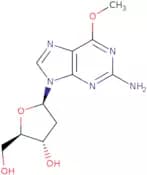
Producto descatalogado2'-Deoxy-6-O-methyl-guanosine
CAS:<p>2'-Deoxy-6-O-methyl-guanosine is a methylated nucleoside that has been shown to inhibit protein synthesis in cancer cells. It does so by inhibiting the synthesis of DNA, which is required for the production of proteins. This compound also inhibits monoclonal antibody production, which may be due to its ability to methylate DNA and prevent dna duplexes from being repaired. 2'-Deoxy-6-O-methyl-guanosine is used as a probe in the detection of human proteins by fluorescence spectroscopy. The sensitivity of this probe has been shown to be greater than 10 ng/mL, making it ideal for use in clinical settings where small quantities of proteins are present.</p>Fórmula:C11H15N5O4Pureza:Min. 95%Forma y color:PowderPeso molecular:281.27 g/molRef: 3D-ND157121
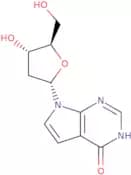
Producto descatalogado7-Deaza-2'-deoxyinosine
CAS:<p>7-Deaza-2'-deoxyinosine is a purine nucleoside analog that has been shown to be a hydrogen bond donor and formamide acceptor. This drug destabilizes duplex DNA by interfering with the formation of the hydrogen bonds between the bases, which may result in strand breakage. 7-Deaza-2'-deoxyinosine has also been shown to inhibit RNA polymerase activity, thereby inhibiting protein synthesis. It has been used as a tool for studying enzyme mechanisms and in solid phase synthesis.</p>Fórmula:C11H13N3O4Pureza:Min. 95%Forma y color:PowderPeso molecular:251.24 g/molRef: 3D-ND06187
Producto descatalogado2'-Deoxy-2'-fluoro-5-iodouridine
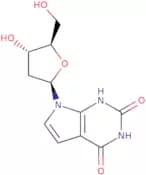
CAS:<p>2'-Deoxy-2'-fluoro-5-iodouridine is a nucleoside analog that is a modified version of uridine, where the 2'-fluoro modification is added to the sugar (deoxyribose), and an iodine atom is attached at the 5' position of the uracil base. This combination of modifications provides unique properties that may be useful for research and therapeutic applications.</p>Fórmula:C9H10FIN2O5Pureza:Min. 95%Forma y color:White PowderPeso molecular:372.09 g/mol7-Deaza-2'-deoxyxanthosine
CAS:<p>7-Deaza-2'-deoxyxanthosine is an oligodeoxynucleotide that is a substrate for the enzyme dUTPase. The allyl group on 7-deaza-2'-deoxyxanthosine is used to attach it to the 3' end of DNA, where it acts as a competitive inhibitor of RNA synthesis. The ethyl group at the end of the molecule is used to attach it to the 5' end of DNA, where it inhibits transcription and replication by binding with RNA polymerase. 7-Deaza-2'-deoxyxanthosine has been shown to be effective in preventing stenosis following coronary bypass surgery, as well as in treating heart disease by reducing levels of xanthosine.</p>Fórmula:C11H13N3O5Pureza:Min. 95%Forma y color:Beige PowderPeso molecular:267.24 g/molRef: 3D-ND02491
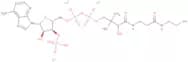
Producto descatalogadoCoenzyme A trilithium salt
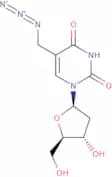
CAS:<p>Coenzyme A trilithium salt is a synthetic cofactor that is used in the synthesis of long-chain fatty acids. It is membrane permeable and has minimal toxicity, making it an attractive candidate for treating hepatic steatosis. Coenzyme A trilithium salt also activates human mitochondrial beta-oxidation by increasing the availability of substrate and enhancing the expression of genes involved in beta-oxidation. This molecule has been shown to be effective in improving the symptoms of X-linked adrenoleukodystrophy (X-ALD) by stimulating creatine kinase activity and suppressing lysosomal accumulation of long chain fatty acids.</p>Fórmula:C21H33Li3N7O16P3SPureza:Min. 80%Forma y color:White Off-White PowderPeso molecular:785.33 g/mol5-(Azidomethyl)-2’-deoxyuridine
CAS:<p>5-azidomethyl-2-deoxyuridine (AmdU) is a nucleoside that contains an azide group. The structure of the nucleoside is similar to thymidine, and it is incorporated into nascent DNA by cellular polymerases, similarly to EdU (NE08701). Unlike EdU that needs to be further modified with azides in the presence of copper catalyst, AmdU can also react in the absence of copper catalyst using spAAC Click Chemistry with strained cycloalkynes, such as cyclooctynes. This enables detection of nascent DNA in benign, copper free conditions.</p>Fórmula:C10H13N5O5Pureza:Min. 95%Forma y color:PowderPeso molecular:283.24 g/molRef: 3D-NA162993
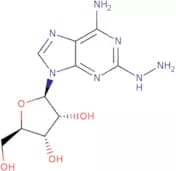
Producto descatalogado2-Hydrazinoadenosine
CAS:<p>2-Hydrazinoadenosine is an active analogue of adenosine. It is a potent agonist for the adenosine receptor subtypes A1 and A2A with high affinity. 2-Hydrazinoadenosine has been shown to inhibit cardiac contractility in animal models, as well as to produce hypotension, bradycardia, and bronchodilation in humans. This drug also has a functional effect on the heart by binding to adenosine receptors, which leads to the inhibition of catecholamine release. This drug is used clinically as an antiarrhythmic agent and a vasodilator in coronary artery disease.</p>Fórmula:C10H15N7O4Pureza:Min. 95%Forma y color:PowderPeso molecular:297.27 g/molRef: 3D-NH06266
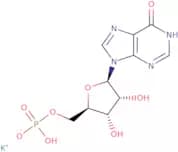
Producto descatalogadoPolyinosinic acid tripotassium salt
CAS:<p>Polyinosinic acid is a single stranded RNA analog which is combined with polycytidylic acid (poly C) to form a stable duplex structure known as Polyinosinic acid-polycytidylic acid (Poly I:C). PolyI:C stimulates the secretion of pro-inflammatory cytokines and type I interferon through its interaction with endosomal Toll-like receptor 3 (TLR-3) and the cytoplasmic receptors melanoma differentiation-associated gene 5 (MDA-5) and retinoic acid-inducible gene I (RIG-I). This immunostimulant activity makes Poly I:C a useful vaccine adjuvant and is used in vaccine formulations. Poly I:C and its stabilized analogs (e.g., poly-ICLC) are also being actively researched for their dual role in oncology: directly targeting tumors and acting as immune potentiators. For example Poly I:C can induce apoptosis in tumor cells and stimulate immunogenic cell death and is therefore being explored alongside chemotherapy, radiotherapy, and checkpoint inhibitors, helping to overcome resistance mechanisms and strengthen treatment outcomes. We can supply PolyI:C to all stages of your project - from R&D and preclinical phases right up to GMP commercial manufacture. Contact our team for custom Poly I:C products.<br>For more on poly I:C read out blog 'Poly I:C: A Vaccine Adjuvant With Oncological Potential.'</p>Pureza:Min. 95%Ref: 3D-TP65775
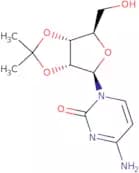
Producto descatalogado2',3'-O-Isopropylidenecytidine
CAS:<p>2',3'-O-Isopropylidenecytidine is a nucleoside for use in research applications</p>Fórmula:C12H17N3O5Pureza:Min. 95%Forma y color:PowderPeso molecular:283.28 g/molRef: 3D-NI08545
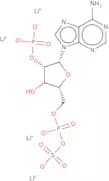
Producto descatalogado2'-Phosphoadenosine 5'-phosphosulfate tetralithium salt (mixture with 3'-isomer)
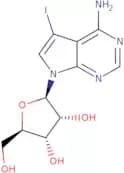
CAS:<p>2'-Phosphoadenosine 5'-phosphosulfate tetralithium salt (mixture with 3'-isomer) is a novel, modified nucleoside. It has antiviral properties and can be used for the treatment of cancer. 2'-Phosphoadenosine 5'-phosphosulfate tetralithium salt (mixture with 3'-isomer) inhibits viral replication by inhibiting the synthesis of viral DNA and RNA. This compound also inhibits cancer cell proliferation by inhibiting deoxyribonucleic acid (DNA) and ribonucleic acid (RNA) synthesis.</p>Fórmula:C10H11N5O13P2S·4LiPureza:Min. 95%Forma y color:SolidPeso molecular:531 g/mol7-Deaza-7-iodoadenosine
CAS:<p>7-Deaza-7-iodoadenosine is a nucleotide that has been used in experiments to assess the levels of adenosine, a dinucleotide phosphate that is involved in many cellular functions. 7-deaza-7-iodoadenosine has been shown to inhibit locomotor activity in rats and cyclase activity in 3T3-L1 preadipocytes. It also inhibits the release of inflammatory proteins from polymorphonuclear leucocytes and angiogenesis (formation of new blood vessels) in liver cells. Although this nucleotide has not been extensively studied, it has been proposed as an antiinflammatory agent because it inhibits protein synthesis and downregulates proinflammatory proteins.</p>Fórmula:C11H13IN4O4Pureza:Min. 95%Peso molecular:392.15 g/molRef: 3D-ND09248
Producto descatalogadoUridine-3',5'-cyclic monophosphate sodium salt
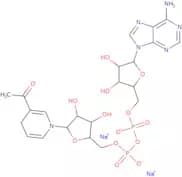
CAS:<p>Uridine-3',5'-cyclic monophosphate sodium salt is a phosphotriester that is an intermediate in the biosynthesis of nucleosides. It is also a phosphodiesterase inhibitor, which means it inhibits the breakdown of cyclic nucleotides and allows them to accumulate. This drug has been shown to increase platelet production and has anti-inflammatory effects. Uridine-3',5'-cyclic monophosphate sodium salt is a human metabolite that can be synthesized from uridine, which is present in DNA, RNA, and food sources such as meat, eggs, and milk. The synthesis of uridine-3',5'-cyclic monophosphate sodium salt requires phosphoramidite as a precursor.</p>Fórmula:C9H10N2O8P·NaPureza:Min. 98 Area-%Forma y color:White PowderPeso molecular:328.2 g/mol3-Acetylpyridine adenine dinucleotide disodium, reduced form
CAS:<p>Reduced synthetic analog of NADH with an acetylpyridine modification. It is used as a reducing substrate to study the mechanisms of NAD(P)+-dependent reductases and to probe the active sites and catalytic processes of these important enzymes through its altered spectroscopic and binding properties. The disodium salt ensures good solubility for biochemical applications.</p>Fórmula:C22H30N6O14P2•Na2Pureza:Min. 95%Forma y color:Slightly Yellow PowderPeso molecular:710.43 g/molRef: 3D-NA30684
Producto descatalogado4'-α-C-Methylcytidine
CAS:<p>4'-a-C-Methylcytidine is a nucleoside that is synthesized from 4'-a-C-methyluridine. It has antiviral and anticancer properties, and has been shown to be a potent activator of the immune system. The modified nucleosides in this compound are thought to be less toxic than other cytotoxic agents. 4'-a-C-Methylcytidine is also used as a building block for the synthesis of DNA, RNA and phosphoramidites.</p>Pureza:Min. 95%Forma y color:PowderPeso molecular:257.24 g/molRef: 3D-NM144928
Producto descatalogado3'-Deoxycytidine-5'-triphosphate
CAS:<p>3'-Deoxycytidine-5'-triphosphate is a modified nucleoside that is the precursor for DNA synthesis. It is an activator of deoxyribonucleoside triphosphates, which are needed in the production of DNA. 3'-Deoxycytidine-5'-triphosphate has been shown to be active against cancer cells and antiviral agents. This chemical also inhibits viral RNA synthesis by blocking the conversion of ribonucleotides to deoxyribonucleotides. 3'-Deoxycytidine-5'-triphosphate is novel and high purity, with a CAS number 69383-05-7.</p>Pureza:Min. 95%Peso molecular:467.1 g/molAbacavir 5'-phosphate
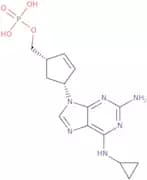
CAS:<p>Abacavir 5'-phosphate is a nucleoside analog that inhibits the replication of the herpes virus by covalently binding to the viral DNA polymerase and blocking its ability to polymerize dNTPs. Abacavir 5'-phosphate's anti-viral potency has been shown in vivo using a model with herpes simplex virus, and it has been shown to inhibit viral replication in cell culture. The drug also reacts with cellular components such as proteins, lipids, and nucleic acids, which may lead to drug reactions. Abacavir 5'-phosphate is chemically stable, so it can be subjected to analytical methods without degradation. It is an analog of zidovudine (AZT).</p>Fórmula:C14H19N6O4PPureza:Min. 95%Peso molecular:366.31 g/molRef: 3D-NA16495
Producto descatalogado2',3'-Dehydro-5'-O-tritylthymidine
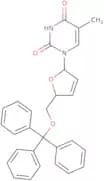
CAS:<p>2',3'-Dehydro-5'-O-tritylthymidine is an anticancer compound, which is a novel nucleoside phosphoramidite. It is synthesized from thymidine in two steps: first, the 2',3'-dideoxyribose phosphate moiety is prepared by reacting 2',3'-dideoxyribose with chloroacetic acid in the presence of triethylamine, followed by reaction with trityl chloride to form the 5' position of the thymidine. 2',3'-Dehydro-5'-O-tritylthymidine has been shown to inhibit DNA synthesis and antiviral activity.</p>Fórmula:C29H26N2O4Pureza:Min. 95%Peso molecular:466.54 g/molRef: 3D-ND04743
Producto descatalogado