Nucleótidos
Los nucleótidos son compuestos orgánicos que sirven como building blocks de los ácidos nucleicos, esenciales para la formación del ADN y ARN. Cada nucleótido está compuesto por una base nitrogenada, una molécula de azúcar y uno o más grupos fosfato. Estos nucleótidos se unen para formar largas cadenas, creando el material genético que lleva y transmite la información genética en todos los organismos vivos. En esta sección, encontrará una amplia variedad de nucleótidos cruciales para la investigación en genética, biología molecular y bioquímica. Son fundamentales para estudiar los procesos genéticos, sintetizar ácidos nucleicos y desarrollar herramientas diagnósticas y terapéuticas. En CymitQuimica, ofrecemos nucleótidos de alta calidad para apoyar su investigación científica y aplicaciones, asegurando precisión y fiabilidad en sus experimentos.
Subcategorías de "Nucleótidos"
Se han encontrado 2634 productos de "Nucleótidos"
Ordenar por
Pureza (%)
0
100
|
0
|
50
|
90
|
95
|
100
2-Deoxycytidine 3',5'-diphosphate sodium salt
CAS:Please enquire for more information about 2-Deoxycytidine 3',5'-diphosphate sodium salt including the price, delivery time and more detailed product information at the technical inquiry form on this pageFórmula:C9H15N3O10P2•xNaPureza:Min. 95%Forma y color:PowderPeso molecular:479.14 g/molN1,O2'-Dimethyladenosine
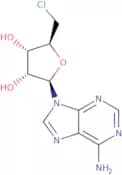
CAS:<p>N1,O2'-Dimethyladenosine is a monophosphate that is an antiviral agent. It has been shown to be a potent activator of the tRNA synthetase enzyme and also inhibits viral DNA synthesis. This drug is synthesized from diphosphate and phosphoramidites. N1,O2'-Dimethyladenosine has been shown to be highly active against viruses such as HIV-1, HIV-2, and HCV. It is also used in the production of modified nucleosides for use in synthetic constructs with therapeutic applications.</p>Fórmula:C12H17N5O4Pureza:(%) Min. 95%Forma y color:PowderPeso molecular:295.29 g/mol5'-Chloro-5'-deoxyadenosine
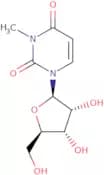
CAS:<p>Adenosine analog</p>Fórmula:C10H12ClN5O3Pureza:Min. 98 Area-%Forma y color:White PowderPeso molecular:285.69 g/molN3-Methyluridine
CAS:<p>N3-Methyluridine is a monosodium salt of N3-methyluridine, which is an analogue of uridine. It is a nucleoside that is used as a precursor for RNA synthesis. In the body, N3-methyluridine is converted to uridine and then phosphorylated to form UMP. The phosphate group on UMP can be hydrolyzed by the enzyme kinase in order to produce ATP. N3-Methyluridine has been shown to be a potential biomarker for metabolic disorders and drug interactions with drugs such as loperamide, which inhibit mitochondrial function by inhibiting the enzyme p2y receptors.</p>Fórmula:C10H14N2O6Pureza:Min. 95%Forma y color:White PowderPeso molecular:258.23 g/mol1-(2'-Deoxy-2'-fluoro-b-D-arabinofuranosyl)cytosine HCl
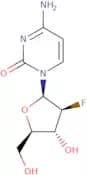
CAS:1-(2'-Deoxy-2'-fluoro-b-D-arabinofuranosyl)cytosine HCl is a nucleoside analog for research applications. It contains a β-D-arabinofuranose sugar and a fluorine (F) at the 2'-position increases resistance to enzymatic degradation and alters its biological activity. The presence of the cytosine nucleobase allows it to mimic natural cytidine and be incorporated into DNA and the HCl salt form improves solubility and stability.Fórmula:C9H12FN3O4·HClPureza:Min. 95%Forma y color:PowderPeso molecular:281.67 g/molCytidine 5'-diphosphate ethanolamine disodium
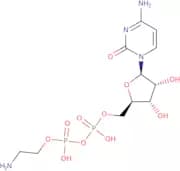
CAS:Cytidine 5'-diphosphate ethanolamine disodium salt (CDP-ethanolamine) is a nucleotide that is synthesized in the cytosol. It is a precursor for the synthesis of phosphatidylethanolamines, which are important components of cell membranes. CDP-ethanolamine has been shown to be an inhibitor of enzymes, such as diacylglycerol acyltransferase and acetyl-CoA carboxylase. This inhibition leads to lower cellular levels of diacylglycerols and fatty acids, which may be beneficial for metabolic disorders such as hepatic steatosis and bowel disease.Fórmula:C11H18Na2N4O11P2Pureza:Min. 95 Area-%Forma y color:White To Off-White SolidPeso molecular:490.21 g/mol5-Methyl-2′-O-[2-(methylamino)-2-oxoethyl]uridine
CAS:5-Methyl-2′-O-[2-(methylamino)-2-oxoethyl]uridine (5MeUrd) is a diphosphate nucleoside that has been modified with a methyl group on the 2′ position. It is a novel, high quality, synthetic nucleoside with antiviral and anticancer properties. 5MeUrd is structurally similar to uridine and cytidine, which are deoxyribonucleosides. The phosphoramidite of 5MeUrd can be used for the synthesis of DNA, RNA, or monophosphate nucleosides in vitro. 5MeUrd has been shown to inhibit human leukemia cells and cancer cell lines in vitro by inhibiting DNA synthesis.Fórmula:C13H19N3O7Pureza:Min. 95%Peso molecular:329.31 g/molPyrimidine-4-carboxylic acid methyl ester
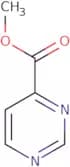
CAS:The pyrimidine-4-carboxylic acid methyl ester is a neutralized derivative of the natural amino acid pyrimidine-4-carboxylic acid. It can be metabolized in vivo to the active form, bleomycin. The neutralized form is useful for the synthesis of betaines and other compounds. This product is also used as an intermediate in the synthesis of metastable carbenes that are difficult to synthesize by other means. Pyrimidine-4-carboxylic acid methyl ester has been used as a reagent in mass spectrometry to identify isotopomers and isomers. It can also be used as a precursor for chemical transfer reactions with carbenes.Fórmula:C6H6N2O2Pureza:Min. 95%Forma y color:PowderPeso molecular:138.12 g/mol5-Methylcytidine-5'-monophosphate
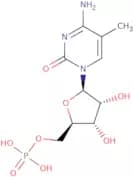
CAS:<p>5-Methylcytidine-5'-monophosphate is a nucleotide that is an intermediate in the synthesis of DNA. It is a neutral form and has been sequenced. 5-Methylcytidine-5'-monophosphate is found in cellular components, such as mitochondria and nuclei. The biochemical properties of this molecule are dependent on its methylation state. This molecule also plays a role in mitochondrial functions and nuclear DNA modifications.</p>Fórmula:C10H16N3O8PPureza:Min. 95%Forma y color:White Off-White PowderPeso molecular:337.22 g/molUridine 5'-monophosphate
CAS:Uridine 5'-monophosphate (UMP) is a nucleotide that is synthesized from uridine. Uridine 5'-monophosphate has been shown to have anticancer activity in vitro and in vivo, as well as antiviral activity against herpes viruses. UMP has been shown to inhibit the protein synthesis of cells by inhibiting the enzyme activities of DNA polymerase and RNA polymerase. It also inhibits the synthesis of p2y receptors, which are involved in cell proliferation and differentiation. Further studies suggest that UMP may be an effective anti-inflammatory agent due to its ability to decrease prostaglandin production.Fórmula:C9H13N2O9PPureza:Min. 95%Forma y color:White Off-White PowderPeso molecular:324.18 g/mol4-Demethylwyosine
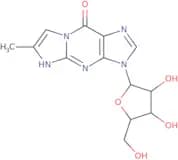
CAS:4-Demethylwyosine is a metabolite found in the bacterium Pyrococcus furiosus. It is an intermediate in the biosynthesis of 2-amino-3,5-dimethyoxybenzoic acid. 4-Demethylwyosine has been shown to inhibit cancer cell proliferation by inhibiting the synthesis of lysine residues and base formation. This inhibition may be due to its methyl transferase activity, which leads to decreased levels of methionine, or it may be due to its ability to act as a carboxylate group donor. 4-Demethylwyosine has also been shown to bind with DNA and RNA, regulating posttranscriptional processes such as protein translation and transcription.Fórmula:C13H15N5O5Pureza:Min. 80 Area-%Forma y color:PowderPeso molecular:321.29 g/mol2',3'-O-Isopropylideneguanosine
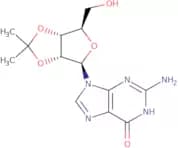
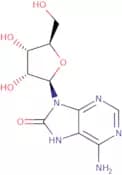
CAS:2',3'-O-Isopropylideneguanosine is a nucleoside for use in research applicationsFórmula:C13H17N5O5Pureza:Min. 95%Forma y color:White Off-White PowderPeso molecular:323.31 g/mol8-Hydroxyadenosine
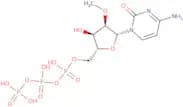
CAS:<p>8-Hydroxyadenosine (8-OHdG) is a purine nucleoside that is formed as a result of oxidative DNA damage. It is not an essential metabolite because it can be synthesized de novo. 8-OHdG has been shown to have potent anti-tumor activity in vitro and in vivo, which may be due to its ability to inhibit DNA replication. The biological effects of 8-OHdG are attributed to its ability to form hydrogen bonds with guanine residues in the double helix, and electrochemical detectors have been developed for its detection.</p>Fórmula:C10H13N5O5Pureza:Min. 98 Area-%Forma y color:PowderPeso molecular:283.25 g/mol2'-O-Methylcytidine-5'-triphosphate sodium salt - 100mM aqueous solution
CAS:<p>2'-O-Methylcytidine-5'-triphosphate sodium salt is a synthetic, modified nucleoside analog. It can be used as an antiviral agent and anticancer drug to inhibit viral replication and tumor growth. 2'-O-Methylcytidine-5'-triphosphate sodium salt has the ability to activate cellular DNA synthesis. This compound also inhibits RNA polymerase activity in cancer cells, which inhibits the production of proteins vital for cell division. 2'-O-Methylcytidine-5'-triphosphate sodium salt can be used as a phosphoramidite building block for the synthesis of oligonucleotides with novel structures.</p>Fórmula:C10H18N3O14P3·xNaPureza:Min. 95%Forma y color:Clear LiquidPeso molecular:497.18 g/molPoly(2'-O-Methyladenosine 5'-monophosphate) sodium
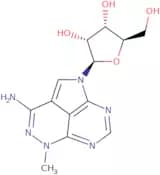
CAS:<p>Please enquire for more information about Poly(2'-O-Methyladenosine 5'-monophosphate) sodium including the price, delivery time and more detailed product information at the technical inquiry form on this page</p>Fórmula:(C11H16N5O7P)x•NaxPureza:Min. 95%Triciribine
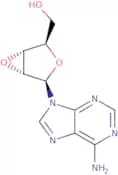
CAS:Protein kinase B inhibitor;Fórmula:C13H16N6O4Pureza:Min. 95%Forma y color:White/Off-White SolidPeso molecular:320.3 g/mol2',3'-Anhydroadenosine
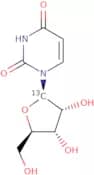
CAS:<p>2',3'-Anhydroadenosine is a nucleoside for a range of applications</p>Fórmula:C10H12N2O5Pureza:Min. 95%Forma y color:PowderPeso molecular:240.21 g/mol1'-13CUridine
CAS:1'-13CUridine is a nucleoside analog attached to an isotopeFórmula:CC8H12N2O6Forma y color:PowderPeso molecular:245.19 g/molN1-Methyladenosine-5’-monophosphate
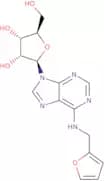
CAS:The N1-methyladenosine is a reversible modification in tRNA, mRNA and long non-coding RNAFórmula:C11H16N5O7PPureza:Min. 95%Forma y color:PowderPeso molecular:361.25 g/molKinetin riboside
CAS:Kinetin is a plant hormone that regulates cell proliferation and differentiation. Kinetin riboside is a derivative of kinetin in which the ribose moiety has been converted to ribosyl-ribitol. Kinetin riboside has shown the ability to inhibit cancer cells by inducing apoptosis, which may be related to its ability to inhibit cyclin D2 and mitochondrial membrane potential. In addition, kinetin riboside has been shown to protect against oxidative stress and decrease mitochondrial function in cells. This compound may have therapeutic potential for cancer treatment and other diseases caused by oxidative stress or mitochondrial dysfunction.Fórmula:C15H17N5O5Pureza:Min. 98 Area-%Forma y color:White PowderPeso molecular:347.33 g/mol


![5-Methyl-2′-O-[2-(methylamino)-2-oxoethyl]uridine](/_next/image/?url=https%3A%2Fstatic.cymitquimica.com%2Fproducts%2F3D%2Fthumb-webp%2FNM182886.webp&w=3840&q=75)