Nucleótidos
Los nucleótidos son compuestos orgánicos que sirven como building blocks de los ácidos nucleicos, esenciales para la formación del ADN y ARN. Cada nucleótido está compuesto por una base nitrogenada, una molécula de azúcar y uno o más grupos fosfato. Estos nucleótidos se unen para formar largas cadenas, creando el material genético que lleva y transmite la información genética en todos los organismos vivos. En esta sección, encontrará una amplia variedad de nucleótidos cruciales para la investigación en genética, biología molecular y bioquímica. Son fundamentales para estudiar los procesos genéticos, sintetizar ácidos nucleicos y desarrollar herramientas diagnósticas y terapéuticas. En CymitQuimica, ofrecemos nucleótidos de alta calidad para apoyar su investigación científica y aplicaciones, asegurando precisión y fiabilidad en sus experimentos.
Subcategorías de "Nucleótidos"
Se han encontrado 2634 productos de "Nucleótidos"
Ordenar por
Pureza (%)
0
100
|
0
|
50
|
90
|
95
|
100
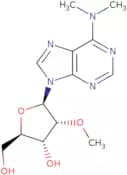
N6,N6,2'-O-Trimethyladenosine
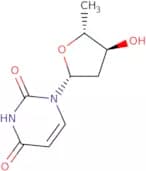
CAS:N6,N6,2'-O-Trimethyladenosine is a nucleoside that is found in small quantities in human tissues. It is synthesized by the enzyme polymerase from adenosine and S-adenosyl-L-methionine. N6,N6,2'-O-Trimethyladenosine is structurally similar to guanosine and cytidine and can be modified by nature or synthetic strategies. N6,N6,2'-O-Trimethyladenosine has been shown to have effects on fertility and may be involved in epigenetics as well as tuberculosis. Its role as an epigenetic marker for gene regulation has not been fully determined.Fórmula:C13H19N5O4Pureza:Min. 88 Area-%Forma y color:White PowderPeso molecular:309.32 g/mol2',5'-Dideoxyuridine
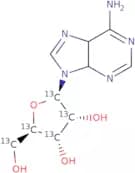
CAS:<p>2',5'-Dideoxyuridine is a synthetic nucleoside analog derived from uridine, one of the four standard nucleosides found in RNA. It is chemically modified by the removal of hydroxyl (–OH) groups at the 2' and 5' positions of the sugar, altering its ability to participate in RNA or DNA chain formation.</p>Fórmula:C9H12N2O4Pureza:Min. 95%Forma y color:White To Off-White SolidPeso molecular:212.21 g/mol1', 2', 3', 4', 5'- ¹³C5-Adenosine
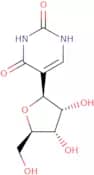
CAS:1', 2', 3', 4', 5'- ¹³C5-Adenosine is adenosine which has all five carbon atoms of the ribose sugar replaced with the stable isotope carbon-13 (^13C). Possible applications are in proteomics studies.Fórmula:C5C5H13N5O4Pureza:Min. 97 Area-%Forma y color:White PowderPeso molecular:272.2 g/molPseudouridine
CAS:Uridine isomer; found in tRNAFórmula:C9H12N2O6Pureza:Min. 98 Area-%Forma y color:White PowderPeso molecular:244.2 g/molCytidine
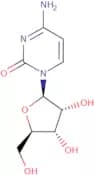
CAS:<p>Cytidine is a nucleoside that belongs to the group of pyrimidine nucleosides. It can be absorbed from the intestine and hydrolyzed to uridine by intestinal enzymes. Cytidine has been shown to inhibit angiogenesis in animal model systems and transfection experiments, as well as being genotoxic in vitro. Cytidine has also been shown to inhibit polymerase chain reactions (PCR) and enzyme activities, such as cytidine deaminase, which converts cytidine into uracil.</p>Fórmula:C9H13N3O5Pureza:Min. 99 Area-%Forma y color:White Off-White PowderPeso molecular:243.22 g/mol2'-Deoxy-5-hydroxycytidine
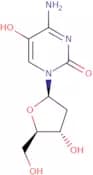
CAS:<p>2'-Deoxy-5-hydroxycytidine is a nucleoside analog that is used to treat human immunodeficiency virus (HIV). It inhibits the synthesis of HIV by inhibiting the enzyme reverse transcriptase. This drug binds to DNA duplexes, and has been shown to be reactive with damaged DNA. The compound has been shown to inhibit viral replication in a model system, and also inhibits the polymerase chain reaction. 2'-Deoxy-5-hydroxycytidine may also have thermodynamic properties that are related to its potential for reactivity with oxidative DNA.<br>2'-Deoxy-5-hydroxycytidine is an analog of cytidine. It can be synthesized using solid phase synthesis on a resin support.</p>Fórmula:C9H13N3O5Pureza:Min. 95%Forma y color:White PowderPeso molecular:243.22 g/molO6-Methylguanosine
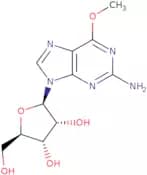
CAS:<p>Intermediate in the synthesis of nelarabine</p>Fórmula:C11H15N5O5Pureza:Min. 95%Forma y color:PowderPeso molecular:297.27 g/molN4,N4,2’-O-Trimethylcytidine
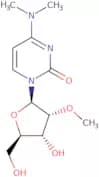
CAS:<p>N4,N4,2’-O-Trimethylcytidine is a novel nucleoside that has been shown to be an anticancer drug. It inhibits the growth of cells by selectively inhibiting their DNA synthesis. N4,N4,2’-O-Trimethylcytidine is also active against viruses and is able to inhibit viral replication by blocking the synthesis of deoxyribonucleosides and phosphoramidites. This compound has been synthesized in high purity and quality with CAS No. 34218-81-0.</p>Fórmula:C12H19N3O5Pureza:Min. 95%Forma y color:White PowderPeso molecular:285.3 g/molN2,N2-Dimethylguanosine
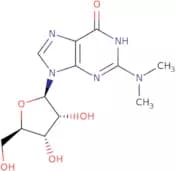
CAS:N2,N2-Dimethylguanosine is a purine nucleoside that is found in human serum. It belongs to the group of purines and has been shown to be involved in energy metabolism. N2,N2-Dimethylguanosine has been shown to be present at high levels in patients with autoimmune diseases such as rheumatoid arthritis. The x-ray crystal structures of wild-type strains of Escherichia coli and Streptococcus pneumoniae have been determined, which revealed that this compound interacts with the enzyme activity for primary sclerosing cholangitis. This nucleoside can also be detected by LC-MS/MS methods and multivariate logistic regression analysis.Fórmula:C12H17N5O5Pureza:Min. 98 Area-%Forma y color:Off-White PowderPeso molecular:311.3 g/mol5-Bromo-2'-deoxy-5'-O-DMT-uridine
<p>5-Bromo-2'-deoxy-5'-O-DMT-uridine is an antiviral nucleoside that is a monophosphate analog of deoxyuridine. 5-Bromo-2'-deoxy-5'-O-DMT-uridine can be used to treat patients with leukemia and other cancers. 5-Bromo-2'-deoxy-5'-O-DMT-uridine has been shown to induce tumor cell apoptosis in vitro and in vivo, as well as inhibit the proliferation of tumor cells by blocking the synthesis of DNA. This drug also has anticancer properties, which are due to its ability to block RNA synthesis.</p>Fórmula:C30H29BrN2O7Pureza:Min. 95%Forma y color:Off-white to beige solid.Peso molecular:609.48 g/mol3'-Deoxyinosine
CAS:<p>3'-Deoxyinosine is a nucleoside analog that is used in the treatment of leukemia, lymphoma, and AIDS-related Kaposi's sarcoma. The drug inhibits DNA synthesis by inhibiting enzymes such as ribonucleotide reductase, thymidylate synthase, and dihydrofolate reductase. 3'-Deoxyinosine has minimal toxicity and may be administered orally or intravenously. It has been shown to have an inhibitory effect on the growth of skin cancer cells and leishmania parasites in cell culture. This drug also lowers blood pressure by interfering with the synthesis of angiotensin II and may be useful for treating hypertension. The drug is synthetically prepared in a laboratory by chemists.</p>Fórmula:C10H12N4O4Pureza:Min. 95%Forma y color:PowderPeso molecular:252.23 g/mol2'-Deoxy-N4-methylcytidine
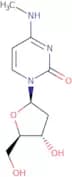
CAS:<p>2'-Deoxy-N4-methylcytidine is a modified nucleoside that is used to inhibit the activity of protein kinases. It has been shown to inhibit the function of two different types of enzymes, eukaryotic protein kinase and bacterial RNA polymerase. 2'-Deoxy-N4-methylcytidine inhibits the activity of these enzymes by modifying their structure, which in turn prevents them from carrying out their normal functions. This modification can be achieved through deamination or protonation reactions with this drug. The effects of this drug are nonparametric and are observed at transcript levels.</p>Fórmula:C10H15N3O4Pureza:Min. 97 Area-%Forma y color:White PowderPeso molecular:241.24 g/mol2'-Deoxy-3'-O-DMT-N2-Isobutyrylguanosine
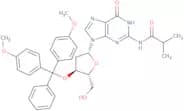
CAS:2'-Deoxy-3'-O-DMT-N2-Isobutyrylguanosine is a synthetic nucleoside that has the ability to activate and inhibit the growth of cancer cells. This compound is a phosphoramidite, and it has been modified by the addition of an isobutyrate group at the 2' position. The structure of this nucleoside is similar to that of natural guanosine, but with an additional 2' oxygen atom. This modification can be used for inhibition of DNA synthesis in cells and may have antiviral effects.Fórmula:C35H37N5O7Pureza:Min. 97 Area-%Peso molecular:639.71 g/mol3',5'-Di-O-benzoyl-2'-deoxy-2',2'-difluorocytidine
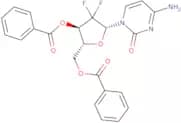
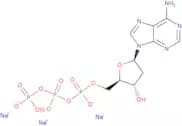
CAS:Used as an intermediate for the preparation of modified oligonucleotides and other cytidine derivatives containing a 2',2'-difluoro modification.Fórmula:C23H19F2N3O6Pureza:Min. 95%Forma y color:White PowderPeso molecular:471.42 g/mol2'-Deoxyadenosine-5'-triphosphate trisodium
CAS:2'-Deoxyadenosine-5'-triphosphate or dATP, is a nucleotide used by cells to synthesize DNA molecules. 2'-Deoxyadenosine-5'-triphosphate is used in molecular biology techniques and assays as a substrate of the enzyme DNA polymerase, e.g. polymerase chain reaction (PCR), DNA sequencing, pyrosequencing reactions. Salt form of 2'-deoxyadenosine-5'-triphosphate has been used in a newly developed detection system for SARS-CoV-2 that combines bioluminescence in real-time (BART) with reverse-transcriptase loop-mediated amplification (RT-LAMP).Fórmula:C10H13N5O12P3·3NaPureza:Min. 97 Area-%Forma y color:White PowderPeso molecular:557.13 g/mol2'-Deoxy-5-hydroxymethylcytidine-5'-triphosphate sodium, 100 mM aqueous solution
2'-Deoxy-5-hydroxymethylcytidine-5'-triphosphate sodium, 100 mM aqueous solution is a synthetic nucleoside that can be used as an antiviral and anticancer agent. The drug inhibits viral replication by inhibiting the synthesis of DNA. The drug also suppresses tumor growth by inhibiting the production of RNA and DNA in cancer cells.Fórmula:C10H18N3O14P3•NaxPureza:Min. 90 Area-%Forma y color:Clear LiquidPeso molecular:497.18 g/mol2',3'-Dideoxy-3'-fluoroguanosine
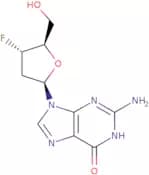
CAS:<p>2',3'-Dideoxy-3'-fluoroguanosine is a synthetic nucleoside analog based on guanosine. It is structurally altered to interfere with DNA or RNA synthesis, making it potentially useful as an antiviral or anticancer agent.</p>Fórmula:C10H12FN5O3Pureza:Min. 95%Forma y color:White PowderPeso molecular:269.24 g/mol5-Formyl-2'-O-methylcytidine
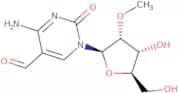
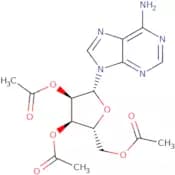
CAS:5-Formyl-2'-O-methylcytidine is a molecule that is involved in cellular processes such as DNA methylation, the addition of a methyl group to the 5 position of a cytosine residue. It has been shown to be an important epigenetic regulator and can be used as a strategy to treat tuberculosis. 5-Formyl-2'-O-methylcytidine is synthesized from guanine, which undergoes conversion into cytosine via enzymatic modification. This process is catalyzed by methyltransferase enzymes and it is usually carried out with S-adenosylmethionine (SAM) as the methyl donor. The product then converts back into guanine through deamination, which can be catalyzed by either adenine phosphoribosyltransferase or adenylate kinase.Fórmula:C11H15N3O6Pureza:Min. 95 Area-%Forma y color:PowderPeso molecular:285.25 g/mol2',3',5'-Tri-O-acetyladenosine
CAS:<p>2',3',5'-Tri-O-acetyladenosine is a chemically protected form of adenosine with potential for use as an intermediate in nucleoside synthesis and nucleic acid chemistry. The hydroxyl (–OH) groups at the 2′, 3′, and 5′ positions of the ribose are protected by acetyl groups (–COCH₃), which can prevent unwanted chemical reactions during chemical synthesis.</p>Fórmula:C16H19N5O7Pureza:Min. 95%Forma y color:PowderPeso molecular:393.35 g/mol5'-O-DMT-N2-isobutyryl-2'-O-(2-methoxyethyl)guanosine
CAS:5'-O-DMT-N2-isobutyryl-2'-O-(2-methoxyethyl)guanosine is an antiviral monophosphate nucleoside. It has been shown to be a novel, high purity, and CAS No. 251647-50-4. It is a modified nucleic acid analogue that acts as an activator of ribonucleotide reductase and DNA polymerase. The anticancer activity of this product may be due to its ability to inhibit the synthesis of diphosphate nucleotides.Fórmula:C38H43N5O9Pureza:Min. 98 Area-%Forma y color:White PowderPeso molecular:713.78 g/mol