Nucleótidos
Los nucleótidos son compuestos orgánicos que sirven como building blocks de los ácidos nucleicos, esenciales para la formación del ADN y ARN. Cada nucleótido está compuesto por una base nitrogenada, una molécula de azúcar y uno o más grupos fosfato. Estos nucleótidos se unen para formar largas cadenas, creando el material genético que lleva y transmite la información genética en todos los organismos vivos. En esta sección, encontrará una amplia variedad de nucleótidos cruciales para la investigación en genética, biología molecular y bioquímica. Son fundamentales para estudiar los procesos genéticos, sintetizar ácidos nucleicos y desarrollar herramientas diagnósticas y terapéuticas. En CymitQuimica, ofrecemos nucleótidos de alta calidad para apoyar su investigación científica y aplicaciones, asegurando precisión y fiabilidad en sus experimentos.
Subcategorías de "Nucleótidos"
Se han encontrado 2634 productos de "Nucleótidos"
Ordenar por
Pureza (%)
0
100
|
0
|
50
|
90
|
95
|
100
5'-O-Benzoyl-2,3'-anhydrothymidine
CAS:<p>5'-O-Benzoyl-2,3'-anhydrothymidine is a heterocycle that has been shown to have immunosuppressive properties. The compound binds to the immunodeficiency virus by covalent binding to an isomeric site on the viral envelope protein. It has been shown that 5'-O-Benzoyl-2,3'-anhydrothymidine can inhibit the growth of HIV in vitro with a 50% inhibitory concentration (IC50) of 0.8 μM. This compound also displays potent antiviral activity against herpes simplex virus type 1 (HSV-1) and herpes simplex virus type 2 (HSV-2).</p>Fórmula:C17H18N2O5Pureza:Min. 95%Forma y color:PowderPeso molecular:330.34 g/mol7-(N-Acetylaminomethyl)-7-deazaguanosine
<p>7-(N-Acetylaminomethyl)-7-deazaguanosine is a nucleoside analog that is used to treat diseases such as hepatitis B and C. It is an antiviral, anticancer, and antibacterial agent. 7-(N-Acetylaminomethyl)-7-deazaguanosine inhibits viral replication by blocking the synthesis of DNA or RNA. The drug also inhibits cell growth through activation of apoptosis, which may be due to its ability to inhibit protein synthesis and DNA replication. This novel nucleoside analog has shown high purity levels in our lab and can be used for the treatment of various diseases.</p>Fórmula:C14H19N5O6Pureza:Min. 95%Forma y color:PowderPeso molecular:353.33 g/mol3-Acetylpyridine adenine dinucleotide
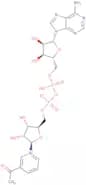
CAS:<p>A non-physiological analog of nicotinamide adenine dinucleotide (NAD+) in biochemical research, particularly as a tool to study the mechanisms of NAD+-dependent enzymes.</p>Fórmula:C22H28N6O14P2Pureza:Min. 92 Area-%Forma y color:White Off-White PowderPeso molecular:662.44 g/molN6-Benzoyl-2'-deoxy-5'-O-DMT-adenosine 3'-O-succinate triethylammonium salt
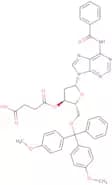
CAS:<p>N6-Benzoyl-2'-deoxy-5'-O-DMT-adenosine 3'-O-succinate triethylammonium salt is a novel nucleoside analog that has antiviral and anticancer properties. It is a ribonucleotide with an N6-(benzoyl)-2'-deoxyadenosine base linked to the 3' position of the sugar through an acetyl group, with a succinic acid moiety at the 5' position. This drug inhibits DNA synthesis and has been shown to block HIV replication in vitro. It also has activity against human papillomavirus type 16 (HPV16) infections in vivo.</p>Fórmula:C42H39N5O9·C6H15NPureza:Min. 95%Forma y color:PowderPeso molecular:858.98 g/molN6-Succinyl adenosine
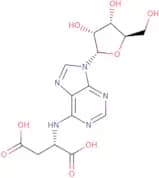
CAS:<p>N6-Succinyl adenosine is a biochemical that is involved in the transfer of fatty acids across membranes. It has been shown to be effective in transfection experiments, where it can be used to increase the expression of genes. N6-Succinyl adenosine has also been shown to be an important substrate for various dehydrogenases. Deficiency of these enzymes leads to orotic aciduria, which is characterized by elevated levels of orotic acid in blood and urine and may lead to mental retardation. A linear calibration curve was generated for diagnosis purposes, with the enzyme activities being determined using a logistic regression model.</p>Fórmula:C14H17N5O8Pureza:Min. 95%Forma y color:White PowderPeso molecular:383.31 g/mol2-Amino-9-(2'-deoxy-β-D-ribofuranosyl)purine
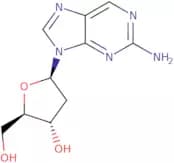
CAS:<p>2-Amino-9-(2'-deoxy-b-D-ribofuranosyl)purine is a nucleoside analog that has been found to be effective in the treatment of leukemia.</p>Fórmula:C10H13N5O3Pureza:(Hplc) Min. 98.00%Forma y color:PowderPeso molecular:251.24 g/mol2’-Deoxy-N1-methylguanosine
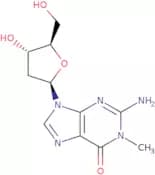
CAS:Producto controlado<p>2’-Deoxy-N1-methylguanosine is a modified purine nucleoside composed of a N¹-methylguanine, a guanine base where a methyl group is attached to the nitrogen at position 1 (N¹). This methylation blocks normal Watson-Crick base pairing, especially with cytosine, and can affect RNA structure and function. It also contains a 2′-Deoxyribose and has possible research applications</p>Fórmula:C11H15N5O4Pureza:Min. 97 Area-%Forma y color:PowderPeso molecular:281.27 g/molb-Nicotinamide adenine dinucleotide reduced form, disodium salt
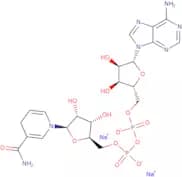
CAS:<p>β-Nicotinamide adenine dinucleotide reduced form, most commonly known as NADH, is a cofactor involved in the electron transport chain, in the metabolism of amino acids and many other cellular processes such as the synthesis of ATP. It is also a substrate for glutathione peroxidase and superoxide dismutase. The reduced form of NADH can be used as an indicator for glutathione peroxidase activity. In addition, it has been shown to have antioxidant properties by reducing reactive oxygen species (ROS) and inhibiting lipid peroxidation. This product has been used in formulations of synthetic drugs for the treatment of women with long-term effects of menopause, such as osteoporosis and cardiovascular disease. It has also been used in the production of alginate gel, which can be used to create scaffolds for tissue engineering applications. More recently, in bioorganic chemistry, NADH has been used as a source of hydride species for reduction reactions.</p>Fórmula:C21H27N7O14P2·2NaPureza:Min. 98 Area-%Forma y color:White PowderPeso molecular:709.4 g/molN4-Acetyl-5'-O-DMT-cytidine
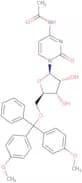
CAS:<p>N4-Acetyl-5'-O-DMT-cytidine is an antiviral drug that inhibits the viral DNA polymerase. It is a modified nucleoside, which is activated by phosphorylation. N4-Acetyl-5'-O-DMT-cytidine is used in research for its anticancer properties and has shown to inhibit the growth of cancer cells in vitro. The compound was found to be more potent than cytidine and other modified nucleosides.</p>Fórmula:C32H33N3O8Pureza:Min. 98 Area-%Forma y color:White PowderPeso molecular:587.63 g/molCytarabine
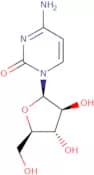
CAS:Anti-viral; anti-neoplasticFórmula:C9H13N3O5Pureza:Min. 95%Forma y color:White PowderPeso molecular:243.22 g/mol2-Deoxy-5-vinyluridine
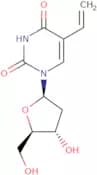
CAS:<p>2-Deoxy-5-vinyluridine (5-VUdR) is a chemical compound that has been shown to cause a mutation in the DNA of herpes simplex virus. The compound is then incorporated into the viral DNA and replicated with each new cell division, leading to mutations in the sequence of its genome. This mutation can either be lethal or nonlethal, depending on how it affects the function of the virus. 5-VUdR has also been shown to affect cancer cells by inhibiting their growth and causing them to undergo apoptosis. This chemical compound also has an effect on animals and humans, as it alters body mass index and causes weight loss. It does this by preventing replication of DNA in cells that produce insulin, which leads to low insulin levels and decreased appetite.END></p>Fórmula:C11H14N2O5Pureza:Min. 95%Forma y color:PowderPeso molecular:254.24 g/molN6-Benzyladenosine
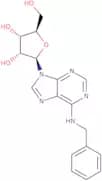
CAS:<p>N6-Benzyladenosine is a nucleoside that is synthesized from adenosine and benzylamine. It is a component of the nutrient solution for cell culture studies, which has been shown to have an effect on the hydrophobic effect in cells. This compound also acts as a co-factor for epidermal growth factor and enzyme activities. N6-Benzyladenosine has been used in the development of monoclonal antibodies with covalent linkages. It is also being studied as a potential biomarker for various cancers, including prostate cancer and other solid tumors. In addition, this compound has been shown to be a sesquiterpene lactone with structural analysis and pharmacokinetic properties. N6-Benzyladenosine can be found in plants such as tomato and ginger at physiological levels.</p>Fórmula:C17H19N5O4Pureza:Min. 98 Area-%Forma y color:White PowderPeso molecular:357.36 g/molN6-Benzoyl-2'-deoxy-8-oxoadenosine
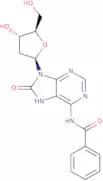
CAS:<p>N6-Benzoyl-2'-deoxy-8-oxoadenosine is a base modified deoxy nucleoside</p>Fórmula:C17H17N5O5Pureza:Min. 95%Forma y color:PowderPeso molecular:371.35 g/mol5'-Azido-5'-deoxyadenosine
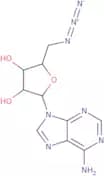
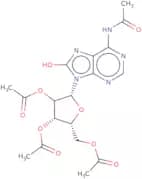
CAS:<p>5'-Azido-5'-deoxyadenosine (Aza-dA) is an adenosine analog that inhibits the deamination of S-adenosylhomocysteine to form adenosine. It has been shown to be more potent than 2-chloroadenosine and inactivates the enzyme s-adenosylhomocysteine hydrolase, which is responsible for the conversion of S-adenosylhomocysteine to adenosine. This leads to decreased levels of adenosine and increased levels of s-adensoylhomocysteine. Aza-dA has been shown to inhibit tumor growth and induce apoptosis in rat hepatocytes. In addition, it is a halogenated molecule that can be used as a modifying agent.</p>Fórmula:C10H12N8O3Pureza:Min. 95%Forma y color:PowderPeso molecular:292.25 g/molN6-Acetyl-2',3',5'-tri-O-acetyl-8-hydroxyadenosine
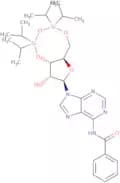
<p>N6-Acetyl-2',3',5'-tri-O-acetyl-8-hydroxyadenosine is a modified nucleoside that is used in the synthesis of oligonucleotides. It is an activator with antiviral and anticancer properties, as well as various other biological activities. The CAS number for this product is 91359-02-2. The purity of this product ranges from 99% to 100%. This chemical has not been previously synthesized and has not been modified by any substituents or moieties.</p>Fórmula:C18H21N5O9Pureza:Min. 95%Forma y color:PowderPeso molecular:451.39 g/molN6-Benzoyl-3',5'-O-(1,1,3,3- tetraisopropyl-1,3-disiloxanediyl)adenosine
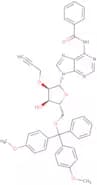
CAS:N6-Benzoyl-3',5'-O-(1,1,3,3-tetraisopropyl-1,3-disiloxanediyl)adenosine is a novel antiviral agent that belongs to the class of nucleoside analogues. It has high antiviral activity against human cytomegalovirus and herpes simplex virus type 1. N6-Benzoyl-3',5'-O-(1,1,3,3-tetraisopropyl-1,3-disiloxanediyl)adenosine also has anticancer effects and is used in the treatment of leukemia. This drug inhibits DNA synthesis by acting as a competitive inhibitor for deoxyribonucleotide triphosphates and binds to ribonucleosides in order to inhibit DNA replication.Fórmula:C29H43N5O6Si2Pureza:Min. 95%Forma y color:White PowderPeso molecular:613.87 g/molN4-Benzoyl-5'-O-DMT-2'-O-propargyl adenosine
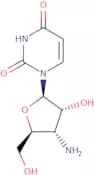
CAS:<p>N4-Benzoyl-5'-O-DMT-2'-O-propargyl adenosine is a novel nucleoside that was synthesized by converting the ribonucleoside 5'-O-DMT to its deoxyribonucleoside form. N4-Benzoyl-5'-O-DMT-2'-O-propargyl adenosine is an antiviral and antiproliferative agent that inhibits DNA synthesis. It also has anticancer activity, but does not have any effect on RNA synthesis. This product is available in high quality and high purity with CAS No. 171486-51-4.</p>Fórmula:C41H37N5O7Pureza:Min. 95%Forma y color:PowderPeso molecular:711.76 g/mol3'-Amino-3'-deoxyuridine
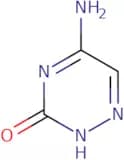
CAS:<p>3'-Amino-3'-deoxyuridine is a nucleoside that is phosphoramidated to the 3' hydroxyl group of uridine. It has been shown to be detectable experimentally and has regiospecificity. The imidazole ring has been shown to be acidic, making it an excellent candidate for kinetics studies. 3'-Amino-3'-deoxyuridine is activated by cleavage of its phosphodiester bond by nucleophilic attack. This nucleotide can be used in the research of nucleic acids and imidazole derivatives.</p>Fórmula:C9H13N3O5Pureza:Min. 95%Forma y color:PowderPeso molecular:243.22 g/mol6-Azacytosine
CAS:<p>Nucleoside analogue; anti-viral; anti-tumoral agent</p>Fórmula:C3H4N4OPureza:Min. 95%Forma y color:PowderPeso molecular:112.09 g/mol3'-O-Benzoylthymidine
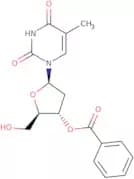
CAS:<p>3'-O-Benzoylthymidine is a nucleoside that is used in the synthesis of DNA. It is a monomeric compound that contains two deoxyribose sugars and one deoxyribonucleotide. 3'-O-Benzoylthymidine interacts with the phosphite triester, which stabilizes the nucleobase. This reaction leads to the formation of a glycosidic bond between the phosphate group and the 5' carbon atom in the sugar ring of 3'-O-benzoylthymidine. The chloride ion is then added to form an intermediate compound with a reactive electrophilic carbon center that can be used for subsequent reactions with other compounds or nucleobases. 3'-O-Benzoylthymidine can also be conjugated to other compounds through covalent bonds, such as phosphonates, to form more complex molecules.</p>Fórmula:C17H18N2O6Pureza:Min. 95%Forma y color:PowderPeso molecular:346.34 g/mol