Vitaminas
Las vitaminas son compuestos orgánicos requeridos en pequeñas cantidades para funciones fisiológicas esenciales y la salud en general. Desempeñan roles cruciales en el metabolismo, la función inmunológica y el mantenimiento celular. En esta categoría, encontrará una amplia gama de vitaminas, incluyendo tipos solubles en agua y en grasa, necesarios para la investigación en nutrición, bioquímica y ciencias de la salud. En CymitQuimica, ofrecemos vitaminas de alta calidad para apoyar sus esfuerzos de investigación y desarrollo, asegurando la precisión y efectividad de sus estudios sobre funciones y deficiencias de vitaminas.
Se han encontrado 1122 productos de "Vitaminas"
Ordenar por
Pureza (%)
0
100
|
0
|
50
|
90
|
95
|
100
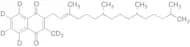
Vitamin K1-d7 (100µg/mL in Acetonitrile)
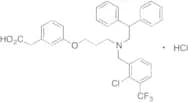
CAS:Producto controladoFórmula:C31H39D7O2Forma y color:Single SolutionPeso molecular:457.74GW 3965 Hydrochloride
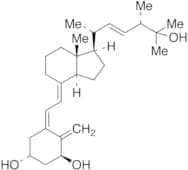
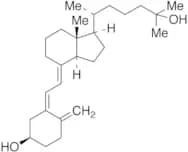
CAS:Producto controlado<p>Applications GW3965 Hydrochloride, is a potent, selective liver X receptor (LXR) agonist for hLXRα and hLXR. GW3965 has shown potent anti-inflammatory activity in both irritant and allergic contact models of dermatitis, requiring the participation of both LXRα and LXRβ.<br>References Fowler, A.J., et. al.: J. Invest. Dermatol., 120, 246 (2003)<br></p>Fórmula:C33H31ClF3NO3•HClForma y color:NeatPeso molecular:582.0536461α,25-Dihydroxy Vitamin D2
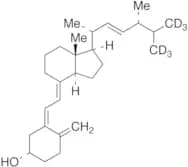
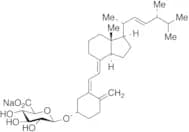
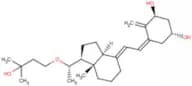
CAS:Producto controladoFórmula:C28H44O3Forma y color:NeatPeso molecular:428.65Vitamin D2 β-D-Glucuronide Sodium Salt
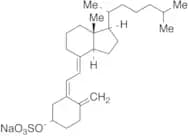
CAS:Producto controladoFórmula:C34H51O7·NaForma y color:NeatPeso molecular:594.754Vitamin D3 Sulfate Sodium Salt (Technical Grade)
CAS:Producto controladoFórmula:C27H43O4S·NaForma y color:NeatPeso molecular:486.683-epi-25-Hydroxy Vitamin D3
CAS:<p>Stability Light Sensitive, Temperature Sensitive<br>Applications The epimer metabolite of Calcifediol or 25-hydroxyvitamin D3 (C125700).<br> Not a dangerous good if item is equal to or less than 1g/ml and there is less than 100g/ml in the package<br>References Sakaki, T., et al.: Eur. J. Biochem., 267, 6158 (2000), Kamao, M., et al.: J. Biol. Chem., 278, 1463 (2003),<br></p>Fórmula:C27H44O2Forma y color:NeatPeso molecular:400.64(24S)-24,25-Epoxycholesterol
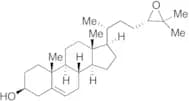
CAS:Producto controlado<p>Applications (24S)-24,25-Epoxycholesterol is a derivative of 4β-Hydroxy Cholesterol (H917980), a metabolite of Cholesterol. It is formed from Cholesterol by the drug-metabolizing enzyme cytochrome P 450 3A4. A potential ligand for the nuclear receptor LXR and also a new endogenous CYP3A marker.<br>References Breuer, O., et al.: J. Lipid Res., 36, 2275 (1995), Pikuleva, I., et al.: J. Biol. Chem., 273, 18153 (1998), Chawla, A., et al.: Science, 294, 1866 (2001), Bodin, K., et al.: J. Biol. Chem., 276, 38685 (2001),<br></p>Fórmula:C27H44O2Forma y color:NeatPeso molecular:400.637Calcipotriol monohydrate
CAS:<p>Calcipotriol monohydrate, a Vitamin D3 analog, binds well to the vitamin D receptor, used in psoriasis research.</p>Fórmula:C27H42O4Pureza:99.95%Forma y color:SolidPeso molecular:430.62Vitamin K
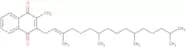
CAS:<p>Vitamin K is a fat-soluble vitamin, which is primarily sourced from leafy green vegetables, and is also synthesized by gut microbiota. Its mode of action involves functioning as a crucial cofactor for the enzyme gamma-glutamyl carboxylase, which catalyzes the carboxylation of specific glutamic acid residues on proteins required for blood coagulation. This modification enables the calcium-binding capacity of these proteins, facilitating essential physiological processes such as coagulation, bone metabolism, and vascular biology.</p>Fórmula:C31H46O2Pureza:Min. 95%Peso molecular:450.7 g/molγ-Tocotrienol
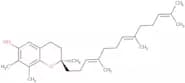
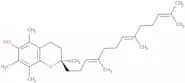
CAS:<p>Gamma-Tocotrienol is a form of vitamin E, which is a lipid-soluble antioxidant sourced predominantly from certain plant oils, including palm oil, rice bran oil, and annatto seeds. It possesses an unsaturated isoprenoid side chain, which differentiates it from tocopherols and contributes to its differing biological activities.</p>Fórmula:C28H42O2Pureza:Min. 95%Peso molecular:410.63 g/molTachysterol
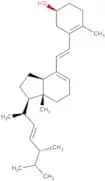
CAS:<p>Tachysterol is a sterol derivative that serves as a vitamin D analog, primarily sourced from the photochemical isomerization of ergosterol or lumisterol. Tachysterol undergoes further conversion processes to become active vitamin D metabolites that play crucial roles in calcium and phosphorus homeostasis. Though not biologically active in its original form, tachysterol is a precursor in the metabolic pathway, with conversion into active forms such as calcitriol occurring in the body.</p>Fórmula:C28H44OPureza:90% MinForma y color:PowderPeso molecular:396.65 g/molMaxacalcitol
CAS:<p>Maxacalcitol (22-Oxacalcitriol) is a ligand of VDR-like receptors and a non-serum calcium vitamin D3 analogue.</p>Fórmula:C26H42O4Pureza:≥98%Forma y color:SolidPeso molecular:418.61D-Biotin - 2%
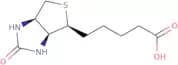
CAS:<p>Biotin is a water-soluble vitamin, also known as vitamin B7. Biotin is an essential coenzyme for five carboxylases in mammalian cells, which play key roles in the metabolism of glucose, amino acids and fatty acids (Zempleni, 2014). Biotin is also used in biochemistry in affinity purification of proteins in the biotin-avidin and biotin-streptavidin systems. Herein, free biotin is used in the elution step to release the recombinant protein from the resin (Diamandis and Christopoulos, 1991).Remainder of the material is maltodextrin.</p>Fórmula:C10H16N2O3SPureza:Min. 95%Forma y color:PowderPeso molecular:244.31 g/molα-Tocotrienol
CAS:<p>alpha-Tocotrienol is a chemical compound known as a vitamin E isoform, which is derived primarily from certain plant oils, such as palm oil, rice bran oil, and annatto. This compound exhibits a unique unsaturated side chain, distinguishing it from tocopherols and enabling it to integrate into cellular membranes with greater efficiency.</p>Fórmula:C29H44O2Pureza:Min. 95%Peso molecular:424.66 g/molRiboflavin-2,4,4α,10α-13C4-1,3-15N2
CAS:<p>Riboflavin-2,4,4α,10α-13C4-1,3-15N2 is a stable isotope-labeled form of riboflavin, which is a type of vitamin B2 molecule. This compound is synthesized with carbon-13 and nitrogen-15 isotopes, providing a distinct mass that enables precise tracking in metabolic studies. The source of this compound is derived from isotopically enriched materials, employing advanced chemical synthesis processes to incorporate stable isotopes into the riboflavin structure without altering its fundamental biochemical properties.</p>Fórmula:C13C4H20N2N2O6Pureza:Min. 95%Peso molecular:382.32 g/molVitamin D3 - 0.5m IU/g=500000 IU/g
CAS:<p>Vitamin D3 is a fat-soluble vitamin that can be obtained from some fish, mushrooms, and dairy products. The most common form of the vitamin is cholecalciferol (vitamin D3) which can be converted in the liver to calcidiol (25-hydroxycholecalciferol) and in the kidneys to calcitriol (1,25-dihydroxycholecalciferol). Vitamin D3 has been shown to have a positive effect on calcium absorption and bone mineralization. It also has important physiological functions such as regulation of cell growth and differentiation. The solubility of vitamin D3 is dependent on the presence of a hydroxy group at position 3' or 25'. This liquid chromatography method uses an experimental solubility data set for the determination of solubility data for compounds with a hydroxy group at position 3'.</p>Fórmula:C27H44OPureza:Min. 95%Forma y color:PowderPeso molecular:384.64 g/molβ-Tocotrienol
CAS:<p>Beta-Tocotrienol is a biochemical compound that belongs to the vitamin E family. It is derived from sources such as palm oil, rice bran, and certain cereal grains. This compound exhibits its mode of action through the modulation of oxidative stress pathways and inhibition of certain enzymes involved in cell proliferation and cholesterol synthesis, which differentiates it from other tocopherols.</p>Fórmula:C28H42O2Pureza:Min. 97 Area-%Forma y color:Clear LiquidPeso molecular:410.63 g/mol5-Ethyl-3-methyllumiflavinium perchlorate
CAS:<p>5-Ethyl-3-methyllumiflavinium perchlorate is an organic compound that serves as a specialized biochemical reagent. It is synthetically derived, typically from the modification of flavin structures, which are known for their versatile roles in biological systems. The compound's unique configuration allows it to interact with various enzymes and proteins, often acting as an electron mediator due to its lumiflavinium core.</p>Fórmula:C16H19N4O2ClO4Pureza:Min. 95%Peso molecular:398.8 g/molPyridoxamine Dihydrochloride Monohydrate
CAS:Fórmula:C8H12N2O2·2HCl·H2OPureza:>98.0%(HPLC)(N)Forma y color:White to Almost white powder to crystalPeso molecular:259.13