Nucleósidos
Se han encontrado 3569 productos de "Nucleósidos"
5'-Amino-N-Boc-5'-deoxy-2',3'-O-isopropylideneadenosine
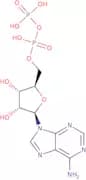
5'-Amino-N-Boc-5'-deoxy-2',3'-O-isopropylideneadenosine is a novel nucleoside that has antiviral activity. It is an activator of the ribonucleotide reductase enzyme and inhibits the synthesis of DNA, RNA and proteins. 5'-Amino-N-Boc-5'-deoxy-2',3'-O-isopropylideneadenosine has shown anticancer activity in several animal models.Pureza:Min. 95%Adenosine 5’-Diphosphate-13C5
CAS:Adenosine 5’-diphosphate (ADP) is a potent activator of the G-protein coupled receptor, P2Y. This receptor has been shown to be present on platelets, which are cells that are involved in the clotting process. ADP also inhibits the ion channel activity of the Na+, K+ ATPase. The effects of ADP on myocardial infarct have been studied in a model system consisting of isolated papillary muscle from rats. Adenosine 5’-diphosphate is not an inhibitor of protein synthesis, but does inhibit polymerase chain reaction amplification. It is used as a pharmacological agent for bowel disease and for treatment of chronic obstructive pulmonary disease.END>Fórmula:C5C5H15N5O10P2Pureza:Min. 95%Peso molecular:432.2 g/mol3',5'-Di-O-benzoyl-2'-O-methyl-5-methyluridine
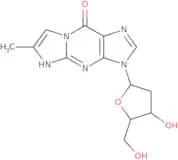
3',5'-Di-O-benzoyl-2'-O-methyl-5-methyluridine is an activated nucleoside which is a synthetic nucleoside analog. It has been shown to be an effective antiviral and anticancer agent, as well as a potential antiviral drug against HIV. 3',5'-Di-O-benzoyl-2'-O-methyl-5-methyluridine is also a potent inhibitor of RNA synthesis in cells, which may lead to the development of new drugs for the treatment of viral infections.Pureza:Min. 95%2'-Deoxy-4-desmethylwyosine
CAS:2'-Deoxy-4-desmethylwyosine is a nucleoside that has been modified to contain a deoxyribose sugar. The monophosphate form of this compound has been shown to activate the DNA synthesis and promote cellular proliferation by stimulating the enzyme ribonucleotide reductase. 2'-Deoxy-4-desmethylwyosine is also an antiviral agent that blocks the synthesis of viral ribonucleic acid (RNA). This compound has been synthesized from phosphoramidites and purified to high purity and high quality.Fórmula:C13H15N5O4Pureza:Min. 95%Peso molecular:305.29 g/mol2'-Deoxy-5-(methylthio)-uridine
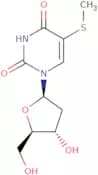
CAS:2'-Deoxy-5-(methylthio)-uridine is a synthetic nucleoside that is used for antiviral and anticancer purposes. It is phosphorylated to 2'-deoxy-5-(methylthio)-2'-fluoro-uridine, which inhibits viral RNA synthesis by acting as a chain terminator. 2'-Deoxy-5-(methylthio)-uridine also has anticancer properties due to its ability to inhibit DNA replication and protein synthesis.
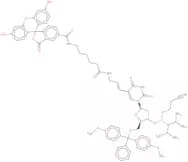
Fórmula:C10H14N2O5SPureza:Min. 95%Peso molecular:274.29 g/mol6-Fluorescein dT phosphoramidite
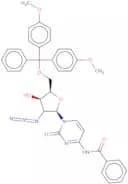
CAS:6-Fluorescein dT phosphoramidite is a novel compound that has been shown to have anticancer, antiviral and antimalarial activities. It is an activator of nucleotides and nucleosides, which are important in DNA synthesis and RNA synthesis. This product is synthesized by the chemical modification of 6-fluorescein with the dT phosphoramidite group. The purity of this product has been determined by high performance liquid chromatography (HPLC) analysis and found to be greater than 98%.Fórmula:C79H89N6O17PPureza:Min. 95%Peso molecular:1,425.56 g/mol2'-Azido-N4-benzoyl-2'-deoxy-5'-O-DMT-cytidine
2'-Azido-N4-benzoyl-2'-deoxy-5'-O-DMT-cytidine is an antiviral nucleoside with anticancer activity. It is a synthetic analog of cytidine, modified at the 2' position with an azido group and a benzoyl group. 2'-Azido-N4-benzoyl-2'-deoxy-5'-O-DMT-cytidine has shown in vitro antiviral activity against herpes simplex virus type 1 (HSV1) and type 2 (HSV2), as well as human immunodeficiency virus type 1 (HIV1). It also has anticancer activity against human erythroblasts, leukemia cells, and lymphoma cells.Fórmula:C37H34N6O7Pureza:Min. 95%Peso molecular:674.7 g/mol6-Aminothymine
CAS:6-Aminothymine is a polyamine that exerts its inhibitory activity by hydrogen bonding to the enzyme's active site. It has been shown to inhibit protein synthesis and growth factor synthesis in HL-60 cells. 6-Aminothymine also has cancer inhibiting properties, which may be due to its ability to bind DNA and interfere with replication or transcription.Fórmula:C5H7N3O2Pureza:Min. 95%Peso molecular:141.13 g/molN4-Benzoyl-2'-deoxy-5'-O-DMT-cytidine 3'-succinyl CPG 1000 Å
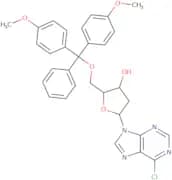
N4-Benzoyl-2'-deoxy-5'-O-DMT-cytidine 3'-succinyl CPG 1000 Å is a synthetic nucleoside analog with antiviral activity. This compound inhibits the synthesis of viral DNA by inhibiting the action of DNA polymerase and reverse transcriptase. The N4-benzoyl group in this compound prevents viral DNA synthesis by acting as an inhibitor for thymidylate synthase, which converts thymine to thymine monophosphate. It also has been shown to be active against cytomegalovirus (CMV).Pureza:Min. 95%6-Chloro-9-(5-o-dimethoxytrityl-β-D-2-deoxyribofuranosyl)purine
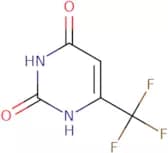
CAS:6-Chloro-9-(5-o-dimethoxytrityl-β-D-2-deoxyribofuranosyl)purine is a phosphoramidite. It is used as an antiviral agent and has been shown to be effective against HIV, herpes zoster, and other viruses. 6-Chloro-9-(5-o-dimethoxytrityl)-2'-deoxyribofuranosyl)purine is a novel nucleotide derivative that inhibits the replication of RNA and DNA by inhibiting the synthesis of viral nucleic acids. This compound can also be used for the treatment of cancer cells.Fórmula:C31H29ClN4O5Pureza:Min. 95%Peso molecular:573 g/mol6-(Trifluoromethyl)uracil
CAS:6-(Trifluoromethyl)uracil is a synthetic analog of uracil, which is a nucleobase that is found in RNA. It can be synthesized by reacting phosphorus oxychloride and trifluoromethyl chloride to form the corresponding chloroformate ester, followed by hydrolysis with anhydrous potassium carbonate. The compound has been shown to inhibit bacterial growth in bioassays and also has the ability to react with amines. 6-Trifluoromethyluracil has a constant chlorine atom that forms hydrogen bonds with other molecules, such as ammonia or amines, which may have antibacterial properties.Fórmula:C5H3F3N2O2Pureza:Min. 95%Peso molecular:180.08 g/mol5'-O-tert-Butyldimethylsilyluridine
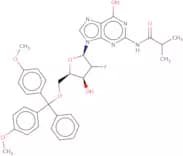
CAS:5'-O-tert-Butyldimethylsilyluridine (5'-O-TBDMSU) is a nucleoside that is used in the synthesis of nucleic acid probes. It is selective for the uridine residues in RNA and DNA, which are found at the 5' position. Sodium hydride reacts with this compound to form the corresponding hydroxyl group. This allows for further nucleobase additions or halogen substitutions to be made to the molecule, as well as desilylation reactions. 5'-O-TBDMSU can also be used to synthesize heteroaromatic nucleic acids and nucleotide derivatives.Fórmula:C15H26N2O6SiPureza:Min. 98 Area-%Forma y color:PowderPeso molecular:358.46 g/mol9-(2'-Deoxy-5'-O-DMT-2'-fluoro-b-D-arabinofuranosyl)-N2-isobutyrylguanine
9-(2'-Deoxy-5'-O-DMT-2'-fluoro-b-D-arabinofuranosyl)-N2-isobutyrylguanine is a nucleoside analogue that is a potent inhibitor of viral replication. It inhibits the synthesis of DNA and RNA by inhibiting enzymes involved in the metabolism of nucleosides (e.g., phosphoramidites, deoxyribonucleosides, ribonucleosides). 9-(2'-Deoxy-5'-O-DMT-2'-fluoro-b-D-arabinofuranosyl)-N2-isobutyrylguanine has been shown to have antiviral activity against HIV, herpes simplex virus type 1 (HSV1), and herpes simplex virus type 2 (HSV2).Fórmula:C35H36FN5O7Pureza:Min. 95%Peso molecular:657.69 g/molN2,3',5'-Tri-O-acetyl-2'-deoxy-O5-diphenylcarbamoyl-a/b-guanosine
N2,3',5'-Tri-O-acetyl-2'-deoxy-O5-diphenylcarbamoyl-a/b-guanosine is a novel nucleoside with anticancer activity. The compound can be activated to the corresponding monophosphate by phosphorylation and is also a potent antiviral agent. In addition, the compound has good chemical stability and high purity. This product is suitable for use in biochemical research and as an additive in pharmaceuticals.
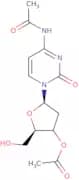
Pureza:Min. 95%3'-O, N4-Diacetyl-2'-deoxycytidine
3'-O, N4-Diacetyl-2'-deoxycytidine is a modified nucleoside that has anticancer and antiviral activities. It inhibits the synthesis of DNA by preventing the formation of deoxyribonucleotide triphosphates. 3'-O, N4-Diacetyl-2'-deoxycytidine is a novel nucleoside with high purity and high quality. The CAS number for this product is 61428-37-5. This product can be used as starting material in the synthesis of phosphoramidites or modified oligonucleotides.
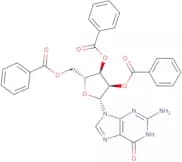
Fórmula:C13H17N3O6Pureza:Min. 95%Peso molecular:311.29 g/mol2',3',5'-Tri-O-benzoylguanosine
CAS:2',3',5'-Tri-O-benzoylguanosine is an anticancer nucleoside that inhibits the synthesis of DNA and RNA. It is a novel synthetic monophosphate nucleoside analog with antiviral and antitumor activities. 2',3',5'-Tri-O-benzoylguanosine has shown to be effective against human leukemia cells, lymphoma cells, prostate cancer cells, and melanoma cells in vitro. The drug also inhibits the growth of HIV virus in vitro.
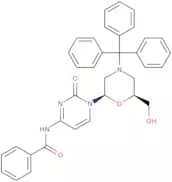
Fórmula:C31H25N5O8Pureza:Min. 95%Peso molecular:595.56 g/molN4-Benzoyl-7'-hydroxy-N-trityl-morpholino cytosine monomer
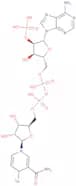
CAS:N4-Benzoyl-7'-hydroxy-N-trityl-morpholino cytosine monomer is a novel deoxyribonucleoside monomer. It is an antiviral, activator and high purity compound that can be used as a building block for the preparation of modified oligodeoxynucleotides. N4-Benzoyl-7'-hydroxy-N-trityl-morpholino cytosine monomer is synthesized by reacting 7'-O-(benzoyl)ribose with trityl chloride in the presence of morpholine to form the corresponding benzyl ester.Fórmula:C35H32N4O4Pureza:Min. 95%Forma y color:White solid.Peso molecular:572.65 g/molb-Nicotinamide-D adenine dinucleotide reduced form
CAS:Producto controladoNicotinamide-adenine dinucleotide (NADH) is a coenzyme that plays an essential role in cellular metabolism. NADH has been shown to have neuroprotective effects by improving cerebellar perfusion and reducing the severity of granule cell death in the cerebellum of experimental animals. It also inhibits synaptic activity and improves Purkinje cell survival. NADH is found in granules cells, which are located in the cerebellar cortex. These cells release this molecule when activated by an action potential, which leads to increased calcium levels inside neurons and subsequent neurotransmitter release. The major form of NADH found in these cells is NADH-NAD+ oxidoreductase (EC 1.6.5.3). The activity of this enzyme can be inhibited by a number of compounds, including nicotinamide adenine dinucleotide reduced form (NADH-NAD+ reductase), which may have therapeutic value for treating Parkinson'sFórmula:C21H29N7O17P3DPureza:Min. 95%Peso molecular:746.43 g/molCytidine hemisulfate salt
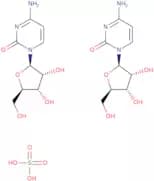
CAS:Cytidine hemisulfate salt is a postulated inhibitor of the blood group antigen. It inhibits the phosphatase activity of blood group-specific phosphatases, which may be caused by its specific inhibition of α-tocopherol and phenolphthalein. Cytidine hemisulfate salt has been shown to inhibit both adenylic and uridylic phosphatases, but does not inhibit other phosphatases. This drug is also an antigen that can stimulate B cells, which produce antibodies against it. Cytidine hemisulfate salt is found in DNA and RNA.Fórmula:C9H13N3O5H2SO4Pureza:Min. 95%Peso molecular:292.26 g/mol2'-Deoxyguanosine phosphoramidite dimer
2'-Deoxyguanosine phosphoramidite dimer is a modified nucleoside that is used in the synthesis of DNA. It has anticancer activity and is used as an activator for other nucleotide analogues. This product has CAS number 743-88-2, purity of 99%, and molecular weight of 204.23 g/mol.Pureza:Min. 95%