Nucleósidos
Se han encontrado 3569 productos de "Nucleósidos"
cis-Zeatin-o-glucoside riboside
CAS:Cis-Zeatin-o-glucoside riboside is a plant metabolite that belongs to the class of phenylpropanoids. It is the product of the conversion of zeatin by a polyphenol oxidase. Cis-Zeatin-o-glucoside riboside has been found in plants, such as Eucomis and Alnifolia, at levels ranging from 0.2 to 1%. This metabolite is also present in animal tissues, such as rat brain and bovine mammary gland. The metabolic pathway for cis-Zeatin-o-glucoside riboside has been elucidated through tissue culture experiments with Eucomis and 24-epibrassinolide. The biosynthesis of this metabolite involves a two step process: first, an oxidative cleavage of zeatin to indole-3-acetyl l -aspartic acid and then conversion to
Fórmula:C21H31N5O10Pureza:Min. 95%Peso molecular:513.5 g/mol3'-Deoxyadenosine CPG
3'-Deoxyadenosine CPG is a nucleoside that is synthetically manufactured. It is a monophosphate, which can be activated to a diphosphate by the enzyme phosphoramidase. 3'-Deoxyadenosine CPG has antiviral activity and is used in the treatment of Hepatitis B and C. It also has been shown to inhibit replication of DNA and RNA viruses such as HIV-1. 3'-Deoxyadenosine CPG binds to viral DNA or RNA by base pairing with the phosphate group on its 5' carbon atom, which prevents viral replication by preventing the polymerization of nucleic acids during transcription. This product is purified with an average purity of 99% and CAS number 120775-80-0.br>br>
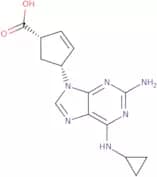
3'-Deoxyadenosine CPG (3'-DAD) is a modified nucleoside that was synthesized for use in antiviral therapy against hepatitis B virusPureza:Min. 95%Abacavir carboxylate
CAS:Abacavir carboxylate is a prodrug of abacavir that is activated by the carboxylation of the terminal hydroxyl group in the liver. It has been shown to be quantified using a liquid chromatography-mass spectrometry (LC-MS) method. Abacavir carboxylate has an additional benefit of being less sensitive to degradation by nitrate, which can interfere with the analysis of acyclovir. The deuterium label on abacavir carboxylate ensures that it is not confused with acyclovir and facilitates identification in wastewater samples.
Fórmula:C14H16N6O2Pureza:Min. 95%Peso molecular:300.32 g/molRef: 3D-NA16897
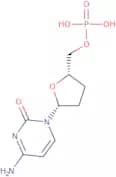
Producto descatalogado2',3'-Dideoxycytidine 5'-monophosphate
CAS:Dideoxycytidine 5'-monophosphate (DDCMP) is a molecule that inhibits HIV infection by inhibiting the synthesis of DNA. It binds to the dna template strand, preventing the addition of new nucleotides and thus blocking the progression of HIV infection. DDCMP has been shown to be potent in vitro and in vivo in clinical studies. In cell culture, DDCMP has been shown to inhibit DNA duplexes, leading to a decrease in lymphocytic leukemia cells activated by T-cell receptor stimulation. Structural biology studies have revealed that DDCMP inhibits HIV-1 reverse transcriptase through binding at the M2 subunit of the enzyme's active site.
Fórmula:C9H14N3O6PPureza:Min. 95%Forma y color:PowderPeso molecular:291.2 g/molRef: 3D-ND170662
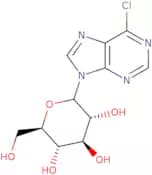
Producto descatalogado6-Chloropurine-9-b-D-glucoside
CAS:6-Chloropurine-9-b-D-glucoside is a nucleoside that belongs to the family of modified nucleosides. It is used as an activator and a phosphoramidate in the synthesis of oligonucleotides. 6-Chloropurine-9-b-D-glucoside is also used in anticancer therapy because it inhibits DNA, RNA, and protein synthesis. 6CPG has antiviral activity against herpes virus and other viruses. This compound has been shown to have antiinflammatory activities by inhibiting the production of prostaglandins. 6CPG is also classified as a carcinogen by the International Agency for Research on Cancer (IARC).
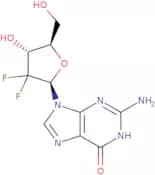
Fórmula:C11H13CIN4O5Pureza:Min. 95%Peso molecular:420.16 g/mol2'-Deoxy-2',2'-difluoroguanosine
CAS:2'-Deoxy-2',2'-difluoroguanosine (DFG) is an analog of guanosine that has been used to study the effect of guanylate kinase on cellular proliferation. This compound has also been shown to have a cytotoxic effect on leukemia cells. DFG has been shown to inhibit the growth of cancer cells and induce apoptosis in HL-60 leukemia cells. It has also been shown to inhibit the synthesis of DNA, RNA, and proteins. These effects are due to inhibition of guanylate kinase activity and may be related to its ability to cause the release of intracellular calcium ions.
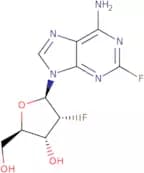
Fórmula:C10H11F2N5O4Pureza:Min. 95%Peso molecular:303.22 g/mol9-(2'-Deoxy-2'-fluoro-b-D-ribofuranosyl)-2-fluoroadenine
CAS:9-(2'-Deoxy-2'-fluoro-b-D-ribofuranosyl)-2-fluoroadenine is a modified nucleoside that is used as an antiviral and anticancer agent. It acts as an activator for the synthesis of DNA, RNA, and protein. 9-(2'-Deoxy-2'-fluoro-b-D-ribofuranosyl)-2-fluoroadenine also inhibits the growth of cancer cells by interfering with the division process. This drug is synthesized from 9-(5'-deoxy-5'-iodo-b-D-ribofuranosyl) -2,6 difluoro adenine (diFdA). The Ribonucleosides are then prepared in a similar manner to other nucleosides by using phosphoramidites. The product is then purified using HPLC.
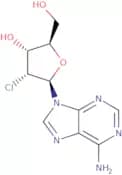
Fórmula:C10H11F2N5O3Pureza:Min. 95%Forma y color:White PowderPeso molecular:287.23 g/mol2’-Chloro-2’-deoxyadenosine
CAS:2’-Chloro-2’-deoxyadenosine (2CDA) is a synthetic nucleoside analogue that is used as an antineoplastic agent for the treatment of non-Hodgkin lymphoma and histiocytic lymphoma. It is typically used in combination with other cytotoxic drugs. 2CDA has been shown to be effective against resistant tumor cell lines and has been used to treat patients with metastatic breast cancer, Hodgkin lymphoma, and multiple myeloma. The drug can cause thrombocytopenia, which may be due to its effects on platelets or bone marrow cells. Other toxicities include bone marrow suppression, nausea, vomiting, diarrhea, anorexia, and liver damage. Patients who are at risk for these toxicities should be closely monitored.
Fórmula:C10H12ClN5O3Pureza:Min. 95%Forma y color:PowderPeso molecular:285.69 g/mol3',5'-O-[Tetrakis(1-methylethyl)-1,3-disiloxanediyl]-guanosine
CAS:3',5'-O-[Tetrakis(1-methylethyl)-1,3-disiloxanediyl]-guanosine is a nucleoside phosphoramidite that is synthesized by the reaction of 3',5'-O-[Tetrakis(trimethylsiloxy)silyl]guanosine with tetrakis(1-methylethyl) siloxane. It is a novel monophosphate analogue of guanosine and has antiviral, anticancer and activator properties. 3',5'-O-[Tetrakis(1-methylethyl)-1,3-disiloxanediyl]-guanosine is not toxic to cells and can be used in the treatment of cancer.
Fórmula:C22H39N5O6Si2Pureza:Min. 95%Peso molecular:525.75 g/molRef: 3D-NT16564
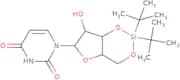
Producto descatalogado3',5'-O-(Di-tert-butylsilanediyl)uridine
CAS:3',5'-O-(Di-tert-butylsilanediyl)uridine is a novel antiviral agent that is synthesized from uridine and has been shown to be effective against herpes simplex virus. This compound was also shown in vitro to inhibit the replication of human immunodeficiency virus type 1 (HIV-1). 3',5'-O-(Di-tert-butylsilanediyl)uridine binds to single stranded DNA, preventing the synthesis of DNA by the viral enzyme reverse transcriptase. It also inhibits the production of viral proteins by binding to viral RNA polymerase. This drug may also have anticancer activity due to its ability to inhibit ribonucleotide reductase, an enzyme required for DNA synthesis.
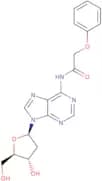
Pureza:Min. 95%2'-Deoxy-N6-phenoxyacetyladenosine
CAS:2'-Deoxy-N6-phenoxyacetyladenosine is a cyclic oligonucleotide analog that has been shown to be efficient in inhibiting the replication of RNA. It binds to the RNA polymerase, preventing transcription and replication of the nucleic acid. 2'-Deoxy-N6-phenoxyacetyladenosine is also an effective inhibitor of DNA synthesis and can inhibit the synthesis of proteins by binding to ribosomes. This drug is structurally similar to deoxyadenosine, which is a component of DNA, and it has been shown to be more potent than other analogs.
Fórmula:C18H19N5O5Pureza:Min. 97 Area-%Peso molecular:385.38 g/mol3'-Deoxy-L-thymidine
CAS:3'-Deoxy-L-thymidine is a nucleoside analog that inhibits HIV replication by interfering with the synthesis of viral DNA. The drug binds to the enzyme thymidine phosphorylase, which converts thymidine into deoxyuridine monophosphate, and prevents conversion of deoxyuridine to deoxythymidine monophosphate. This leads to inhibition of both DNA synthesis and the production of RNA. 3'-Deoxy-L-thymidine has dose-limiting toxicity at high doses and is not active against other viruses such as herpes simplex virus or cytomegalovirus. It is metabolized in the liver by enzymes such as 5-fluorocytosine, which converts it into its active form, 5-fluorouracil.
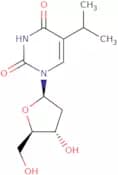
Fórmula:C10H14N2O4Pureza:Min. 95%Peso molecular:226.23 g/mol5-Isopropyl-2'-deoxyuridine
CAS:5-Isopropyl-2'-deoxyuridine is a nucleoside analog that is used in the treatment of inflammatory bowel disease. It has been shown to be effective in the treatment of Crohn's disease, ulcerative colitis, and indeterminate colitis. 5-Isopropyl-2'-deoxyuridine inhibits bacterial growth by inhibiting RNA synthesis, which leads to cell death. This drug also inhibits the production of inflammatory mediators such as prostaglandins and leukotrienes that are released from cells infected with bacteria. 5-Isopropyl-2'-deoxyuridine is converted into an active form by hydrolysis or oxidation followed by phosphorylation. This drug binds to the 5' end of bacterial DNA and prevents the formation of hydrogen bonds between adjacent bases, causing strand breakage.
Fórmula:C12H18N2O5Pureza:Min. 95%Peso molecular:270.28 g/molRef: 3D-NI16765
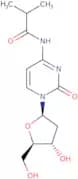
Producto descatalogado2'-Deoxy-N2-isobutyrylcytidine
CAS:2'-Deoxy-N2-isobutyrylcytidine is a nucleoside analogue of cytidine that has been modified with a 2-amino-2-deoxyribose moiety. The transaminated product is more stable than the parent compound and has improved anticoagulant activity. It has also been shown to be active in inhibiting DNA synthesis and cell proliferation in vitro. 2'-Deoxy-N2-isobutyrylcytidine inhibits the growth of bacteria by binding to their ribosomes, preventing protein synthesis. This compound has also been shown to inhibit the formation of blood clots in mice.
Fórmula:C13H19N3O5Pureza:Min. 95%Peso molecular:297.31 g/molRef: 3D-ND02994
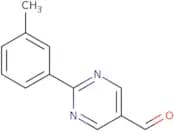
Producto descatalogado2-(3-Methylphenyl)pyrimidine-5-carbaldehyde
CAS:2-(3-Methylphenyl)pyrimidine-5-carbaldehyde is a monophosphate nucleoside analog that can be used as an antiviral drug. It has shown cytotoxic activity against cells with a high DNA content, and it inhibits the synthesis of RNA and DNA. This compound could be useful for the treatment of HIV and other viral diseases.Fórmula:C12H10N2OPureza:Min. 95%Peso molecular:198.22 g/mol6-Methyl-3-(β-D-2-deoxyribofuranosyl)furano-[2,3-d]pyrimidin-2-one
CAS:6-Methyl-3-(β-D-2-deoxyribofuranosyl)furano-[2,3-d]pyrimidin-2-one is a novel nucleoside analog that has been modified to contain an antiviral agent. It is phosphorylated at the 2' position to form a monophosphate. This compound is a potent inhibitor of HIV reverse transcriptase and human DNA polymerases α and β. The structure of this compound contains a furano ring fused with the pyrimidine moiety, which is substituted with methyl groups on C6 and C3 positions. The CAS number for 6-Methyl-3-(β-D-2-deoxyribofuranosyl)furano-[2,3-d]pyrimidin-2-one is 383897−60−7.Fórmula:C12H14N2O5Pureza:Min. 95%Peso molecular:266.25 g/molRef: 3D-IQA89760
Producto descatalogado5’-Azido-2’,5’-dideoxyuridine
CAS:5’-Azido-2’,5’-dideoxyuridine (5ADU) is a pyrimidine nucleoside that has been used to treat cancer. It is converted to 5-azidouracil which inhibits the synthesis of thymidylate, an essential component of DNA. 5ADU is also active against herpes virus and can be used as an antiviral agent. This drug has been shown to protect against radiation damage by inhibiting the formation of free radicals. The protonation of 5ADU leads to a stereochemical rearrangement that prevents the formation of free radicals. 5ADU does not inhibit bacterial enzymes, but it does have some effect on viruses, such as herpes virus, because they contain DNA or RNA similar to human cells.
Fórmula:C9H11N5O4Pureza:Min. 95%Peso molecular:253.21 g/mol2'-Deoxyadenosine phosphoramidite dimer
2'-Deoxyadenosine phosphoramidite dimer is a novel nucleoside analog that has been shown to be an effective anticancer agent in vitro. It has also been shown to inhibit viral replication and induce apoptosis in infected cells. This product is used as a DNA monophosphate, diphosphate, and triphosphate activator to increase the efficiency of DNA synthesis. It is also used as a precursor for the synthesis of other nucleosides such as 2'-deoxycytidine phosphoramidite dimer.
Pureza:Min. 95%Ref: 3D-PD145901
Producto descatalogadoN4-Benzoyl-2'-deoxy-3'-O-levulinoylcytidine
N4-Benzoyl-2'-deoxy-3'-O-levulinoylcytidine is a nucleoside that is used as an antiviral and anticancer agent. It is a modified deoxyribonucleoside that has antiviral activity against HSV-1, HSV-2, and HIV. N4-Benzoyl-2'-deoxy-3'-O-levulinoylcytidine also has anticancer effects against leukemia cells in mice. This drug is synthesized from 2′,3′,5′triacetyladenosine by the reaction of 4-(1H)-benzoyloxymethyl)phenylacetic acid with triethylamine and levulinic acid chloride.
Fórmula:C21H23N3O7Pureza:Min. 95%Peso molecular:429.43 g/molIsowyosine
CAS:Isowyosine is a protein that catalyzes the synthesis of purines, which are essential for DNA synthesis and repair. Isowyosine is found in mammalian cells, where it has been observed to play a role in the translation of messenger RNA (mRNA). Isowyosine also plays a role in the synthesis of viral proteins and viral replication. It has been shown to be active against various viruses, including herpes simplex virus and influenza virus. Isowyosine may also have anti-cancer properties due to its ability to inhibit tumor growth.
Fórmula:C14H17N5O5Pureza:Min. 95%Forma y color:PowderPeso molecular:335.32 g/mol

![3',5'-O-[Tetrakis(1-methylethyl)-1,3-disiloxanediyl]-guanosine](/_next/image/?url=https%3A%2Fstatic.cymitquimica.com%2Fproducts%2F3D%2Fthumb-webp%2FNT16564.webp&w=3840&q=75)

![6-Methyl-3-(β-D-2-deoxyribofuranosyl)furano-[2,3-d]pyrimidin-2-one](/_next/image/?url=https%3A%2Fstatic.cymitquimica.com%2Fproducts%2F3D%2Fthumb-webp%2FIQA89760.webp&w=3840&q=75)