Nucleósidos
Los nucleósidos son building blocks fundamentales de los ácidos nucleicos, compuestos por una base nitrogenada unida a una molécula de azúcar. En esta sección, puede encontrar una amplia variedad de nucleósidos esenciales para la investigación en biología molecular, bioquímica y farmacología. Estos compuestos juegan roles cruciales en la síntesis de ADN y ARN, y son vitales en varios procesos metabólicos. Los nucleósidos se utilizan para estudiar material genético, desarrollar terapias antivirales y anticancerígenas, y comprender los mecanismos celulares. En CymitQuimica, proporcionamos nucleósidos de alta calidad para apoyar sus necesidades de investigación y desarrollo, asegurando pureza y fiabilidad para sus aplicaciones experimentales.
Se han encontrado 3569 productos de "Nucleósidos"
Ordenar por
Pureza (%)
0
100
|
0
|
50
|
90
|
95
|
100
8-Aza-6-hydroxy-2-mercaptopurine
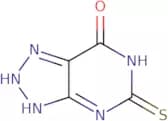
CAS:8-Aza-6-hydroxy-2-mercaptopurine (8AzaMP) is a novel nucleoside analog that is an activator of the thymidylate synthase enzyme. It has been shown to inhibit the replication of many DNA viruses and to inhibit tumor growth in animal models. 8AZA MP has been evaluated in Phase I and II clinical trials for the treatment of various cancers, including malignant melanoma, renal cell carcinoma, and chronic lymphocytic leukemia. This drug has also shown promise as a chemotherapeutic agent for AIDS patients with HIV infection or AIDS-related complex.Fórmula:C4H3N5OSPureza:Min. 95%Forma y color:PowderPeso molecular:169.17 g/mol3’-b-C-Methyl-5-methyluridine
CAS:3’-b-C-Methyl-5-methyluridine is a phosphoramidite that is used as an antiviral agent. It is also known as (2’,3’)-O-(2-methoxyethyl) 5'-O-(4,4'-dimethoxytrityl)thymidine or 3’-b-C-Methyluridine. It has been shown to have anticancer properties in vitro and in vivo, and it can be used for the treatment of prostate cancer. 3’-b-C-Methyluridine is synthesized by the reaction of uracil with bis(trimethylsilyl)acetamide followed by reaction with methylamine. The synthesis of this drug was first reported in 1975.Pureza:Min. 95%Acetoacetyl coenzyme A lithium salt
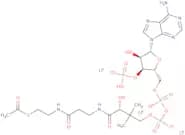
CAS:Acetoacetyl coenzyme A lithium salt is a novel phosphoramidite building block. It's a modified nucleoside that can be used in the synthesis of oligonucleotides and DNA. Acetoacetyl coenzyme A lithium salt has antiviral, anticancer, and antifungal activities.Fórmula:C25H36N7O18P3SLi4·5H2OPureza:Min. 96 Area-%Forma y color:PowderPeso molecular:965.42 g/mol5’-O-Acetyl-5-acetyloxymethyluridine
CAS:5’-O-Acetyl-5-acetyloxymethyluridine is an activated nucleoside that is a phosphoramidite. It can be used in the synthesis of oligonucleotides and has antiviral, anticancer, and antiretroviral activities. This product is a novel compound that can be used to synthesize high quality deoxyribonucleosides and diphosphate ribonucleosides. 5’-O-Acetyl-5-acetyloxymethyluridine is an activator for DNA polymerases and RNA polymerases with a high degree of purity.Fórmula:C14H18N2O9Pureza:Min. 95%Peso molecular:358.3 g/molCytidine
CAS:Cytidine is a pyrimidine nucleoside that is important in the synthesis of RNA and DNA. Cytidine deaminase is an enzyme that catalyzes the conversion of cytidine to uridine. Cytidine deaminase has been shown to be inhibited by its substrate, cytidine, and by other compounds that are structurally similar to cytidine such as uracil, thymine, and guanine. Cytidine deaminase has been shown to have a role in the development of autoimmune diseases and HIV infection. This enzyme also has an important role in the polymerization of DNA during replication. Cytidine can be used for transfection experiments and to inhibit viral replication.Fórmula:C9H13N3O5Pureza:Min. 99 Area-%Peso molecular:243.22 g/mol4’,5’-Didehydro-2’-O-(2-methoxyethyl)-5-methyluridine
CAS:4’,5’-Didehydro-2’-O-(2-methoxyethyl)-5-methyluridine (DdeO) is a novel phosphoramidite that is synthesized from 2’,3’-dideoxycytidine. It is used in DNA synthesis and as an antiviral and anticancer agent. DdeO has shown to be a potent activator of the p53 tumor suppressor gene and inhibits the proliferation of human cancer cells by inhibiting the activity of DNA polymerase alpha. DdeO also inhibits viral replication by interfering with viral DNA synthesis.Pureza:Min. 95%5-Fluorocytosine
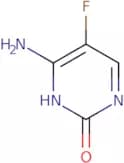
CAS:Flucytosine is an antifungal agent that inhibits the synthesis of DNA by preventing the conversion of deoxyuridine monophosphate to uracil monophosphate. It is used as an antiretroviral therapy in combination with other drugs, such as zidovudine and dideoxyinosine, to treat HIV infections. Flucytosine has been shown to have a strong antitumor response in a model system involving mice with sarcoma 180. This drug can cause serious side effects, including drug interactions and resistance mutations in microorganisms. These side effects are often observed in patients undergoing cancer chemotherapy or immunosuppressive therapy.Fórmula:C4H4FN3OPureza:Min. 95%Forma y color:White PowderPeso molecular:129.09 g/mol5’(R)-C-Methyl-5-fluorouridine
5’(R)-C-Methyl-5-fluorouridine is a nucleoside that has been shown to activate both ribonucleosides and deoxyribonucleosides. 5’(R)-C-Methyl-5-fluorouridine is a novel nucleotide with the potential to be used in anticancer therapy. It can be used as a building block for DNA synthesis, as well as being able to act as an anticancer drug by inhibiting the growth of cancer cells. This product is made from high quality raw materials and has a purity of at least 98%. It is available in powder form.Pureza:Min. 95%N6-Benzoyl-5'-O-DMT-2'-O-[([triisopropylsilyl]oxy])methyl]-adenosine
CAS:N6-Benzoyl-5'-O-DMT-2'-O-[([triisopropylsilyl]oxy])methyl]-adenosine is a novel nucleoside that is chemically modified with an ortho-benzoyl group and a triisopropylsilyl ether moiety. It is used as a precursor for the synthesis of phosphoramidites, which are then used to synthesize DNA, RNA, and antiviral agents. N6-Benzoyl-5'-O-DMT-2'-O-[([triisopropylsilyl]oxy])methyl]-adenosine has shown anticancer activity in vitro against human tumor cell lines. The results showed that this agent inhibited the proliferation of tumor cells and induced apoptosis in these cells. This compound also has antiviral properties by inhibiting viral replication at the level of DNA synthesis and RNA transcription.Fórmula:C48H57N5O8SiPureza:Min. 95%Peso molecular:860.08 g/molN4-Acetyl-2'-deoxycytidine
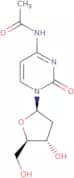
CAS:N4-Acetyl-2'-deoxycytidine is a nucleoside analogue that acts as an inhibitor of DNA synthesis. It binds to the active site of the enzyme ribonucleotide reductase, blocking the conversion of ribonucleotides to deoxyribonucleotides. This prevents DNA synthesis and replication, which leads to cell death. N4-Acetyl-2'-deoxycytidine has been shown to be more efficient than other analogues in terms of energy efficiency, control levels, and constant linear model. This compound is reactive and can cause low yields when isolated from solutions with high concentrations. A diode can be used for analytical purposes, while calcium binding may be used as a mathematical model in order to analyze this drug.Fórmula:C11H15N3O5Pureza:Min. 98 Area-%Forma y color:PowderPeso molecular:269.25 g/mol3'-O-Allyladenosine
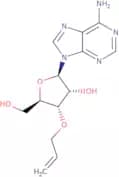
CAS:3'-O-Allyladenosine is an antiviral agent that inhibits the replication of DNA and RNA viruses. It has been shown to have anticancer properties, and is a novel nucleoside analog with potential as an antitumor agent. 3'-O-Allyladenosine is a modified nucleoside analog that can be synthesized with high purity and quality. This compound has shown antiviral activity against influenza virus and herpes simplex virus type 1. In addition, 3'-O-Allyladenosine has been found to inhibit tumor growth in mice without any significant side effects.
Fórmula:C13H17N5O4Pureza:Min. 95%Forma y color:PowderPeso molecular:307.31 g/molO6-Methylguanosine
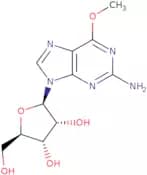
CAS:Intermediate in the synthesis of nelarabineFórmula:C11H15N5O5Pureza:Min. 95%Forma y color:PowderPeso molecular:297.27 g/mol9-(b-D-Arabinofuranosyl)adenine
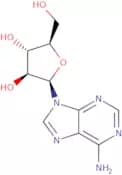
CAS:9-(b-D-Arabinofuranosyl)adenine is a nucleoside that is used as an antiviral agent. It binds to viral RNA and inhibits viral replication. 9-(b-D-Arabinofuranosyl)adenine has been shown to have potent side-effect profiles, including myocardial infarct, neuronal death, and immunological reactions. These effects are due to its ability to inhibit the synthesis of guanine nucleotides in the heart and brain cells, which are essential for energy production and neurotransmitter release respectively. 9-(b-D-Arabinofuranosyl)adenine also binds to toll-like receptors (TLRs), which are proteins found on the surface of cells that recognize invading microbes or foreign substances. This binding leads to activation of immune response pathways.Fórmula:C10H13N5O4Pureza:Min. 95%Forma y color:White PowderPeso molecular:267.24 g/molN4-Benzoyl-2'-deoxy-5'-O-DMT-cytidine 3'-thiophosphoramidite
N4-Benzoyl-2'-deoxy-5'-O-DMT-cytidine 3'-thiophosphoramidite is a novel nucleoside that has been shown to inhibit the growth of cancer cells in vitro. It is an analogue of cytidine and inhibits DNA synthesis by inhibiting the enzyme ribonucleotide reductase, which converts ribonucleotides to deoxyribonucleotides. This drug also inhibits the synthesis of viral RNA in cells infected with human immunodeficiency virus (HIV) and herpes simplex virus type 1 (HSV-1). N4-Benzoyl-2'-deoxy-5'-O-DMT-cytidine 3'-thiophosphoramidite is a phosphoramidite that is synthesized from 2,4,6-trichlorobenzoyl chloride, 5'-O-[(N,N-diisopropFórmula:C50H51N4O8PS2Pureza:Min. 95%Peso molecular:931.07 g/mol5-Hydroxymethylcytidine
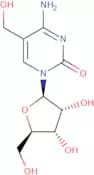
CAS:5-Hydroxymethylcytidine is a nucleoside that has been shown to inhibit the activity of RNA polymerase by forming hydrogen bonds with the enzyme. It is used in vitro to study the role of messenger RNA in regulating gene expression, and also as a probe for transcriptase activity. 5-Hydroxymethylcytidine has also been shown to have a biological function in solid tumours and may be an analytical method for detecting cancer.Fórmula:C10H15N3O6Pureza:Min. 95 Area-%Forma y color:White PowderPeso molecular:273.24 g/mol9-(b-D-Arabinofuranosyl)isoguanine
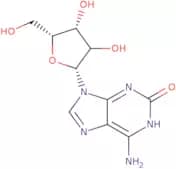
CAS:9-(b-D-Arabinofuranosyl)isoguanine is a modified nucleoside that has antiviral activity. It is synthesized by substituting the 2'-hydroxyl group of deoxyribose with an arabinofuranose, which can be phosphorylated to form 9-(b-D-arabinofuranosyl)isoguanine 5'-monophosphate. This novel antiviral agent inhibits the synthesis of viral DNA and RNA, and is effective against a wide range of viruses in vitro. The drug was shown to have anticancer activities in animal models and has been patented for use as a chemotherapeutic agent against leukemia, lymphoma, and other cancers.Fórmula:C10H13N5O5Pureza:Min. 95%Forma y color:White PowderPeso molecular:283.25 g/molInosine 5'-diphosphate disodium salt
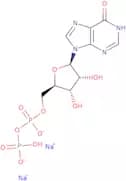
CAS:Inosine-5'-diphosphate disodium salt (IDPS) is a nitro compound that is used in the synthesis of antibacterial drugs. It is also used in the production of polymers and as a precursor to other organic compounds. IDPS has been shown to have antibacterial activity against halogeno bacteria, such as buprestidae, and many Gram-positive bacteria, including encapsulated strains. IDPS has been shown to be effective against both damaged cells and healthy cells in culture. The mechanism of action may involve inhibition of protein synthesis by blocking the ribosomes or by interfering with DNA replication. This drug also inhibits growth rate of japonica rice and heterocycles.Fórmula:C10H12N4Na2O11P2Pureza:Min. 90.0 Area-%Forma y color:White PowderPeso molecular:472.15 g/mol4’-C-Methyl-N6-methyladenosine
CAS:4’-C-Methyl-N6-methyladenosine (4’-MeA) is a novel, synthetic nucleoside that has antiviral activity. It is a phosphoramidite nucleoside that is modified by the methylation of the adenosine moiety to give it antiviral activity. 4’-MeA can be used as an activator for oligonucleotide synthesis and as a potential anticancer drug.Pureza:Min. 95%1-(2'-Deoxy-5'-O-DMT-2'-fluoro-β-D-arabinofuranosyl)thymine
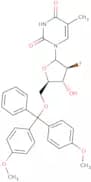
CAS:1-(2'-Deoxy-5'-O-DMT-2'-fluoro-b-D-arabinofuranosyl)thymine is a chemically modified nucleoside that contains a fluorinated sugar moiety and a thymine base, with a dimethoxytrityl (DMT) protecting group on the 5'-hydroxyl of the sugar.Fórmula:C31H31FN2O7Pureza:Min. 95%Peso molecular:562.6 g/mol2'-O-tert-Butyldimethylsilyl-5'-O-DMT-N2-isobutyrylguanosine 3'-CE phosphoramidite
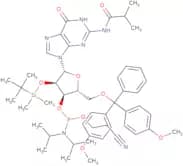
CAS:The 2'-O-tert-Butyldimethylsilyl-5'-O-DMT-N2-isobutyrylguanosine 3'-CE phosphoramidite is an oligomer with a modified nucleoside. The modification of the nucleoside has been shown to be more efficient than other modifications, such as fluorine or bromine substitutions. This product is used in the synthesis of DNA and RNA oligomers. The coupling efficiency is high and can be used for ligand binding studies.Fórmula:C50H68N7O9PSiPureza:Min. 98 Area-%Forma y color:White PowderPeso molecular:970.18 g/mol






![N6-Benzoyl-5'-O-DMT-2'-O-[([triisopropylsilyl]oxy])methyl]-adenosine](/_next/image/?url=https%3A%2Fstatic.cymitquimica.com%2Fproducts%2F3D%2Fthumb-webp%2FNB172672.webp&w=3840&q=75)