Nucleósidos
Los nucleósidos son building blocks fundamentales de los ácidos nucleicos, compuestos por una base nitrogenada unida a una molécula de azúcar. En esta sección, puede encontrar una amplia variedad de nucleósidos esenciales para la investigación en biología molecular, bioquímica y farmacología. Estos compuestos juegan roles cruciales en la síntesis de ADN y ARN, y son vitales en varios procesos metabólicos. Los nucleósidos se utilizan para estudiar material genético, desarrollar terapias antivirales y anticancerígenas, y comprender los mecanismos celulares. En CymitQuimica, proporcionamos nucleósidos de alta calidad para apoyar sus necesidades de investigación y desarrollo, asegurando pureza y fiabilidad para sus aplicaciones experimentales.
Se han encontrado 3567 productos de "Nucleósidos"
Ordenar por
Pureza (%)
0
100
|
0
|
50
|
90
|
95
|
100
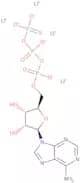
Adenosine-5'-O-(1-thiotriphosphate) lithium salt - 100 mM aqueous solution
CAS:<p>Adenosine-5'-O-(1-thiotriphosphate) lithium salt is an inhibitor of the guanine nucleotide-binding protein that is reversibly inhibited by adenosine triphosphate. It has been shown to inhibit HIV infection by binding to the Ryanodine receptor and blocking the release of calcium ions from intracellular stores. This prevents the activation of caspases, which are enzymes that cause cell lysis. Adenosine-5'-O-(1-thiotriphosphate) lithium salt also blocks transcription and polymerase chain reactions, and may inhibit the growth of cancer cells by inhibiting epidermal growth factor receptors on the cell surface.</p>Fórmula:C10H12Li4N5O12P3SPureza:Min. 95%Forma y color:PowderPeso molecular:546.98 g/mol2'-Deoxyinosine
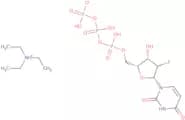
CAS:<p>2'-Deoxyinosine is an antimicrobial peptide that has been shown to have potent activity against Gram-positive bacteria, including Staphylococcus aureus. 2'-Deoxyinosine binds to the 3′-hydroxyl group of nucleic acid, preventing DNA replication and transcription. This binding also prevents ribosomal RNA from binding to the ribosome, inhibiting protein synthesis. 2'-Deoxyinosine has been detected using a highly sensitive optical sensor and can be used as a model system for studying the interaction between dsDNA duplexes and other biomolecules. The pharmacokinetic properties of this molecule have been determined in rats by measuring its concentration in serum over time after injection. These data were then used to determine the amount of 2'-deoxyinosine that was needed to inhibit bacterial growth in water samples.</p>Fórmula:C10H12N4O4Pureza:Min. 98 Area-%Forma y color:White PowderPeso molecular:252.23 g/mol1-(2'-Deoxy-2'-fluoro-b-D-arabinofuranosyl)uracil 5'-triphosphate triethylammonium salt
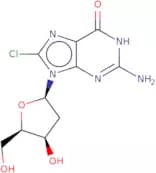
<p>1-(2'-Deoxy-2'-fluoro-b-D-arabinofuranosyl)uracil 5'-triphosphate triethylammonium salt is an Activator for the synthesis of DNA and RNA. It is a novel synthetic nucleoside that has anticancer activity. 1-(2'-Deoxy-2'-fluoro-b-D-arabinofuranosyl)uracil 5'-triphosphate triethylammonium salt is used as an antiviral agent, inhibiting viral replication by blocking the RNA polymerase enzyme.</p>Fórmula:C9H13FN2O14P3·C6H16NPureza:Min. 95%Peso molecular:587.32 g/mol8-Chloro-2'-deoxyguanosine
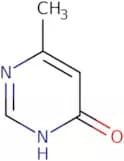
CAS:<p>8-Chloro-2'-deoxyguanosine is a reactive oxygen species that can cause oxidative damage to DNA. This compound is generated by the hypochlorous acid (HOCl) in cells and can be found in human tissues. 8-Chloro-2'-deoxyguanosine can also be generated by the HOCl in diabetic patients, where it has been shown to cause oxidative damage to DNA. 8-Chloro-2'-deoxyguanosine is a product of the reaction between hydrogen peroxide and catalase, and it is activated by HOCl. It has been shown to be carcinogenic in animal models, where it causes DNA damage that leads to cancer.</p>Fórmula:C10H12ClN5O4Pureza:Min. 95%Forma y color:PowderPeso molecular:301.69 g/mol4-Hydroxy-6-methylpyrimidine
CAS:<p>4-Hydroxy-6-methylpyrimidine (4-OHMP) is a metabolite of trimethyltin. It is formed in the liver by methylation of 4,6-dimethylpyrimidine (4,6-DMPU). The levels of 4-OHMP in urine samples are used to monitor exposure to this agent. The median values for urinary concentrations of 4-OHMP are typically 10 times higher than those found in blood samples. The metabolite can be detected in urine up to 2 weeks after an individual’s last contact with trimethyltin. This compound has been shown to inhibit the synthesis of glycol dimethyl ethers and carbamates.</p>Fórmula:C5H6N2OPureza:Min. 95%Peso molecular:110.11 g/mol3'-O-Allylguanosine
<p>3'-O-Allylguanosine is a antiviral agent that belongs to the group of synthetic nucleosides. It is a monophosphate analog of guanosine and an activator of ribonucleotide reductase. 3'-O-Allylguanosine has been shown to be effective against cancer cells in vitro. It has also been shown to inhibit DNA synthesis and promote DNA degradation in human leukemia cells, suggesting its potential use for the treatment of leukemia.</p>Fórmula:C13H17N5O5Pureza:Min. 95%Peso molecular:323.3 g/molTrifluorothymidine
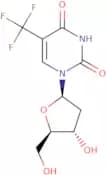
CAS:<p>Treats herpes-associated keratitis and keratoconjunctivitis; antineoplastic</p>Fórmula:C10H11F3N2O5Pureza:Min. 95%Forma y color:PowderPeso molecular:296.2 g/molN6-Benzoyl-2'-deoxy-2'-fluoroadenosine 3'-CE phosphoramidite
<p>N6-Benzoyl-2'-deoxy-2'-fluoroadenosine 3'-CE phosphoramidite is a novel nucleoside that has antiviral and anticancer properties. It is an analog of adenosine and inhibits the action of ribonucleotide reductase, which is an enzyme that converts ribonucleotides to deoxyribonucleotides. N6-Benzoyl-2'-deoxy-2'-fluoroadenosine 3'-CE phosphoramidite also inhibits the synthesis of DNA, which may be due to its inhibition of DNA polymerase. This compound has been shown to inhibit the growth of leukemia cells in culture and induce apoptosis in human tumor cells.</p>Fórmula:C47H51FN7O7PPureza:Min. 95%Peso molecular:875.92 g/mol2'-Deoxy-5'-O-DMT-5-iodouridine
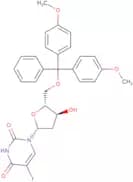
CAS:<p>2'-Deoxy-5'-O-DMT-5-iodouridine is an intercalating agent that binds to DNA and RNA. It can be used as a probe for the detection of specific sequences in human cells. The fluorophore attached to the molecule allows it to be detected by fluorescence microscopy, while the chromophore is responsible for its ability to emit light at a wavelength of 535 nm. 2'-Deoxy-5'-O-DMT-5-iodouridine has been shown to enhance nucleotide excision repair and increase the sensitivity of cancer cells to chemotherapy drugs such as cisplatin. The molecule can also be used as a fluorescent protein marker in her-2 gene amplification and overexpression studies.</p>Fórmula:C30H29IN2O7Pureza:Min. 95%Forma y color:PowderPeso molecular:656.48 g/mol5'-Amino-5'-deoxyguanosine
CAS:<p>5'-Amino-5'-deoxyguanosine (5-ADG) is an intermediate in the de novo synthesis of guanine nucleotides. It can be synthesized from 5-aminoimidazole ribonucleotide and guanosine monophosphate (GMP). 5-ADG is a substrate for the enzyme GTP cyclohydrolase, which converts it to GMP. This intermediate can also be formed by the action of phosphoryl chloride on 5-aminoimidazole ribonucleotide. The reaction of 5-ADG with malonic acid leads to the formation of inosinic acid, which has been postulated to be a precursor of purines. This conversion is catalyzed by adenylosuccinate synthetase and the enzyme adenylosuccinase.</p>Fórmula:C10H14N6O4Pureza:Min. 95 Area-%Forma y color:PowderPeso molecular:282.26 g/molN6-Benzoyl-2’-chloro-2’-deoxy-5’-O-DMT-adenosine
<p>N6-Benzoyl-2’-chloro-2’-deoxy-5’-O-DMT-adenosine is a novel nucleoside that has been shown to have anti-cancer, antiviral, and antiinflammatory activities. It is structurally related to 2’,3’,5’triphosphate adenine (TPAD) and inhibits the synthesis of DNA by competitive inhibition of ribonucleotide reductase. TPAD also induces apoptosis in tumor cells. N6BzCdA has an IC50 value of 0.5 μM for TPAD synthetase from Escherichia coli and rat liver, indicating that it is a potent inhibitor of this enzyme. The purity level of this product is greater than 98%, with a CAS number of 67972-83-1.</p>Pureza:Min. 95%Uridine-5-oxyacetic acid methyl ester
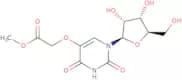
CAS:<p>Uridine-5-oxyacetic acid methyl ester is a modified nucleotide that is an intermediate in the biosynthesis of uridine. This molecule can be synthesized from 5-hydroxymethyluridine and malonic acid by a methyltransferase. Uridine-5-oxyacetic acid methyl ester can also be obtained from the metabolism of deoxyribose. Analysis of this molecule is possible with spectrometric, mass spectrometric, and chemical structures methods. It has been shown to have a function in translation and protein synthesis. The chemical structure of uridine-5-oxyacetic acid methyl ester has been determined to be guanosine-3',5'-bis(2'-carboxyethyl)phosphate, which is different from that found in DNA or RNA.</p>Fórmula:C12H16N2O9Pureza:Min. 95%Forma y color:PowderPeso molecular:332.26 g/molβ-Nicotinamide adenine dinucleotide sodium dihydrate
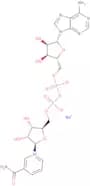
CAS:<p>Coenzyme and regenerating electron donor in catabolic processes</p>Fórmula:C21H26N7NaO14P2•(H2O)2Pureza:Min. 95%Forma y color:White PowderPeso molecular:721.44 g/mol2'-Deoxyguanosine-5'-carboxylic acid
CAS:<p>2'-Deoxyguanosine-5'-carboxylic acid is a synthetic nucleoside that has antiviral and anticancer properties. It is an activator of DNA polymerase, which is used in the synthesis of DNA. 2'-Deoxyguanosine-5'-carboxylic acid also inhibits the activity of ribonucleotide reductase and deoxyribonucleotide reductase, which are enzymes that catalyze the conversion of ribose-5-phosphate to deoxyribose-5-phosphate. This substance also blocks viral replication by inhibiting RNA synthesis in cells infected with HIV or herpes simplex virus type 1.</p>Fórmula:C10H11N5O5Pureza:Min. 95%Peso molecular:281.23 g/mol2,2'-Anhydrothymidine
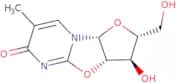
CAS:<p>2,2'-Anhydrothymidine is an anhydro version of thymidine. As 2,2'-Anhydrothymidine is a modified version of thymidine it can help researchers understand what happens when DNA is changed or damaged. Other possible uses as in research related to antiviral drug creation.</p>Fórmula:C10H12N2O5Pureza:Min. 95%Forma y color:White Off-White PowderPeso molecular:240.21 g/mol8-Allyloxy-9-(b-D-xylofuranosyl)guanine
<p>8-Allyloxy-9-(b-D-xylofuranosyl)guanine is a novel nucleoside that is an activator of ribonucleotide reductase. It is a deoxyribonucleoside and monophosphate, and it has been shown to be active against cancer cells and viruses. 8-Allyloxy-9-(b-D-xylofuranosyl)guanine inhibits the growth of cancer cells by inhibiting DNA synthesis and protein synthesis, which may be due to its inhibition of ribonucleotide reductase. This drug also has antiviral activity against HIV, herpes simplex virus type 1 (HSV1), and herpes simplex virus type 2 (HSV2).</p>Pureza:Min. 95%TFA-aa-dUPhosphoramidite
<p>TFA-aa-dUPhosphoramidite is a high quality, novel DNA phosphoramidite. It is used for the synthesis of deoxyribonucleosides and ribonucleosides. TFA-aa-dUPhosphoramidite has been shown to be an activator in the synthesis of RNA and DNA, and it is also resistant to degradation by nucleases. This product has CAS No.</p>Fórmula:C44H51N5O9PPureza:Min. 95%Peso molecular:824.88 g/mol2',3'-Di-O-acetyl-D-uridine
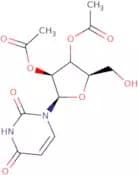
CAS:<p>2',3'-Di-O-acetyl-D-uridine is a nucleoside for use in research applications</p>Fórmula:C13H16N2O8Pureza:Min. 98 Area-%Forma y color:White PowderPeso molecular:328.27 g/mol2'-Deoxyguanosine 3'-O-L-valinyl ester
<p>2'-Deoxyguanosine 3'-O-L-valinyl ester is a synthetic nucleoside obtained from 2'-deoxyguanosine and valine. It has antiviral activity against DNA viruses, such as herpes simplex virus and vaccinia virus, and anticancer activity. 2'-Deoxyguanosine 3'-O-L-valinyl ester is an analog of guanosine that has been modified to contain an L-valyl group at the 3' position. This modification increases the stability of this nucleoside in aqueous solutions and provides potent antiviral and anticancer activity.</p>Pureza:Min. 95%9-(2'-O-Acetyl-3'-deoxy-3'-fluoro-5'-O-toluoyl-b-D-ribofuranosyl)-6-phenylpurine
<p>9-(2'-O-Acetyl-3'-deoxy-3'-fluoro-5'-O-toluoyl-b-D-ribofuranosyl)-6-phenylpurine (FTC) is a novel antiviral nucleoside analog that inhibits the synthesis of DNA by inhibiting the enzyme DNA polymerase. It has been shown to be effective against HIV in vitro. FTC exhibits anticancer activity through inhibition of DNA synthesis and induction of apoptosis. FTC also has high purity and quality, as it is synthesized chemically without any purification steps.</p>Pureza:Min. 95%