Nucleósidos
Los nucleósidos son building blocks fundamentales de los ácidos nucleicos, compuestos por una base nitrogenada unida a una molécula de azúcar. En esta sección, puede encontrar una amplia variedad de nucleósidos esenciales para la investigación en biología molecular, bioquímica y farmacología. Estos compuestos juegan roles cruciales en la síntesis de ADN y ARN, y son vitales en varios procesos metabólicos. Los nucleósidos se utilizan para estudiar material genético, desarrollar terapias antivirales y anticancerígenas, y comprender los mecanismos celulares. En CymitQuimica, proporcionamos nucleósidos de alta calidad para apoyar sus necesidades de investigación y desarrollo, asegurando pureza y fiabilidad para sus aplicaciones experimentales.
Se han encontrado 3569 productos de "Nucleósidos"
Ordenar por
Pureza (%)
0
100
|
0
|
50
|
90
|
95
|
100
5’(R)-C-Methyluridine
CAS:<p>5’(R)-C-Methyluridine is a synthetic nucleoside that is an antiviral agent. It inhibits the enzyme RNA polymerase and thereby prevents the production of viral RNA. The compound can be used as a potential anticancer drug because it inhibits the synthesis of DNA in tumor cells. 5’(R)-C-Methyluridine has been shown to inhibit the growth of some bacterial species, such as Mycobacterium tuberculosis, but not other bacteria, such as Escherichia coli.</p>Pureza:Min. 95%5'-O-tert-Butyldimethylsilyl-2'-deoxyuridine
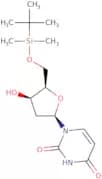
<p>5'-O-tert-Butyldimethylsilyl-2'-deoxyuridine (5'-O-TBDMSU) is a modified nucleoside that has antiviral, anticancer and novel activities. It is synthesized by the reaction of 5'-O-tert-butyldimethylsilyl-2'-deoxyuridine with methyl chloroformate. 5'-O-TBDMSU has been shown to inhibit viral replication in cell culture. The antiviral activity of 5'-O-TBDMSU may be due to its ability to inhibit DNA synthesis by inhibiting the incorporation of deoxyribonucleotide triphosphates into DNA or by inhibiting the activity of DNA polymerases. This compound also inhibits the replication of RNA viruses such as HIV and hepatitis C virus, which are dependent on deoxyribonucleosides for their replication.</p>Fórmula:C15H26N2O5SiPureza:Min. 95%Peso molecular:342.47 g/mol5'-Adenylic acid monoanhydride with (dichlorophosphonomethyl)phosphonic acid
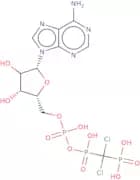
CAS:<p>5'-Adenylic acid monoanhydride with (dichlorophosphonomethyl)phosphonic acid is a neuronal blocker that inhibits the enzyme acetylcholinesterase. It is an efficient inhibitor of AChE and has been shown to be effective in animal models of Alzheimer's disease. The inhibition of AChE by 5'-Adenylic acid monoanhydride with (dichlorophosphonomethyl)phosphonic acid leads to increased levels of acetylcholine, which can stimulate nerve impulses and slow or stop the progression of Alzheimer's disease.</p>Fórmula:C11H16Cl2N5O12P3Pureza:Min. 95%Peso molecular:574.1 g/mol5'-O-Benzoyl-2',3'-dideoxy-3'-fluorouridine
<p>5'-O-Benzoyl-2',3'-dideoxy-3'-fluorouridine is a novel nucleoside that is synthesized from ribonucleosides. It is an inhibitor of the RNA polymerase enzyme, which prevents the transcription and replication of DNA. 5'-O-Benzoyl-2',3'-dideoxy-3'-fluorouridine also inhibits viral DNA synthesis by preventing viral RNA from being translated into DNA. This product has been shown to be active against a wide range of viruses, including influenza A virus, herpes simplex virus type 1, and vaccinia virus.</p>Fórmula:C16H15FN2O5Pureza:Min. 95%Peso molecular:334.35 g/mol5-Hydroxymethylcytidine
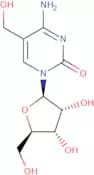
CAS:<p>5-Hydroxymethylcytidine is a nucleoside that has been shown to inhibit the activity of RNA polymerase by forming hydrogen bonds with the enzyme. It is used in vitro to study the role of messenger RNA in regulating gene expression, and also as a probe for transcriptase activity. 5-Hydroxymethylcytidine has also been shown to have a biological function in solid tumours and may be an analytical method for detecting cancer.</p>Fórmula:C10H15N3O6Pureza:Min. 95 Area-%Forma y color:White PowderPeso molecular:273.24 g/molInosine 5'-triphosphate lithium salt
<p>Inosine 5'-triphosphate lithium salt is a nucleoside that is used as an activator for DNA polymerase in the synthesis of deoxyribonucleotides. It has been shown to have anticancer properties and can be used to treat leukemia, lymphoma, and ovarian cancer. Inosine 5'-triphosphate lithium salt has also been shown to inhibit the growth of bacteria by inhibiting RNA synthesis.</p>Fórmula:C10H15N4O14P3FPureza:Min. 95%Peso molecular:527.16 g/mol2'-Deoxynucleoside-5'-triphosphate mixture
<p>2'-Deoxynucleoside-5'-triphosphate mixture are a group of phosphorylated compounds that are used in the synthesis of DNA. They are used as antiviral and anticancer agents, as well as activators for certain enzymes. They are also used to synthesize deoxyribonucleotides. The 2'-deoxynucleoside-5'-triphosphate mixture is purified and modified to produce high purity products for research purposes. These compounds have novel properties, making them suitable for creating new drugs with improved efficacy and reduced side effects.</p>Pureza:Min. 95%Morpholino C monomer
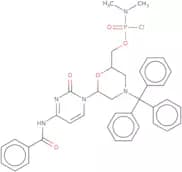
CAS:<p>Morpholino C monomer is a nucleoside amidite used to prepare morpholino oligomers</p>Fórmula:C37H37ClN5O5PPureza:Min. 98 Area-%Forma y color:White PowderPeso molecular:698.15 g/mol5'-O-tert-Butyldimethylsilyl-2,2'-anhydrouridine
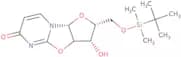
<p>5'-O-tert-Butyldimethylsilyl-2,2'-anhydrouridine is a modified nucleoside that has been used as an anticancer agent and antiviral and antifungal agent. It has been shown to inhibit the growth of tumor cells in animal models by inhibiting DNA synthesis and repair. 5'-O-tert-Butyldimethylsilyl-2,2'-anhydrouridine is also able to bind to RNA with high affinity, making it a potential candidate for use as an antiviral agent against HIV. This compound does not occur naturally in cells and can be synthesized from other nucleosides.</p>Fórmula:C15H24N2O5SiPureza:Min. 95%Peso molecular:340.45 g/mol5-Fluorocytosine
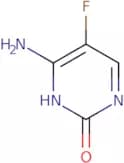
CAS:<p>Flucytosine is an antifungal agent that inhibits the synthesis of DNA by preventing the conversion of deoxyuridine monophosphate to uracil monophosphate. It is used as an antiretroviral therapy in combination with other drugs, such as zidovudine and dideoxyinosine, to treat HIV infections. Flucytosine has been shown to have a strong antitumor response in a model system involving mice with sarcoma 180. This drug can cause serious side effects, including drug interactions and resistance mutations in microorganisms. These side effects are often observed in patients undergoing cancer chemotherapy or immunosuppressive therapy.</p>Fórmula:C4H4FN3OPureza:Min. 95%Forma y color:White PowderPeso molecular:129.09 g/molN6-Benzoyl-2'-O-tert-butyldimethylsilyl-5'-O-trityladenosine 3'-CE phosphoramidite
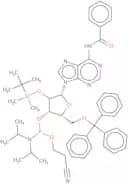
<p>N6-Benzoyl-2'-O-tert-butyldimethylsilyl-5'-O-trityladenosine 3'-CE phosphoramidite is a novel modified nucleoside. It is an antiviral and anticancer agent that has been shown to inhibit the replication of DNA in vitro. It also inhibits the synthesis of RNA and protein, which may contribute to its anti-cancer properties. N6-Benzoyl-2'-O-tert-butyldimethylsilyl-5'-O-trityladenosine 3'-CE phosphoramidite is synthesized from 2,6,8 trichloroquinoline and 2,3,4 trimethoxybenzaldehyde via a novel process with high purity.</p>Fórmula:C51H62N7O6PSiPureza:Min. 95%Peso molecular:928.17 g/molN4-Acetyl-2'-O-tert-butyldimethylsilyl-5'-O-DMT-cytidine 3'-CE phosphoramidite
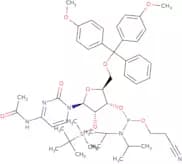
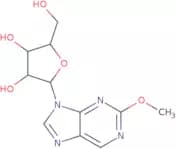
CAS:<p>N4-Acetyl-2'-O-tert-butyldimethylsilyl-5'-O-DMT-cytidine 3'-CE phosphoramidite is a novel nucleoside analogue with antiviral and anticancer potential. It is a modified nucleoside that contains an acetyl group at the 4' position. The 3'-OH group has been replaced by a tertiary butyldimethylsilyl group, which renders the compound resistant to deamination by nucleases. N4-Acetyl-2'-O-tert-butyldimethylsilyl-5'-O-DMT-cytidine 3'-CE phosphoramidite also shows high purity and high quality.</p>Fórmula:C47H64N5O9PSiPureza:Min. 98 Area-%Forma y color:White PowderPeso molecular:902.11 g/mol2-Methoxy-9-(b-D-ribofuranosyl)purine
CAS:<p>2-Methoxy-9-(b-D-ribofuranosyl)purine (2MeO) is a nucleoside that is structurally similar to adenosine. It has antiviral and anticancer activities, as well as the ability to activate phosphoramidites. The 2MeO molecule consists of a modified 9-mer ribofuranose phosphate, which can be synthesized from 2-deoxyribofuranose phosphate by selective oxidation. 2MeO has been shown to inhibit the growth of tumor cells in vitro and in vivo, and also inhibits the replication of DNA and RNA viruses. This drug is considered novel because it does not exist naturally in any organism.</p>Pureza:Min. 95%Cyclopentenyl cytosine 5'-triphosphate sodium salt
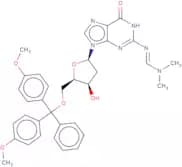
<p>Cyclopentenyl cytosine 5'-triphosphate sodium salt is a synthetic, activator diphosphate. It is used as a phosphoramidite in the synthesis of DNA and RNA. Cyclopentenyl cytosine 5'-triphosphate sodium salt has been shown to have anticancer and antiviral properties.</p>Pureza:Min. 95%2'-Deoxy-N2-DMF-5'-O-DMT-guanosine
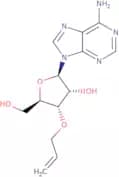
CAS:<p>2'-Deoxy-N2-DMF-5'-O-DMT-guanosine is a monophosphate nucleoside that has antiviral, anticancer, and high purity properties. It is synthesized by the phosphoramidite method from 2'-deoxy-N2-DMF and 5'-O-DMT guanosine. This compound has been shown to inhibit the growth of human cancer cells in vitro and in vivo. It also inhibits HIV replication in vitro and is not toxic to normal cells.</p>Fórmula:C34H36N6O6Pureza:Min. 95%Forma y color:White PowderPeso molecular:624.7 g/mol3'-O-Allyladenosine
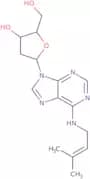
CAS:<p>3'-O-Allyladenosine is an antiviral agent that inhibits the replication of DNA and RNA viruses. It has been shown to have anticancer properties, and is a novel nucleoside analog with potential as an antitumor agent. 3'-O-Allyladenosine is a modified nucleoside analog that can be synthesized with high purity and quality. This compound has shown antiviral activity against influenza virus and herpes simplex virus type 1. In addition, 3'-O-Allyladenosine has been found to inhibit tumor growth in mice without any significant side effects.</p>Fórmula:C13H17N5O4Pureza:Min. 95%Forma y color:PowderPeso molecular:307.31 g/mol2’-Deoxy-N6-isopentenyladenosine
CAS:<p>2’-Deoxy-N6-isopentenyladenosine (2’-DIA) is a monophosphate nucleoside that has antiviral properties. It activates DNA polymerase and inhibits tumor proliferation by inhibiting the synthesis of RNA and DNA. 2’-DIA is an analog of adenosine, which is used in the anticancer drug gemcitabine. 2’-DIA is synthesized through the condensation of 6-(2'-deoxyisopentenyl)adenosine with diphosphate. This compound also functions as a ribonucleotide, meaning it can be incorporated into RNA chains to form new proteins.</p>Pureza:Min. 95%2'-Deoxy-5'-O-DMT-N6-phenoxyacetyladenosine 3'-CE phosphoramidite
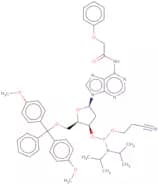
CAS:<p>Amidite designed to withstand prolonged exposure to strongly alkaline conditions during heating with ammonium hydroxide solution.</p>Fórmula:C48H54N7O8PPureza:Min. 95%Forma y color:PowderPeso molecular:887.98 g/mol1,5-Anhydro-2,3-dideoxy-2-(N6-benzoyladenin-1-yl)-D-glucitol
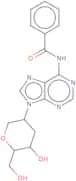
<p>1,5-Anhydro-2,3-dideoxy-2-(N6-benzoyladenin-1-yl)-D-glucitol is a novel modified nucleoside that is used as an activator in the synthesis of oligodeoxynucleotides and ribonucleosides. It is also used for the synthesis of phosphoramidites for DNA and RNA molecules. This product is available in high purity and quality.</p>Fórmula:C18H19N5O4Pureza:Min. 95%Peso molecular:369.38 g/mol6-(4-Morpholino)-9-(β-D-ribofuranosyl)-9H-purine
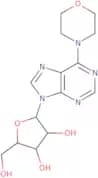
CAS:<p>6-(4-Morpholino)-9-(β-D-ribofuranosyl)-9H-purine is a modified monophosphate analog of adenosine. It is an antiviral agent that inhibits the synthesis of nucleic acids in virus-infected cells, preventing viral replication and spread. 6-(4-Morpholino)-9-(β-D-ribofuranosyl)-9H-purine is also used as a radiosensitizer to treat cancer. This drug is synthesized by high purity, high quality and reliable suppliers.</p>Fórmula:C14H19N5O5Pureza:Min. 95%Forma y color:PowderPeso molecular:337.33 g/mol