Nucleósidos
Se han encontrado 3569 productos de "Nucleósidos"
3’-Deoxy-3’-fluoro-6-thioinosine
CAS:Please enquire for more information about 3’-Deoxy-3’-fluoro-6-thioinosine including the price, delivery time and more detailed product information at the technical inquiry form on this page
Pureza:Min. 95%9-(2'-O-Acetyl-3'-deoxy-3'-fluoro-5'-O-toluoyl-b-D-ribofuranosyl)-6-phenylpurine
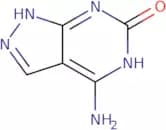
9-(2'-O-Acetyl-3'-deoxy-3'-fluoro-5'-O-toluoyl-b-D-ribofuranosyl)-6-phenylpurine (FTC) is a novel antiviral nucleoside analog that inhibits the synthesis of DNA by inhibiting the enzyme DNA polymerase. It has been shown to be effective against HIV in vitro. FTC exhibits anticancer activity through inhibition of DNA synthesis and induction of apoptosis. FTC also has high purity and quality, as it is synthesized chemically without any purification steps.Pureza:Min. 95%4-Amino-6-hydroxypyrazolo(3,4-D)pyrimidine
CAS:4-Amino-6-hydroxypyrazolo(3,4-D)pyrimidine is an anti-inflammatory drug that is used to treat bowel disease. It is also used as a polymer conjugate to treat cancer, and in the prevention of transplant rejection. 4-Amino-6-hydroxypyrazolo(3,4-D)pyrimidine has been shown to have antioxidant properties and may be effective in preventing inflammatory diseases such as inflammatory bowel disease. It has also been shown to act as an antihypertensive agent by inhibiting angiotensin I converting enzyme (ACE).Fórmula:C5H5N5OPureza:Min. 95%Peso molecular:151.13 g/mol2'-Deoxy-5'-O-DMT-N2-isobutyryl-a-guanosine
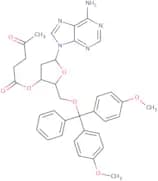
CAS:2'-Deoxy-5'-O-DMT-N2-isobutyryl-a-guanosine is a nucleoside that is synthesized from 2'-deoxyribonucleosides and activated with diphosphate. It is an antiviral and anticancer agent that inhibits viral DNA polymerases, leading to the inhibition of viral replication. 2'-Deoxy-5'-O-DMT-N2-isobutyryl-a-guanosine has also been shown to inhibit cancer cell growth in vitro by inhibiting the synthesis of cellular DNA. This nucleoside has high purity and quality as it is made synthetically and has novel properties because it contains modified groups.Fórmula:C35H37N5O7Pureza:Min. 95%Forma y color:White to off-white solid.Peso molecular:639.71 g/mol5’-O-DMT-3’-O-levulinyl-2’-deoxyadenosine
CAS:5’-O-DMT-3’-O-levulinyl-2’-deoxyadenosine is a monophosphate antiviral agent. It has been shown to inhibit the activity of DNA and RNA polymerases in vitro. The drug is novel, and its antiviral properties have not been tested in vivo. 5’-O-DMT-3’-O-levulinyl-2’-deoxyadenosine has been synthesized using phosphoramidites and was found to be of high quality and purity. It has also been modified at the 2' position with an acetyl group and at the 3' position with a levulinoyl group.Pureza:Min. 95%N-Boc-5'-chloro-5'-deoxy-2,3-O-isopropylideneadenosine
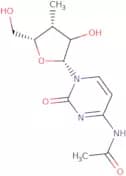
N-Boc-5'-chloro-5'-deoxy-2,3-O-isopropylideneadenosine is a novel nucleoside phosphoramidite. It is synthesized by the reaction of 5'-chloro-5'-deoxyadenosine with 2,3-O-isopropylideneadenosine in the presence of tetrazole and triethylammonium tetrafluoroborate. This compound has been shown to be an activator against the ribonucleotide reductase enzyme, which is involved in the synthesis of DNA. N-Boc-5'-chloro-5'-deoxyadenosine also has antiviral activity against human cytomegalovirus and influenza A virus.Pureza:Min. 95%N4-Acetyl-3'-deoxy-3'-C-methylcytidine
N4-Acetyl-3'-deoxy-3'-C-methylcytidine is a novel antiviral drug that is modified from cytidine. It is an activator of the monophosphate pathway of DNA synthesis, which causes the incorporation of N4-acetyl-3'-deoxy-3'-C-methylcytidine into ribonucleosides and deoxyribonucleosides. This compound has been shown to be active against a variety of cancers, including leukemia, colon cancer, breast cancer, and prostate cancer.
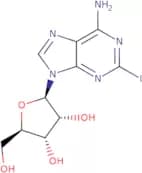
Fórmula:C12H17N3O5Pureza:Min. 95%Peso molecular:283.28 g/mol2-Iodoadenosine
CAS:2-Iodoadenosine is a chemical compound that is produced from the oxidation of uridine. It is used in the synthesis of peptides, which are important for biological processes like signal transduction and cell growth. 2-Iodoadenosine can be made by coupling other molecules to an adenosine molecule. This process involves a cross-coupling reaction with palladium catalysts or hydroxylation reactions with sodium borohydride. The resulting product has been shown to have anticancer and anti-microbial activities against protozoan parasites and cyclic peptide structures.Fórmula:C10H12IN5O4Pureza:Min. 97 Area-%Forma y color:PowderPeso molecular:393.14 g/molN1-Methylguanosine
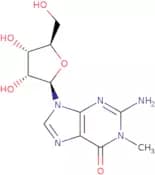
CAS:Producto controladoN1-Methylguanosine is a methylated nucleotide that is incorporated into the growing DNA chain during protein synthesis. The incorporation of N1-methylguanosine into the growing DNA chain can cause frameshifting, which creates an unusual amino acid sequence. This effect has been shown in model organisms, such as Saccharomyces cerevisiae and Escherichia coli. In these organisms, N1-methylguanosine has been shown to induce cancer when added to the growth medium. It is also found in urine samples from people with bladder cancer and has been used to identify urinary tract cancers. Titration calorimetry studies have shown that N1-methylguanosine binds to a chelate ligand and forms a disulfide bond with cysteine residues on proteins or peptides, which may lead to mitochondrial dysfunction by interfering with hydrogen bonding interactions. Messenger RNA studies show that N1-methylguanosine inhibits translation of mRNA by binding to
Fórmula:C11H15N5O5Pureza:Min. 95%Forma y color:White PowderPeso molecular:297.27 g/mol5'-O-Benzoyl-2'-deoxyinosine 3'-CE phosphoramidite
5'-O-Benzoyl-2'-deoxyinosine 3'-CE phosphoramidite is an anticancer and antiviral agent. It is a nucleoside analogue that inhibits the synthesis of DNA by competitive inhibition of ribonucleotide reductase, which converts ribonucleotides to deoxyribonucleotides. The monophosphate form also inhibits viral replication by inhibiting reverse transcriptase. This compound has been shown to be active against herpes simplex virus type 1 and 2, adenovirus, influenza A virus, and vaccinia virus.
Fórmula:C26H33N6O6PPureza:Min. 95%Peso molecular:556.56 g/mol2'-Deoxy-6-thioguanosine-5'-monophosphate
CAS:Azathioprine is a drug that suppresses the immune system and is used to treat autoimmune disorders such as rheumatoid arthritis, lupus erythematosus, and inflammatory bowel disease. It is an immunosuppressant that prevents the formation of antibodies by blocking the enzyme thiopurine S-methyltransferase. Azathioprine is metabolized in the liver to 6-mercaptopurine, which has been shown to cause leukopenia. The genetic polymorphism of this enzyme can lead to differences in the metabolism and toxicity of azathioprine therapy.Fórmula:C10H14N5O6PSPureza:Min. 95%Peso molecular:363.29 g/molN4-Benzoyl-2'-O-tert-butyldimethylsilylcytidine
CAS:Producto controladoN4-Benzoyl-2'-O-tert-butyldimethylsilylcytidine is a nucleoside that is modified by the attachment of an acetyl group at the 2' position. It is used as a component in the synthesis of oligonucleotides and can also be used in antiviral and anticancer applications. N4-Benzoyl-2'-O-tert-butyldimethylsilylcytidine is synthesized by reacting 4,5′-dihydroxybenzoic acid with 4-(dimethylamino)pyridine and diisopropylethylamine to form an intermediate, which reacts with cytosine to produce the desired product. This process requires high purity, which can be achieved through high quality production methods.Fórmula:C22H31N3O6SiPureza:Min. 95%Peso molecular:461.58 g/molN6-Carbamoylthreonyladenosine sodium salt
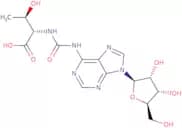
CAS:N6-Carbamoylthreonyladenosine sodium salt is a fatty acid that is found in the bacterial cell wall. It has been shown to be an essential component of the cell wall for Gram-positive and Gram-negative bacteria. N6-Carbamoylthreonyladenosine sodium salt has been used to study the mechanism of protein synthesis in bacteria, especially how enzymes are involved in this process. Chemical biology studies have shown that this molecule can bind to DNA and inhibit bacterial growth. The crystal structure of N6-Carbamoylthreonyladenosine sodium salt has also been determined using x-ray diffraction data. This molecule inhibits the binding of proteins to DNA, which prevents transcription and replication. The reaction mechanism involves hydrogen bonding between the oxygen atoms on N6-Carbamoylthreonyladenosine sodium salt and divalent metal ions such as magnesium or zinc, which are required for protein synthesis.Fórmula:C15H19N6O8·NaPureza:Min. 98 Area-%Forma y color:White PowderPeso molecular:434.34 g/mol6-Amino-4-hydrazino-1-(b-D-ribofuranosyl)-1H-pyrazolo[3,4-d]pyrimidine
6-Amino-4-hydrazino-1-(b-D-ribofuranosyl)-1H-pyrazolo[3,4-d]pyrimidine is a nucleoside phosphoramidite which is used in the synthesis of oligonucleotides. It is a novel modified nucleoside and has antiviral and anticancer activities. 6-Amino-4-hydrazino-1-(b-D ribofuranosyl)-1H pyrazolo[3,4 d]pyrimidine can be used as an activator for 2'-deoxyribonucleotide synthesis and an inhibitor of ribonucleotide synthesis.
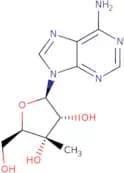
Pureza:Min. 95%3’-b-C-Methyladenosine
CAS:3’-b-C-Methyladenosine is a novel antiviral and anticancer agent that is synthetically derived from deoxyribonucleosides. 3’-b-C-Methyladenosine has been shown to have antiviral activity against HIV, influenza, herpes simplex virus type 1 and type 2, and vaccinia virus. It also has anticancer activity against leukemia cells. 3’-b-C-Methyladenosine can be used as a phosphoramidite in the synthesis of oligonucleotides. It may be useful as an activator for nucleophilic substitution reactions with phosphorus halides.Pureza:Min. 95%1-(2'-Deoxy-5'-O-DMT-2'-fluoro-β-D-arabinofuranosyl)thymine 3'-O-succinate triethylammonium
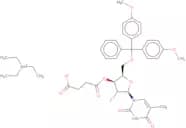
1-(2'-Deoxy-5'-O-DMT-2'-fluoro-b-D-arabinofuranosyl)thymine 3'-O-succinate triethylammonium salt is a compound used in the synthesis of oligonucleotides. The synthesis of such compounds often involves the use of protecting groups, such as the 4,4'-dimethoxytrityl (DMT) group, to prevent unwanted reactions during the synthesis process. The 2'-fluoro modification is of particular interest due to its potential to alter the chemical and biological properties of the resulting oligonucleotides. Fluorinated nucleosides and their analogs have been extensively studied for their antiviral and anticancer activitiesFórmula:C35H34FN2O10•C6H16NPureza:Min. 95%Peso molecular:763.87 g/molN6-Benzoyl-9-(3'-O-methyl-b-D-xylofuranosyl)adenine
N6-Benzoyl-9-(3'-O-methyl-β-D-xylofuranosyl)adenine is a novel nucleoside containing an aromatic ring that is attached to the 9 position of the adenine base. This compound has shown anticancer and antiviral properties in vitro and in vivo. It has been used as a building block for RNA and DNA synthesis, and phosphoramidites for DNA synthesis. N6-Benzoyl-9-(3'-O-methyl-β-D-xylofuranosyl)adenine is also a potent activator of ribonucleotide reductase, which converts ribonucleotides into deoxyribonucleotides.Pureza:Min. 95%5-b-D-Glucopyranosyl-5-thio-thymine
5-b-D-Glucopyranosyl-5-thio-thymine is a novel, synthetic nucleoside that has antiviral activity. It is deoxyribonucleosides and ribonucleosides, which are the building blocks of DNA and RNA respectively. 5-b-D-Glucopyranosyl-5-thio-thymine can be used as an activator for phosphoramidites, which are used in the synthesis of DNA and RNA. This modified nucleotide also has anti cancer properties as it inhibits the growth of tumor cells.
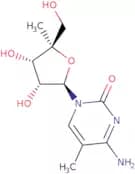
Pureza:Min. 95%4’-C-Methyl-5-methylcytidine
CAS:4’-C-Methyl-5-methylcytidine is a phosphoramidite nucleoside that is used as a reagent in the synthesis of DNA. It is modified with a 4′-methyl and 5′-methyl group at the C4 and C5 positions of the cytosine base, respectively. The 4′-C methyl group is an antiviral agent that inhibits viral replication by inhibiting reverse transcriptase. The 5′-methyl group prevents deamination of cytosine residues by inhibiting uracil glycosylase. This product has anticancer properties due to its ability to inhibit cell division and activate apoptosis in tumor cells.
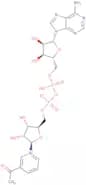
Pureza:Min. 95%3-Acetylpyridine adenine dinucleotide
CAS:A non-physiological analog of nicotinamide adenine dinucleotide (NAD+) in biochemical research, particularly as a tool to study the mechanisms of NAD+-dependent enzymes.Fórmula:C22H28N6O14P2Pureza:Min. 92 Area-%Forma y color:White Off-White PowderPeso molecular:662.44 g/mol






![6-Amino-4-hydrazino-1-(b-D-ribofuranosyl)-1H-pyrazolo[3,4-d]pyrimidine](/_next/image/?url=https%3A%2Fstatic.cymitquimica.com%2Fproducts%2F3D%2Fthumb-webp%2FNA162943.webp&w=3840&q=75)