Nucleósidos
Se han encontrado 3569 productos de "Nucleósidos"
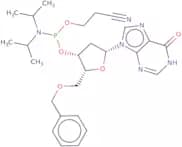
5'-O-Benzyl-2'-deoxyinosine 3'-CE phosphoramidite
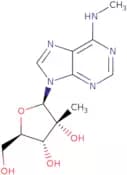
5'-O-Benzyl-2'-deoxyinosine 3'-CE phosphoramidite is an activator of DNA synthesis. It has antiviral and anticancer properties, which have been shown in animal models. This compound is a novel nucleoside phosphoramidite that can be used to synthesize oligonucleotides. The CAS number for this product is 98469-45-7.Fórmula:C26H35N6O5PPureza:Min. 95%Peso molecular:542.58 g/molN6-Methyl-2'-C-methyladenosine
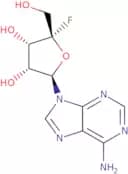
CAS:N6-Methyl-2'-C-methyladenosine is a modified nucleoside that belongs to the category of Deoxyribonucleosides. It is a novel compound with antiviral, anticancer, and antitumor properties. N6-Methyl-2'-C-methyladenosine inhibits viral replication by blocking the synthesis of DNA. This compound also has antiproliferative effects on cancer cells and retards tumor growth in animal models. N6-Methyl-2'-C-methyladenosine is synthesized from phosphoramidites in a two step process: first, the addition of methyl iodide to the phosphorus atom followed by nucleophilic substitution with methylamine.Fórmula:C12H17N5O4Pureza:Min. 95%Peso molecular:295.29 g/mol4'-C-Fluoroadenosine
CAS:4'-C-Fluoroadenosine is a fluorine-substituted analog of adenosine, which has been shown to have minimal toxicity in animals. 4'-C-Fluoroadenosine inhibits the uptake of trypanosomes by macrophages and has been shown to be effective in treating Leishmania donovani infections in mice. Its mechanism of action is not yet clear, but it may involve inhibiting the enzymatic activity of enzymes involved in the metabolism of adenosine and/or enhancing the activity of those that are involved in catalysing adenoside triphosphate synthesis.Pureza:Min. 95%3’-Deoxy-5-fluoro-3’-methyluridine
CAS:3’-Deoxy-5-fluoro-3’-methyluridine is a nucleoside that has antiviral and anticancer properties. It is synthesized from 5-fluorouracil, which is a prodrug that is activated by 3’-deoxy-5-fluoro-3’-methyl uridine to produce 5′,6′ difluorodeoxyadenosine. This compound can be used in the treatment of hepatitis B virus and hepatitis C virus infections. 3’-Deoxy-5-fluoro-3’ methyluridine has also been shown to inhibit the growth of cancer cells in vitro.
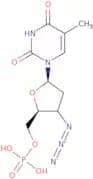
Pureza:Min. 95%3'-Azido-3'-deoxythymidine-5'-monophosphate lithium salt - 100 mM aqueous solution
CAS:3'-Azido-3'-deoxythymidine-5'-monophosphate lithium salt - 100 mM aqueous solution is an azidothymidine (AZT) analog that inhibits HIV replication. AZT is a nucleoside reverse transcriptase inhibitor that blocks the progression of HIV by preventing the virus from duplicating its DNA. This product has been shown to be effective in treating AIDS and related diseases, as well as other infectious diseases such as hepatitis B and C. 3'-Azido-3'-deoxythymidine-5'-monophosphate lithium salt - 100 mM aqueous solution is often used in combination with other drugs to increase their efficacy. It has also been shown to be an effective chemotherapeutic agent against cancer cells.
Fórmula:C10H14N5O7P·xLiPureza:Min. 95%Peso molecular:347.22 g/mol2'-Deoxynucleoside-5'-triphosphate mixture
2'-Deoxynucleoside-5'-triphosphate mixture are a group of phosphorylated compounds that are used in the synthesis of DNA. They are used as antiviral and anticancer agents, as well as activators for certain enzymes. They are also used to synthesize deoxyribonucleotides. The 2'-deoxynucleoside-5'-triphosphate mixture is purified and modified to produce high purity products for research purposes. These compounds have novel properties, making them suitable for creating new drugs with improved efficacy and reduced side effects.
Pureza:Min. 95%6-Methylmercapto-9-(b-D-ribofuranosyl)purine
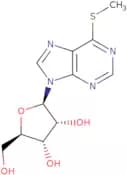
CAS:6-Methylmercapto-9-(b-D-ribofuranosyl)purine (6MMPR) is a nucleotide analog that is synthesized through the process of ribosylation. It has been shown to be reactive and inflammatory in the colon, which may be due to its role as an enzyme inhibitor. 6MMPR inhibits target enzymes such as 2-methylthio-6-chloropurine riboside, which are involved in DNA synthesis and repair. This drug also has anti-inflammatory properties, which may be due to its ability to inhibit the production of inflammatory cytokines by activated immune cells. 6MMPR is used for the treatment of bowel diseases such as Crohn's disease and ulcerative colitis.Fórmula:C11H14N4O4SPureza:Min. 95%Forma y color:White PowderPeso molecular:298.32 g/mol3-Iodo-1-(2-C-methyl-b-D-ribofuranosyl)-1H-pyrazolo[3,4-d]pyrimidin-4-amine,
CAS:3-Iodo-1-(2-C-methyl-b-D-ribofuranosyl)-1H-pyrazolo[3,4-d]pyrimidin-4-amine is a novel antiviral monophosphate nucleotide analog. It has been shown to be an effective activator of the enzyme ribonucleotide reductase, which is involved in DNA synthesis and repair. 3Iodo possesses anticancer activity, inhibiting the proliferation of cancer cells by interfering with DNA synthesis. The compound also inhibits tumor cell growth in vivo by inducing apoptosis. 3Iodo has been shown to inhibit HIV replication and may have potential as a treatment for HIV/AIDS.Pureza:Min. 95%2'-Deoxy-5-formylcytidine
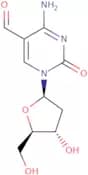
CAS:2'-Deoxy-5-formylcytidine is a nucleoside analog that is used as a chemotherapeutic agent. It is cytotoxic to cells by binding to DNA and preventing the synthesis of DNA, RNA, and protein. The drug has been shown to induce cellular senescence in human fibroblasts, which can be reversed by the addition of deuterium. 2'-Deoxy-5-formylcytidine also inhibits the production of reactive oxygen species (ROS) by inducing the expression of antioxidant enzymes such as superoxide dismutase 2 and glutathione peroxidase 1. The oxidation products are misincorporated into DNA strands, leading to intramolecular hydrogen bonds with cytosine bases. These modifications lead to denaturation of DNA and inhibition of transcription and replication.
2'-Deoxy-5-formylcytidine also interacts with oligodeoxynucleotides, which leads to misincFórmula:C10H13N3O5Pureza:Min. 97 Area-%Forma y color:White PowderPeso molecular:255.23 g/mol2’-Deoxy-5’-O-DMT-N2-isobutyrylguanosine-3’-(4-nitrophenoxyl)butanedioate
2’-Deoxy-5’-O-DMT-N2-isobutyrylguanosine-3’-(4-nitrophenoxyl)butanedioate is a novel antiviral drug that has been synthesized by coupling diphosphate and monophosphate nucleosides to an antiviral agent. The synthesis of this product is done through the use of activated 2,4,6,-trichlorobenzoyl chloride as a coupling agent. This product can be used in the treatment of cancer cells.Pureza:Min. 95%1-(2'-Deoxy-2'-fluoro-b-D-arabinofuranosyl)6-methylpurine
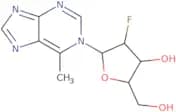
CAS:1-(2'-Deoxy-2'-fluoro-b-D-arabinofuranosyl)6-methylpurine is a synthetic nucleoside analog that has been shown to be an activator of DNA synthesis in mammalian cells. It has antiviral, anticancer, and antibiotic properties due to its ability to inhibit the growth of a variety of cancer cells. 1-(2'-Deoxy-2'-fluoro-b-D-arabinofuranosyl)6-methylpurine also inhibits viral replication by interfering with the replication machinery. This nucleoside analog is a modified form of 6MP and has high purity and quality.Pureza:Min. 95%2-Deoxy-2-Fluoro-a-D-arabinofuranosylamine
CAS:2-Deoxy-2-Fluoro-a-D-arabinofuranosylamine is a novel antiviral agent that is synthesized from 2,4,6-trichlorobenzoyl chloride and 2,4,6-trifluorophenylglycine. It has been shown to be effective in inhibiting the replication of HIV and HSV types 1 and 2. This compound also has anticancer activity against colorectal cancer cells. The synthesis of this compound results in high purity with a high yield.Fórmula:C5H10FNO3Pureza:Min. 95%Peso molecular:151.14 g/mol3’-b-Azido-2’,3’-dideoxy-5’-O-(4-methoxytrityl)uridine
CAS:3’-b-Azido-2’,3’-dideoxy-5’-O-(4-methoxytrityl)uridine (AZDU) is a modified nucleoside that is used as an antiviral agent. AZDU inhibits viral DNA synthesis by acting as a competitive inhibitor of the enzyme ribonucleotide reductase. AZDU has also been shown to inhibit tumor cell growth in vitro and in vivo. In addition, AZDU has been found to have anticancer activity against human leukemia cells, which may be due to its ability to inhibit DNA synthesis.Pureza:Min. 95%2-Methylthioadenosine
CAS:2-Methylthioadenosine is a purine nucleoside which induces necrotic cell death. It is the first of its kind to be shown to have activity against squamous carcinoma cells, and is activated by nucleoside phosphorylase in order to produce its cytotoxic form. 2-Methylthioadenosine also inhibits the transcription-polymerase chain reaction and increases oxidative injury. This drug has been shown to have receptor activity in brain cells, as well as chemotactic activity for gland cells. 2-Methylthioadenosine has been used as a model organism for polymerase chain reactions, and has been shown to inhibit p2y receptors in the human colon cancer cell line HT29.
Fórmula:C11H15N5O4SPureza:Min. 95%Forma y color:White Off-White PowderPeso molecular:313.34 g/mol5'-Deoxyuridine
CAS:5'-Deoxyuridine is an inorganic, phosphite, and isomeric compound. It can be used as a chromatographic analog to purify uridylic acid. The epimerization reaction of 5'-deoxyuridine with galactose can be catalyzed by dehydrogenase or ion-exchange resin. In addition, 5'-deoxyuridine has the same chemical formula as uridine (C5H5N3O3) but has a different structure: in place of the hydroxyl group on carbon number 5, it has a hydrogen atom. 5'-Deoxyuridine has two isomers: one with the hydroxyl group on carbon number 4 and another with the hydroxyl group on carbon number 2.Fórmula:C9H12N2O5Pureza:Min. 95%Forma y color:White PowderPeso molecular:228.21 g/mol2,3'-Anhydro-5'-O-tert-butyldimethylsilyl-N4-benzoyl-2'-deoxycytidine
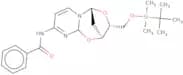
CAS:2,3'-Anhydro-5'-O-tert-butyldimethylsilyl-N4-benzoyl-2'-deoxycytidine is an antiviral agent that is a synthetic nucleoside analogue. It acts as an activator of monophosphate and as a DNA phosphoramidite. 2,3'-Anhydro-5'-O-tert-butyldimethylsilyl-N4-benzoyl-2'-deoxycytidine has been shown to inhibit the growth of cancer cells and is being studied for its anticancer activity. This drug also inhibits ribonucleotide reductase, which prevents the conversion of ribonucleotides to deoxyribonucleotides, thereby inhibiting DNA synthesis.Fórmula:C22H31N3O4SiPureza:Min. 95%Peso molecular:429.6 g/molN4-Acetyl-2'-deoxy-5'-O-DMT-5-methylcytidine 3'-CE phosphoramidite
CAS:N4-Acetyl-2'-deoxy-5'-O-DMT-5-methylcytidine 3'-CE phosphoramidite is a novel nucleoside and deoxyribonucleoside that has been synthesized by the chemical modification of cytidine. It is an anticancer drug and antiviral agent, which has been shown to activate DNA polymerase, inhibit RNA synthesis and have antiviral activities against HIV, HSV, CMV, and VZV. N4-Acetyl-2'-deoxy-5'-O-DMT-5-methylcytidine 3'-CE phosphoramidite has high purity with low impurities (0.1% DMSO), making it a valuable nucleoside for use in synthesis of ribonucleotide analogues.Fórmula:C42H52N5O8PPureza:Min. 97 Area-%Forma y color:White Off-White PowderPeso molecular:785.86 g/mol1-(2'-Deoxy-2'-fluoro-b-D-arabinofuranosyl)-5-ethyluracil
CAS:1-(2'-Deoxy-2'-fluoro-b-D-arabinofuranosyl)-5-ethyluracil is a nucleoside analog with modifications to alter its biological activity. It contains a β-D-arabinofuranose sugar instead of the standard β-D-deoxyribose in natural nucleosides and
the fluorine (F) at the 2'-position increases resistance to enzymatic degradation and alters its biological activity. The 5-ethyl modification on the uracil ring enhances its interaction with viral polymerases.Fórmula:C11H15FN2O5Pureza:Min. 95%Forma y color:White PowderPeso molecular:274.25 g/molClofarabine 5'-triphosphate triethylammonium salt
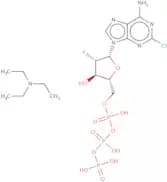
CAS:Clofarabine is a nucleoside analog that is used to treat various types of cancer, including leukemia, lymphoma, and solid tumours. Clofarabine has been shown to have minimal toxicity in healthy cells and is usually well tolerated by patients. It acts by inhibiting the synthesis of DNA in rapidly dividing cells. This effect can be synergistic with other anti-cancer agents such as the cytotoxic agent Bleomycin. Clofarabine binds to an intracellular target and inhibits DNA synthesis by blocking the enzyme DNA polymerase. Inhibition of this enzyme leads to cell death. Clofarabine has been tested in pediatric patients from age 1 month old up to 18 years old. The drug has been found to be safe for use in this population.Fórmula:C10H14ClFN5O12P3Pureza:Min. 95%Forma y color:PowderPeso molecular:543.62 g/mol




![3-Iodo-1-(2-C-methyl-b-D-ribofuranosyl)-1H-pyrazolo[3,4-d]pyrimidin-4-amine,](/_next/image/?url=https%3A%2Fstatic.cymitquimica.com%2Fproducts%2F3D%2Fthumb-webp%2FNI14087.webp&w=3840&q=75)