Nucleósidos
Los nucleósidos son building blocks fundamentales de los ácidos nucleicos, compuestos por una base nitrogenada unida a una molécula de azúcar. En esta sección, puede encontrar una amplia variedad de nucleósidos esenciales para la investigación en biología molecular, bioquímica y farmacología. Estos compuestos juegan roles cruciales en la síntesis de ADN y ARN, y son vitales en varios procesos metabólicos. Los nucleósidos se utilizan para estudiar material genético, desarrollar terapias antivirales y anticancerígenas, y comprender los mecanismos celulares. En CymitQuimica, proporcionamos nucleósidos de alta calidad para apoyar sus necesidades de investigación y desarrollo, asegurando pureza y fiabilidad para sus aplicaciones experimentales.
Se han encontrado 3569 productos de "Nucleósidos"
Ordenar por
Pureza (%)
0
100
|
0
|
50
|
90
|
95
|
100
3',5'-Di-O-benzoyl-gemcitabine - Bio-X ™
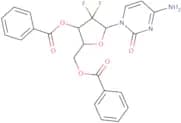
CAS:3',5'-Di-O-benzoyl-2'-deoxy-2',2'-difluorocytidine is a nucleoside analog, which is metabolized to its active form, 2',2'-difluoro-3'-O-methylcytidine. 3',5'-Di-O-benzoyl-2'-deoxy-2',2'-difluorocytidine has been shown to be a potent inhibitor of human tumor cell growth and is also effective in stimulating antitumor immunity. This drug binds to the DNA of cells and prevents transcription and replication.Fórmula:C23H19F2N3O6Pureza:Min. 95%Forma y color:PowderPeso molecular:471.41 g/mol2'-tert-Butyldimethylsilyl-5'-DMT-N6-methyladenosine
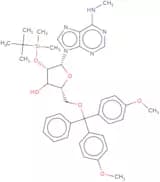
CAS:2'-tert-Butyldimethylsilyl-5'-DMT-N6-methyladenosine is an antiviral monophosphate nucleoside. It is a novel and structurally modified analog of adenosine, which inhibits viral DNA polymerase by competitive inhibition. 2'-tert-Butyldimethylsilyl-5'-DMT-N6-methyladenosine is a high purity and high quality nucleotide that can be used in the synthesis of DNA or RNA. This product has been shown to be an anticancer agent with potential therapeutic effects against leukemia, lymphoma, and breast cancer.Fórmula:C38H47N5O6SiPureza:Min. 95%Peso molecular:697.9 g/mol5’-Deoxy-5’-iodo-5-methyluridine
CAS:5’-Deoxy-5’-iodo-5-methyluridine is a modified antiviral nucleoside that inhibits the synthesis of viral DNA by inhibiting the enzyme ribonucleotide reductase. This compound has been shown to be an inhibitor of cancer cells and an activator of the immune system. 5’-Deoxy-5’-iodo-5-methyluridine is synthesized in high purity and at high quality using phosphoramidites, which are activated by diphosphate. It is used for research purposes as well as for pharmaceuticals and other medical applications.Pureza:Min. 95%N6-([6-Aminohexyl]carbamoylmethyl)adenosine 5'-triphosphate lithium salt
CAS:N6-([6-Aminohexyl]carbamoylmethyl)adenosine 5'-triphosphate lithium salt is a monophosphate nucleoside that has been modified with a 6-aminohexylaminocarbonyl group. It is an antiviral and anticancer agent that inhibits the synthesis of DNA, RNA, and proteins. N6-[(6-Aminohexyl)carbamoylmethyl]adenosine 5'-triphosphate lithium salt is novel and high quality.Fórmula:C18H32N7O14P3·xLiPureza:Min. 95%2'-Deoxy-2'-fluoro-N4-benzoyl-5-methylcytidine
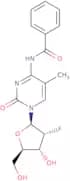
CAS:2'-Deoxy-2'-fluoro-N4-benzoyl-5-methylcytidine is a monophosphate nucleoside that is used as an antiviral and anticancer drug. It inhibits the synthesis of DNA, RNA, and proteins by acting as a chain terminator. 2'-Deoxy-2'-fluoro-N4-benzoyl-5-methylcytidine inhibits viral replication by blocking the formation of viral DNA. This compound is also used for the treatment of cancerous cells. 2'-Deoxy-2'-fluoro-N4-benzoyl-5-methylcytidine has shown to be effective against leukemia cells in culture. 2'-Deoxy -2' -fluoro N4 benzoyl 5 methyl cytidine has been synthesized with high purity and is available in a variety of modifications including phosphoramidites and deoxyribonucleosides.Pureza:Min. 95%5'-O-tert-Butyldimethylsilylthymidine 3'-CE phosphoramidite
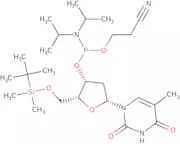
5'-O-tert-Butyldimethylsilylthymidine 3'-CE phosphoramidite is a nucleoside which is an activator for DNA synthesis. It is synthesized from the natural substance thymidine, and it can be modified to have various properties by changing the chemical group that attaches to the 3' carbon. 5'-O-tert-Butyldimethylsilylthymidine 3'-CE phosphoramidite is a novel nucleoside that has been shown to be anticancerous in vitro. This compound may also play a role in treating viral infections due to its antiviral properties.Fórmula:C25H45N4O6PSiPureza:Min. 95%Peso molecular:556.72 g/mol4'-C-Azido-2'-deoxy-2'-fluoro-β-D-arabinocytidine
CAS:4'-C-Azido-2'-deoxy-2'-fluoro-β-D-arabinocytidine (4FA) is a potent inhibitor of the growth of HIV. It has been shown to inhibit the production of inflammatory cytokines and chemokines, which are associated with inflammatory diseases such as arthritis and asthma. 4FA has also been shown to inhibit glycogen synthase kinase 3 (GSK3), which is involved in the regulation of cellular signaling pathways that control cell growth and proliferation. Furthermore, 4FA inhibits an enzyme that is needed for viral replication and can be used as a therapeutic agent against viruses such as hepatitis C virus.Fórmula:C9H11FN6O4Pureza:Min. 95%Forma y color:Off-White PowderPeso molecular:286.22 g/mol2'-Deoxy-5'-O-DMT-uridine 3'-O succinate TEA
2'-Deoxy-5'-O-DMT-uridine 3'-O succinate TEA salt is a modified nucleoside that is an activator for DNA synthesis. It can be used to synthesize oligonucleotides for use in the treatment of cancer and antiviral agents. 2'-Deoxy-5'-O-DMT-uridine 3'-O succinate TEA salt has been shown to inhibit viral replication by inhibiting the function of reverse transcriptase, which is an enzyme that catalyzes the conversion of RNA into DNA. This product has a CAS number, high purity, and high quality.Pureza:Min. 95%3'-Amino-N4-benzoyl-5'-O-benzoyl-2',3'-dideoxyadenosine
This product is a novel nucleoside analog with antiviral, anticancer and antiretroviral activities. It is an activator of ribonucleosides and deoxyribonucleosides. This product is synthesized by the phosphoramidite method. The purity of this product is greater than 98%.Fórmula:C24H22N6O4Pureza:Min. 95%Peso molecular:458.47 g/mol3'-Azido-5'-O-benzoyl-3'-deoxythymidine
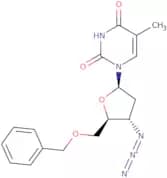
CAS:3'-Azido-5'-O-benzoyl-3'-deoxythymidine is a novel antiviral agent that is synthesized by modifying the structure of thymidine. It has been shown to have high antiviral activity against HIV and other viruses in vitro. 3'-Azido-5'-O-benzoyl-3'-deoxythymidine also inhibits tumor growth in animal models and may be useful as an anticancer drug. This compound is found to be active against a number of cancers, including leukemia, colon cancer, and prostate cancer. 3'-Azido-5'-O-benzoyl-3'-deoxythymidine is phosphoramidites for DNA synthesis, which can be used in the production of ribonucleosides or deoxyribonucleosides.Fórmula:C17H19N5O4Pureza:Min. 95%Peso molecular:357.36 g/molN4-Benzoyl-2'-O-propargyladenosine
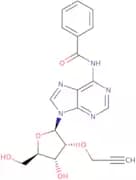
CAS:N4-Benzoyl-2'-O-propargyladenosine (BAP) is an antiviral monophosphate nucleoside that inhibits the synthesis of DNA. It is a novel, synthetic, and high quality nucleoside with antiviral activity. BAP has been shown to inhibit the replication of human immunodeficiency virus type 1 (HIV-1), human cytomegalovirus (HCMV), and herpes simplex virus type 2 (HSV2). This drug also has anticancer activity as it inhibits the production of cancer cells in vitro. As a phosphoramidite, BAP can be used for the synthesis of DNA.Pureza:Min. 95%2-Thiouridine
CAS:2-Thiouridine is a uridine derivative that acts as a precursor for protein synthesis. It is synthesized from 2-amino-5-thiazole carboxylic acid and uracil in two steps, first with the formation of 2-thiouridine monophosphate and then with the conversion to 2-thiouridine diphosphate. The synthesis of 2-thiouridine is catalyzed by the enzyme uridine phosphorylase, which converts it to uridine monophosphate. 2-Thiouridine has been shown to have immunomodulatory effects in cell culture systems and animal models. These effects are believed to be due to its ability to act as an inhibitor of fatty acid synthase, which generates fatty acids from acetyl CoA. This process prevents the production of prostaglandins and leukotrienes, thereby reducing inflammation.Fórmula:C9H12N2O5SPureza:Min. 98 Area-%Forma y color:White PowderPeso molecular:260.27 g/molCytidine 3'(2’)-monophosphate
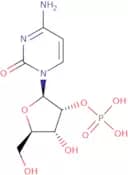
CAS:Cytidine 3’(2’)-monophosphate (CMP) is a biochemical substance that is found in the nucleic acids of cells. It is an equilibrative nucleoside and a precursor to the biosynthesis of uridine and cytidine. CMP is also an intermediate in the synthesis of the coenzyme tetrahydrofolate, which has been shown to inhibit the growth of antibiotic-resistant strains such as Escherichia coli, Pseudomonas aeruginosa, Klebsiella pneumoniae, Staphylococcus aureus, and Enterobacter cloacae. Cytidine 3’(2’)-monophosphate can be converted into cytidine by phosphorylation with ATP or by methylation with S-adenosylmethionine. Cytidine 3’(2’)-monophosphate has been shown to have polymerase chain reaction activityFórmula:C9H14N3O8PPureza:Min. 95%Forma y color:White PowderPeso molecular:323.2 g/molInosine 5'-monophosphate - from Saccharomyces Cerevisiae
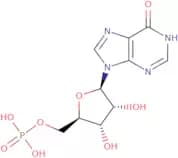
CAS:Inosine 5'-monophosphate is a monophosphate that is produced from the purine nucleotide inosine. Inosine 5'-monophosphate has been shown to inhibit the inflammatory response in human cells and mice, which may be due to its ability to inhibit the toll-like receptor TLR2 and TLR4. It also has an antiviral effect against opportunistic fungal pathogens such as Candida albicans. Inosine 5'-monophosphate also inhibits the production of reactive oxygen species by neutrophils, which may be due to its ability to inhibit polymerase chain reaction. The therapeutic potential of this drug is currently being researched for bowel diseases such as Crohn's disease and ulcerative colitis.Fórmula:C10H13N4O8PPureza:Min. 95%Peso molecular:348.2 g/mol3'-O-tert-Butyldimethylsilyl-5'-O-DMT-uridine 2'-CE phosphoramidite
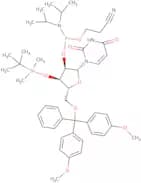
CAS:3'-O-tert-Butyldimethylsilyl-5'-O-DMT-uridine 2'-CE phosphoramidite is a modified nucleoside that is commonly used in the synthesis of DNA. It is a monophosphate, diphosphate, and triphosphate analog of uridine. 3'-O-tert-Butyldimethylsilyl-5'-O-DMT-uridine 2'-CE phosphoramidite has antiviral and anticancer activity, as well as antitumor properties. This product is available in high purity and high quality.Fórmula:C45H61N4O9PSiPureza:Min. 95%Peso molecular:861.05 g/molCytidine 3',5'-cyclic monophosphate monosodium
CAS:Cytidine 3',5'-cyclic monophosphate monosodium is a phosphotriester that is used as a building block to synthesize ribonucleosides, uridine, guanosine, and cytidine. The phosphate group in the molecule can be removed by nucleophilic substitution with ammonia or sodium hydroxide to form the corresponding nucleosides. Cytidine 3',5'-cyclic monophosphate monosodium has been shown to inhibit bacterial growth.Fórmula:C9H11N3O7PNaPureza:Min. 95%Forma y color:White PowderPeso molecular:327.16 g/mol2'-Deoxy-N3-methyluridine
CAS:2'-Deoxy-N3-methyluridine is a nucleoside analog that is used as a substrate in the synthesis of DNA. It can be incorporated into the DNA strand by enzymes called thymidylate synthases. 2'-Deoxy-N3-methyluridine has been shown to inhibit bacterial growth in cell cultures, and it is also active against marine sponges. The protonation state of the molecule determines its hydrophobicity and can be altered by adding a test compound to the solution. Hydrophobic molecules are more likely to bind with water molecules than hydrophilic molecules, which are more soluble in water.Fórmula:C10H14N2O5Pureza:Min. 95%Forma y color:White PowderPeso molecular:242.23 g/mol6-Amino-4-methoxy-2-(b-D-ribofuranosyl)-2H-pyrazolo[3,4-d]pyrimidine
6-Amino-4-methoxy-2-(b-D-ribofuranosyl)-2H-pyrazolo[3,4-d]pyrimidine is a novel antiviral monophosphate nucleoside. It has been shown to be an activator of the transcription factor NFAT and to inhibit the replication of human immunodeficiency virus (HIV). 6-Amino-4-methoxy-2-(b-D-ribofuranosyl)-2H-pyrazolo[3,4-d]pyrimidine is synthesized from 2,6 dihydroxybenzaldehyde and 3,5 dibenzyloxybenzaldehyde using phosphoramidites. The product is purified by HPLC.Pureza:Min. 95%2'-Deoxy-4'-thioadenosine
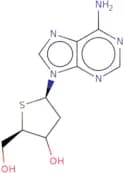
CAS:2'-Deoxy-4'-thioadenosine is a purine nucleoside that is synthesized from 4-thiouridine and phosphorylase. It is cytotoxic and has significant cytotoxicity against cultured cells. The cytotoxicity of 2'-deoxy-4'-thioadenosine was found to be due to its conversion to the triphosphate form in the cells, which inhibits both DNA synthesis and RNA synthesis. This drug also has an inhibitory effect on the growth of tumor cells by inhibiting ribosomal protein synthesis.Fórmula:C10H13N5O2SPureza:Min. 95%Peso molecular:267.31 g/mol1-(3'-5'-Di-O-benzoyl-2'-deoxy-2'-fluoro-alpha-L-arabinofuranosyl)thymine
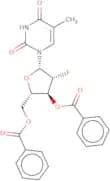
1-(3`-5`-Di-O-benzoyl-2`-deoxy-2`-fluoro-alpha-L-arabinofuranosyl)thymine is a nucleoside analog with modifications that influence its biological activity. It is made up of a thymine base, benzoyl groups that protect hydroxyl functionalities during chemical synthesis and a α-L-linkage, which impacts its biological interactions compared to β-L-nucleosides. This molecule also contains the sugar 2'-Deoxy-2'-fluoro-α-L-arabinofuranose which has a L-arabinose configuration, an α-Anomeric linkage and a 2'-Fluoro substitution. The latter modification has the potential to increase the molecule's metabolic stability and resistance to enzymatic degradationFórmula:C24H21FN2O7Pureza:Min. 95%Peso molecular:484.89 g/mol


![N6-([6-Aminohexyl]carbamoylmethyl)adenosine 5'-triphosphate lithium salt](/_next/image/?url=https%3A%2Fstatic.cymitquimica.com%2Fproducts%2F3D%2Fthumb-webp%2FNA73270.webp&w=3840&q=75)





![6-Amino-4-methoxy-2-(b-D-ribofuranosyl)-2H-pyrazolo[3,4-d]pyrimidine](/_next/image/?url=https%3A%2Fstatic.cymitquimica.com%2Fproducts%2F3D%2Fthumb-webp%2FNA162978.webp&w=3840&q=75)