Nucleósidos
Los nucleósidos son building blocks fundamentales de los ácidos nucleicos, compuestos por una base nitrogenada unida a una molécula de azúcar. En esta sección, puede encontrar una amplia variedad de nucleósidos esenciales para la investigación en biología molecular, bioquímica y farmacología. Estos compuestos juegan roles cruciales en la síntesis de ADN y ARN, y son vitales en varios procesos metabólicos. Los nucleósidos se utilizan para estudiar material genético, desarrollar terapias antivirales y anticancerígenas, y comprender los mecanismos celulares. En CymitQuimica, proporcionamos nucleósidos de alta calidad para apoyar sus necesidades de investigación y desarrollo, asegurando pureza y fiabilidad para sus aplicaciones experimentales.
Se han encontrado 3569 productos de "Nucleósidos"
Ordenar por
Pureza (%)
0
100
|
0
|
50
|
90
|
95
|
100
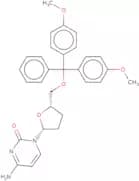
2',3'-Dideoxy-5'-O-DMT-cytidine
CAS:2',3'-Dideoxy-5'-O-DMT-cytidine is a chemically modified cytidine nucleoside which can be used in synthetic chemistry, especially in nucleic acid synthesis. A dimethoxytrityl (DMT) protecting group is attached to the 5'-oxygen of the sugar. This is not biologically active, but it’s commonly used in solid-phase oligonucleotide synthesis to protect the 5' end during step-by-step DNA or RNA construction.Fórmula:C30H31N3O5Pureza:Min. 95%Forma y color:PowderPeso molecular:513.6 g/molDMT-2'-OMe-pseudouridine phosphoramidite
DMT-2'-OMe-pseudouridine phosphoramidite is an antiviral, anticancer, and DNA synthesis inhibitor. It has been used in the synthesis of oligonucleotide probes for sequencing and hybridization studies. DMT-2'-OMe-pseudouridine phosphoramidite is a modified nucleoside that is used as a building block for the synthesis of DNA. This compound is synthesized from 2'-deoxy-5-methyluridine and dimethoxytrityl chloride. DMT-2'-OMe-pseudouridine phosphoramidite inhibits the synthesis of RNA and DNA by binding to ribonucleotides and deoxyribonucleotides during the polymerization reaction, thereby blocking the progression of the reaction.Pureza:Min. 95%2'-Deoxy-5'-DMT-5-(prop-2-yn-1-ylcarbamoyl)uridine 3'-CE phosphoramidite
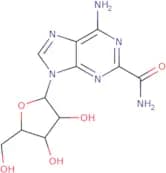
2'-Deoxy-5'-DMT-5-(prop-2-yn-1-ylcarbamoyl)uridine 3'-CE phosphoramidite is a diphosphate nucleoside that is used in the synthesis of DNA. It has been modified with an acetyl group at the 2' position and a propargylamine group at the 5' position. This modification improves its stability to hydrolysis by esterases and also increases binding affinity for cationic lipids. The purified material is suitable for use in a variety of DNA syntheses, including PCR amplification, gene cloning, and site-directed mutagenesis.Pureza:Min. 95%Adenosine-2-carboxamide
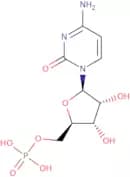
CAS:Adenosine-2-carboxamide (ACA) is a potent and selective adenosine A2A receptor ligand with high affinity and selectivity. This drug has been shown to be a competitive antagonist of the adenosine A2A receptor with an IC50 of 0.8 nM and was highly selective for this receptor over the other adenosine receptors. ACA has also been shown to inhibit binding of radioligands to the adenosine A2A receptor in functional assays, as well as improve binding activity in cell-based assays. These results were confirmed by in silico studies that showed ACA to have high binding affinity, low off-target activity, and good pharmacokinetic properties.Pureza:Min. 95%Cytidine 5'-monophosphate free acid
CAS:Cytidine 5'-monophosphate is a nucleotide that is important in the synthesis of DNA and RNA. It is a precursor to uridine monophosphate (UMP) and uridylic acid (UDP). Cytidine 5'-monophosphate has been found to inhibit the growth of antibiotic-resistant strains of bacteria, such as those resistant to ampicillin, chloramphenicol, tetracycline, kanamycin, and streptomycin. Cytidine 5'-monophosphate also has inhibitory properties against energy metabolism and protein oxidation in bowel disease. This nucleotide has been shown to increase the rate constant for polymerase chain reaction (PCR) by up to 10-fold.Fórmula:C9H14N3O8PPureza:Min. 98 Area-%Forma y color:White Off-White PowderPeso molecular:323.2 g/molN6-Acetyladenosine
CAS:N6-Acetyladenosine is a nucleoside that belongs to the group of N-acetylated adenosines. It is found in thermophilic organisms and has been shown to be involved in optimal growth. N6-Acetyladenosine has also been found to be an important part of the coding and population modifications of crenarchaeota, archaeal organisms that are phylogenetically related to methanogens. Unfractionated populations of methanogen contain both N6-acetyladenosine residues and other modified adenosines, with each organism differing in the types of modifications they contain. Transfer of these modified adenosines from one organism to another can lead to changes in their coding and population modifications.Fórmula:C12H15N5O5Pureza:Area-% Min. 90 Area-%Forma y color:White PowderPeso molecular:309.28 g/mol2-Amino-9-(3',5'-di-O-acetyl-2'-O-methyl-b-D-ribofuranosyl)-6-chloropurine
CAS:2-Amino-9-(3',5'-di-O-acetyl-2'-O-methyl-b-D-ribofuranosyl)-6-chloropurine (PMID: 24840114) is a novel nucleoside analog with potent anticancer, antiviral and antimalarial activities. PMID: 24840114Pureza:Min. 95%3'-Azido-3'-deoxy-b-L-cytidine
CAS:3'-Azido-3'-deoxy-b-L-cytidine is a novel nucleoside that has been shown to be an activator of the ribonuclease activity of purified RNase A in vitro. This product is suitable for use in synthesis of oligodeoxynucleotides and phosphoramidites. 3'-Azido-3'-deoxy-b-L-cytidine can be used as a potential anticancer drug or antiviral agent.Pureza:Min. 95%5’-O-Acetyl-5-acetyloxymethyluridine
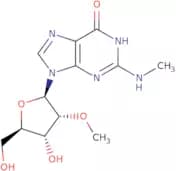
CAS:5’-O-Acetyl-5-acetyloxymethyluridine is an activated nucleoside that is a phosphoramidite. It can be used in the synthesis of oligonucleotides and has antiviral, anticancer, and antiretroviral activities. This product is a novel compound that can be used to synthesize high quality deoxyribonucleosides and diphosphate ribonucleosides. 5’-O-Acetyl-5-acetyloxymethyluridine is an activator for DNA polymerases and RNA polymerases with a high degree of purity.Fórmula:C14H18N2O9Pureza:Min. 95%Peso molecular:358.3 g/molN2,2'-O-Dimethylguanosine
CAS:N2,2'-O-Dimethylguanosine is a nucleoside that belongs to the category of modified bases. It is synthesized from adenosine and a methyl group by a mutant strain of Escherichia coli. N2,2'-O-Dimethylguanosine can be identified by its characteristic UV-visible spectrum and high retention time on chromatographic columns. It has been shown to inhibit translation in E. coli at concentrations as low as 1 mM and also inhibits growth rate at concentrations as low as 2 mM. The chemical structure of this compound is similar to that of guanosine, but it contains an extra methyl group on its 2' carbon atom. This chemical modification may result in changes in the way the molecule interacts with other molecules or how it functions in the cell. N2,2'-O-Dimethylguanosine was first identified from a mutant strain of Escherichia coli that had been subjected to mutagenesisFórmula:C12H17N5O5Pureza:Min. 95%Peso molecular:311.29 g/mol2'-O-cyanoethyoxymethyl-5'-O-DMT-adenosine
2'-O-cyanoethyoxymethyl-5'-O-DMT-adenosine is a novel nucleoside analog that belongs to the group of cytidine analogs. It has antiviral activity, which is due to its ability to inhibit viral replication by disrupting the synthesis of viral RNA. This drug is an activator and can be used for cancer treatment. 2'-O-cyanoethyoxymethyl-5'-O-DMT-adenosine binds to ribonucleosides and deoxyribonucleosides, preventing their incorporation into DNA or RNA. It also inhibits the biosynthesis of RNA and DNA, which leads to cell death in tumor cells.Pureza:Min. 95%N6,N6,2'-O-Trimethyladenosine
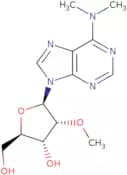
CAS:N6,N6,2'-O-Trimethyladenosine is a nucleoside that is found in small quantities in human tissues. It is synthesized by the enzyme polymerase from adenosine and S-adenosyl-L-methionine. N6,N6,2'-O-Trimethyladenosine is structurally similar to guanosine and cytidine and can be modified by nature or synthetic strategies. N6,N6,2'-O-Trimethyladenosine has been shown to have effects on fertility and may be involved in epigenetics as well as tuberculosis. Its role as an epigenetic marker for gene regulation has not been fully determined.Fórmula:C13H19N5O4Pureza:Min. 88 Area-%Forma y color:White PowderPeso molecular:309.32 g/mol4’,5’-Didehydro-2’-O-(2-methoxyethyl)-5-methyluridine
CAS:4’,5’-Didehydro-2’-O-(2-methoxyethyl)-5-methyluridine (DdeO) is a novel phosphoramidite that is synthesized from 2’,3’-dideoxycytidine. It is used in DNA synthesis and as an antiviral and anticancer agent. DdeO has shown to be a potent activator of the p53 tumor suppressor gene and inhibits the proliferation of human cancer cells by inhibiting the activity of DNA polymerase alpha. DdeO also inhibits viral replication by interfering with viral DNA synthesis.Pureza:Min. 95%4’-C-Methyl-N6-methyladenosine
CAS:4’-C-Methyl-N6-methyladenosine (4’-MeA) is a novel, synthetic nucleoside that has antiviral activity. It is a phosphoramidite nucleoside that is modified by the methylation of the adenosine moiety to give it antiviral activity. 4’-MeA can be used as an activator for oligonucleotide synthesis and as a potential anticancer drug.Pureza:Min. 95%Isocytidine
CAS:Isocytidine, also known as 2-amino-1-β-D-ribofuranosyl-4(1H)-pyrimidinone, have broad antitumor activity targeting indolent lymphoid malignancies.Fórmula:C9H13N3O5Pureza:Min. 95%Forma y color:PowderPeso molecular:243.22 g/mol3',5'-Di-O-benzoyl-gemcitabine - Bio-X ™
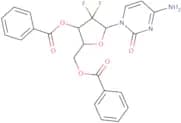
CAS:3',5'-Di-O-benzoyl-2'-deoxy-2',2'-difluorocytidine is a nucleoside analog, which is metabolized to its active form, 2',2'-difluoro-3'-O-methylcytidine. 3',5'-Di-O-benzoyl-2'-deoxy-2',2'-difluorocytidine has been shown to be a potent inhibitor of human tumor cell growth and is also effective in stimulating antitumor immunity. This drug binds to the DNA of cells and prevents transcription and replication.Fórmula:C23H19F2N3O6Pureza:Min. 95%Forma y color:PowderPeso molecular:471.41 g/mol5’(R)-C-Methyl-5-fluorouridine
5’(R)-C-Methyl-5-fluorouridine is a nucleoside that has been shown to activate both ribonucleosides and deoxyribonucleosides. 5’(R)-C-Methyl-5-fluorouridine is a novel nucleotide with the potential to be used in anticancer therapy. It can be used as a building block for DNA synthesis, as well as being able to act as an anticancer drug by inhibiting the growth of cancer cells. This product is made from high quality raw materials and has a purity of at least 98%. It is available in powder form.Pureza:Min. 95%N1-Benzylpseudouridine
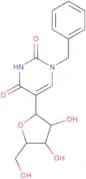
CAS:N1-Benzylpseudouridine is a nucleoside that is used as a building block in the synthesis of DNA. It is also an activator, which is a molecule that can bind to and activate other enzymes, such as ribonucleases or deoxyribonucleases. N1-Benzylpseudouridine has been shown to have antiviral and anticancer properties.Pureza:Min. 95%1', 2', 3', 4', 5'- ¹³C5-Adenosine
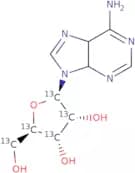
CAS:1', 2', 3', 4', 5'- ¹³C5-Adenosine is adenosine which has all five carbon atoms of the ribose sugar replaced with the stable isotope carbon-13 (^13C). Possible applications are in proteomics studies.Fórmula:C5C5H13N5O4Pureza:Min. 97 Area-%Forma y color:White PowderPeso molecular:272.2 g/mol6-Benzyl-2-thiouracil
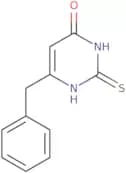
CAS:6-Benzyl-2-thiouracil (BTS) is a benzyl group with the chemical formula C12H8N2OS. It has been used as an anti-infective agent and has been shown to have a clinical relevance in treating hepatitis, cutaneous lesions, and inflammatory bowel disease. BTS is metabolized through oxidation of the benzyl group by cytochrome P450 enzymes. This active form has been shown to inhibit mitochondrial fatty acid synthesis, which may be a pathogenic mechanism for BTS in women with metabolic syndrome. The metabolism of BTS also results in its conversion to 2-benzylpyrimidine, which can be converted into a carcinogen by N-nitrosation.
Fórmula:C11H10N2OSPureza:Min. 95%Forma y color:PowderPeso molecular:218.28 g/mol