Nucleósidos
Se han encontrado 3569 productos de "Nucleósidos"
2'-Deoxy-5'-O-DMT-N2-isobutyryl-guanosine-3'-lcaa-CPG
2'-Deoxy-5'-O-DMT-N2-isobutyryl-guanosine-3'-lcaa-CPG is a modified nucleoside, which is synthetically prepared. It is an activator of DNA polymerase and has been shown to be active against human leukemia cells. 2'-Deoxy-5'-O-DMT-N2-isobutyryl Guanosine 3'-lcaa CPG has also been shown to inhibit the replication of the herpes simplex virus type 1 in vitro. The compound is a novel high quality nucleoside phosphoramidite that can be used as a building block in the synthesis of deoxyribonucleosides and modified nucleosides with novel chemical structures.
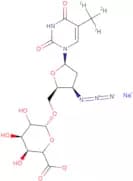
Pureza:Min. 95%3'-Azido-3'-deoxythymidine-methyl-D3-b-D-glucuronide sodium salt
Producto controlado3'-Azido-3'-deoxythymidine-methyl-D3-b-D-glucuronide sodium salt is a novel antiviral nucleoside phosphoramidite that has been shown to be an effective activator in the synthesis of diphosphate and triphosphate analogs. The novel antiviral nucleoside phosphoramidite was synthesized from 3'-azido-3'-deoxythymidine, methyl bromoacetate and sodium hydroxide in methanol at room temperature. It is structurally similar to the natural nucleosides, deoxyribonucleosides and ribonucleosides with modifications on the sugar moiety and phosphate group. This compound is a high quality synthetic material for use in pharmaceutical research, as an anticancer agent and as a potential antiviral drug.Fórmula:C16H17D3N5NaO10Pureza:Min. 95%Forma y color:PowderPeso molecular:468.36 g/molRef: 3D-NA04586
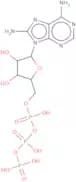
Producto descatalogado8-Aminoadenosine-5'-triphosphate sodium salt - 10mM aqueous solution
CAS:8-Aminoadenosine-5'-triphosphate sodium salt is a phosphoramidite that is used to synthesize antiviral nucleosides. It is a high quality product that can be used as an activator in the synthesis of ribonucleosides and deoxyribonucleosides. 8-Aminoadenosine-5'-triphosphate sodium salt has been shown to inhibit the growth of cancer cells.Fórmula:C10H17N6O13P3·xNaPureza:Min. 95%Peso molecular:522.2 g/molRef: 3D-NA12011
Producto descatalogado3'-O-Aminoacetoxythymidine 5'-O-triphosphate triethylammonium salt
Please enquire for more information about 3'-O-Aminoacetoxythymidine 5'-O-triphosphate triethylammonium salt including the price, delivery time and more detailed product information at the technical inquiry form on this page
Fórmula:C13H22N3O14P3•(C6H15N)xPureza:Min. 99 Area-%Forma y color:PowderPeso molecular:537.25 g/molPyrimidine-4-carboxylic acid hydrazide
CAS:Pyrimidine-4-carboxylic acid hydrazide (PCAH) is an antimycobacterial agent that inhibits the growth of Mycobacterium tuberculosis and other related species. PCAH is a ligand that binds to redox active metal ions, forming a supramolecular complex. The carboxyl group on PCAH reacts with the hydroxide ion in the presence of water to produce hydrogen peroxide, which in turn oxidizes the mycolic acids in the cell wall of M. tuberculosis, leading to cell death. The pyridine ring on PCAH is nucleophilic and can react with nucleophiles such as thiols or amines, which are found in proteins or peptides. This reaction results in nucleophilic substitutions, which inhibit bacterial protein synthesis and lead to cell death.Fórmula:C5H6N4OPureza:Min. 95%Peso molecular:138.13 g/molRef: 3D-NP57376
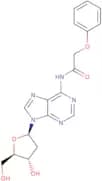
Producto descatalogado2'-Deoxy-N6-phenoxyacetyladenosine
CAS:2'-Deoxy-N6-phenoxyacetyladenosine is a cyclic oligonucleotide analog that has been shown to be efficient in inhibiting the replication of RNA. It binds to the RNA polymerase, preventing transcription and replication of the nucleic acid. 2'-Deoxy-N6-phenoxyacetyladenosine is also an effective inhibitor of DNA synthesis and can inhibit the synthesis of proteins by binding to ribosomes. This drug is structurally similar to deoxyadenosine, which is a component of DNA, and it has been shown to be more potent than other analogs.
Fórmula:C18H19N5O5Pureza:Min. 97 Area-%Peso molecular:385.38 g/molN6-Benzoyl-2'-deoxy-5'-O-DMT adenosine-3'-Q Linker CPG 1000 Å
N6-benzoyl-2'-deoxy-5'-O-DMT adenosine-3'-Q Linker CPG 1000 Å is a novel nucleoside with antiviral activity. It is synthesized by the condensation of 2'-deoxyadenosine monophosphate and 3'-Q linker CPG 1000 Å. The molecular weight of N6-benzoyl-2'-deoxy-5'-O-DMT adenosine-3'-Q Linker CPG 1000 Å is 878.36 g/mol, and its CAS number is 628674-06-4. This substance has antiviral activity against herpes simplex virus type 1 (HSV1) and herpes simplex virus type 2 (HSV2). N6-benzoyl-2'-deoxy-5'-O-DMT adenosine can be used as an anticancer drug because it inhibits the growth
Pureza:Min. 95%Ref: 3D-NB11617
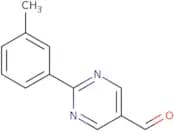
Producto descatalogado2-(3-Methylphenyl)pyrimidine-5-carbaldehyde
CAS:2-(3-Methylphenyl)pyrimidine-5-carbaldehyde is a monophosphate nucleoside analog that can be used as an antiviral drug. It has shown cytotoxic activity against cells with a high DNA content, and it inhibits the synthesis of RNA and DNA. This compound could be useful for the treatment of HIV and other viral diseases.Fórmula:C12H10N2OPureza:Min. 95%Peso molecular:198.22 g/mol2'-O-Hexylaminoguanosine
2'-O-Hexylaminoguanosine is a modified nucleoside that has antiviral properties. It is an activator of the human immune system and is used to treat cancer. 2'-O-Hexylaminoguanosine inhibits the synthesis of DNA by phosphoramidite addition to the monophosphate form of guanosine, which prevents RNA synthesis and therefore also protein synthesis. It also has anticancer effects by inhibiting the growth of cells in culture.
Pureza:Min. 95%5-Aminoallyl 2'-deoxycytidine-5'-triphosphate lithium, 100mM aqueous solution
5-Aminoallyl 2'-deoxycytidine-5'-triphosphate lithium salt - 100mM aqueous solution is a novel modified nucleoside that can be activated to the corresponding phosphoramidite.
Fórmula:C12H17N4O13P3•Li4Pureza:Min. 95%Forma y color:Clear LiquidPeso molecular:545.97 g/molRef: 3D-NA32075
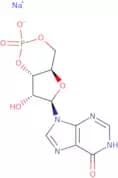
Producto descatalogadoInosine-3',5'-cyclic-monophosphate sodium
CAS:Inosine-3',5'-cyclic-monophosphate sodium (cIMP) is a metabolite of inosine and is generated by the enzyme inosine monophosphate cyclohydrolase. cIMP has been shown to be related to colorectal adenocarcinoma, cancer, and body mass index. It has also been implicated in the diagnosis of cancer and infectious diseases. cIMP is involved in energy metabolism and DNA synthesis, which are important for the progression of renal cell cancer. In addition, it has been shown that cIMP can function as a biomarker for prognosis when used with multivariate logistic regression.Fórmula:C10H11N4O7P·NaPureza:Min. 95%Peso molecular:353.18 g/molRef: 3D-NI170529
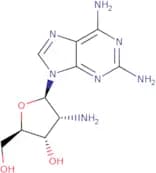
Producto descatalogado2,6-Diamino-9-(2'-amino-2'-deoxy-b-D-ribofuranosyl)purine
CAS:2,6-Diamino-9-(2'-amino-2'-deoxy-b-D-ribofuranosyl)purine (dAraMP) is a novel nucleoside analogue that was synthesized and characterized. It has been shown to inhibit the growth of cancer cells in vitro. dAraMP is a monophosphate analogue of 2,6-diamino-9-(2'-deoxy-b-D-ribofuranosyl)purine (dAraP). The modified phosphoramidite approach used in its synthesis yielded high purity and yields. This product is also available as a diphosphate analogue of 2,6 diamino 9-(2'-amino 2'-deoxy b D ribofuranosyl) purine (dAMP). The diphosphate form of this product has been shown to be an activator for DNA polymerase.Fórmula:C10H15N7O3Pureza:Min. 95%Forma y color:White To Off-White SolidPeso molecular:281.28 g/molRef: 3D-ND06322
Producto descatalogado6-Amino-1-methyluracil
CAS:6-Amino-1-methyluracil is a synthetic drug that is used in the treatment of inflammatory diseases, including rheumatoid arthritis and psoriasis. It is also used to treat cancer, such as leukemia and in the treatment of bacterial infections. 6-Amino-1-methyluracil inhibits the synthesis of DNA by inhibiting the enzyme thymidylate synthetase. This inhibition prevents DNA replication and transcription, which leads to cell death. 6-Amino-1-methyluracil binds to cellular proteins through its amino group and hydroxyl group, which are not involved in its chemical reactions. 6-Amino-1-methyluracil has shown great promise as a template molecule for the synthesis of new drugs.
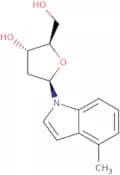
Pureza:Min. 95%1-(2-Deoxy-b-D-ribofuranosyl)-4-methylindole
CAS:1-(2-Deoxy-b-D-ribofuranosyl)-4-methylindole is a nucleoside that can be used as an activator for phosphoramidite synthesis. It is also known to have antiviral, anticancer, and antimalarial properties. 1-(2-Deoxy-b-D-ribofuranosyl)-4-methylindole has been shown to inhibit the proliferation of human leukemia cells in culture. It has also been shown to suppress HIV replication in vitro by inhibiting viral RNA synthesis.Fórmula:C14H17NO3Pureza:Min. 95%Peso molecular:247.3 g/molRef: 3D-ND06396
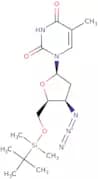
Producto descatalogado3'-Azido-5'-O-tert-butyldimethylsilyl-3'-deoxythymidine
CAS:3'-Azido-5'-O-tert-butyldimethylsilyl-3'-deoxythymidine (BUdR) is an antiviral agent that is used in the synthesis of DNA and RNA. BUdR is a modified phosphoramidite that is activated with diphosphate. It has a high quality, high purity, and a novel structure. BUdR has been shown to have anticancer properties as well as inhibitory effects on HIV production in cells.
Fórmula:C16H27N5O4SiPureza:Min. 95%Peso molecular:381.51 g/molRef: 3D-NA08679
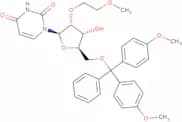
Producto descatalogado5'-O-DMT-2'-O-(2-methoxyethyl)uridine
CAS:5'-O-DMT-2'-O-(2-methoxyethyl)uridine is a modified nucleoside that is an antiviral and anticancer agent. It was first synthesized in the early 1980s, and has been shown to be active against a variety of viruses, such as herpes simplex virus (HSV), varicella zoster virus (VZV), cytomegalovirus (CMV), hepatitis B virus (HBV), and Epstein-Barr virus (EBV). 5'-O-DMT-2'-O-(2-methoxyethyl)uridine inhibits the growth of cancer cells by interfering with DNA synthesis. This drug also has been shown to be an activator for DNA polymerases and is used as a building block for antiretroviral drugs.
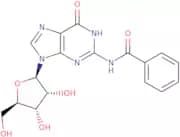
Fórmula:C33H36N2O9Pureza:Min. 95%Peso molecular:604.65 g/molN2-Benzoylguanosine
CAS:N2-Benzoylguanosine is a nucleotide derivative that is formed by the acetylation of guanosine. It has been shown to act as a buffer in alkaline solutions and isomerizes to its n-oxide form when heated. N2-Benzoylguanosine reacts with peroxides such as hydrogen peroxide, glyoxal, and organic peroxides, forming hydroperoxide intermediates that can be converted into other products. The acidic hydrolysis of N2-benzoylguanosine yields the corresponding 6-benzoyladenosines. It has been shown to enhance the activity of uridine in inhibiting bacterial growth, while also acting as an inhibitor of viral RNA synthesis. This compound also reacts with nitrous acid to form an n6-benzoyladenosine derivative that inhibits the formation of RNA chains during transcription.
Fórmula:C17H17N5O6Pureza:Min. 95%Forma y color:White to beige solid.Peso molecular:387.35 g/molRef: 3D-NB06331
Producto descatalogado2',3',5'-Tri-O-acetylinosine
CAS:2′,3′,5′-Tri-O-acetylinosine is a protected form of the nucleoside inosine, with potential for use in the preparation of modified nucleotides and nucleoside analogs.
Fórmula:C16H18N4O8Pureza:Min. 95%Forma y color:White To Off-White SolidPeso molecular:394.34 g/molRef: 3D-NT06708
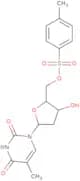
Producto descatalogado5'-O-Tosylthymidine
CAS:5'-O-Tosylthymidine is a bifunctional reagent that is used in the synthesis of DNA. It is a nucleophilic, inorganic compound that reacts with the electrophilic acrylonitrile group on 5'-hydroxythymidine to form a stable thiophosphate linkage. The reaction takes place stepwise and is catalyzed by an enzyme called DNA polymerase. This product has been used as an antimetabolite in medicine, mainly for treating leukemia.
Fórmula:C17H20N2O7SPureza:Min. 95%Peso molecular:396.42 g/molRef: 3D-NT10016
Producto descatalogado