Nucleósidos
Se han encontrado 3569 productos de "Nucleósidos"
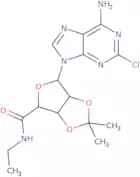
2-Chloro-5'-N-ethylcarboxamide-2',3'-O-isopropylidene adenosine
CAS:2-Chloro-5'-N-ethylcarboxamide-2',3'-O-isopropylidene adenosine is an antiviral agent that inhibits the synthesis of deoxyribonucleic acid (DNA) and ribonucleic acid (RNA). It is a synthetic, modified nucleoside. 2-Chloro-5'-N-ethylcarboxamide-2',3'-O-isopropylidene adenosine has been shown to be active against human tumor cell lines in vitro and in vivo. The compound inhibits the activity of DNA polymerase and RNA polymerase by competitive inhibition of the enzyme phosphoramidite. 2CECA has also been shown to have anticancer properties as it induces apoptosis in cancer cells.Fórmula:C15H19ClN6O4Pureza:Min. 95%Peso molecular:382.8 g/mol2'-Deoxy-5'-O-DMT-2'-fluoro-N2-isobutyrylguanosine 3'-O-succinate triethylammonium salt
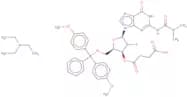
2'-Deoxy-5'-O-DMT-2'-fluoro-N2-isobutyrylguanosine 3'-O-succinate triethylammonium salt is a novel phosphoramidite that can be used as an activator for DNA synthesis. It is activated by the addition of an appropriate nucleophile and has been shown to be effective in antiviral and anticancer activities. This compound is synthesized through a modified diphosphate method and it is available in high purity with a CAS number.Fórmula:C39H40FN5O10·C6H16NPureza:Min. 95%Peso molecular:859.98 g/molO6-Diphenylcarbonyl-N2-isobutyryl-1-(5'-O-DMT-b-D-arabinofuranosyl) guanine
O6-Diphenylcarbonyl-N2-isobutyryl-1-(5'-O-DMT-b-D-arabinofuranosyl) guanine is a synthetic nucleoside. It is an activator of antiviral, anticancer, and antimalarial agents. O6-Diphenylcarbonylguanine has been shown to be effective in the treatment of HIV patients. It also inhibits the replication of herpes simplex virus type 1 (HSV1) and can be used for the treatment of HSV1 encephalitis. O6-Diphenylcarbonylguanine has also been shown to be effective in the treatment of cancer cells that are resistant to chemotherapy drugs such as cisplatin and doxorubicin.Fórmula:C47H47N5O9Pureza:Min. 95%Peso molecular:825.9 g/molAdenosine 5'-diphosphate trilithium salt
CAS:Adenosine 5'-diphosphate trilithium salt is a lithium salt of adenosine 5'-diphosphate. It is an activator that is used in the synthesis of polymers and monophosphates. Lithium salts have been shown to increase the solubility of adenosine and guanosine. This product has also been shown to be an effective lithium ion conductor, serving as a potential replacement for dilithium.Fórmula:C10H12N5O10P2·Li3Pureza:Min. 95%Peso molecular:445 g/mol8-Chloroadenosine 3',5'-cyclic monophosphate dihydrate
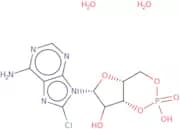
CAS:8-Chloroadenosine 3',5'-cyclic monophosphate dihydrate (8-Cl-cAMP) is an anticancer drug that inhibits the growth of cells in vitro and in vivo. 8-Cl-cAMP is a cytostatic agent that can inhibit the proliferation of cancer cells, especially renal cell cancer cells. It also has synergistic activity with epidermal growth factor, which may be due to its ability to increase the production of reactive oxygen species and decrease mitochondrial membrane potential. 8-Cl-cAMP may have potential as an anticancer agent due to its ability to induce apoptosis and inhibit protein synthesis.
Fórmula:C10H11ClN5O6P·2H2OPureza:Min. 95%Peso molecular:399.69 g/mol8-Bromo-9-[3',5'-O-(1,1,3,3-tetraisopropyl-1,3-disiloxanediyl)-2'-deoxy-b-D-ribofuranosyl]guanine
CAS:8-Bromo-9-[3',5'-O-(1,1,3,3-tetraisopropyl-1,3-disiloxanediyl)-2'-deoxy-b-D-ribofuranosyl]guanine is a nucleoside analog that inhibits DNA synthesis in the cancer cells. This agent is an activator of nucleases and can inhibit RNA synthesis by inhibiting the enzyme ribonucleotide reductase. 8-Bromo-9-[3',5'-O-(1,1,3,3-tetraisopropyl-1,3-disiloxanediyl)-2'-deoxy-b-Dribofuranosyl]guanine also has antiviral activity against herpes simplex virus type 1 and 2. The drug is a novel compound with anticancer activity that targets DNA synthesis by binding to the enzyme topoisomerase II. ThisFórmula:C22H38BrN5O5Si2Pureza:Min. 95%Peso molecular:588.64 g/mol6-(2-Cyanoethylthio)-2'-deoxy-5'-O-DMT-N2-trifluoroacetylguanosine 3'-CE phosphoramidite
CAS:6-(2-Cyanoethylthio)-2'-deoxy-5'-O-DMT-N2-trifluoroacetylguanosine 3'-CE phosphoramidite is a novel, modified nucleoside with antiviral, anticancer and other potential therapeutic activities. It is synthesized by the reaction of 6-(2-cyanoethylthio)-2'-deoxy-5'-O-DMT nucleoside with 2,4,6-trifluoroacetic anhydride in the presence of N,N'-diisopropylethylamine. The product is purified on a column to yield high quality material. The CAS number for this compound is 146691-59-0.Fórmula:C45H50N8O7PSPureza:Min. 95%Peso molecular:934.96 g/mol5-Bromouridine-5'-monophosphate
CAS:5-Bromouridine-5'-monophosphate is a nucleoside analog of uridine. It is an antiviral and antineoplastic agent that inhibits the synthesis of DNA by inhibiting the enzyme ribonucleotide reductase. This enzyme catalyzes the conversion of ribonucleosides to diphosphates, which are precursors for DNA and RNA synthesis. 5-Bromouridine-5'-monophosphate has been shown to be effective against some cancer cells in vitro and in vivo, but has not been tested on humans.
Fórmula:C9H12BrN2O9PPureza:Min. 95%Peso molecular:403.08 g/mol(5'S)-8,5'-Cyclodeoxyadenosine CE phosphoramidite
CAS:(5'S)-8,5'-Cyclodeoxyadenosine CE phosphoramidite is a nucleoside that is used in the synthesis of DNA. It is an analog of adenosine and has antiviral and anticancer properties. It also has been shown to inhibit the growth of certain types of cancer cells by inhibiting the production of deoxyribonucleosides. (5'S)-8,5'-Cyclodeoxyadenosine CE phosphoramidite can be used as a monophosphate or as a diphosphate for incorporation into DNA strands. This compound belongs to the group of modified nucleosides, which are synthetically produced compounds that are different from naturally occurring nucleosides found in DNA. (5'S)-8,5'-Cyclodeoxyadenosine CE phosphoramidite is purified and has high purity when purchased from us.Fórmula:C47H50N7O7PPureza:Min. 95%Peso molecular:855.92 g/mol3'-Deoxythymidine-5'-triphosphate lithium salt - 100mM aqueous solution
CAS:3'-Deoxythymidine-5'-triphosphate lithium salt - 100mM aqueous solution is a phosphoramidite. It is an antiviral agent that inhibits the replication of DNA and RNA viruses by inhibiting the synthesis of viral nucleic acid. 3'-Deoxythymidine-5'-triphosphate lithium salt - 100mM aqueous solution has been shown to be effective against some cancer cells with high purity and novel properties.Fórmula:C10H17N2O13P3·xLiPureza:Min. 95%Peso molecular:466.17 g/mol8-Bromoadenosine 3',5'-cyclic monophosphorothioate, Sp-isomer sodium salt
CAS:8-Bromoadenosine 3',5'-cyclic monophosphate is a nucleotide analog that binds to RNA polymerase and blocks the elongation of RNA. It has been shown to stimulate axonal regeneration in the rat spinal cord, by increasing the level of glutamate in the extracellular space. 8-Bromoadenosine 3',5'-cyclic monophosphate also stimulates nerve growth factor (NGF) production and activates protein kinase C (PKC). This drug also inhibits apoptosis by inhibiting the activity of Mcl-1 protein, which is involved in mitochondrial membrane permeability.Fórmula:C10H10BrN5O5PS·NaPureza:Min. 95%Forma y color:White to off-white solid.Peso molecular:446.51 g/mol2'-Deoxy-5'-O-DMT-5-methylzebularine 3'-CE phosphoramidite
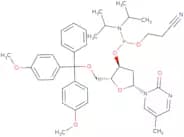
CAS:2'-Deoxy-5'-O-DMT-5-methylzebularine 3'-CE phosphoramidite is a novel nucleoside that has been modified to contain a 5-methyl group at the 2′ position. It is phosphorylated with a phosphate group at the 3′ position and linked to an oligonucleotide via a 3′-O,O′-dimethoxytrityl (DMT) spacer. This novel nucleoside has antiviral activity against hepatitis C virus and cytomegalovirus, as well as anticancer properties. 2'-Deoxy-5'-O-DMT-5-methylzebularine 3'-CE phosphoramidite has shown antitumour activity in animal models of human breast cancer and melanoma.Fórmula:C40H49N4O7PPureza:Min. 95%Forma y color:SolidPeso molecular:728.81 g/molBiotin-16-deoxyuridine-5'-triphosphate, lithium salt - 1 mM aqueous solution
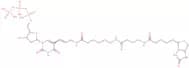
CAS:Biotin-16-deoxyuridine-5'-triphosphate, lithium salt (Biotin-16-dUTP) is a nucleotide analog that is used in the detection of RNA and DNA. It is incorporated into the growing DNA or RNA strand by DNA polymerase and then detected by an enzyme that can detect biotin. Biotin-16-dUTP has been shown to be effective in identifying the occipital cortex during basic protein localization studies. The use of biotin-16-dUTP has also been shown to increase immune response as well as neuronal death in vivo models. This drug has also been shown to cause necrotic cell death in hl-60 cells, which may be due to its ability to inhibit creatine kinase and interfere with cellular ATP production. Biotin-16-dUTP has also been used for the detection of genome dna from HLA class I genes with monoclonal antibodiesFórmula:C32H52N7O18P3S·xLiPureza:Min. 95%Forma y color:Colourless liquid.Peso molecular:947.78 g/mol6-Chloro-2-hydroxy-9-(2',3',5'-tri-O-acetyl-b-D-ribofuranosyl)purine
CAS:6-Chloro-2-hydroxy-9-(2',3',5'-tri-O-acetyl-b-D-ribofuranosyl)purine is a novel nucleoside that has been shown to have anticancer activity. It is synthesized by the condensation of 2,6 dichloropurine with 3,5 diacetyl b ribofuranosyl chloride in the presence of triethylamine and pyridine. The compound has been shown to inhibit viral replication and induce apoptosis in cancer cells. 6C2H9(2',3',5'-tri-O-acetylb-D-ribofuranosyl)purine may also be useful for the treatment of human immunodeficiency virus (HIV) infection.Fórmula:C16H17ClN4O8Pureza:Min. 95%Peso molecular:428.78 g/mol2'-Deoxy-2',2'-difluorocytidine 5'-monophosphate triethylammonium salt
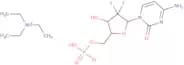
2'-Deoxy-2',2'-difluorocytidine 5'-monophosphate triethylammonium salt is an antiviral nucleotide that inhibits the synthesis of viral DNA by competing with natural substrates. It has been shown to be a potent activator of the phosphoramidite method, which is a synthetic method for the production of oligonucleotides. This nucleotide is synthesized by reacting 2-deoxy-2',2'-difluorocytidine 5'-triphosphate with TEA in DMF. The CAS number for this compound is 62533-81-7 and it has a molecular weight of 298.3 Da.Pureza:Min. 95%2,4,6-Trimethoxy-pyrimidine
CAS:Producto controlado2,4,6-Trimethoxy-pyrimidine is a heterobicyclic compound that contains three methoxy groups. It is a synthetic nucleobase that can be found in the nucleosides uridine and cytidine, as well as in other compounds such as pyrimidines. 2,4,6-Trimethoxy-pyrimidine has been shown to be reactive to nucleophilic solutes and has been used with success in the synthesis of lactams. The isomers of this compound have different efficiencies for reaction with nucleophilic solutes.
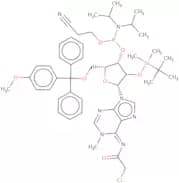
Pureza:Min. 95%2'-O-tert-Butyldimethylsilyl-N6-chloroacetyl-N1-methyl-5'-O-MMT-adenosine 3'-CE phosphoramidite
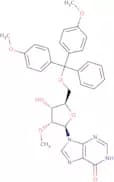
2'-O-tert-Butyldimethylsilyl-N6-chloroacetyl-N1-methyl-5'-O-MMT-adenosine 3'-CE phosphoramidite is an activated monophosphate chemical compound. It is a modified nucleoside that has been used for the synthesis of oligonucleotides and DNA. It also has anticancer, antiviral, and other pharmacological activities.Fórmula:C48H63ClN7O7PSiPureza:Min. 95%Peso molecular:944.57 g/mol5'-O-DMT-2'-O-methylinosine
CAS:5'-O-DMT-2'-O-methylinosine is a monophosphate nucleotide that has antiviral effects. It is synthesized from the synthetic nucleoside 5'-O-DMT-2'-deoxyuridine and 2'-O-methylinosine. The synthesis of 5'-O-DMT-2'-O-methylinosine is achieved through phosphoramidite chemistry, which produces a novel antiviral agent with high purity and quality. This compound has been shown to inhibit HIV replication in vitro, but further research is needed to determine its efficacy in vivo.
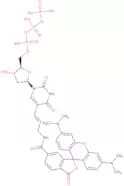
Fórmula:C32H32N4O7Pureza:Min. 95%Peso molecular:584.63 g/mol5-Aminoallyl- 2'-deoxyuridine 5'-triphosphate, labeled with 5/6-TAMRA - 1mM aqueous solution
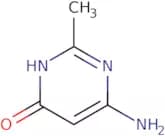
CAS:5-Aminoallyl-2'-deoxyuridine 5'-triphosphate is a novel chemical compound that is modified with 5/6-TAMRA and has anticancer, antiviral, and antitumor properties. It is an activator of ribonucleosides and deoxyribonucleosides. CAS No. 151345-35-6Fórmula:C37H40N5O18P3Pureza:Min. 95%Peso molecular:935.66 g/mol4-Amino-6-hydroxy-2-methylpyrimidine
CAS:4-Amino-6-hydroxy-2-methylpyrimidine (4AMMP) is a heterocyclic compound that belongs to the group of pyrimidines. It has been shown to react with morpholine and acrylic acid in an oxidation sequence. The reaction proceeds through an elimination, forming formaldehyde, which condenses with hydrolyzed piperazine to give the final product. 4AMMP can also be alkylated with a variety of reagents such as methyl iodide or dimethyl sulfate.Fórmula:C5H7N3OPureza:Min. 95%Forma y color:PowderPeso molecular:125.13 g/molBiotin-5-deoxycytidine-5'-triphosphate, lithium salt - 1 mM aqueous solution
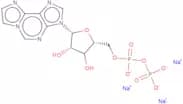
Biotin-5-deoxycytidine-5'-triphosphate, lithium salt - 1 mM aqueous solution is a modified nucleoside with antiviral activity. It is a phosphoramidite that can be used for the synthesis of DNA, RNA and other nucleic acids. Biotin-5-deoxycytidine-5'-triphosphate, lithium salt - 1 mM aqueous solution is an active ingredient in many research laboratories.Fórmula:C22H35N6O15P3SPureza:Min. 95%Peso molecular:748.53 g/mol1,N6-Ethenoadenosine-5'-diphosphate, Sodium salt
CAS:Emission max - 415nmMolar extinction coefficient ε [L·mol⁻¹·cm⁻¹] - 6000Fluorescent analogue of 5'-ADP, NA10698Fórmula:C12H15N5O10P2Pureza:Min. 95%Peso molecular:451.22 g/mol8-Amino-2'-deoxy-N6,N8-di-DMF-5'-O-DMT-adenosine 3'-CE phosphoramidite
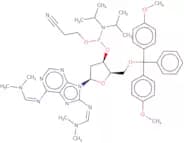
CAS:8-Amino-2'-deoxy-N6,N8-di-DMF-5'-O-DMT-adenosine 3'-CE phosphoramidite is a novel nucleoside analog with antiviral and anticancer properties. It is synthesized by reacting 8-aminoimidazo[2,1-b]thiazole 1,3(2H)-dione (AITD) with N6,N8-diisopropyl dATP to form the aminothiazole phosphate intermediate. This intermediate is then reacted with 5'-O-(4,4'-dimethoxytrityl)-2',3',5' triphosphate (DMTrP) to produce the desired product. The synthesis of 8AAODMTAP has been shown to be more efficient than other synthesized nucleosides due to its high purity and lack of impurities.Fórmula:C46H59N10O6PPureza:Min. 95%Peso molecular:879 g/mol2',3'-Dideoxyguanosine-5'-O-(1-thiotriphosphate)
CAS:2',3'-Dideoxyguanosine-5'-O-(1-thiotriphosphate) (2,3'-ddGTP) is a nucleoside that is synthesized using phosphoramidite chemistry. It has antiviral and anticancer activity, as well as the ability to activate cellular transcription. 2,3'-Dideoxyguanosine-5'-O-(1-thiotriphosphate) can be used in the synthesis of modified nucleosides or in the synthesis of novel nucleosides. The compound was found to inhibit DNA replication by binding to the enzyme ribonucleotide reductase. 2,3'-Dideoxyguanosine-5'-O-(1-thiotriphosphate) can also be used for DNA sequencing and as a cytotoxic agent in cancer chemotherapy.Fórmula:C10H16N5O11P3SPureza:Min. 95%Peso molecular:507.25 g/mol5,6-Diaminouracil
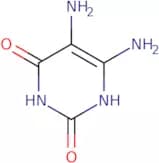
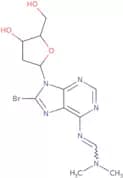
CAS:5,6-Diaminouracil is a nitrogen-containing heterocyclic compound that inhibits bacterial enzymes. 5,6-Diaminouracil is used as a pharmaceutical preparation for the treatment of cancer, and has been shown to be effective against various cancers, including colon cancer and breast cancer. 5,6-Diaminouracil can inhibit the growth of cells by binding to DNA and inhibiting DNA synthesis. This drug also has potent antitumor activity. 5,6-Diaminouracil has been used in analytical chemistry as an analytical method for determining the purity of products such as pharmaceuticals or dyes. The potency of this drug was determined electrochemically using cyclic voltammetry and it was found to have a constant inhibitory effect on tumor cell growth at low concentrations.Fórmula:C4H7ClN4O2Pureza:Min. 95%Peso molecular:178.58 g/mol8-Bromo-N6-(dimethylaminomethylidene)-2'-deoxyadenosine
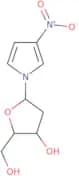
CAS:8-Bromo-N6-(dimethylaminomethylidene)-2'-deoxyadenosine is a phosphoramidite that is used in the preparation of antiviral nucleosides and monophosphate. It has been shown to have anticancer activity. 8-Bromo-N6-(dimethylaminomethylidene)-2'-deoxyadenosine is synthesized by reacting an acid halide with a 2'-deoxyribonucleotide. This reaction produces a 2'-bromo adenosine derivative, which is then reacted with dimethylamine to produce the desired product. The synthesis of 8-bromo-N6-(dimethylaminomethylidene)-2'-deoxyadenosine can be performed on a large scale using an automated process.Fórmula:C13H17BrN6O3Pureza:Min. 95%Peso molecular:385.22 g/mol1-(β-D-2-Deoxyribofuranosyl)-3-nitropyrrole
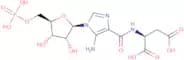
CAS:1-(β-D-2-Deoxyribofuranosyl)-3-nitropyrrole is a nitrofuranose analog that is used in the synthesis of nucleic acids. It has been shown to be effective as a template for DNA sequencing and as a probe for magnetic resonance spectroscopy. 1-(β-D-2-Deoxyribofuranosyl)-3-nitropyrrole inhibits the polymerase chain reaction by binding to the primer and causing misincorporation at mismatched sites, leading to reduced amplification of the target sequence. This compound also has antiviral properties and can prevent the replication of HIV and other viruses by destabilizing their dna duplexes.Fórmula:C9H12N2O5Pureza:Min. 95%Peso molecular:228.2 g/molN-Succinyl-5-aminoimidazole-4-carboxamide ribose 5'-phosphate
CAS:N-Succinyl-5-aminoimidazole-4-carboxamide ribose 5'-phosphate is a synthetase that is involved in the biosynthesis of purines and pyrimidines. It catalyzes the ATP-dependent formation of N-succinyl5'-aminoimidazole-4-carboxamide ribose 5'-phosphate from succinyl CoA and aspartic acid. This enzyme has been studied in wild type strains of bacteria, such as Escherichia coli, but not in humans or other organisms. N-Succinyl5'-aminoimidazole-4-carboxamide ribose 5'-phosphate has been shown to be an inhibitor of antimicrobial agents such as penicillin G, erythromycin, and tetracycline. The mechanism for this inhibition is unclear, but it may involve hydrogen bonding interactions or structural changes that prevent bindingFórmula:C13H19N4O12PPureza:Min. 95 Area-%Forma y color:White Off-White PowderPeso molecular:454.28 g/molO6-Phenyl-2'-deoxyinosine
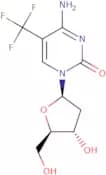
CAS:O6-Phenyl-2'-deoxyinosine is a high purity, modified nucleoside that is a novel anticancer agent. It is used as a phosphoramidite in the synthesis of DNA and RNA. It has been shown to have cytotoxic effects against tumor cells and enhances the efficacy of chemotherapy. O6-Phenyl-2'-deoxyinosine has also been shown to be an activator of transcription factors, including NF-κB, AP-1, and STAT3.Fórmula:C16H16N4O4Pureza:Min. 95%Peso molecular:328.32 g/mol2'-Deoxy-5-(trifluoromethyl)cytidine
CAS:2'-Deoxy-5-(trifluoromethyl)cytidine is a synthetic nucleoside analogue that inhibits the cytidine deaminase enzyme. It is used in the treatment of some types of leukemia and other cancers. The compound, which has a trifluoromethyl group on the 2' position, binds to the active site of cytidine deaminase and prevents it from functioning. This leads to an accumulation of thymidylate, which is required for DNA synthesis. The tumor tissue also contains high concentrations of this drug and its metabolites, making it more effective against cancer cells than normal cells. 2'-Deoxy-5-(trifluoromethyl)cytidine has been shown to inhibit anabolism in tumor tissue in the presence of high concentrations of phosphorylases, which are enzymes that catalyze reactions that break down carbohydrates and proteins into smaller molecules such as glucose or amino acids.Fórmula:C10H12F3N3O4Pureza:Min. 95%Peso molecular:295.22 g/molN6-Benzoyl-2',3'-dideoxyadenosine
CAS:N6-Benzoyl-2',3'-dideoxyadenosine is a nucleoside analog that inhibits the growth of Mycobacterium tuberculosis by preventing DNA replication. It is also a potent inhibitor of DNA synthesis, and binds to the beta-subunit of bacterial RNA polymerase, leading to inhibition of transcription. N6-Benzoyl-2',3'-dideoxyadenosine has shown in vitro activity against Mycobacterium tuberculosis and other bacteria that have been found to be resistant to conventional antibiotics.Fórmula:C17H17N5O3Pureza:Min. 95%Forma y color:White/Off-White SolidPeso molecular:339.36 g/mol2'-Deoxy-5-fluoroadenosine
2'-Deoxy-5-fluoroadenosine is a nucleoside that is used in the synthesis of DNA and RNA. It has antiviral activity and can be used as an anticancer agent. This nucleoside is synthesized by reacting 2'-deoxyadenosine with 5-fluorouracil in a high-quality, high purity environment under stringent conditions. 2'-Deoxy-5-fluoroadenosine has also been shown to have antiretroviral activity against HIV and hepatitis B virus.
Pureza:Min. 95%Chemical phosphorylating reagent (cpr)
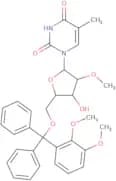
CAS:Chemical phosphorylating reagent (CPR) is a powerful tool for the study of kinases, which are enzymes that regulate cellular processes such as cell division and apoptosis. CPR has been shown to be effective in inhibiting the activity of certain kinases that are involved in tumor growth and progression. It has also been used as an anticancer agent, inducing apoptosis in cancer cells. CPR is an analog of toxaphene and labetalol, two compounds with known kinase inhibitor activity. This reagent has been tested on human urine samples and Chinese hamster ovary cells, demonstrating its potential as a valuable research tool for studying kinase signaling pathways and developing new cancer therapies.Fórmula:C5H10O5Pureza:Min. 95%Peso molecular:150.13 g/mol5'-o-(Dimethoxytrityl)-5-methyl-2'-o-methyluridine
CAS:5'-O-(Dimethoxytrityl)-5-methyl-2'-O-methyluridine is a DNA building block that is used as a monophosphate and can be converted to diphosphate or modified with various protecting groups. This compound has been shown to have antiviral and anticancer properties, as well as being a novel nucleoside analog. 5'-O-(Dimethoxytrityl)-5-methyl-2'-O-methyluridine has the CAS number of 115173-73-4.Fórmula:C32H34N2O8Pureza:Min. 95%Peso molecular:574.6 g/mol2',3'-Didehydro-2',3'-dideoxyuridine
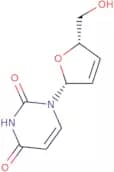
CAS:2',3'-Didehydro-2',3'-dideoxyuridine (DDDU) is a nucleoside analog that inhibits the formation of HIV. It is a potent inhibitor of human immunodeficiency virus type 1 (HIV-1) replication in cell culture, and has been shown to inhibit the production of HIV-1 virions in vitro. 2',3'-Didehydro-2',3'-dideoxyuridine has been shown to bind to the enzyme glycosyltransferase, which is required for HIV-1 replication. DDU also binds to human CD4+ T cells, deflecting them from the HIV-infected target cell. This compound may be useful as an antiviral agent against HIV-1 infection by inhibiting viral replication and infectivity.
Fórmula:C9H10N2O4Pureza:Min. 95%Peso molecular:210.19 g/molAdenosine 5'-(tetrahydrogen triphosphate)
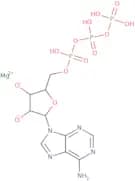
CAS:Adenosine is a nucleoside consisting of adenine and ribose. It is used in biochemical analysis to quantify the cytosolic Ca2+ concentration, which is an important cellular signal that regulates many cellular processes. Adenosine stimulates the uptake of Ca2+ by binding to the monophosphate-activated protein (AMPAR), which results in the opening of voltage-gated calcium channels. These channels allow Ca2+ to enter the cell, increasing its intracellular concentration. Adenosine also has been shown to stimulate muscle contraction through increased release of Ca2+. This drug also possesses inhibitory effects on synaptic transmission and may have anti-inflammatory properties due to its ability to inhibit proteolytic enzymes in muscle cells.Fórmula:C10H14MgN5O13P3Pureza:Min. 95%Peso molecular:529.47 g/molGuanosine-5'-carboxylic acid
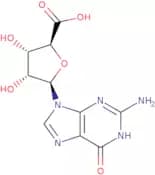
CAS:Guanosine-5'-carboxylic acid (GCA) is a nucleotide that interacts with mammalian cells. It reacts in a vessel to form the antigen, which can then be detected using an antibody. The conformational properties of this molecule are important for its function, and it has been shown to be effective against cancer cells in vivo. GCA has also been shown to interact with toll-like receptor 2 and induce an antibody response.Fórmula:C10H11N5O6Pureza:Min. 95%Peso molecular:297.22 g/molN2-DMF-9-(2'-deoxy-5'-O-DMT-b-D-ribofuranosyl)purine 3'-CE phosphoramidite
CAS:N2-DMF-9-(2'-deoxy-5'-O-DMT-b-D-ribofuranosyl)purine 3'-CE phosphoramidite is a novel, modified nucleoside analog with antiviral and anticancer properties. It is synthesized by the reaction of 2′,5′-O-(4,4′-dimethoxytrityl)-9-(2′deoxy-5′-O-DMT b D ribofuranosyl)purine 3′ with a phosphoramidite reagent in DMF at elevated temperature. The compound has been shown to inhibit viral replication in vitro and in vivo. In addition to its antiviral activity, N2DMFP3'-CE also inhibits tumor cell growth.Fórmula:C43H53N8O6PPureza:Min. 95%Forma y color:Off white solid.Peso molecular:808.93 g/mol2'-Deoxy-8-oxo-6-thioguanosine 5'-triphosphate
2'-Deoxy-8-oxo-6-thioguanosine 5'-triphosphate is a synthetic nucleotide that has antiviral properties. It activates the transcription of genes by preventing the synthesis of viral DNA and RNA. 2'-Deoxy-8-oxo-6-thioguanosine 5'-triphosphate is also an anticancer agent, as it prevents cell proliferation by inhibiting the synthesis of DNA, RNA, and protein. This drug can be used for treatment of HIV infection or cancer. 2'-Deoxy-8-oxo-6-thioguanosine 5'-triphosphate is a novel nucleotide with high purity.
Pureza:Min. 95%3'-Deoxy-3'-fluorocytidine
CAS:3'-Deoxy-3'-fluorocytidine is an activating agent that has been shown to inhibit coxsackie virus and other single-stranded RNA viruses. It is a nucleoside analogue that binds to the enzyme ribofuranoside, preventing the formation of the active site. 3'-Deoxy-3'-fluorocytidine has also been shown to inhibit the biochemical reactions involving S-adenosylhomocysteine hydrolase, which catalyzes the conversion of S-adenosylhomocysteine into adenosine, a precursor for DNA synthesis. Mechanistic studies have indicated that 3'-deoxy-3'-fluorocytidine inhibits enzymatic activity through stereochemical interactions with S-adenosylhomocysteine hydrolase.
Fórmula:C9H12FN3O4Pureza:Min. 95%Peso molecular:245.21 g/mol2’-Deoxy-N2-dimethylguanosine
CAS:2’-Deoxy-N2-dimethylguanosine is a novel antiviral agent that inhibits the replication of human DNA viruses by binding to their diphosphate or monophosphate regions and inhibiting ribonucleotide reductase. It has also been shown to have anticancer properties in vitro.Pureza:Min. 95%2,2-Crylo-5-methyluridine
2,2-Crylo-5-methyluridine is a synthetic diphosphate nucleotide that has been shown to be an activator of DNA synthesis. It is used in the synthesis of oligonucleotides and as a monophosphate for the synthesis of 2'-O-methyl ribonucleosides. 2,2-Crylo-5-methyluridine has been shown to have anticancer activity, which may be due to its ability to inhibit tumor proliferation or induce apoptosis.Pureza:Min. 95%2-Iodo-2’-deoxyadenosine
CAS:2-Iodo-2’-deoxyadenosine is a novel nucleoside that is a modified adenosine. It has been shown to possess anticancer activity. 2-Iodo-2’-deoxyadenosine has a high degree of cytotoxicity and can induce apoptosis in cancer cells. This drug also inhibits the growth of herpes simplex virus type 1 (HSV) and HIV, which are both types of viruses that infect humans. The antiviral activity may be due to the inhibition of viral DNA synthesis or RNA transcription. 2-Iodo-2’-deoxyadenosine is synthesized from adenine, iodine, and sulfuric acid with high purity and quality. It is not active against bacteria because it does not inhibit bacterial DNA gyrase or topoisomerase IV enzymes.Pureza:Min. 95%2-Thiopseudouridine
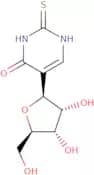
CAS:2-Thiopseudouridine is a heterocyclic nucleoside that is used as a building block for the synthesis of natural products. 2-Thiopseudouridine is prepared by a two-step process involving the desymmetrization of pseudoisocytidine and the formation of an aminopyrimidinone. The desymmetrization reaction proceeds with high stereoselectivity to yield the desired product in high yields. Other carbocyclic nucleosides can be synthesized from 2-thiopseudouridine, such as 2-thienopyrrole and 2-pyrroline.Fórmula:C9H12N2O5SPureza:Min. 95%Forma y color:SolidPeso molecular:260.27 g/mol4-(4-Chlorophenyl)pyrimidine-2-thiol
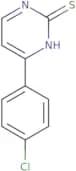
CAS:4-(4-Chlorophenyl)pyrimidine-2-thiol is an anti-cancer drug that is used in the treatment of ovarian cancer. It has been shown to be effective against cancer cells by interfering with the DNA replication process. 4-(4-Chlorophenyl)pyrimidine-2-thiol binds at the active site of topoisomerase II, which is involved in the process of transcription and replication. This drug also has been shown to induce apoptosis in fibroblast cells by inhibiting DNA synthesis and protein synthesis. 4-(4-Chlorophenyl)pyrimidine-2-thiol has a molecular weight of 181.24 g/mol and is soluble in water, methanol, and ethanol. The colorimetric assay for this compound has a detection limit of 1 µg/mL.
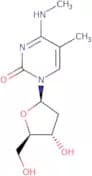
Pureza:Min. 95%2'-Deoxy-N4,5-dimethylcytidine
CAS:2'-Deoxy-N4,5-dimethylcytidine is an activator that has the ability to activate a variety of nucleoside analogs. The compound is synthetically derived and used as an antiviral agent. It can be modified at the 5' position with phosphate groups or ribonucleosides. 2'-Deoxy-N4,5-dimethylcytidine is also a novel monophosphate nucleoside that has been shown to inhibit the growth of cancer cells in vitro and in vivo. This drug inhibits DNA synthesis by preventing the incorporation of diphosphate nucleotides into DNA during DNA replication. 2'-Deoxy-N4,5-dimethylcytidine is not active against RNA synthesis because it does not have any activity at this site.
Fórmula:C11H17N3O4Pureza:Min. 95%Peso molecular:255.27 g/mol2',3'-Stannyluridine
2',3'-Stannyluridine is a novel modified ribonucleoside. It is synthesized by the condensation of 2'-deoxyuridine and 3'-hydroxy-2-methylpropiophenone. This product has been shown to have anticancer and antiviral activities. 2',3'-Stannyluridine inhibits the synthesis of DNA, RNA, and protein in cells by binding to the ribonucleotide reductase enzyme. It also has an effect on phosphoramidite synthesis, which is an important step in DNA replication. The CAS number for this product is 57824-03-1.
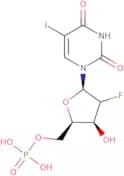
Pureza:Min. 95%Fialuridine 5'-monophosphate
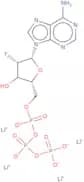
CAS:Fialuridine 5'-monophosphate is an analog of fialuridine, a drug used to treat HIV. Fialuridine 5'-monophosphate inhibits mitochondrial DNA synthesis by inhibiting hepg2 in the mitochondria and blocks the conversion of uracil to thymine in nuclear DNA. The inhibition of these two processes prevents viral replication and cell division. Fialuridine 5'-monophosphate also has antioxidant properties that protect cells from oxidative damage induced by reactive oxygen species. This drug may be beneficial for cancer treatment as well as hepatitis C or herpes simplex virus infection.Fórmula:C9H11FIN2O8PPureza:Min. 95%Peso molecular:452.07 g/mol2'-Deoxy-2'-fluoroadenosine-5'-triphosphate lithium salt - 100mM aqueous solution
CAS:2'-Deoxy-2'-fluoroadenosine-5'-triphosphate lithium salt is an analog of ATP that has significant inhibitory effect on DNA polymerase. It inhibits the synthesis of RNA and protein by binding to the enzyme DNA gyrase. This drug is used in cell culture as a nucleotide analog to study how cells are affected by atp analogs. 2'-Deoxy-2'-fluoroadenosine-5'-triphosphate lithium salt is used at high concentrations in vitro, where it inhibits topoisomerases and prevents cell division.Fórmula:C10H11FN5O12P3·4LiPureza:Min. 95%Peso molecular:532.9 g/mol6-Propylamino-7-deazapurine
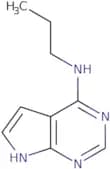
CAS:6-Propylamino-7-deazapurine is a synthetic nucleoside with antiviral and anticancer properties. It is an activator of DNA synthesis and is modified to have a high quality. 6-Propylamino-7-deazapurine has been shown to be effective against HIV and other viruses in vitro, as well as in animal models, but it is not yet approved for use in humans.6-Propylamino-7-deazapurine has also been shown to inhibit the growth of cancer cells in vitro and in vivo.
Fórmula:C9H12N4Pureza:Min. 95%Peso molecular:176.22 g/mol



![8-Bromo-9-[3',5'-O-(1,1,3,3-tetraisopropyl-1,3-disiloxanediyl)-2'-deoxy-b-D-ribofuranosyl]guanine](/_next/image/?url=https%3A%2Fstatic.cymitquimica.com%2Fproducts%2F3D%2Fthumb-webp%2FNB04668.webp&w=3840&q=75)