Nucleósidos
Se han encontrado 3569 productos de "Nucleósidos"
5-Hydroxymethyl-dc ce-phosphoramidite (hmdc)
CAS:Please enquire for more information about 5-Hydroxymethyl-dc ce-phosphoramidite (hmdc) including the price, delivery time and more detailed product information at the technical inquiry form on this page
Fórmula:C50H57N6O9PPureza:Min. 95%Peso molecular:917 g/mol5-Phenylcytidine
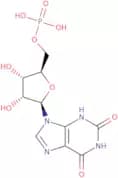
CAS:5-Phenylcytidine is a nitro compound that is used as an antiviral agent. It inhibits the replication of the virus by interfering with viral DNA synthesis and preventing the assembly of viral proteins. 5-Phenylcytidine is also capable of inhibiting influenza A virus in vitro at concentrations below 1 μM and has been shown to inhibit herpes simplex virus type 1 (HSV-1) in cell culture. The antiviral activity of 5-phenylcytidine may be due to its ability to form a stable reaction product with cytosine in alkaline conditions, which prevents the incorporation of this nucleobase into DNA or RNA.Pureza:Min. 95%Xanthosine-5'-monophosphate ammonium salt
CAS:Xanthosine-5'-monophosphate ammonium salt is a monophosphate compound that is formed by the reaction of xanthosine and ammonium hydroxide. It has been shown to have an optimum concentration of 1 mM in dextran sulfate solutions and to be active against a range of bacteria at this concentration. The antimicrobial activity of xanthosine-5'-monophosphate ammonium salt is due to its inhibition of energy metabolism and synthesis, which leads to cell death. Xanthosine-5'-monophosphate ammonium salt also inhibits the production of tetracycline resistance in leukemic mice and k562 cells, which may be due to its ability to form a complex enzyme with tetracycline synthetase.Pureza:Min. 95%3'-O-Allyluridine
3'-O-Allyluridine is a nucleoside that has antiviral, anticancer, and antibacterial activities. 3'-O-Allyluridine is an activator of RNA polymerase and is used to synthesize DNA in vitro. It can be used as a substrate for phosphoramidites in the synthesis of oligonucleotides with modified backbones. 3'-O-Allyluridine has been shown to inhibit the growth of cancer cells by blocking the synthesis of DNA and RNA. The drug also inhibits the production of ribonucleases, which are enzymes that break down RNA in cells.Fórmula:C12H16N2O6Pureza:Min. 95%Peso molecular:284.27 g/molN4-Benzoyl-2'-O-tert-butyldimethylsilyl-5'-O-DMT-2'C-methylcytidine 3'-CE phosphoramidite
N4-Benzoyl-2'-O-tert-butyldimethylsilyl-5'-O-DMT-2'C-methylcytidine 3'-CE phosphoramidite is a novel, deoxynucleoside phosphoramidite with high purity and high quality. It has been used in the synthesis of anticancer agents, ribonucleotide analogues and antiviral agents. N4-Benzoyl-2'-O-tert-butyldimethylsilyl-5'-O-DMT-2'C-methylcytidine 3'-CE phosphoramidite can be used as an activator for DNA polymerase to synthesize DNA molecule.Fórmula:C53H68N5O9PSiPureza:Min. 95%Peso molecular:978.19 g/molAdenylyl-3'-5'-uridine ammonium salt
CAS:Adenylyl-3'-5'-uridine ammonium salt is a novel antiviral agent that has been shown to inhibit the activity of viral DNA polymerase, RNA polymerase and reverse transcriptase. It is also an anticancer agent that can be used as a cytotoxic agent against leukemia and lymphoma cells. Adenylyl-3'-5'-uridine ammonium salt is synthesized by the reaction of adenosine monophosphate with uracil in the presence of phosphate and ammonia. This compound can then be converted to ribonucleosides or deoxyribonucleosides by phosphorylation. SYNONYMS: AMP-uridine; AMP-U; UMPFórmula:C19H24N7O12PPureza:Min. 95%Peso molecular:573.41 g/molN6-(tert-Butylphenoxyacetyl)-2'-O-methyl-5'-O-DMT-adenosine 3'-CE phosphoramidite
N6-(tert-Butylphenoxyacetyl)-2'-O-methyl-5'-O-DMT-adenosine 3'-CE phosphoramidite is a novel anticancer, antiviral and antifungal agent. It is synthesized by reacting the nucleoside adenosine with tert-butyl phenoxyacetic acid to form an activated ester derivative which reacts with 2'-O-methyl 5'-O-DMT in the presence of a phosphoramidite reagent to form a DNA precursor. The modified nucleotide has been shown to have high purity and good quality, as well as high antiviral and anti-cancer activities.Fórmula:C53H64N7O9PPureza:Min. 95%Peso molecular:974.09 g/molThymidine 5’-triphosphate sodium hydrate
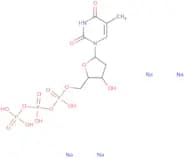
Thymidine 5’-triphosphate (dTTP) sodium hydrate is a fundamental building block in chemical biology. As one of the four natural deoxynucleotides, it plays a crucial role in DNA replication and repair, where dTTP is incorporated into growing DNA strands by DNA polymerases, ensuring fidelity during genetic duplication. The use of dTTP spans various applications, including PCR, DNA sequencing, and site-directed mutagenesis.
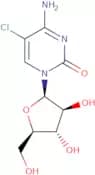
Pureza:Min. 95%5-Chloro-1-(b-D-arabinofuranosyl)cytidine
CAS:5-Chloro-1-(b-D-arabinofuranosyl)cytidine is a monophosphate that is used as a precursor in the synthesis of antiviral and anticancer drugs. 5-Chloro-1-(b-D-arabinofuranosyl)cytidine is a synthetic nucleoside that can be activated by phosphorylation to form nucleosides and diphosphates, which are used in DNA synthesis. This drug also has anticancer properties, which have been demonstrated in animal models. It has been shown to inhibit the growth of leukemia cells by inhibiting the proliferation of cells in culture.Fórmula:C9H12CIN3O5Pureza:Min. 95%Peso molecular:277.66 g/molN4-Acetyl-5'-O-DMT-cytidine 3'-CE phosphoramidite
N4-Acetyl-5'-O-DMT-cytidine 3'-CE phosphoramidite is a monophosphate nucleoside that is an important building block in nucleic acid synthesis. It has been shown to be effective against cancer cells and HIV infection. N4-Acetyl-5'-O-DMT-cytidine 3'-CE phosphoramidite also inhibits the production of viral proteins, including new viral particles, by binding to the RNA polymerase enzyme in cells. This compound can be used as a novel antiviral agent for the treatment of human immunodeficiency virus type 1 (HIV1) infections.Pureza:Min. 95%5'-O-DMT-N2-Isobutyryl-2'-O-(2-methylacetamido)guanosine 3'-CE phosphoroamidite
5'-O-DMT-N2-Isobutyryl-2'-O-(2-methylacetamido)guanosine 3'-CE phosphoroamidite is a high purity, modified phosphoramidite that is used as an activator for the synthesis of DNA. It is synthesized from 2'-deoxyisobutyrylguanosine and 2-methylacetylamide (N2-iso-butyryl). 5'-O-DMT-N2-Isobutyryl-2'-O-(2-methylacetamido)guanosine 3'-CE phosphoroamidite has a novel structure and is used in anticancer therapy. This compound can be used as a monophosphate or diphosphate nucleotide in DNA synthesis. 5'-O-DMT-N2-Isobutyryl - 2'- O-(2 - methylacetamido)Pureza:Min. 95%2'-Deoxy-N2-isobutyryl-a-cytidine
2'-Deoxy-N2-isobutyryl-a-cytidine (DBIC) is a modified nucleoside that is used in the synthesis of DNA. It is an activator that can be used to enhance the antitumor effects of other drugs. DBIC has been shown to inhibit the proliferation of human tumor cells by inactivating the p53 protein, which regulates cell cycle progression and suppresses tumorigenesis. This drug also has antiviral, anticancer, and anti-inflammatory properties.Fórmula:C13H19N3O5Pureza:Min. 95%Peso molecular:297.31 g/molN4-Acetyl-2'-Deoxy-5'-O-DMT-cytidine 3'-succinyl CPG 1000 Å
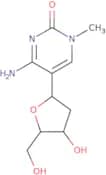
N4-Acetyl-2'-Deoxy-5'-O-DMT-cytidine 3'-succinyl CPG 1000 Å is a nucleoside analog. It is an antiviral and anticancer agent that inhibits the synthesis of DNA. This compound has a high purity, reactivity and solubility. N4-Acetyl-2'-Deoxy-5'-O-DMT-cytidine 3'-succinyl CPG 1000 Å can be used in the synthesis of oligonucleotides for research purposes or as pharmaceutical ingredients.Pureza:Min. 95%4-Amino-5-(2-deoxy-b-D-ribofuranosyl)-1-methyl-2(1H)-pyrimidinone
CAS:4-Amino-5-(2-deoxy-b-D-ribofuranosyl)-1-methyl-2(1H)-pyrimidinone is a novel activator that is a ribonucleoside and deoxyribonucleoside diphosphate, as well as phosphoramidite and modified nucleosides. It has been shown to have anticancer, antiviral, and antimalarial activities in vitro. This compound has been synthesized in high purity and high quality with CAS No. 1166395-05-6.Fórmula:C10H15N3O4Pureza:Min. 95%Peso molecular:241.24 g/mol3'-Deoxy-N6-propionyladenosine
CAS:3'-Deoxy-N6-propionyladenosine is a prodrug that is modified in the body to form adenosine. It has been shown to have a high bioavailability and pharmacokinetic profile, with a high initial concentration and rapid elimination. 3'-Deoxy-N6-propionyladenosine has been shown to be effective against tuberculosis and leprosy, with a half-life of approximately 1 hour. The pharmacokinetic curves for this drug have exceeded those of other drugs used for these diseases.Fórmula:C13H17N5O4Pureza:Min. 95%Peso molecular:307.31 g/mol2'-Deoxy-2'-fluoro-2'-C-methylcytidine
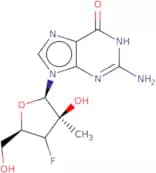
CAS:2'-Deoxy-2'-fluoro-2'-C-methylcytidine is a nucleoside analog with modifications on both the sugar and the nucleobase. It is a derivative of cytidine, with fluorine attached to the 2' carbon of the sugar (deoxyribose) and a methyl group at the 2' carbon of the sugar as well. These modifications provide the compound with unique properties, such as potnetial increased resistance to enzymatic degradation, which can make it useful in antiviral and anticancer applications.Fórmula:C10H14FN3O4Pureza:Min. 95%Forma y color:PowderPeso molecular:259.23 g/mol3'-Deoxy-3'-fluoro-2'-C-methylguanosine
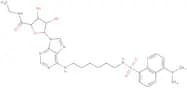
CAS:3'-Deoxy-3'-fluoro-2'-C-methylguanosine is a nucleoside analog that is used in the treatment of cancer. It is an activator of the anticancer drug 5-FU, which inhibits DNA synthesis and cell division. 3'-Deoxy-3'-fluoro-2'-C-methylguanosine may also be used as a starting material for the synthesis of other nucleosides, such as 2',3'-deoxyadenosine and 3',5' -deoxycytidine.Fórmula:C11H14FN5O4Pureza:Min. 95%Peso molecular:299.26 g/molN6-Dansylhexyl-5'-ethylcarboxamidoadenosine
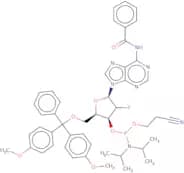
CAS:N6-Dansylhexyl-5'-ethylcarboxamidoadenosine is a fluorescent molecule that can be used in the field of microscopy and cytometry. It has been shown to be an adenosine receptor agonist, which may be due to its ability to bind to the adenosine receptor and activate it. This ligand has also been shown to bind with high affinity to the fluorescence resonance transfer protein, resulting in a fluorescent signal. In addition, this molecule is a linker for fluorescence resonance energy transfer between two molecules that are not close enough for direct contact.Fórmula:C30H40N8O6SPureza:Min. 95%Peso molecular:640.75 g/molN6-Benzoyl-9-(2'-deoxy-5'-O-DMT-2'-fluoro-b-D-arabinofuranosyl)adenine 3'-CE phosphoramidite
CAS:N6-Benzoyl-9-(2'-deoxy-5'-O-DMT-2'-fluoro-b-D-arabinofuranosyl)adenine 3'-CE phosphoramidite is an antiviral agent that inhibits the activity of viral DNA polymerase. This chemical has been shown to be effective against herpes virus, pox virus and HIV. N6-Benzoyl-9-(2'-deoxy-5'-O-DMT-2'-fluoro-b-D-arabinofuranosyl)adenine 3'-CE phosphoramidite is a novel nucleotide analogue that contains a modified deoxyribose sugar backbone. It has been shown to be active against cancer cells in vitro, but not in vivo.Fórmula:C47H51FN7O7PPureza:Min. 95%Forma y color:PowderPeso molecular:875.95 g/mol2-Aminopyrimidine-5-boronic acid
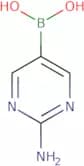
CAS:2-Aminopyrimidine-5-boronic acid is a synthetic compound that has been shown to inhibit the activity of cellulase enzymes in vitro. It also has neuroprotective effects and potent inhibition against cancer cells. 2-Aminopyrimidine-5-boronic acid's mechanism of action is reversible covalent, meaning that it reacts with DNA by forming an N2-(2'-aminopyrimidine) adduct with guanine at position 6 in the purine ring. This reaction inhibits DNA synthesis, leading to cell death. 2-Aminopyrimidine-5-boronic acid is not currently being used as a cancer therapy, but it is being researched for its potential use in cancer treatments.
Fórmula:C4H6BN3O2Pureza:Min. 95%Peso molecular:138.92 g/mol2',3'-Di-O-acetyl-5'-O-DMT-5-methyluridine
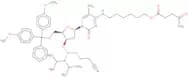
2',3'-Di-O-acetyl-5'-O-DMT-5-methyluridine is a monophosphate nucleotide, which is an antiviral agent. It is a novel, high quality and high purity compound. The CAS number for 2',3'-Di-O-acetyl-5'-O-DMT-5-methyluridine is 69681-06-8. It has antiviral activity against the herpes simplex virus type 1 (HSV1) and Epstein Barr virus (EBV). This drug also inhibits DNA synthesis by inhibiting the enzyme DNA polymerase. This product can be used in research to synthesize phosphoramidites, activator molecules, and nucleosides.Pureza:Min. 95%2'-Deoxy-5'-O-DMT-N4-(hexyloxylevulinyl)-5-methylcytidine 3'-CE phosphoramidite
2'-Deoxy-5'-O-DMT-N4-(hexyloxylevulinyl)-5-methylcytidine 3'-CE phosphoramidite is a novel modified nucleoside that can be used in the synthesis of oligonucleotides. 2'-Deoxy-5'-O-DMT-N4-(hexyloxylevulinyl)-5-methylcytidine 3'-CE phosphoramidite is an activator of adenovirus, herpes simplex virus and human immunodeficiency virus type 1 (HIV-1). It is also an anticancer agent that has been shown to inhibit proliferation of various tumor cells. This product has high purity, high quality and is available at CAS No. 216837-27-3.Fórmula:C51H68N5O10PPureza:Min. 95%Peso molecular:942.11 g/mol4-Amino-2,6-dimethyl-8-(2'-deoxy-3',5'-di-O-toluoyl-D-ribofuranosyl)-7-pteridone
4-Amino-2,6-dimethyl-8-(2'-deoxy-3',5'-di-O-toluoyl-D-ribofuranosyl)-7-pteridone is an activator that has been shown to be a novel antiviral agent. It inhibits the activity of viral RNA polymerase and prevents the synthesis of viral RNA. This drug also has anticancer activity, which may be due to its ability to inhibit DNA synthesis. 4-Amino-2,6-dimethyl-8-(2'-deoxy-3',5'-di-O-toluoyl) -7 pteridone is a nucleoside with phosphoramidite chemistry.Fórmula:C29H29N5O6Pureza:Min. 95%Peso molecular:543.57 g/molN4-Benzoyl-2'-deoxy-3'-O-DMT-cytidine
CAS:N4-Benzoyl-2'-deoxy-3'-O-DMT-cytidine is a novel nucleoside phosphoramidite with antiviral and anticancer activities. It is synthesized from 2'-deoxycytidine and 4-aminobenzoyl chloride in the presence of tetrazole as a catalyst. The cytidine moiety of N4-benzoyl-2'-deoxy-3'-O-DMT-cytidine is activated by diphosphate, which leads to phosphorylation. This nucleotide has shown potential in inhibiting cancer cell growth and may be used for treatment of leukemia, lymphomas, and myeloma.Fórmula:C37H35N3O7Pureza:Min. 95%Peso molecular:633.69 g/molo-Topolin riboside-5'-monophosphate sodium salt
CAS:O-topolin riboside-5'-monophosphate sodium salt is a phosphoramidite that has antiviral, anticancer and activator properties. It is synthesized from o-topolin riboside, which is a novel modified nucleoside. O-topolin riboside-5'-monophosphate sodium salt binds to the DNA strand and inhibits RNA synthesis. This prevents the production of proteins vital for cell division.Fórmula:C17H18N5Na2O8P·H2OPureza:Min. 95%Peso molecular:515.32 g/mol2'-Deoxy-5-iodo-2-pytimidinone-D-ribose
2'-Deoxy-5-iodo-2-pytimidinone-D-ribose is a nucleoside with antiviral properties. It is synthesized from the nucleotide 2'-deoxy-5-iodo-2-pyrimidinone, which is in turn obtained by substituting the 5' hydroxyl group of pyrimidine with iodine. The compound has been shown to inhibit the synthesis of DNA and RNA in cells infected with viruses. 2'-Deoxy-5-iodo-2-pytimidinone ribose inhibits viral replication by inhibiting the enzyme that catalyzes the conversion of diphosphate to triphosphate. This prevents DNA synthesis, thus preventing viral replication.Pureza:Min. 95%N6-Benzoyl-3'-deoxy-5'-O-DMT-adenosine
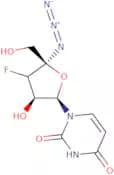
CAS:N6-Benzoyl-3'-deoxy-5'-O-DMT-adenosine is a modified nucleoside that has been synthesized to be an activator of ribonucleotide reductase. This product can be used in the preparation of oligoribonucleotides or phosphoramidites for therapeutic purposes. N6-Benzoyl-3'-deoxy-5'-O-DMT-adenosine is also a novel antiviral agent with anticancer activity.Fórmula:C38H35N5O6Pureza:Min. 95%Peso molecular:657.71 g/mol4'-C-Azido-3'-deoxy-3'-fluorouridine
CAS:4'-C-Azido-3'-deoxy-3'-fluorouridine (4-CADU) is a novel nucleoside that has been shown to have antiviral and anticancer activities. 4-CADU is synthesized as a monophosphate, which undergoes dephosphorylation by phosphatases to form the corresponding ribonucleotide. The phosphate group is then removed through hydrolysis by esterases or glucuronidases and the product of this reaction is an erythromycin intermediate that can be converted to 4-CADU in vitro. This drug has also been shown to inhibit the growth of bacteria such as Mycobacterium tuberculosis and Mycobacterium avium complex.
Fórmula:C9H10FN5O5Pureza:Min. 95%Peso molecular:287.2 g/mol3'-O-Propargylguanosine
3'-O-Propargylguanosine is a ribonucleoside that is structurally related to guanosine. It has antiviral and anticancer activities, but its most important function is as a substrate for the synthesis of DNA and RNA. The compound is used in the preparation of nucleosides and nucleotides, which are used in DNA synthesis. 3'-O-Propargylguanosine can be synthesized from diphosphate, phosphoramidites, or modified monophosphate. The CAS number for this product is 583-85-4.Fórmula:C13H15N5O5Pureza:Min. 95%Forma y color:PowderPeso molecular:321.29 g/mol5’-O-DMT-N2-isobutyryl-2’-O-propargylguanosine
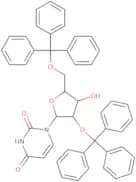
CAS:5’-O-DMT-N2-isobutyryl-2’-O-propargylguanosine is an antiviral, anticancer, and nucleoside monophosphate. It is a novel and modified nucleoside. This product has high purity, high quality, and is also a phosphoramidite.Pureza:Min. 95%2',5'-Bis-O-(triphenylmethyl)uridine
CAS:2',5'-Bis-O-(triphenylmethyl)uridine is a synthetic nucleoside that is used in the treatment of leukemia. It is used as an analogue of uridine and guanosine, and is converted to these compounds by decarboxylase enzymes. 2',5'-Bis-O-(triphenylmethyl)uridine has been shown to inhibit the proliferation of L1210 cells in vitro and in vivo, but not normal cells. 2',5'-Bis-O-(triphenylmethyl)uridine also inhibits DNA synthesis by inhibiting the enzyme hydroxylase and carboxylate, which are involved in purine metabolism. This drug binds to the ribonucleotide reductase enzyme and blocks its activity, thereby inhibiting RNA synthesis.Pureza:Min. 95%2'-Deoxyguanosine-5'-triphosphate sodium salt - 100mmol solution
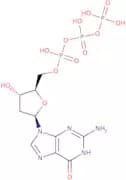
CAS:2'-Deoxyguanosine-5'-triphosphate sodium salt is a triphosphate with antiviral and antifungal activity. It has been shown to inhibit the proliferation of HL60 cells and induce apoptosis in IL-2 receptor-bearing cells. The compound inhibits the growth of opportunistic fungi, such as Aspergillus niger and Candida albicans, by binding to deoxyguanosine residues in DNA. The compound also blocks polymerase activity, preventing DNA replication. 2'-Deoxyguanosine-5'-triphosphate sodium salt is used as a model system for studying the binding of nucleoside analogs to DNA. This drug is prepared as an injection solution for intravenous administration.
Fórmula:C10H16N5O13P3Pureza:Min. 95%Peso molecular:507.18 g/molMethyl 2,4-dimethoxypyrimidine-5-carboxylate
CAS:Methyl 2,4-dimethoxypyrimidine-5-carboxylate is a novel anticancer drug that inhibits the growth of cancer cells by blocking DNA polymerase. It is a monophosphate nucleoside analogue that is phosphorylated to methyl 2,4-dimethoxypyrimidine-5′-diphosphate. This compound has been shown to be more effective than other nucleosides in inhibiting the growth of human leukemia cells and it may have potential as a therapeutic agent for treatment of some forms of cancer.Pureza:Min. 95%1-(2'-Deoxy-5'-O-DMT-3'-O-nitrophenylsulphonyl-b-D-lyxofuranosyl)thymine
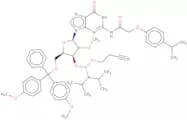
CAS:1-(2'-Deoxy-5'-O-DMT-3'-O-nitrophenylsulphonyl-b-D-lyxofuranosyl)thymine is a synthetic nucleoside that is used as an activator of phosphoramidites. It has been shown to be active against cancer cells and viruses. 1-(2'-Deoxy-5'-O-DMT-3'-O-nitrophenylsulphonyl-b-D-lyxofuranosyl)thymine can be modified to produce other nucleosides, including deoxyribonucleosides, ribonucleosides, or monophosphate nucleotides. 1-(2'-Deoxy-5'-O-DMT-3'-O-nitrophenylsulphonyl -b -D -lyxofuranosyl)thymine has not yet been approved for use in humans.Fórmula:C37H35N3O11SPureza:Min. 95%Peso molecular:729.75 g/mol5'-O-DMT-N2-(4-isopropylphenoxyacetyl)-2'-O-methylguanosine 3'-CE phosphoramidite
This is a phosphoramidite that is used in the synthesis of DNA. The chemical name for this compound is 5'-O-DMT-N2-(4-isopropylphenoxyacetyl)-2'-O-methylguanosine 3'-CE phosphoramidite. This compound has been shown to be an anticancer drug and has high purity, high quality, and novel properties.Fórmula:C52H62N7O10PPureza:Min. 95%Forma y color:White PowderPeso molecular:976.09 g/mol2'-Deoxy-5'-O-DMT-2'-fluoro-N6-phenoxyacetyladenosine 3'-CE phosphoramidite
2'-Deoxy-5'-O-DMT-2'-fluoro-N6-phenoxyacetyladenosine 3'-CE phosphoramidite is a modified nucleoside that has been shown to inhibit the growth of cancer cells. It is synthesized by the reaction of 2'-deoxy-5'-O-dimethoxytriphenylmethyl adenosine 3'-chloroethylphosphoramidite and 2',6' -difluoroaniline in an organic solvent. The product is purified by silica gel column chromatography, followed by recrystallization from a mixture of methanol and water. This novel nucleoside may prove to be a useful anticancer agent as it inhibits the growth of cancer cells without producing any apparent toxicity for normal cells.Pureza:Min. 95%2'-Deoxy-N2-isobutyryl-3'-O-levulinoylguanosine
CAS:2'-Deoxy-N2-isobutyryl-3'-O-levulinoylguanosine is a monophosphate antiviral agent that inhibits the synthesis of viral RNA by blocking the activity of DNA polymerase. It has been shown to be active against Herpes simplex virus type 1 and 2 (HSV1, HSV2) and cytomegalovirus (CMV). This compound also has anticancer activity due to its ability to inhibit cell proliferation and induce apoptosis in cancer cells. The antiviral activity of 2'-deoxy-N2-isobutyryl-3'-O-levulinoylguanosine is not limited to herpes viruses and also includes HIV, human T lymphotropic virus type I (HTLV1), and human cytomegalovirus. This product is synthesized with high purity, high quality, and high yield.
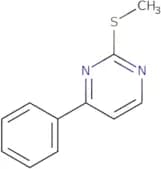
Fórmula:C19H25N5O6Pureza:Min. 95%Peso molecular:419.44 g/mol2-Methylsulfanyl-4-phenylpyrimidine
CAS:2-Methylsulfanyl-4-phenylpyrimidine is a heterocyclic compound that has been shown to be an effective anti-malarial agent. The drug inhibits the growth of malaria parasites by binding to the parasite's DNA and preventing its replication. 2-Methylsulfanyl-4-phenylpyrimidine also recycles the monocyclic pyrimidines, which are nucleophiles, and therefore can be used as a precursor for other drugs. 2-Methylsulfanyl-4-phenylpyrimidine is not very soluble in water but is soluble in organic solvents such as ethanol, propylene glycol, or acetone. It has also been found to form stable salts with perchlorate and guanidine.Pureza:Min. 95%5'-Ethylcarboxamido-2',3'-O-isopropylideneadenosine
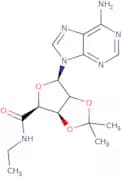
CAS:5'-Ethylcarboxamido-2',3'-O-isopropylideneadenosine is an activator that can be used to treat cancer. It is synthesized from the natural amino acid inosine by replacing the amine group with ethyl carboxamide. The synthesis of this molecule is currently in progress. This product has shown anticancer activity and antiviral effects, as well as high purity and novel properties.Fórmula:C15H20N6O4Pureza:Min. 95%Peso molecular:348.36 g/molBiotin-11-2-deoxyuridine-5-triphosphate tetralithium salt
CAS:Biotin-11-2-deoxyuridine-5-triphosphate tetralithium salt is a modified nucleoside that is used in antiviral and anticancer treatments. The deoxyribonucleosides are synthesized by coupling biotin to 2'-deoxyuridine 5'-triphosphate, which is then reacted with lithium tetralithium chloride. This product has been shown to be an activator of DNA synthesis and can induce the proliferation of cancer cells. Biotin-11-2-deoxyuridine-5-triphosphate tetralithium salt has been shown to inhibit the growth of both human immunodeficiency virus (HIV) and murine leukemia virus (MLV). Biotin-11-2-deoxyuridine-5-triphosphate tetralithium salt is also used in the synthesis of ribonucleosides for use in DNA research. ItFórmula:C24H41N6O17P3S·4LiPureza:Min. 95%Peso molecular:886.41 g/molThymidine 5'- triphosphate lithium salt - 100mM aqueous solution
CAS:Thymidine 5’-triphosphate tetralithium salt (dTTP) is a crucial component in chemical biology research. It is a modified form of thymidine, containing three phosphate groups. Important in DNA replication and repair, dTTP acts as a substrate for DNA polymerases during polymerase chain reactions (PCR), facilitating the amplification of specific DNA sequences. In addition, in DNA sequencing, dTTP is incorporated into newly synthesized DNA strands, allowing precise determination of nucleotide sequences.Fórmula:C10H17N2O14P3·xLiPureza:Min. 95%Peso molecular:482.17 g/mol6-Bromo-4-chloropyrido[2,3-d]pyrimidine
CAS:6-Bromo-4-chloropyrido[2,3-d]pyrimidine is a pyrimidine derivative that has been synthesized using cyclization and condensation techniques. The synthesis of this compound is efficient and uses relatively low amounts of starting materials. It can be made using microwave irradiation in a high yield. 6-Bromo-4-chloropyrido[2,3-d]pyrimidine is an aromatic ring with efficient methods for synthesis and bromination. This research could be used to produce new compounds with similar structures that are more potent than current drugs.Pureza:Min. 95%Cytidine-5'-triphosphate
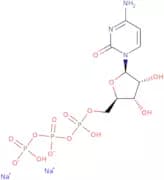
CAS:Cytidine-5'-triphosphate is a nucleotide that is involved in the biosynthesis of fatty acids. It is synthesized by the enzyme cytidine triphosphate synthetase and converted to cytidine diphosphate (CDP) by the enzyme CTP synthetase. The nitrogen atoms are derived from ammonia. Cytidine-5'-triphosphate is found in mitochondria, where it participates in lipid synthesis. Cytidine-5'-triphosphate may also be used to treat cancer. This drug has been shown to inhibit tumor growth and metastasis, as well as induce apoptosis in cancer cells.Pureza:Min. 95%Stavudine 5'-monophosphate sodium salt - 10 mM aqueous solution
Stavudine is a nucleoside analog that is phosphorylated by cellular enzymes to the corresponding monophosphate. Stavudine is an activator of DNA synthesis and has been shown to be effective against cancer cells in vitro. It is also active against HIV-1, which has been shown in vitro to inhibit the production of viral DNA and RNA. Stavudine's antiviral activity may be due to its ability to inhibit the synthesis of viral DNA, RNA, or both. This drug can also be used as a nucleotide precursor for oligonucleotide synthesis.Fórmula:C10H13N2O7P·xNaPureza:Min. 95%Peso molecular:304.19 g/mol2-Amino-N6-isopentenyladenosine
CAS:2-Amino-N6-isopentenyladenosine is a nucleoside that is an activator of ribonucleotide reductase. It has antiviral properties and can be used as a therapeutic agent for HIV infection. 2-Amino-N6-isopentenyladenosine is also known to have anticancer properties, although it is not well studied.Pureza:Min. 95%5-Amino-1-(b-D-ribofuranosyl)imidazole-4-carboxamide-5'-phosphate
5-Amino-1-(b-D-ribofuranosyl)imidazole-4-carboxamide-5'-phosphate is a ribonucleoside monophosphate. It is an antiviral agent that inhibits the synthesis of RNA by preventing the attachment of ribonucleotides to the 5' end of RNA. This drug is also used in anticancer therapy, as it has been shown to inhibit DNA synthesis and induce cell differentiation. 5-Amino-1-(b-D-ribofuranosyl)imidazole-4-carboxamide-5'-phosphate is synthesized from 1-(2'-deoxyribofuranosyl)-5-(2'-deoxyribofuranosyl)imidazole, which can be made from 2,4,6,-triaminopyrimidine and 2,3,-dideoxyribose. This product has CAS number 13Pureza:Min. 95%Cytidyl-3'-5'-adenosine ammonium salt
Cytidyl-3'-5'-adenosine ammonium salt is a novel synthetic monophosphate nucleoside with antiviral and anticancer properties. It is synthesized from adenosine and cytidine, which are natural nucleosides. Cytidyl-3'-5'-adenosine ammonium salt is a high purity, high quality product that has been modified to target the ribonucleotide reductase enzyme. This enzyme controls the production of DNA in the cell, preventing it from reproducing. This product can be used as an activator for other chemotherapeutic drugs or as an anticancer drug itself.
Pureza:Min. 95%N6-Benzoyl-5'-O-DMT-2'-O-(2-Ethoxy-2-oxoethyl)adenosine
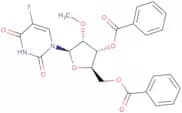
N6-Benzoyl-5'-O-DMT-2'-O-(2-Ethoxy-2-oxoethyl)adenosine is a phosphoramidite that is used in the synthesis of oligonucleotides. It is an activator of ribonucleotides and diphosphate for RNA synthesis. Its high purity and quality make it suitable for use in the synthesis of DNA, RNA, or other nucleoside analogues.Pureza:Min. 95%3',5'-Di-O-benzoyl-5-fluoro-2'-O-methyluridine
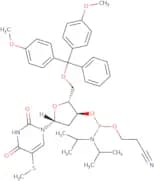
CAS:3',5'-Di-O-benzoyl-5-fluoro-2'-O-methyluridine is a nucleoside that acts as an activator and phosphoramidite. The di-O-benzoyl group is used to protect the 2'-hydroxyl group during the synthesis of oligonucleotides. 3',5'-Di-O-benzoyl-5-fluoro-2'-O-methyluridine has been shown to have anticancer activity against human breast cancer cells. It also inhibits the replication of DNA viruses, such as HIV, hepatitis B virus and herpes simplex virus type 1, and is active against influenza A virus. This compound has also been shown to inhibit the production of inflammatory cytokines in vitro.Fórmula:C24H21FN2O8Pureza:Min. 95%Peso molecular:484.44 g/mol2'-Deoxy-5'-O-DMT-5-(methylthio)-uridine 3'-CE phosphoramidite
CAS:2'-Deoxy-5'-O-DMT-5-(methylthio)-uridine 3'-CE phosphoramidite is a novel anticancer agent that inhibits DNA synthesis and RNA transcription. It is a nucleoside analog, which is not metabolized by the body, and can therefore be used in combination with other drugs to treat cancer. This drug has been shown to be active against influenza virus and herpes simplex virus, as well as inhibiting the production of HIV. 2'-Deoxy-5'-O-DMT-5-(methylthio)-uridine 3'-CE phosphoramidite has also been shown to inhibit the growth of tumor cells when combined with other chemotherapeutic agents.Fórmula:C40H49N4O8PSPureza:Min. 95%Peso molecular:776.88 g/mol


























![6-Bromo-4-chloropyrido[2,3-d]pyrimidine](/_next/image/?url=https%3A%2Fstatic.cymitquimica.com%2Fproducts%2F3D%2Fthumb-webp%2FNB44335.webp&w=3840&q=75)