Nucleósidos
Se han encontrado 3570 productos de "Nucleósidos"
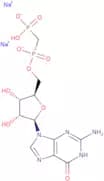
a,b-Methyleneguanosine 5'-diphosphate sodium salt
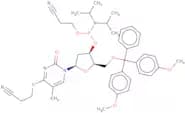
CAS:a,b-Methyleneguanosine 5'-diphosphate sodium salt is a chemical species that binds to the influenza virus neuraminidase. The drug binding site on the influenza virus neuraminidase has been identified in high resolution by NMR and X-ray crystallography. This drug is able to inhibit the release of infectious particles and prevent infection by the influenza virus, which is an important biological weapon in bioterrorism. The compound is not active against other viruses such as HIV and herpes simplex virus type 1. In addition, this chemical species also inhibits the activity of geniculate nucleus neurons and may be effective for treatment of chronic pain caused by nerve injury.Fórmula:C11H17N5O10P2·xNaPureza:Min. 95%Peso molecular:441.23 g/mol4-(2-Cyanoethylthio)-5'-O-DMT-thymidine 3'-CE phosphoramidite
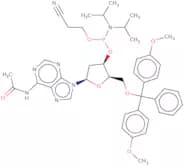
4-(2-Cyanoethylthio)-5'-O-DMT-thymidine 3'-CE phosphoramidite is a novel, modified nucleoside with antiviral activity. It is activated by the addition of a DMT group to its 5' end and has an anticancer effect. The monophosphate form of 4-(2-Cyanoethylthio)-5'-O-DMT-thymidine 3'-CE phosphoramidite has been shown to inhibit viral DNA synthesis in vitro and to be cytotoxic against human cancer cell lines. 4-(2-Cyanoethylthio)-5'-O-DMT- thymidine 3'-CE phosphoramidite is a high quality, high purity product that can be used as a nucleoside or nucleotide in anticancer drugs.Fórmula:C43H52N5O7PSPureza:Min. 95%Peso molecular:813.96 g/molN6-Acetyl-2'-deoxy-5'-O-DMT-adenosine 3'-CE phosphoramidite
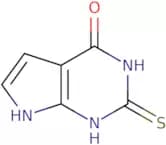
CAS:N6-Acetyl-2'-deoxy-5'-O-DMT-adenosine 3'-CE phosphoramidite is a novel, modified, activator with antiviral and anticancer properties. It is the monophosphate of the acetylated 2'-deoxyadenosine 3'-cyanoethylphosphoramidite and has been shown to be effective in inhibiting DNA synthesis in cell cultures. This product is synthesized using high purity reagents and purification techniques.Fórmula:C42H50N7O7PPureza:Min. 95%Forma y color:SolidPeso molecular:795.86 g/mol7-Deaza-2-mercaptohypoxanthine
CAS:7-Deaza-2-mercaptohypoxanthine is a nucleoside that has been found to have anticancer activity in vivo. It has also been shown to inhibit the replication of HIV and herpes simplex virus. 7-Deaza-2-mercaptohypoxanthine is an analog of hypoxanthine, which is a nucleoside that can be found in DNA and RNA. In addition, this compound can be used as a phosphoramidite or nucleotide analogue for the synthesis of DNA and RNA. This compound can also be used as an antiviral agent against herpes simplex virus type 1 (HSV1).Fórmula:C6H5N3OSPureza:Min. 95%Peso molecular:167.19 g/mol6-Methylthiopurine ribonucleotide
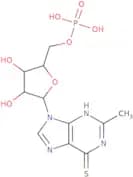
CAS:6-Methylthiopurine ribonucleotide is an inhibitor that belongs to the group of analogs of betamethasone. It has been shown to have anti-cancer properties and can induce apoptosis in cancer cells. This compound has also been studied for its potential use in treating urinary tract infections, as it has been shown to inhibit the growth of bacteria such as chlorhexidine-resistant strains. Additionally, 6-Methylthiopurine ribonucleotide has been found to be a potent inhibitor of human kinase and may have therapeutic potential for a variety of diseases. This compound has also been investigated as an inhibitor of tolvaptan, which is used to treat conditions such as hyponatremia. Overall, 6-Methylthiopurine ribonucleotide shows promising potential for the treatment of various diseases and conditions.Fórmula:C11H15N4O7PSPureza:Min. 95%Peso molecular:378.3 g/mol7-Methylinosine
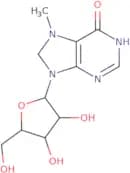
CAS:7-Methylinosine is a versatile compound that has various applications in different fields. It is used as an intermediate in the synthesis of drugs such as azasetron, eletriptan, and fructan. Additionally, it has been shown to have detergent properties that make it useful in cleaning products. 7-Methylinosine also plays a role in cholesterol metabolism and has been implicated in the development of fibrosis. Studies have found that this compound can inhibit the activity of enzymes involved in glucosinolate biosynthesis and may play a role in plant defense against pathogens. Furthermore, 7-Methylinosine has been isolated from Nocardia sp., which suggests its potential use as a source of novel bioactive compounds.Fórmula:C11H16N4O5Pureza:Min. 95%Peso molecular:284.27 g/molBiotin-11-uridine-5'-triphosphate, lithium salt - 1 mM aqueous solution
CAS:Biotin-11-uridine-5'-triphosphate, lithium salt (BUP) is a nucleoside analog that has been modified to allow the incorporation of BUP into DNA. The modification of BUP with lithium salts allows for the covalent attachment of BUP to DNA. This incorporation of BUP into DNA prevents the polymerase from binding to DNA and thus inhibits replication. Biotin-11-uridine-5'-triphosphate, lithium salt (BUP) has demonstrated anticancer and antiviral activity as well as being novel and high quality.Fórmula:C28H45N6O18P3S·xLiPureza:Min. 95%Peso molecular:878.67 g/molN6-Benzoyl-2'-deoxy-5'-O-DMT-adenosine 3'-Rp-oxazaphospholidine
N6-Benzoyl-2'-deoxy-5'-O-DMT-adenosine 3'-Rp-oxazaphospholidine is an activator of DNA polymerase. It has been shown to be a potent inhibitor of viral replication and an anticancer agent in vitro. The compound has also been shown to inhibit the growth of tumor cells in vivo. N6-Benzoyl-2'-deoxy-5'-O-DMT-adenosine 3'-Rp-oxazaphospholidine is a novel nucleoside analogue that has not been previously reported.Pureza:Min. 95%2',3',5'-Tris-O-[tert-butyldimethylsilyl]-2-chloroadenosine
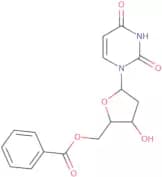
CAS:2',3',5'-Tris-O-[tert-butyldimethylsilyl]-2-chloroadenosine is a phosphoramidite that can be used in the synthesis of ribonucleosides, deoxyribonucleosides, and nucleoside analogues. It is a novel compound that has antiviral and anticancer properties. This product is synthesized from 2,3,5-trichloropyrimidine by reaction with tert-butyldimethylsilyl chloride in the presence of triethylamine. The product is purified by vacuum distillation and characterized using proton nuclear magnetic resonance (NMR) spectroscopy.Fórmula:C28H54ClN5O4Si3Pureza:Min. 95%Peso molecular:644.47 g/mol5'-O-Benzoyl-2'-deoxyuridine
CAS:5'-O-Benzoyl-2'-deoxyuridine is a synthetic nucleoside that is a component of DNA. 5'-O-Benzoyl-2'-deoxyuridine is used as an antiviral agent and for the treatment of some cancers, including lymphomas, leukemia, and certain types of solid tumors. It has also been shown to be effective in the treatment of hepatitis B virus infection. This compound inhibits viral replication by competing with natural nucleosides for incorporation into DNA and RNA. 5'-O-Benzoyl-2'-deoxyuridine binds to double helix DNA at the groove between adenine and thymine bases and prevents further binding of nucleotides to this site. It also inhibits viral DNA synthesis by preventing conversion of ribonucleotides to deoxynucleosides. This drug is not active against bacteria or fungi; however, it can cause serious side effects such as pancreatitis and liver toxicity.Fórmula:C16H16N2O6Pureza:Min. 95%Peso molecular:332.32 g/molN4-Benzoyl-5'-O-DMT-2'-O-(2-methoxyethyl)cytidine 3'-CE phosphoramidite
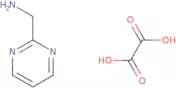
Nucleoside phosphoramidite used in oligonucleotide synthesisFórmula:C49H58N5O10PPureza:Min. 95%Peso molecular:907.99 g/mol2-(Aminomethyl)pyrimidine oxalate
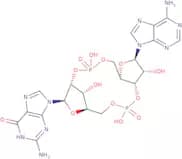
CAS:2-(Aminomethyl)pyrimidine oxalate is a substance that can be found in cicer arietinum. This compound has been shown to be tumorigenic, and it is hypothesized that the tumorigenicity of this compound is due to its ability to recombine with DNA and expressed genes, which may lead to the development of tumors. 2-(Aminomethyl)pyrimidine oxalate has been shown to activate translation of genes that are involved in tumorigenesis. The gene product which has been identified as being activated by 2-(aminomethyl)pyrimidine oxalate is called rhizogenes. Rhizogenes have been shown to have virulent phenotypes when exposed to cicer arietinum. With all these properties, it is believed that 2-(aminomethyl)pyrimidine oxalate may cause cancer or other harmful effects on organisms.br> br>Fórmula:C5H7N3·C2H2O4Pureza:Min. 95%Peso molecular:199.16 g/mol2',3'-Cyclic guanosine monophosphate-adenosine monophosphate
CAS:cyclic guanosine monophosphate (cGMP) is increasingly recognized as having widespread consequences for human health which include regulation of biofilm formation as well as virulence. It has now been identified as a specific and high affinity ligand for the GEMM class of bacterial riboswitches that regulate gene expression.Fórmula:C20H24N10O13P2Pureza:Min. 95%Peso molecular:674.41 g/molN-Benzoyl-5'-O-(bis(4-methoxyphenyl)phenylmethyl)-2'-O-(2-methoxyethyl)adenosine
CAS:N-Benzoyl-5'-O-(bis(4-methoxyphenyl)phenylmethyl)-2'-O-(2-methoxyethyl)adenosine is a synthetic nucleoside that is an activator of DNA polymerase and has antiviral activities. It is also used in the synthesis of deoxyribonucleosides, phosphoramidites, and ribonucleosides.Fórmula:C41H41N5O8Pureza:Min. 95%Forma y color:White PowderPeso molecular:731.79 g/molBis(2-cyanoethyl)-N,N-diisopropyl phosphoramidite
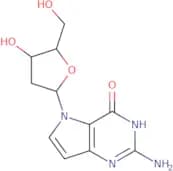
CAS:Bis(2-cyanoethyl)-N,N-diisopropyl phosphoramidite is a potent inhibitor that targets human immunodeficiency virus (HIV) and cancer. It acts as an analog of substrates for human plasma membrane kinases, which are essential for the replication of HIV. Bis(2-cyanoethyl)-N,N-diisopropyl phosphoramidite has been shown to inhibit lung metastasis in mice, indicating its potential therapeutic use against cancer. This compound also exhibits inhibitory activities against Escherichia coli alkaline phosphatase and other enzymes, suggesting its pharmacological activity may extend beyond HIV and cancer treatment. Overall, Bis(2-cyanoethyl)-N,N-diisopropyl phosphoramidite is a promising inhibitor with potential applications in multiple fields.Fórmula:C12H22N3O2PPureza:Min. 90 Area-%Forma y color:Slightly Yellow Clear LiquidPeso molecular:271.3 g/mol9-Deaza-2'-deoxyguanosine
CAS:9-Deaza-2'-deoxyguanosine is a novel synthetic nucleoside that activates the ribonucleotide reductase enzyme. The activation of this enzyme was found to be dependent on the presence of diphosphate, which is a cofactor for this enzyme. 9-Deaza-2'-deoxyguanosine has been shown to inhibit the growth of cells in culture and to induce apoptosis. It also inhibits viral replication by interfering with the synthesis of viral DNA. In addition, 9-Deaza-2'-deoxyguanosine can inhibit tumor cell proliferation and promote differentiation in vitro.Fórmula:C11H14N4O4Pureza:Min. 95%Peso molecular:266.25 g/mol7-Deaza-7-iodoadenosine
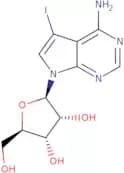
CAS:7-Deaza-7-iodoadenosine is a nucleotide that has been used in experiments to assess the levels of adenosine, a dinucleotide phosphate that is involved in many cellular functions. 7-deaza-7-iodoadenosine has been shown to inhibit locomotor activity in rats and cyclase activity in 3T3-L1 preadipocytes. It also inhibits the release of inflammatory proteins from polymorphonuclear leucocytes and angiogenesis (formation of new blood vessels) in liver cells. Although this nucleotide has not been extensively studied, it has been proposed as an antiinflammatory agent because it inhibits protein synthesis and downregulates proinflammatory proteins.
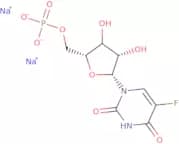
Fórmula:C11H13IN4O4Pureza:Min. 95%Peso molecular:392.15 g/mol5-Fluorouridine-5'-monophosphate sodium salt - 10mM aqueous solution
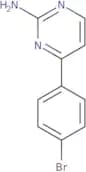
CAS:5-Fluorouridine-5'-monophosphate sodium salt is a nucleoside analog that is used as an antiviral drug. It inhibits viral DNA synthesis by competitive inhibition of thymidylate, which is a precursor for DNA synthesis. 5-Fluorouridine-5'-monophosphate sodium salt has been shown to be active against human pathogens and cancer cells in vitro. The enzyme activity of 5-fluorouridine-5'-monophosphate sodium salt can be inhibited by the presence of p-nitrophenyl phosphate, which is also a product of the enzymatic reaction. This may lead to synergistic effects in cells with both enzymes present.Fórmula:C9H12FN2O9PPureza:Min. 95%Forma y color:Colorless PowderPeso molecular:342.17 g/mol2-Amino-4-(4-bromophenyl)pyrimidine
CAS:2-Amino-4-(4-bromophenyl)pyrimidine is a phosphoramidite, modified nucleoside. It is an antiviral and anticancer agent that inhibits DNA synthesis. 2-Amino-4-(4-bromophenyl)pyrimidine is a novel nucleotide analog with the ability to inhibit replication of RNA and DNA in vitro. This compound has been shown to be active against herpes simplex virus type 1 (HSV1), cytomegalovirus (CMV), and HIV in cell culture. Furthermore, this phosphoramidite has been shown to have no detectable toxicity in mice at doses up to 2000 mg/kg.Fórmula:C10H8BrN3Pureza:Min. 95%Peso molecular:250.09 g/mol5-Hydroxymethyl-dc ce-phosphoramidite (hmdc)
CAS:Please enquire for more information about 5-Hydroxymethyl-dc ce-phosphoramidite (hmdc) including the price, delivery time and more detailed product information at the technical inquiry form on this page
Fórmula:C50H57N6O9PPureza:Min. 95%Peso molecular:917 g/mol5-Phenylcytidine
CAS:5-Phenylcytidine is a nitro compound that is used as an antiviral agent. It inhibits the replication of the virus by interfering with viral DNA synthesis and preventing the assembly of viral proteins. 5-Phenylcytidine is also capable of inhibiting influenza A virus in vitro at concentrations below 1 μM and has been shown to inhibit herpes simplex virus type 1 (HSV-1) in cell culture. The antiviral activity of 5-phenylcytidine may be due to its ability to form a stable reaction product with cytosine in alkaline conditions, which prevents the incorporation of this nucleobase into DNA or RNA.Pureza:Min. 95%Xanthosine-5'-monophosphate ammonium salt
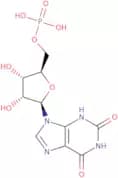
CAS:Xanthosine-5'-monophosphate ammonium salt is a monophosphate compound that is formed by the reaction of xanthosine and ammonium hydroxide. It has been shown to have an optimum concentration of 1 mM in dextran sulfate solutions and to be active against a range of bacteria at this concentration. The antimicrobial activity of xanthosine-5'-monophosphate ammonium salt is due to its inhibition of energy metabolism and synthesis, which leads to cell death. Xanthosine-5'-monophosphate ammonium salt also inhibits the production of tetracycline resistance in leukemic mice and k562 cells, which may be due to its ability to form a complex enzyme with tetracycline synthetase.Pureza:Min. 95%¹⁵N5, 2’-deoxy-8-oxoguanosine
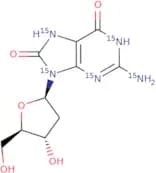
CAS:A 15N5 labelled version of 2'-Deoxy-8-oxoguanosine (8-OHdG) ND06344.Supplied as 30ug in 1ml waterFórmula:C10H13N5O5Pureza:Min. 95%Peso molecular:288.2 g/mol4'-Azidothymidine 5-triphosphate
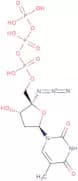
CAS:4'-Azidothymidine 5-triphosphate (4AZTTP) is a deoxyribonucleoside that has been synthesized as an analog to thymidine. It has potent inhibitory activity against human immunodeficiency virus (HIV), and has been shown to be more effective than 2',3'-dideoxyinosine in inhibiting HIV replication. 4AZTTP inhibits the viral enzyme reverse transcriptase, which is crucial for the replication of HIV. This drug is activated by cellular enzymes and phosphorylated to 4'-azidothymidine 5'-triphosphate monophosphate, which can then bind to the viral DNA template and inhibit synthesis of RNA strands. The kinetic properties of 4AZTTP have been studied in detail using human lymphocytes as a model system for HIV infection.Fórmula:C10H16N5O14P3Pureza:Min. 95%Peso molecular:523.18 g/mol5-Aminomethyluridine
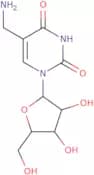
CAS:5-Aminomethyluridine is a chemical compound that is involved in protein synthesis. It has been shown to inhibit the production of methylated uridines and cytosine, as well as the formation of 5-methylcytosine by methyltransferase. It also inhibits protein synthesis in human cells. 5-Aminomethyluridine may be able to block the progression of infectious diseases by inhibiting protein synthesis in the host cell. The compounds have been shown to inhibit the catalytic subunit of ribonucleotide reductase and RNA polymerase II, which are vital for cellular replication.Fórmula:C10H15N3O6Pureza:Min. 95%Forma y color:PowderPeso molecular:273.24 g/molN4-(tert-Butylphenoxyacetyl)-5'-O-DMT-2'-O-methylcytidine 3'-CE phosphoramidite
N4-(tert-Butylphenoxyacetyl)-5'-O-DMT-2'-O-methylcytidine 3'-CE phosphoramidite is a modified nucleoside that inhibits DNA synthesis by inhibiting the activity of DNA polymerase. It has been shown to have anticancer effects in vitro and in vivo by inducing apoptosis and cell cycle arrest. This compound has also been shown to be more potent than other nucleosides, such as cytidine 5'-diphosphate (CDP) or cytidine 5'-monophosphate (CMP). This chemical is not yet commercially available but can be custom synthesized for research purposes.Fórmula:C52H64N5O10PPureza:Min. 95%Peso molecular:950.07 g/mol3'-O-Allyluridine
3'-O-Allyluridine is a nucleoside that has antiviral, anticancer, and antibacterial activities. 3'-O-Allyluridine is an activator of RNA polymerase and is used to synthesize DNA in vitro. It can be used as a substrate for phosphoramidites in the synthesis of oligonucleotides with modified backbones. 3'-O-Allyluridine has been shown to inhibit the growth of cancer cells by blocking the synthesis of DNA and RNA. The drug also inhibits the production of ribonucleases, which are enzymes that break down RNA in cells.Fórmula:C12H16N2O6Pureza:Min. 95%Peso molecular:284.27 g/mol2'-Bromo-2'-deoxy-3'-O-methanesulfonyluridine
2'-Bromo-2'-deoxy-3'-O-methanesulfonyluridine is a nucleoside analogue that acts as an activator of the human immunodeficiency virus (HIV). It is thought to work by binding to the viral reverse transcriptase enzyme, which converts the RNA genome into DNA. This prevents the virus from replicating and producing new viruses. 2'-Bromo-2'-deoxy-3'-O-methanesulfonyluridine has also been shown to be active against other viruses such as herpes simplex virus type 1 (HSV1) and influenza A virus.Pureza:Min. 95%9-(b-L-Arabinofuranosyl)guanine
CAS:9-(b-L-Arabinofuranosyl)guanine (9-Araf) is a nucleoside analogue that is used as an antiviral and anticancer agent. It is synthesized by the reaction of 2,4-diaminopyrimidine with b-L-arabinofuranosyl chloride. This product is soluble in water and ethanol. 9-(b-L-Arabinofuranosyl)guanine has antiviral activity against Herpes simplex virus type 1, herpes simplex virus type 2, cytomegalovirus, and Epstein Barr Virus. In addition to its antiviral activity, 9-(b-L-Arabinofuranosyl)guanine also has anticancer activity against human cancer cells and has been shown to inhibit the growth of leukemic cells in mice.Fórmula:C10H13N5O5Pureza:Min. 95%Peso molecular:283.24 g/mol5-Chloro-1-(b-D-arabinofuranosyl)cytidine
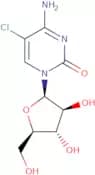
CAS:5-Chloro-1-(b-D-arabinofuranosyl)cytidine is a monophosphate that is used as a precursor in the synthesis of antiviral and anticancer drugs. 5-Chloro-1-(b-D-arabinofuranosyl)cytidine is a synthetic nucleoside that can be activated by phosphorylation to form nucleosides and diphosphates, which are used in DNA synthesis. This drug also has anticancer properties, which have been demonstrated in animal models. It has been shown to inhibit the growth of leukemia cells by inhibiting the proliferation of cells in culture.Fórmula:C9H12CIN3O5Pureza:Min. 95%Peso molecular:277.66 g/molN4-Benzoyl-2'-O-tert-butyldimethylsilyl-5'-O-DMT-2'C-methylcytidine 3'-CE phosphoramidite
N4-Benzoyl-2'-O-tert-butyldimethylsilyl-5'-O-DMT-2'C-methylcytidine 3'-CE phosphoramidite is a novel, deoxynucleoside phosphoramidite with high purity and high quality. It has been used in the synthesis of anticancer agents, ribonucleotide analogues and antiviral agents. N4-Benzoyl-2'-O-tert-butyldimethylsilyl-5'-O-DMT-2'C-methylcytidine 3'-CE phosphoramidite can be used as an activator for DNA polymerase to synthesize DNA molecule.Fórmula:C53H68N5O9PSiPureza:Min. 95%Peso molecular:978.19 g/molAdenylyl-3'-5'-uridine ammonium salt
CAS:Adenylyl-3'-5'-uridine ammonium salt is a novel antiviral agent that has been shown to inhibit the activity of viral DNA polymerase, RNA polymerase and reverse transcriptase. It is also an anticancer agent that can be used as a cytotoxic agent against leukemia and lymphoma cells. Adenylyl-3'-5'-uridine ammonium salt is synthesized by the reaction of adenosine monophosphate with uracil in the presence of phosphate and ammonia. This compound can then be converted to ribonucleosides or deoxyribonucleosides by phosphorylation. SYNONYMS: AMP-uridine; AMP-U; UMPFórmula:C19H24N7O12PPureza:Min. 95%Peso molecular:573.41 g/molN6-(tert-Butylphenoxyacetyl)-2'-O-methyl-5'-O-DMT-adenosine 3'-CE phosphoramidite
N6-(tert-Butylphenoxyacetyl)-2'-O-methyl-5'-O-DMT-adenosine 3'-CE phosphoramidite is a novel anticancer, antiviral and antifungal agent. It is synthesized by reacting the nucleoside adenosine with tert-butyl phenoxyacetic acid to form an activated ester derivative which reacts with 2'-O-methyl 5'-O-DMT in the presence of a phosphoramidite reagent to form a DNA precursor. The modified nucleotide has been shown to have high purity and good quality, as well as high antiviral and anti-cancer activities.Fórmula:C53H64N7O9PPureza:Min. 95%Peso molecular:974.09 g/molThymidine 5’-triphosphate sodium hydrate
Thymidine 5’-triphosphate (dTTP) sodium hydrate is a fundamental building block in chemical biology. As one of the four natural deoxynucleotides, it plays a crucial role in DNA replication and repair, where dTTP is incorporated into growing DNA strands by DNA polymerases, ensuring fidelity during genetic duplication. The use of dTTP spans various applications, including PCR, DNA sequencing, and site-directed mutagenesis.
Pureza:Min. 95%3’-O-(2-Methoxyethyl)guanosine
CAS:3’-O-(2-Methoxyethyl)guanosine is a nucleoside analogue of guanosine. It is a modified, deoxyribonucleoside that is synthesized from 2-methoxyethanol and 1,2-dihydroxybenzene. 3’-O-(2-Methoxyethyl)guanosine has antiviral, anticancer, and DNA synthesis inhibitory activities. This nucleoside analogue increases the intracellular concentration of guanosine by inhibiting its degradation. 3’-O-(2-Methoxyethyl)guanosine has been used as an antiviral agent in the treatment of influenza A virus infection in humans and animals.
Pureza:Min. 95%2’-O-(2-Methoxyethyl)guanosine 5’-triphosphate ammonium salt
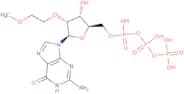
CAS:2’-O-(2-Methoxyethyl)guanosine 5’-triphosphate ammonium salt (2'OMeEtGTP) is an antiviral agent that is used as a component of an antiviral drug. It inhibits the viral enzyme DNA polymerase, which prevents viral replication and transcription. This compound has been shown to have anticancer properties in vitro and in vivo in rat models. 2'OMeEtGTP is synthesized by reacting the nucleoside phosphoramidite 2'OMeEtGTP with triethylammonium phosphate (TEAP).
Pureza:Min. 95%5'-O-DMT-N2-Isobutyryl-2'-O-(2-methylacetamido)guanosine 3'-CE phosphoroamidite
5'-O-DMT-N2-Isobutyryl-2'-O-(2-methylacetamido)guanosine 3'-CE phosphoroamidite is a high purity, modified phosphoramidite that is used as an activator for the synthesis of DNA. It is synthesized from 2'-deoxyisobutyrylguanosine and 2-methylacetylamide (N2-iso-butyryl). 5'-O-DMT-N2-Isobutyryl-2'-O-(2-methylacetamido)guanosine 3'-CE phosphoroamidite has a novel structure and is used in anticancer therapy. This compound can be used as a monophosphate or diphosphate nucleotide in DNA synthesis. 5'-O-DMT-N2-Isobutyryl - 2'- O-(2 - methylacetamido)Pureza:Min. 95%N4-Acetyl-5'-O-DMT-cytidine 3'-CE phosphoramidite
N4-Acetyl-5'-O-DMT-cytidine 3'-CE phosphoramidite is a monophosphate nucleoside that is an important building block in nucleic acid synthesis. It has been shown to be effective against cancer cells and HIV infection. N4-Acetyl-5'-O-DMT-cytidine 3'-CE phosphoramidite also inhibits the production of viral proteins, including new viral particles, by binding to the RNA polymerase enzyme in cells. This compound can be used as a novel antiviral agent for the treatment of human immunodeficiency virus type 1 (HIV1) infections.Pureza:Min. 95%3'-Epi gemcitabine
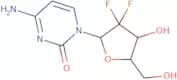
CAS:3'-Epi-GEMCITABINE is a nucleoside phosphoramidite that is used in the synthesis of DNA and RNA. It is an antiviral agent and also has anticancer activity. 3'-Epi-GEMCITABINE inhibits the growth of cells by inhibiting DNA synthesis, which leads to cell death. The chemical name for 3'-epigemcitabine is 2',3'-dideoxyinosine monophosphate. 3'-Epi-GEMCITABINE can be synthesized from 2',3'-dideoxyinosine monophosphate and 5-bromo-2'-deoxyuridine diphosphate.Fórmula:C9H11F2N3O4Pureza:Min. 95%Peso molecular:263.2 g/mol2'-Deoxy-N2-isobutyryl-a-cytidine
2'-Deoxy-N2-isobutyryl-a-cytidine (DBIC) is a modified nucleoside that is used in the synthesis of DNA. It is an activator that can be used to enhance the antitumor effects of other drugs. DBIC has been shown to inhibit the proliferation of human tumor cells by inactivating the p53 protein, which regulates cell cycle progression and suppresses tumorigenesis. This drug also has antiviral, anticancer, and anti-inflammatory properties.Fórmula:C13H19N3O5Pureza:Min. 95%Peso molecular:297.31 g/molN4-Acetyl-2'-Deoxy-5'-O-DMT-cytidine 3'-succinyl CPG 1000 Å
N4-Acetyl-2'-Deoxy-5'-O-DMT-cytidine 3'-succinyl CPG 1000 Å is a nucleoside analog. It is an antiviral and anticancer agent that inhibits the synthesis of DNA. This compound has a high purity, reactivity and solubility. N4-Acetyl-2'-Deoxy-5'-O-DMT-cytidine 3'-succinyl CPG 1000 Å can be used in the synthesis of oligonucleotides for research purposes or as pharmaceutical ingredients.Pureza:Min. 95%4-Amino-5-(2-deoxy-b-D-ribofuranosyl)-1-methyl-2(1H)-pyrimidinone
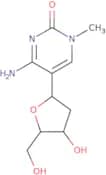
CAS:4-Amino-5-(2-deoxy-b-D-ribofuranosyl)-1-methyl-2(1H)-pyrimidinone is a novel activator that is a ribonucleoside and deoxyribonucleoside diphosphate, as well as phosphoramidite and modified nucleosides. It has been shown to have anticancer, antiviral, and antimalarial activities in vitro. This compound has been synthesized in high purity and high quality with CAS No. 1166395-05-6.Fórmula:C10H15N3O4Pureza:Min. 95%Peso molecular:241.24 g/mol3'-Deoxy-N6-propionyladenosine
CAS:3'-Deoxy-N6-propionyladenosine is a prodrug that is modified in the body to form adenosine. It has been shown to have a high bioavailability and pharmacokinetic profile, with a high initial concentration and rapid elimination. 3'-Deoxy-N6-propionyladenosine has been shown to be effective against tuberculosis and leprosy, with a half-life of approximately 1 hour. The pharmacokinetic curves for this drug have exceeded those of other drugs used for these diseases.Fórmula:C13H17N5O4Pureza:Min. 95%Peso molecular:307.31 g/molN6-Benzoyl-9-(2'-deoxy-5'-O-DMT-2'-fluoro-b-D-arabinofuranosyl)adenine 3'-CE phosphoramidite
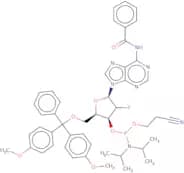
CAS:N6-Benzoyl-9-(2'-deoxy-5'-O-DMT-2'-fluoro-b-D-arabinofuranosyl)adenine 3'-CE phosphoramidite is an antiviral agent that inhibits the activity of viral DNA polymerase. This chemical has been shown to be effective against herpes virus, pox virus and HIV. N6-Benzoyl-9-(2'-deoxy-5'-O-DMT-2'-fluoro-b-D-arabinofuranosyl)adenine 3'-CE phosphoramidite is a novel nucleotide analogue that contains a modified deoxyribose sugar backbone. It has been shown to be active against cancer cells in vitro, but not in vivo.Fórmula:C47H51FN7O7PPureza:Min. 95%Forma y color:PowderPeso molecular:875.95 g/mol2'-Deoxy-2'-fluoro-2'-C-methylcytidine
CAS:2'-Deoxy-2'-fluoro-2'-C-methylcytidine is a nucleoside analog with modifications on both the sugar and the nucleobase. It is a derivative of cytidine, with fluorine attached to the 2' carbon of the sugar (deoxyribose) and a methyl group at the 2' carbon of the sugar as well. These modifications provide the compound with unique properties, such as potnetial increased resistance to enzymatic degradation, which can make it useful in antiviral and anticancer applications.Fórmula:C10H14FN3O4Pureza:Min. 95%Forma y color:PowderPeso molecular:259.23 g/mol3'-Deoxy-3'-fluoro-2'-C-methylguanosine
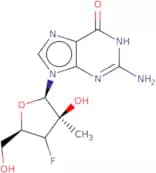
CAS:3'-Deoxy-3'-fluoro-2'-C-methylguanosine is a nucleoside analog that is used in the treatment of cancer. It is an activator of the anticancer drug 5-FU, which inhibits DNA synthesis and cell division. 3'-Deoxy-3'-fluoro-2'-C-methylguanosine may also be used as a starting material for the synthesis of other nucleosides, such as 2',3'-deoxyadenosine and 3',5' -deoxycytidine.Fórmula:C11H14FN5O4Pureza:Min. 95%Peso molecular:299.26 g/molN6-Dansylhexyl-5'-ethylcarboxamidoadenosine
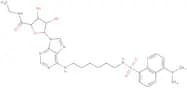
CAS:N6-Dansylhexyl-5'-ethylcarboxamidoadenosine is a fluorescent molecule that can be used in the field of microscopy and cytometry. It has been shown to be an adenosine receptor agonist, which may be due to its ability to bind to the adenosine receptor and activate it. This ligand has also been shown to bind with high affinity to the fluorescence resonance transfer protein, resulting in a fluorescent signal. In addition, this molecule is a linker for fluorescence resonance energy transfer between two molecules that are not close enough for direct contact.Fórmula:C30H40N8O6SPureza:Min. 95%Peso molecular:640.75 g/mol2-Aminopyrimidine-5-boronic acid
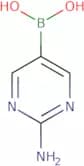
CAS:2-Aminopyrimidine-5-boronic acid is a synthetic compound that has been shown to inhibit the activity of cellulase enzymes in vitro. It also has neuroprotective effects and potent inhibition against cancer cells. 2-Aminopyrimidine-5-boronic acid's mechanism of action is reversible covalent, meaning that it reacts with DNA by forming an N2-(2'-aminopyrimidine) adduct with guanine at position 6 in the purine ring. This reaction inhibits DNA synthesis, leading to cell death. 2-Aminopyrimidine-5-boronic acid is not currently being used as a cancer therapy, but it is being researched for its potential use in cancer treatments.
Fórmula:C4H6BN3O2Pureza:Min. 95%Peso molecular:138.92 g/mol1-(2'-O-4-C-Methylene-b-D-ribofuranosyl)guanine
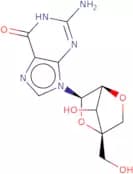
CAS:1-(2'-O-4-C-Methylene-b-D-ribofuranosyl)guanine is a nucleoside that is used in the synthesis of DNA. It is a novel, synthetic nucleoside that has been modified to contain a 2'-O-4-C methylene bridge and an additional ribose moiety at the 3' position. This modification increases the stability of the nucleotide, making it more resistant to degradation by phosphodiesterases. 1-(2'-O-4-C-Methylene-b-D-ribofuranosyl)guanine may be used as an antiviral agent against HIV and influenza A virus. The compound has also shown anticancer activities in mice with leukemia induced by busulfan.Fórmula:C11H13N5O5Pureza:Min. 95%Peso molecular:295.25 g/mol2',3'-Di-O-acetyl-5'-O-DMT-5-methyluridine
2',3'-Di-O-acetyl-5'-O-DMT-5-methyluridine is a monophosphate nucleotide, which is an antiviral agent. It is a novel, high quality and high purity compound. The CAS number for 2',3'-Di-O-acetyl-5'-O-DMT-5-methyluridine is 69681-06-8. It has antiviral activity against the herpes simplex virus type 1 (HSV1) and Epstein Barr virus (EBV). This drug also inhibits DNA synthesis by inhibiting the enzyme DNA polymerase. This product can be used in research to synthesize phosphoramidites, activator molecules, and nucleosides.Pureza:Min. 95%



![2',3',5'-Tris-O-[tert-butyldimethylsilyl]-2-chloroadenosine](/_next/image/?url=https%3A%2Fstatic.cymitquimica.com%2Fproducts%2F3D%2Fthumb-webp%2FNT16652.webp&w=3840&q=75)