Nucleósidos
Se han encontrado 3570 productos de "Nucleósidos"
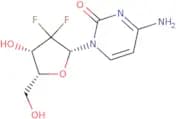
1-(2-Deoxy- 2, 2- difluoro- b- D- xylofuranosyl)cytosine
CAS:1-(2-Deoxy-2,2-difluoro-beta-D-xylofuranosyl)cytosine is a nucleoside (a compound consisting of a nucleotide base linked to a sugar). It is a modified form of cytosine that has been phosphorylated at the 2’ position. 1-(2-Deoxy-2,2-difluoro-beta-D-xylofuranosyl)cytosine has antiviral and anticancer activity through its ability to inhibit viral DNA synthesis and activate the immune system. This drug also has antitumor activity due to its ability to inhibit the tumor growth factor beta (TGFB). 1-(2-Deoxy-2,2-difluoro-beta-D -xylofuranosyl)cytosine can be used in cancer treatment as an anticancer agent.Fórmula:C9H11F2N3O4Pureza:Min. 95%Peso molecular:263.2 g/mol2'-Deoxy-2'-fluoroinosine 5'-monophosphate lithium salt
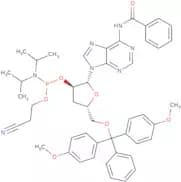
2'-Deoxy-2'-fluoroinosine 5'-monophosphate lithium salt is a nucleoside analog that has been modified to contain a fluorine atom at the 2' position of the ribose sugar. This agent is an activator of DNA polymerase and can be used in the synthesis of oligonucleotides. It is also an antiviral and anticancer agent.Fórmula:C10H12FN4O7P·xLiPureza:Min. 95%Peso molecular:350.2 g/molN6-Benzoyl-2'-deoxy-5'-O-DMT-adenosine 3'-Sp-oxazaphospholidine
N6-Benzoyl-2'-deoxy-5'-O-DMT-adenosine 3'-Sp-oxazaphospholidine is a modified nucleoside that is synthesized from the amino acid phenylalanine. It has anticancer activity and is an activator of ribonucleosides. This compound also has novel properties, including high purity and high quality. N6-Benzoyl-2'-deoxy-5'-O-DMT-adenosine 3'-Sp-oxazaphospholidine can be used as a phosphoramidite to synthesize DNA or deoxyribonucleosides and diphosphates.Pureza:Min. 95%5-Ethynylcytidine
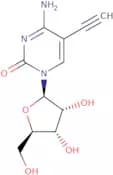
CAS:5-Ethynylcytidine is a fluorescent analog of cytosine that has been synthesized for use in biochemical research. It is used to identify cellular sites of RNA synthesis and replication, as well as to study the role of the 5-ethynyl group in the mechanism of DNA methylation. The synthetic route starts with an azide intermediate which is then treated with sodium hydroxide, followed by hydrolysis and demethylation. 5-Ethynylcytidine has been shown to be selective for mammalian cells and tissues, and was incubated with calf thymus DNA for crystallographic data.Fórmula:C11H13N3O5Pureza:Min. 95%Peso molecular:267.24 g/mol1,2'-O-Dimethylguanosine
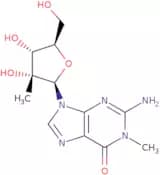
CAS:1,2'-O-Dimethylguanosine is an activator of anticancer activity. It has been shown to inhibit the proliferation of cancer cells in vitro and in vivo. 1,2'-O-Dimethylguanosine is a novel synthetic nucleoside analogue that can be modified to phosphoramidites and ribonucleosides for use as antiviral agents. This compound is also used as a building block for the synthesis of other nucleosides and nucleotides.Fórmula:C12H17N5O5Pureza:Min. 95%Peso molecular:311.29 g/mol4-Methyl-2-(methylsulfanyl)-5-pyrimidinecarboxylic acid
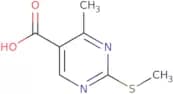
CAS:Ribonucleosides, deoxyribonucleosides, and their activated forms (e.g., 4-methyl-2-(methylsulfanyl)-5-pyrimidinecarboxylic acid) are all important intermediates for the synthesis of DNA and RNA. Ribonucleosides are the key building blocks for the synthesis of DNA. They can be converted to nucleosides by removal of the ribose moiety. Deoxyribonucleosides are synthesized from ribonucleosides by removal of the hydroxyl group from carbon 2' position of ribose. The activated forms (e.g., 4-methyl-2-(methylsulfanyl)-5-pyrimidinecarboxylic acid) are useful in phosphoramidite chemistry as they have a free amine group on one side and a free sulfonyl group on the other side that can be used to react with a growing oligo or polyphosph
Fórmula:C7H8N2O2SPureza:Min. 95%Peso molecular:184.22 g/mol2'-Deoxy-5-hydroxymethylcytidine 5'-monophosphate sodium salt
CAS:2'-Deoxy-5-hydroxymethylcytidine 5'-monophosphate sodium salt (2'-dO-5HmcMP) is a nucleoside analogue that inhibits the activity of reverse transcriptase, an enzyme required for replication of HIV. This compound is phosphorylated in vivo to 2'-dO-5HmcMP monophosphate, which then competitively inhibits the binding of dNTPs to the enzyme and prevents DNA synthesis. 2'-dO-5HmcMP also has anticancer activity and has been shown to inhibit the proliferation of cells in vitro. 2'-dO-5HmcMP has no significant toxicity to humans or other mammals.Pureza:Min. 95%2',5'-Dideoxy-2'-fluoro-5'-iodouridine
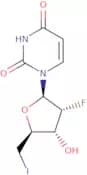
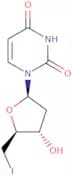
CAS:2',5'-Dideoxy-2'-fluoro-5'-iodouridine is a modified nucleoside that is used in the synthesis of oligonucleotides. It can be used as an antiviral and anticancer agent. The drug has been shown to inhibit the replication of DNA and RNA, which may lead to cell death. 2',5'-Dideoxy-2'-fluoro-5'-iodouridine is also known for its high purity, novel structure and stability.
Fórmula:C9H10FIN2O4Pureza:Min. 95%Peso molecular:356.09 g/molNicotinamide 1,N6-ethenoadenine dinucleotide
CAS:Nicotinamide 1,N6-ethenoadenine dinucleotide (NADH) is an enzyme form that binds to the active site of glutamate dehydrogenase (GDH). This binding prevents GDH from catalyzing the oxidation of NADH to NAD+, which is necessary for GDH activity. Nicotinamide 1,N6-ethenoadenine dinucleotide is a noncompetitive inhibitor that binds with a higher affinity than the substrate. It has been shown to be effective in inhibiting GDH in a model system and in enzyme preparations. The binding constant for nicotinamide 1,N6-ethenoadenine dinucleotide is 2 mM. The optimum pH for nicotinamide 1,N6-ethenoadenine dinucleotide activity is 6.8.Fórmula:C23H27N7O14P2Pureza:Min. 97 Area-%Forma y color:White Off-White PowderPeso molecular:687.45 g/molAdenosine 5'-difluoromethylene-5'-triphosphate triethylammonium salt
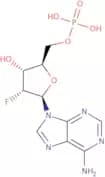
Adenosine 5'-difluoromethylene-5'-triphosphate triethylammonium salt is a novel nucleotide activator that has antiviral, anticancer, and ribonucleoside activities. This activator is a phosphoramidite monomer with an adenine base. The pharmaceutical industry uses this activator as a starting material in the synthesis of anticancer drugs and antiviral drugs. It is also used as a reagent in the production of modified DNA and RNA molecules for use in gene therapy and drug discovery.Pureza:Min. 95%2'-Deoxy-2'-fluoroadenosine-5'-monophosphate
CAS:2'-Deoxy-2'-fluoroadenosine-5'-monophosphate is a nucleotide that is used as an anthelmintic drug. It inhibits the synthesis of fatty acids and ATP levels in tissue culture cells. This nucleotide has also been shown to have immunomodulatory effects, which may be due to its ability to bind to receptor activity. 2'-Deoxy-2'-fluoroadenosine-5'-monophosphate binds with high affinity to the response elements of transcription factors such as NF-κB and AP1, which are involved in the regulation of gene expression and inflammatory responses.Fórmula:C10H13FN5O6PPureza:Min. 95%Peso molecular:349.21 g/molN4-Acetyl-2'-O-acetyl-5'-O-DMT-arabinosyl cytosine 3'-CE phosphoramidite
N4-Acetyl-2'-O-acetyl-5'-O-DMT-arabinosyl cytosine 3'-CE phosphoramidite is a prodrug that is activated by intracellular enzymes. It has been shown to be an immunostimulatory agent, which modulates the immune system for the treatment of cancer and autoimmune disorders. N4-Acetyl-2'-O-acetyl-5'-O-DMT-arabinosyl cytosine 3'-CE phosphoramidite can also act as a ligand for various cell surface receptors and transporters, including CD28, interleukin 2 receptor alpha chain, CD40, CD84, and MHC class II. The compound has been shown to inhibit tumor cells in culture and induces apoptosis in these cells.
Pureza:Min. 95%2'-Deoxy-5'-DMT-5-[3-(trifluoroacetylamino)-1-E-propenyl]-uridine 3-CE phosphoramidite
CAS:2'-Deoxy-5'-DMT-5-[3-(trifluoroacetylamino)-1-E-propenyl]-uridine 3-CE phosphoramidite is a synthetic nucleoside analog that has been modified to contain a triphosphate group. It is used in the synthesis of DNA or RNA. The compound is synthesized from 2,4-dichloro-N-(2,6-dimethoxybenzyl)phenylamine, which was reacted with ethyl (3-[(trifluoroacetyl)amino]propanoate) and deoxythymidine 3'-monophosphate. The CAS number for this product is 851520-76-8.Pureza:Min. 95%2’,5’-Dideoxy-5’-iodouridine
CAS:2’,5’-Dideoxy-5’-iodouridine is an antiviral drug that inhibits DNA synthesis. It is a modified nucleoside analog with a phosphoramidite derivative of the natural ribonucleosides and deoxyribonucleosides. This drug is synthesized through the reaction of 2’,5’-dideoxyadenosine with 5-iodo-2-deoxyuridine in the presence of a strong base such as sodium hydride. The resulting product has a high purity, high yield, and can be used for the synthesis of DNA. 2’,5’-Dideoxy-5’-iodouridine also has anticancer properties and has been shown to inhibit cell growth in vitro at concentrations ranging from 0.1 to 1 μM.
Pureza:Min. 95%2'-Deoxy-2'-fluoroadenosine 5'-a-thiotriphosphate sodium salt
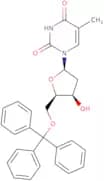
2'-Deoxy-2'-fluoroadenosine 5'-a-thiotriphosphate sodium salt (2'F-ATP) is a nucleoside analog that inhibits viral DNA polymerase and induces apoptosis in cancer cells. It is a novel, modified nucleotide that can be phosphorylated to 2'F-dATP, 2'F-AMP, or 2'F-GMP. The phosphate group in 2'F-ATP is replaced by a thiophosphate group, which increases the stability of the molecule and prevents it from being hydrolyzed by phosphatases. This makes it an effective activator for DNA synthesis reactions.Pureza:Min. 95%3'-Deoxy-5'-O-trityluridine
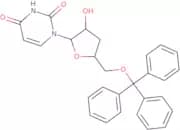
CAS:3'-Deoxy-5'-O-trityluridine is a nucleoside that is structurally related to uridine. It belongs to the class of nucleosides and has a hydroxyl group at the 3' position. The 5' position is modified by an anion (most often trityl) sterically, which prevents hydrolysis by esterases or phosphatases. The efficiency of this modification can be increased by using diethyl phosphate as the protecting agent. This modification also provides protection against nucleophiles, such as hydroxyl groups in nucleosides or phosphite triester derivatives. 3'-Deoxy-5'-O-trityluridine is used in the synthesis of other nucleosides and as a substrate for diffraction experiments.Fórmula:C28H26N2O5Pureza:Min. 95%Peso molecular:470.53 g/molN2-Benzoyl-2'-deoxy-5'-O-DMT-guanosine
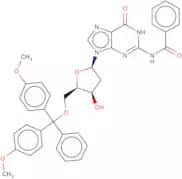
CAS:N2-Benzoyl-2'-deoxy-5'-O-DMT-guanosine is a novel and potent anticancer nucleoside with antiviral activity. It is an analog of 2'-deoxy-5'-O-DMT guanosine, which was reported to be the first phosphoramidite nucleoside. N2-Benzoyl-2'-deoxy-5'-O-DMT-guanosine is an excellent candidate for DNA synthesis and has been shown to inhibit viral replication. This product is also of high purity and high quality, and can be used in research applications.Fórmula:C38H35N5O7Pureza:Min. 95%Peso molecular:673.71 g/mol2'-Azido-2'-deoxyadenosine-5'-triphosphate lithium salt
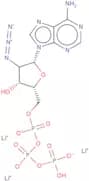
2'-Azido-2'-deoxyadenosine-5' triphosphate lithium salt is an activator nucleoside which is structurally related to ADP and ATP. It can be used as a starting material for the synthesis of phosphoramidites, nucleosides, ribonucleosides, and deoxyribonucleosides. In addition, it has antiviral properties and anticancer activity. 2'-Azido-2'-deoxyadenosine-5' triphosphate lithium salt can be modified to produce oligomers with different lengths or to modify the sugar chemical groups on the backbone.Fórmula:C10H15N8O12P3Pureza:Min. 95%Peso molecular:532.19 g/mol2'-Deoxyadenosine 5'-monophosphate sodium salt
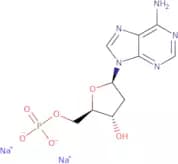
CAS:2'-Deoxyadenosine 5'-monophosphate sodium salt is a hydrated salt that is the sodium salt of 2'-deoxyadenosine 5'-monophosphate. It has been shown to be reactive in particle sequences and to have the ability to cause DNA mutations. Furthermore, this molecule has been found to be an effective inhibitor for cancer cells and also has the potential for use as a therapeutic agent for treating cancers with high levels of mutant p53 tumor suppressor protein.Fórmula:C10H14N5O6P·xNaPureza:Min. 95%Forma y color:PowderPeso molecular:331.22 g/mol5'-Deoxy-5'-(1,3-diphenyl-2-imidazolidinyl)thymidine
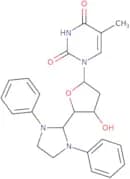
CAS:5'-Deoxy-5'-(1,3-diphenyl-2-imidazolidinyl)thymidine is a modified nucleoside analog that inhibits the growth of viruses. It has been shown to be active against herpes simplex virus type 1 and 2, varicella zoster virus, cytomegalovirus, and Epstein-Barr virus. This drug is used as an antiviral medication in the treatment of viral infections.Fórmula:C24H26N4O4Pureza:Min. 95%Peso molecular:434.5 g/mol2'-Deoxy-5'-O-DMT-2'-fluorouridine 3'-O-succinate triethylammonium salt
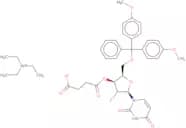
2'-Deoxy-5'-O-DMT-2'-fluorouridine 3'-O-succinate triethylammonium salt is a nucleoside that is modified with a 2,2,2-trifluoroethoxycarbonyl group on the 5' position of the sugar moiety. It is an activator for phosphoramidites in DNA synthesis and has been shown to have anticancer activity. It is also used as an antiviral agent and to treat HIV and herpes virus infections. This compound has a molecular weight of 439.5 g/mol and its CAS number is 62273-03-3.
Fórmula:C34H32FN2O10·C6H16NPureza:Min. 95%Forma y color:SolidPeso molecular:749.84 g/molN4-Benzoyl-5'-O-DMT-(2'-O, 4'-C-methylene)-5-methyl-a-cytidine 3'-CE phosphoramidite
N4-Benzoyl-5'-O-DMT-(2'-O, 4'-C-methylene)-5-methyl-a-cytidine 3'-CE phosphoramidite is a novel modified nucleoside that has antiviral and anticancer properties. It is synthesized by reacting the 3'-hydroxyl group of cytidine with 2,4,6-trimethoxybenzoyl chloride to form N4-(2',6'-dimethoxyphenyl)benzoylcytidine. This compound is then reacted with methylene bis(diethylamino)thiophene (2') and the 5' phosphoramidite of 5'-O-DMT-(2'-O, 4'-C-methylene)-5-methylcytidine. The product is an active synthetic nucleoside that can be used as a building block for other nucleosides or oligonucleotides.Pureza:Min. 95%2'-Deoxyadenosine 5'-a-thiotriphosphate sodium salt
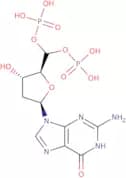
2'-Deoxyadenosine 5'-a-thiotriphosphate sodium salt is an antiviral nucleotide analog that has been modified to have a novel structure. It is phosphorylated in vivo to form 2'-deoxyadenosine 5'-a-thiotriphosphate. The nucleoside can inhibit viral DNA synthesis and help prevent the spread of HIV, herpes virus type I, herpes virus type II, influenza virus, and other viruses. This compound also has anticancer activity and has been shown to be effective against leukemia cells.Pureza:Min. 95%Guanosine 3',5'-diphosphate tetralithium salt
CAS:Guanosine 3',5'-diphosphate tetralithium salt is a nucleoside that has antiviral and anticancer properties. It is synthesized by reacting guanosine with lithium tetrabutylammonium tetraiodide. This nucleotide can be used as a precursor for DNA synthesis, deoxyribonucleosides, and phosphoramidites. Guanosine 3',5'-diphosphate tetralithium salt has been shown to activate the synthesis of proteins in the absence of adenosine triphosphate (ATP).Fórmula:C10H11Li4N5O11P2Pureza:Min. 95%Peso molecular:466.93 g/mol5'-O-Trityl-3'-b-hydroxythymidine
CAS:5'-O-Trityl-3'-b-hydroxythymidine is a nucleoside that is synthesized by the reduction of a pyrimidine with xylene. This molecule has been shown to have antibacterial activity, and also activates p53 in human cells. 5'-O-Trityl-3'-b-hydroxythymidine has been shown to inhibit the growth of cancer cells in a dose dependent manner. The functional theory for this finding is that 5'-O-Trityl-3'-b-hydroxythymidine may bind to DNA, preventing RNA polymerase from transcribing DNA into mRNA.
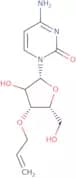
Fórmula:C29H28N2O6Pureza:Min. 95%Peso molecular:500.54 g/mol3'-O-Allylcytidine
3'-O-Allylcytidine is a phosphoramidite nucleoside that is synthesized by the coupling of cytidine with allyl bromoacetate. It has antiviral activity, and has been shown to be active against herpes simplex virus type 1 (HSV-1) and hepatitis B virus (HBV). 3'-O-Allylcytidine has also been shown to inhibit the growth of cells in culture, suggesting that it may have anticancer properties. 3'-O-Allylcytidine is a novel monophosphate nucleoside that has not been previously reported.br>
Fórmula:C12H17N3O5Pureza:Min. 95%Forma y color:PowderPeso molecular:283.28 g/mol6-O-(2-Cyanoethyl)-2'-deoxy-5'-O-DMT-N2-Isobutyrylguanosine
CAS:6-O-(2-Cyanoethyl)-2'-deoxy-5'-O-DMT-N2-Isobutyrylguanosine is an antiviral, anticancer and antibacterial agent. It is a nucleoside analog with antiviral activity against herpes simplex virus type 1 (HSV-1) and cytomegalovirus (CMV), and it can also inhibit the growth of leukemia cells. The nucleoside analog inhibits viral DNA synthesis by competitively inhibiting DNA polymerase and causes viral RNA to be degraded by RNase H. This compound is synthesized from 2',3'-dideoxyisobutyrylguanosine and 2'-deoxycytidine 5'-monophosphate, which are commercially available compounds. 6-O-(2-Cyanoethyl)-2'-deoxy-5'-O-DMT-N2-Isobutyrylguanosine has beenFórmula:C38H40N6O7Pureza:Min. 95%Peso molecular:692.76 g/mol4-Amino-3-benzyl-1H-pyrazolo[3,4-d]pyrimidine 1-b-D-ribofuranose
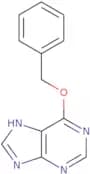
CAS:4-Amino-3-benzyl-1H-pyrazolo[3,4-d]pyrimidine 1b-D-ribofuranose is a novel diphosphate activator that can modify the properties of deoxyribonucleosides and nucleosides. It has antiviral activity against human immunodeficiency virus type 1 (HIV) and herpes simplex virus type 2 (HSV). 4-Amino-3-benzyl-1H-pyrazolo[3,4-d]pyrimidine 1b -D--ribofuranose is also an anticancer agent that has been shown to have DNA binding ability, in addition to its ability to inhibit the proliferation of cancer cells.Fórmula:C17H19N5O4Pureza:Min. 95%Peso molecular:357.36 g/mol6-Benzyloxypurine
CAS:6-Benzyloxypurine is a fluorescent compound that can be used to measure the concentration of aqueous solutions. It is used in molecular modeling and as a tracer in bioassays. The binding constants for 6-benzyloxypurine have been determined by fluorescence spectrometry, and it has been shown to inhibit the growth of aerobacter aerogenes at concentrations greater than 0.5 mM. This inhibitor also has an inhibitory effect on the growth of tissue culture cells and wastewater treatment bacteria, such as enterococcus faecalis and pseudomonas aeruginosa. The optimum concentration of 6-benzyloxypurine to inhibit bacterial growth is 1 mM, which corresponds to a pH of ~8.2.
Fórmula:C12H10N4OPureza:Min. 95%Peso molecular:226.23 g/mol2-Methanesulfonyl-pyrimidine
CAS:2-Methanesulfonyl-pyrimidine is a thiourea that is used as a catalyst in organic synthesis. It can be prepared by reacting phosphorus oxychloride with malonate and hydrochloric acid at temperatures of about 0°C to 150°C. The chloride anion is replaced by the sulfonyl chloride, which has high affinity for the 2-position of thiourea. This reaction leads to an intermediate that can be hydrolyzed with hydrochloric acid to produce 2-methanesulfonyl-pyrimidine. 2-Methanesulfonyl-pyrimidine is soluble in water and can be used as a catalyst in wastewater treatment processes, such as cyclic oxidation or oxychlorination reactions.Pureza:Min. 95%N6-Benzoyl-5'-O-DMT-2'-O-(2-methylacetamido)-adenosine 3'-CE phosphoramidite
N6-Benzoyl-5'-O-DMT-2'-O-(2-methylacetamido)-adenosine 3'-CE phosphoramidite is a modified nucleoside that is used in the synthesis of DNA. It is an activator for antiviral and anticancer drugs, as well as a ribonucleoside monophosphate, diphosphate, or deoxyribonucleoside. N6-Benzoyl-5'-O-DMT-2'-O-(2-methylacetamido)-adenosine 3'-CE phosphoramidite has been shown to have a novel anticancer activity.Pureza:Min. 95%N4-Benzoyl-2'-deoxy-5'-O-DMT-2'-fluoro-5-methylcytidine
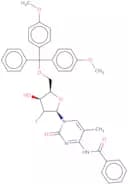
CAS:N4-Benzoyl-2'-deoxy-5'-O-DMT-2'-fluoro-5-methylcytidine is a nucleoside, which is a compound that consists of a sugar group, one or more phosphate groups, and one or more nucleobases. It is an analogue of cytidine with modifications in the sugar portion and the substitution of 2'-fluoro-5-methyluracil for uracil. This compound has been shown to be effective against cancer cells when used in combination with other anticancer agents. It also inhibits viral replication by acting as a competitive inhibitor of reverse transcriptase, preventing RNA synthesis. This compound also exhibits antiviral activity by inhibiting the synthesis of viral DNA and RNA.Fórmula:C38H36FN3O7Pureza:Min. 95%Peso molecular:665.72 g/molInosine-3',5'-cyclic-monophosphate free acid
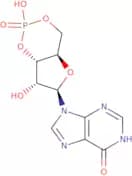
CAS:Inosine-3',5'-cyclic-monophosphate free acid is an ester of inosine 3',5'-cyclic-monophosphate that is structurally related to adenosine. It has been shown to have a physiological function as a cyclic nucleotide phosphodiesterase inhibitor, and also inhibits voltage-dependent calcium channels. Inosine-3',5'-cyclic-monophosphate free acid has been shown to be effective against infectious diseases, such as Mycobacterium tuberculosis and Galleria mellonella. It has also been shown to reduce the production of peptide hormones, nucleotides, and cyclic AMP (cAMP). Inosine-3',5'-cyclic-monophosphate free acid does not exhibit any pharmacological activity on its own but can modulate the activities of other pharmacological agents.Fórmula:C10H11N4O7PPureza:Min. 95%Peso molecular:330.19 g/mol2'-O-Allylguanosine
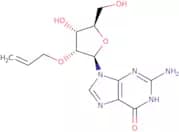
CAS:2'-O-Allylguanosine is an intermediate in the synthesis of 2,6-diaminopurine riboside. It is synthesized from allyl chloride and guanosine by an allylation reaction. The yield for this reaction is high, which makes it a useful synthon. Deamination of the product yields 2'-O-allylguanosine 5'-monophosphate, which can be converted to 2',6-diaminopurine riboside by hydrolysis with phosphoric acid. This intermediate is used in research on nucleic acids sequences and hydrogen bonding.Fórmula:C13H17N5O5Pureza:Min. 95%Forma y color:White PowderPeso molecular:323.3 g/mol2'-Methyl-adenosine-(benzoyl)-succinyl-CPG; 500 Å (RNA)
2'-Methyl-adenosine-(benzoyl)-succinyl-CPG; 500 Å (RNA) is a nucleic acid that is used to synthesize DNA. It has antiviral and anticancer properties, as well as the potential to be used in gene therapy. 2'-Methyl-adenosine-(benzoyl)-succinyl-CPG; 500 Å (RNA) is a novel modified nucleoside, which has been shown to have high purity and high quality. It has been registered with the Chemical Abstract Service (CAS No.).Pureza:Min. 95%γ-(BBT)-ATP
gamma-(BBT)-ATP is a novel ATP analog that has been shown to activate the purine nucleotide receptor and cause tumor cell death. It is a deoxyribonucleoside, phosphoramidite, and monophosphate that can be used as an activator for DNA synthesis. gamma-(BBT)-ATP inhibits the growth of tumor cells in culture and has antiviral activity against herpes simplex virus type-1.Fórmula:C24H22N7O13P3S2·xNaPureza:Min. 95%Forma y color:PowderPeso molecular:773.52 g/mol2'-Deoxy-5'-O-DMT-N6-isobutyryladenosine 3'-CE phosphoramidite
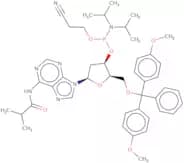
2'-Deoxy-5'-O-DMT-N6-isobutyryladenosine 3'-CE phosphoramidite is a novel and high quality anticancer agent that is used in the synthesis of DNA. This compound has shown potent cytotoxic activity against various cancer cell lines, including human leukemia cells, human breast carcinoma cells, and human colon carcinoma cells. 2'-Deoxy-5'-O-DMT-N6-isobutyryladenosine 3'-CE phosphoramidite inhibits DNA synthesis by inhibiting the enzyme DNA polymerase. It also inhibits protein synthesis and has been shown to be toxic to the mitochondria, which may be responsible for its anti-cancer effects.Fórmula:C44H54N7O7PPureza:Min. 95%Peso molecular:823.94 g/molClofarabine 5'-monophosphate triethylammonium salt
CAS:Clofarabine is an anti-cancer drug that belongs to the class of diphosphate, Synthetic, Activator, Phosphoramidites, Deoxyribonucleosides. It is a modified nucleoside with antiviral and anticancer activity. Clofarabine 5'-monophosphate triethylammonium salt (CPF) has been shown to inhibit DNA synthesis by blocking the incorporation of deoxyribonucleotides into DNA. CPF binds to DNA at the 3' position of the deoxyribonucleotide chain, which prevents its extension and leads to inhibition of DNA replication. CPF also inhibits viral DNA synthesis through inhibition of viral DNA polymerase or viral RNA polymerase in vitro. Clofarabine is not active against bacteriophage T4 or bacterial RNA polymerase.Pureza:Min. 95%Pyrido[3,4-d]pyrimidine-2,4(1H,3H)-dione
CAS:Pyrido[3,4-d]pyrimidine-2,4(1H,3H)-dione is a small molecule that can function as a transcriptional activator or repressor by binding to DNA. This drug has been shown to upregulate the expression of genes that are involved in the immune system and inflammation.Pureza:Min. 95%Guanosine 5'-O-(1-thiotriphosphate) lithium salt - 100mM aqueous solution
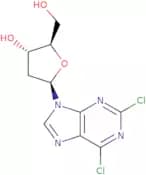
CAS:Guanosine 5'-O-(1-thiotriphosphate) lithium salt is a nucleotide analogue that binds to the guanine nucleotide-binding site on the enzyme. This agent has been shown to inhibit the growth of viruses, such as influenza virus and human immunodeficiency virus, by inhibiting viral transcription. The drug also has antiviral activity against herpesviruses and cytomegalovirus in cell culture. Guanosine 5'-O-(1-thiotriphosphate) lithium salt inhibits the binding of RNA polymerase to DNA templates and prevents the initiation of transcription. It also reduces the expression of a number of genes in cells by inhibiting protein synthesis in the cytoplasm. Guanosine 5'-O-(1-thiotriphosphate) lithium salt may be used for treating congestive heart failure due to its ability to reduce levels of cytosolic Ca2+ ions, which have been shown to promote cardiac myFórmula:C10H16N5O13P3S·4LiPureza:Min. 95%Forma y color:Colourless liquid.Peso molecular:567.01 g/mol2,6-Dichloro-9-(2'-deoxy-b-D-ribofuranosyl)purine
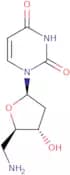
CAS:2,6-Dichloro-9-(2'-deoxy-β-D-ribofuranosyl)purine is a synthetic compound that is used in the treatment of certain types of cancer. It has been shown to be an activator of DNA synthesis and an inhibitor of RNA synthesis. It has also been shown to inhibit tumor growth and prolong the survival time for patients with leukemia. The antiviral activity of 2,6-dichloro-9-(2'-deoxy-β-D-ribofuranosyl)purine may be due to its ability to inhibit viral DNA polymerase. This drug is also known as dideoxyinosine (ddI).Fórmula:C10H10Cl2N4O3Pureza:Min. 95%Peso molecular:305.12 g/mol5'-Amino-2',5'-dideoxyuridine
CAS:5'-Amino-2',5'-dideoxyuridine (5-ADU) is a pyrimidine nucleoside that is structurally similar to thymidylate, which it inhibits. 5-ADU is used in the treatment of viral infections and cancers, as well as in the prevention of radiation injury. It has been shown to be an effective antiviral agent against herpes virus and some DNA viruses, such as adenovirus, vaccinia virus, and poliovirus. 5-ADU also enhances the effects of azauridine and other pyrimidine nucleosides in bacterial enzymes such as E. coli. 5-ADU has not been shown to be active against uninfected cells or tissues.Fórmula:C9H13N3O4Pureza:Min. 95%Peso molecular:227.22 g/molN6-Benzoyl-3'-deoxy-5'-O-DMT-adenosine 2'-CE phosphoramidite
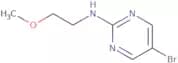
CAS:N6-Benzoyl-3'-deoxy-5'-O-DMT-adenosine 2'-CE phosphoramidite is a novel modified nucleoside that has antiviral, anticancer and antibacterial properties. The chemical name is N6-benzoyl-3'-deoxy-5'-O-DMT-adenosine 2'-CE phosphoramidite. It is a ribonucleotide. It is an activator of the enzyme kinase A which phosphorylates proteins and activates them. This product has not been tested in humans.Fórmula:C47H52N7O7PPureza:Min. 95%Peso molecular:857.93 g/mol5-Bromo-2-(2-methoxyethylamino)pyrimidine
CAS:5-Bromo-2-(2-methoxyethylamino)pyrimidine is a novel, ribonucleoside that exhibits anticancer activity. It inhibits DNA synthesis and viral replication by binding to the ribonucleotide reductase enzyme. 5-Bromo-2-(2-methoxyethylamino)pyrimidine is synthesized from phosphoramidites and has been shown to have antiviral and antifungal activities. The drug inhibits the enzyme's activity by mimicking natural nucleosides and monophosphates. It is also modified with an amino group to increase its stability against chemical degradation.Pureza:Min. 95%4'-a-C-Methyladenosine
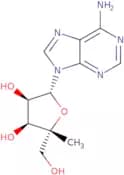
CAS:4'-a-C-Methyladenosine is a nucleoside that has antiviral, anticancer and novel properties. It is a modified nucleoside with a methyl group in the 4' position. This modification prevents the phosphodiester bond from being hydrolyzed by nucleotide kinase enzymes. The methyl group also inhibits the formation of adenosine monophosphate (AMP) during DNA synthesis, which prevents the deactivation of adenosine triphosphate (ATP). 4'-a-C-Methyladenosine is used to synthesize oligonucleotides for use in DNA sequencing and gene mapping.
Pureza:Min. 95%5-[N(6-(Trifluoroacetamido)hexyl)-3-(E)-acrylamido] -2'-deoxyuridine
CAS:5-[N(6-(Trifluoroacetamido)hexyl)-3-(E)-acrylamido] -2'-deoxyuridine is a synthetic, modified nucleoside that functions as an activator of ribonucleotide reductase. It has been shown to be effective in the treatment of viral infections, including herpes simplex virus type 1 (HSV-1), herpes simplex virus type 2 (HSV-2), and human immunodeficiency virus type 1 (HIV-1). 5-[N(6-(Trifluoroacetamido)hexyl)-3-(E)-acrylamido] -2'-deoxyuridine is also synthesized into DNA or RNA molecules, which are used to study the structure of these compounds. It can also be used for phosphoramidite synthesis.Fórmula:C20H27F3N4OPureza:Min. 95%Peso molecular:396.45 g/mol5-[3-(Trifluoroacetamido)-E-1-propenyl]-2’- deoxyuridine
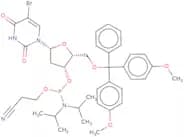
CAS:5-[3-(Trifluoroacetamido)-E-1-propenyl]-2’-deoxyuridine is a monophosphate nucleoside analog that inhibits DNA synthesis by inhibiting the activity of ribonucleotide reductase. It is also antiviral, and has been shown to inhibit the growth of human erythroleukemia cells in vitro and to produce cytotoxic effects on murine leukemia cells. 5-[3-(Trifluoroacetamido)-E-1-propenyl]-2’-deoxyuridine is an anticancer drug that has been shown to be effective against a variety of cancers, including those of the breast, lung, prostate, and colon. It has also been shown to have high quality as it does not cause any significant side effects or show cross resistance with other cancer drugs.Fórmula:C14H16F3N3O6Pureza:Min. 95%Peso molecular:379.29 g/mol5-Bromo-2'-deoxy-5'-O-DMT-uridine 3'-CE phosphoramidite
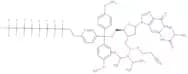
CAS:5-Bromo-2'-deoxy-5'-O-DMT-uridine 3'-CE phosphoramidite is a nucleoside analog and a potential anticancer drug. It is an excellent monophosphate, which can be used as a building block for synthesis of DNA. 5-Bromo-2'-deoxy-5'-O-DMT-uridine 3'-CE phosphoramidite has antiviral activity against HIV and herpes simplex virus, as well as antifungal activity against Candida albicans. This compound has also been shown to have antitumor activity in vitro in the presence of other anticancer drugs.Fórmula:C39H46BrN4O8PPureza:Min. 95%Peso molecular:809.7 g/mol2'-Deoxy-5'-O-FDMT-N2-isobutyryl-guanosine 3'-CE phosphoramidite
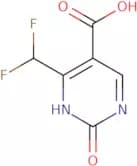
CAS:Producto controlado2'-Deoxy-5'-O-FDMT-N2-isobutyryl-guanosine 3'-CE phosphoramidite is a modified nucleoside that is used as an antiviral agent. It is synthesized by modifying the 2'-deoxyribose sugar with a 2'-deoxy-5'-O-(4,4'-dimethoxytrityl)-N2-isobutyrylguanosine 3' phosphate. This compound has shown anticancer activity in vitro and has been studied in animal models. The synthesis of this compound can be accomplished through the use of diphosphate, which gives it an advantage over natural nucleosides because it does not require ribonucleotides.Fórmula:C54H57F17N7O8PPureza:Min. 95%Peso molecular:1,286.02 g/mol4-(difluoromethyl)-2-hydroxy-pyrimidine-5-carboxylic acid
CAS:4-(difluoromethyl)-2-hydroxy-pyrimidine-5-carboxylic acid is a novel monophosphate and nucleotide analogue, which can activate the HIV reverse transcriptase. It has been shown to be cytotoxic to cancer cells in vitro. 4-(difluoromethyl)-2-hydroxy-pyrimidine-5-carboxylic acid has been used for the synthesis of phosphoramidites and DNA and RNA analogues.Fórmula:C6H4F2N2O3Pureza:Min. 95%Peso molecular:190.1 g/mol







![2'-Deoxy-5'-DMT-5-[3-(trifluoroacetylamino)-1-E-propenyl]-uridine 3-CE phosphoramidite](/_next/image/?url=https%3A%2Fstatic.cymitquimica.com%2Fproducts%2F3D%2Fthumb-webp%2FPD138043.webp&w=3840&q=75)




![4-Amino-3-benzyl-1H-pyrazolo[3,4-d]pyrimidine 1-b-D-ribofuranose](/_next/image/?url=https%3A%2Fstatic.cymitquimica.com%2Fproducts%2F3D%2Fthumb-webp%2FNA16507.webp&w=3840&q=75)





![Pyrido[3,4-d]pyrimidine-2,4(1H,3H)-dione](/_next/image/?url=https%3A%2Fstatic.cymitquimica.com%2Fproducts%2F3D%2Fthumb-webp%2FNP44307.webp&w=3840&q=75)

![5-[N(6-(Trifluoroacetamido)hexyl)-3-(E)-acrylamido] -2'-deoxyuridine](/_next/image/?url=https%3A%2Fstatic.cymitquimica.com%2Fproducts%2F3D%2Fthumb-webp%2FNT57552.webp&w=3840&q=75)
![5-[3-(Trifluoroacetamido)-E-1-propenyl]-2’- deoxyuridine](/_next/image/?url=https%3A%2Fstatic.cymitquimica.com%2Fproducts%2F3D%2Fthumb-webp%2FNT57550.webp&w=3840&q=75)