Nucleósidos
Los nucleósidos son building blocks fundamentales de los ácidos nucleicos, compuestos por una base nitrogenada unida a una molécula de azúcar. En esta sección, puede encontrar una amplia variedad de nucleósidos esenciales para la investigación en biología molecular, bioquímica y farmacología. Estos compuestos juegan roles cruciales en la síntesis de ADN y ARN, y son vitales en varios procesos metabólicos. Los nucleósidos se utilizan para estudiar material genético, desarrollar terapias antivirales y anticancerígenas, y comprender los mecanismos celulares. En CymitQuimica, proporcionamos nucleósidos de alta calidad para apoyar sus necesidades de investigación y desarrollo, asegurando pureza y fiabilidad para sus aplicaciones experimentales.
Se han encontrado 3569 productos de "Nucleósidos"
Ordenar por
Pureza (%)
0
100
|
0
|
50
|
90
|
95
|
100
5-Methyl-4'-thiouridine
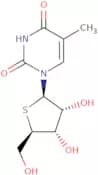
CAS:<p>5-Methyl-4'-thiouridine is a novel, synthetic nucleoside that has antiviral and anticancer activities. It is an activator of ribonucleotide reductase and a substrate for diphosphate reductase. 5-Methyl-4'-thiouridine (also known as 5-methyluridine) is used in the synthesis of DNA, RNA, and phosphoramidites. The CAS number for this compound is 6741-71-5.</p>Pureza:Min. 95%1,N6-Ethenoadenosine-5'-monophosphate sodium salt
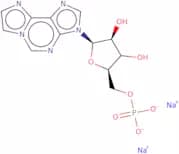
CAS:<p>1,N6-Ethenoadenosine-5'-monophosphate sodium salt is a synthetic nucleoside analog. It serves as an antiviral and anticancer agent by inhibiting viral DNA polymerase and tumor cell proliferation. This drug has been shown to be effective in animal models of cancer. 1,N6-Ethenoadenosine-5'-monophosphate sodium salt also inhibits the enzyme ribonucleotide reductase, which is needed for deoxyribonucleotide synthesis. 1,N6-Ethenoadenosine-5'-monophosphate sodium salt is chemically related to adenosine monophosphate (AMP). However, it is not active against AMP phosphohydrolases that are found in bacteria and some protozoa.</p>Fórmula:C12H14N5O7PPureza:Min. 95%Peso molecular:371.24 g/molN4-Acetyl-2'-deoxy-5'-O-DMT-cytidine 3'-Me phosphoramidite
<p>N4-Acetyl-2'-deoxy-5'-O-DMT-cytidine 3'-Me phosphoramidite is a novel monophosphate nucleoside that is synthesized using an acetylation and methylation reaction. It has a cytidine base and is modified with an acetyl group and a methyl group. N4-Acetyl-2'-deoxy-5'-O-DMT-cytidine 3'-Me phosphoramidite has been shown to inhibit the growth of cancer cells in vitro, as well as to have antiviral and anticancer activity. This product is available in high purity, high quality, and with modifications to improve its stability.</p>Fórmula:C39H49N4O8PPureza:Min. 95%Peso molecular:732.8 g/mol3',5'-Bis-O-(tert-butyldimethylsilyl)-2'-deoxyuridine
CAS:<p>3',5'-Bis-O-(tert-butyldimethylsilyl)-2'-deoxyuridine is a synthetic nucleoside that is used in antiviral and anticancer research. It is an activator of the monophosphate form of DNA and RNA, leading to their synthesis. 3',5'-Bis-O-(tert-bulyldimethylsilyl)-2'-deoxyuridine has been shown to have antitumour activity against cancer cells.</p>Fórmula:C21H40N2O5Si2Pureza:Min. 95%Peso molecular:456.72 g/mol2'-O-(tert-Butyldimethylsilyl)-3'-O-(phenoxythioncarbonyl)-5'-O-trityluridine
CAS:<p>2'-O-(tert-Butyldimethylsilyl)-3'-O-(phenoxythioncarbonyl)-5'-O-trityluridine (TBS-PTU) is a modified nucleoside that has antiviral activity. TBS-PTU inhibits viral replication by interfering with the synthesis of viral RNA and DNA. The antiviral activity of TBS-PTU is increased in the presence of ribonucleotide reductase, an enzyme that converts ribonucleotides to deoxyribonucleotides. TBS-PTU is used as a building block for DNA synthesis and as a precursor to other modified nucleosides.</p>Fórmula:C41H44N2O7SSiPureza:Min. 95%Peso molecular:736.95 g/molN6-Benzoyl-9-(2'-deoxy-2'-fluoro-b-D-arabinofuranosyl)adenine
CAS:<p>N6-Benzoyl-9-(2'-deoxy-2'-fluoro-b-D-arabinofuranosyl)adenine is a novel nucleoside analogue that inhibits HIV, Herpes simplex virus type 1 and 2, Hepatitis C virus, and influenza A virus. It is structurally similar to adenosine but has a benzoyl group at the 6 position on the ribose moiety. N6-Benzoyl-9-(2'-deoxy-2'-fluoro-b-D-arabinofuranosyl)adenine is phosphoramidite, which means it can be synthesized by chemical means or enzymatically. It has high purity and quality with a CAS number of 1446113-65-0. This product also has antiviral activity against several viruses.</p>Fórmula:C17H16FN5O4Pureza:Min. 95%Peso molecular:373.35 g/molO6-Benzyl-N2,3-etheno-2'-phenoxythioxomethyl-3',5'-O-[tetrakis(isopropyl)-1,3-disiloxanediyl] guanosine
CAS:<p>O6-Benzyl-N2,3-etheno-2'-phenoxythioxomethyl-3',5'-O-[tetrakis(isopropyl)-1,3-disiloxanediyl] guanosine is a nucleoside phosphoramidite that is used as an antiviral agent. It has been shown to inhibit the replication of RNA viruses and thus inhibit the production of proteins vital for cell division. O6-Benzyl-N2,3-etheno-2'-phenoxythioxomethyl-3',5'-O-[tetrakis(isopropyl)-1,3-disiloxanediyl] guanosine has also been shown to be an anticancer agent by inhibiting DNA synthesis. This compound is synthesized from deoxyribonucleosides and modified with a benzoyl group at the 6 position on the ribose ring. The</p>Fórmula:C38H49N5O7SSi2Pureza:Min. 95%Peso molecular:776.06 g/mol7-Benzyl-4-chloro-5,6,7,8-tetrahydropyrido[3,4-d]pyrimidine
CAS:<p>7-Benzyl-4-chloro-5,6,7,8-tetrahydropyrido[3,4-d]pyrimidine is a nucleoside analog that is used as an antiviral and anticancer drug. It has also been shown to have antimalarial activity. 7-Benzyl-4-chloro-5,6,7,8-tetrahydropyrido[3,4-d]pyrimidine inhibits the replication of HIV by blocking the viral reverse transcriptase enzyme. This drug is a phosphoramidite monophosphate with a purity of 99%.</p>Fórmula:C14H14ClN3Pureza:Min. 95%Peso molecular:259.73 g/mol5-Fluoro-1-(2'-deoxy-2'-fluoro-3',5'-di-O-benzoyl-b-L-arabinofuranosyl)-uracil
CAS:<p>5-Fluoro-1-(2'-deoxy-2'-fluoro-3',5'-di-O-benzoyl-b-L-arabinofuranosyl)-uracil (5FUA) is a monophosphate nucleoside that inhibits viral replication. It is phosphorylated by the viral enzyme 3' to 5' exonuclease and then acts as a competitive inhibitor of the natural substrate, diphosphate, at the active site of DNA polymerase. The result is inhibition of viral DNA synthesis and replication. 5FUA has been shown to be active against a variety of viruses including herpes simplex virus types 1 and 2, varicella zoster virus, influenza A virus, and human immunodeficiency virus type 1. This drug has also been shown to inhibit cancer cell proliferation in vitro.</p>Pureza:Min. 95%2-Thio-2'-deoxycytidine
CAS:<p>2-Thio-2'-deoxycytidine is a polycrystalline material that belongs to the group of experimental materials. 2-Thio-2'-deoxycytidine is a tautomeric form of cytosine which has been studied theoretically and experimentally. It has been shown that this compound is stable in the environment and can be used as a research material.</p>Fórmula:C9H13N3O3SPureza:Min. 95%Peso molecular:243.29 g/molNicotinamide 1,N6-ethenoadenine dinucleotide
CAS:<p>Nicotinamide 1,N6-ethenoadenine dinucleotide (NADH) is an enzyme form that binds to the active site of glutamate dehydrogenase (GDH). This binding prevents GDH from catalyzing the oxidation of NADH to NAD+, which is necessary for GDH activity. Nicotinamide 1,N6-ethenoadenine dinucleotide is a noncompetitive inhibitor that binds with a higher affinity than the substrate. It has been shown to be effective in inhibiting GDH in a model system and in enzyme preparations. The binding constant for nicotinamide 1,N6-ethenoadenine dinucleotide is 2 mM. The optimum pH for nicotinamide 1,N6-ethenoadenine dinucleotide activity is 6.8.</p>Fórmula:C23H27N7O14P2Pureza:Min. 97 Area-%Forma y color:White Off-White PowderPeso molecular:687.45 g/mol5'-Deoxy-5-fluoro-5'-iodo-2',3'-O-isopropylidenecytidine
CAS:<p>5'-Deoxy-5-fluoro-5'-iodo-2',3'-O-isopropylidenecytidine is a nucleoside with antiviral and anticancer activity. It is an activator of phosphoramidites, and is used in the production of DNA and RNA. 5'-Deoxy-5-fluoro-5'-iodo-2',3'-O-isopropylidenecytidine also has a high purity, which makes it suitable for use in the synthesis of oligonucleotides and ribonucleotides.</p>Fórmula:C12H15FIN3O4Pureza:Min. 95%Peso molecular:411.17 g/molN6-Benzoyl-2'-deoxy-3'-O-DMT-adenosine
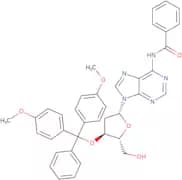
CAS:<p>N6-Benzoyl-2'-deoxy-3'-O-DMT-adenosine is a novel nucleoside analog that is structurally related to the natural nucleotide adenosine. It is an activator of ribonucleotide reductase, which converts ribonucleosides to deoxyribonucleosides. This product has antiviral and anticancer properties. N6-Benzoyl-2'-deoxy-3'-O-DMT-adenosine can be used in research or as an intermediate for the manufacture of other pharmaceuticals.</p>Pureza:Min. 95%5-Aminoallyl-2'-deoxycytidine
5-Aminoallyl-2'-deoxycytidine is an activator that has been shown to be a novel anticancer drug. It is an analogue of cytidine and is synthesized by the phosphoramidite method. 5-Aminoallyl-2'-deoxycytidine inhibits viral replication in human cells, but also has antiviral activity against HIV and influenza A virus. The compound has been shown to be active against small cell lung cancer in animal models.Pureza:Min. 95%3',5'-Di-O-acetyl-5-chloro-2'-deoxyuridine
CAS:<p>3',5'-Di-O-acetyl-5-chloro-2'-deoxyuridine (3,5'-diacetyl-2'-deoxyuridine) is a modified nucleoside with antiviral and anticancer properties. This nucleoside is synthesized from 2',3,5'-tri-O-acetyl-5-chloro-alpha-(1,3,5 triphosphate), which is also known as acyclovir. 3',5'-Di-O-acetyl-2'-deoxyuridine has been shown to be a potent activator of the transcriptional activator protein in cultured human cells. 3',5'-Di-O acetyl 2' deoxyuridine is also a novel phosphoramidite monomer that can be used in the synthesis of DNA and RNA. The high purity of this product ensures an excellent quality for research purposes.</p>Fórmula:C13H15ClN2O7Pureza:Min. 95%Peso molecular:346.73 g/mol9-(5'-O-t-Butyldimethylsilyl-2',3'-O-isopropylidene-b-D-ribofuranosyl)-6-chloro-7-deazaguanine
CAS:<p>9-(5'-O-t-Butyldimethylsilyl-2',3'-O-isopropylidene-b-D-ribofuranosyl)-6-chloro-7-deazaguanine is a novel nucleoside phosphoramidite. It is an analogue of the nucleoside 7-(4,4'-dimethoxytrityl)guanine and 9-(4,4'-dimethoxytrityl)guanine. This product has been shown to have anticancer activity and antiviral activity against HIV in vitro. 9-(5'-O-t-Butyldimethylsilyl-2',3'-O-isopropylidene b -D ribofuranosyl)-6 chloro -7 deazaguanine has also been shown to inhibit DNA synthesis in cells. The purity of this product is over 98%. It is a novel compound that</p>Fórmula:C20H33ClN4O4SiPureza:Min. 95%Peso molecular:457.04 g/molN4-Benzoyl-2'-deoxy-5'-O-DMT-cytidine 3'-phosphonate triethylammonium salt
CAS:<p>N4-Benzoyl-2'-deoxy-5'-O-DMT-cytidine 3'-phosphonate triethylammonium salt (BENZYT) is a novel nucleoside analogue that is phosphorylated to the monophosphate (BENZYTP). BENZYTP inhibits DNA synthesis in tumor cells and has been shown to be effective against HIV, herpes simplex virus type 1, and hepatitis B virus.</p>Fórmula:C37H35N3O9P·C6H16NPureza:Min. 95%Peso molecular:798.86 g/molCyclic di-adenosine monophosphate sodium salt
CAS:<p>Cyclic di-adenosine monophosphate sodium salt (c-di-AMP) is a cyclic nucleotide that is structurally similar to its natural counterpart, Adenosine 5'-triphosphate. It binds to the Toll-like receptor 4 (TLR4) and blocks the activation of TLR4 by lipopolysaccharide, thereby inhibiting the downstream inflammatory response. c-di-AMP also inhibits the production of proinflammatory cytokines such as TNFα, IL1β, and IL6 in vitro. c-di-AMP has shown anti-inflammatory properties in vivo and can be used for the treatment of infectious diseases.</p>Fórmula:C20H24N10O12P2·xNaPureza:Min. 95%Peso molecular:658.41 g/mol2'-Deoxy-5'-O-DMT-inosine 3'-succinyl CPG
2'-Deoxy-5'-O-DMT-inosine 3'-succinyl CPG is a novel chemical compound that has anticancer properties. It is synthesized by the phosphoramidite chemistry and modified with succinyl CPG. This compound can be used as an activator in DNA synthesis, as well as antiviral and anti-inflammatory activities. 2'-Deoxy-5'-O-DMT-inosine 3'-succinyl CPG is a nucleoside monophosphate derived from 2'-deoxy-5'-O-dimethoxytrityl adenosine and 3'-succinyl CPG. It has a CAS number of 90161-81-0.Pureza:Min. 95%N4-Acetyl-2'-deoxy-5'-O-DMT-cytidine 3'-succinyl CPG 1400 Å
<p>N4-Acetyl-2'-deoxy-5'-O-DMT-cytidine 3'-succinyl CPG 1400 Å is a novel antiviral agent that inhibits the synthesis of viral RNA. This compound has been shown to be effective against influenza A and B, human cytomegalovirus, and herpes simplex virus type 1. N4-Acetyl-2'-deoxy-5'-O-DMT-cytidine 3'-succinyl CPG 1400 Å also has anticancer activity in vitro and in vivo. It has been shown to inhibit the proliferation of tumor cells by interfering with DNA replication, RNA synthesis, and protein synthesis.</p>Pureza:Min. 95%2-Chloro-5'-N-ethylcarboxamide-2',3'-O-isopropylidene adenosine
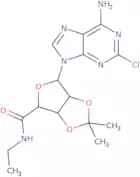
CAS:<p>2-Chloro-5'-N-ethylcarboxamide-2',3'-O-isopropylidene adenosine is an antiviral agent that inhibits the synthesis of deoxyribonucleic acid (DNA) and ribonucleic acid (RNA). It is a synthetic, modified nucleoside. 2-Chloro-5'-N-ethylcarboxamide-2',3'-O-isopropylidene adenosine has been shown to be active against human tumor cell lines in vitro and in vivo. The compound inhibits the activity of DNA polymerase and RNA polymerase by competitive inhibition of the enzyme phosphoramidite. 2CECA has also been shown to have anticancer properties as it induces apoptosis in cancer cells.</p>Fórmula:C15H19ClN6O4Pureza:Min. 95%Peso molecular:382.8 g/molO6-Diphenylcarbonyl-N2-isobutyryl-1-(5'-O-DMT-b-D-arabinofuranosyl) guanine
<p>O6-Diphenylcarbonyl-N2-isobutyryl-1-(5'-O-DMT-b-D-arabinofuranosyl) guanine is a synthetic nucleoside. It is an activator of antiviral, anticancer, and antimalarial agents. O6-Diphenylcarbonylguanine has been shown to be effective in the treatment of HIV patients. It also inhibits the replication of herpes simplex virus type 1 (HSV1) and can be used for the treatment of HSV1 encephalitis. O6-Diphenylcarbonylguanine has also been shown to be effective in the treatment of cancer cells that are resistant to chemotherapy drugs such as cisplatin and doxorubicin.</p>Fórmula:C47H47N5O9Pureza:Min. 95%Peso molecular:825.9 g/molAdenosine 5'-diphosphate trilithium salt
CAS:<p>Adenosine 5'-diphosphate trilithium salt is a lithium salt of adenosine 5'-diphosphate. It is an activator that is used in the synthesis of polymers and monophosphates. Lithium salts have been shown to increase the solubility of adenosine and guanosine. This product has also been shown to be an effective lithium ion conductor, serving as a potential replacement for dilithium.</p>Fórmula:C10H12N5O10P2·Li3Pureza:Min. 95%Peso molecular:445 g/mol8-Chloroadenosine 3',5'-cyclic monophosphate dihydrate
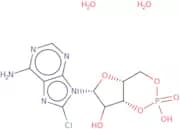
CAS:<p>8-Chloroadenosine 3',5'-cyclic monophosphate dihydrate (8-Cl-cAMP) is an anticancer drug that inhibits the growth of cells in vitro and in vivo. 8-Cl-cAMP is a cytostatic agent that can inhibit the proliferation of cancer cells, especially renal cell cancer cells. It also has synergistic activity with epidermal growth factor, which may be due to its ability to increase the production of reactive oxygen species and decrease mitochondrial membrane potential. 8-Cl-cAMP may have potential as an anticancer agent due to its ability to induce apoptosis and inhibit protein synthesis.</p>Fórmula:C10H11ClN5O6P·2H2OPureza:Min. 95%Peso molecular:399.69 g/mol5'-Azido-2',5'-dideoxyinosine
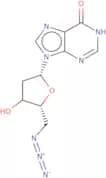
CAS:<p>5'-Azido-2',5'-dideoxyinosine is a novel nucleoside which has been synthesized to investigate its anticancer and antiviral properties. 5'-Azido-2',5'-dideoxyinosine is an activator of ribonucleosides and deoxyribonucleosides, converting them into the corresponding monophosphate or diphosphate form. This product can be used as a building block for the synthesis of phosphoramidites and modified nucleosides. 5'-Azido-2',5'-dideoxyinosine has shown activity against cancer cells in vitro, in particular leukemia cell lines. It also has antiviral activity against HIV, herpes simplex virus type 1, and human cytomegalovirus (HCMV).</p>Fórmula:C10H11N7O3Pureza:Min. 95%Peso molecular:277.24 g/mol8-Bromo-9-[3',5'-O-(1,1,3,3-tetraisopropyl-1,3-disiloxanediyl)-2'-deoxy-b-D-ribofuranosyl]guanine
CAS:<p>8-Bromo-9-[3',5'-O-(1,1,3,3-tetraisopropyl-1,3-disiloxanediyl)-2'-deoxy-b-D-ribofuranosyl]guanine is a nucleoside analog that inhibits DNA synthesis in the cancer cells. This agent is an activator of nucleases and can inhibit RNA synthesis by inhibiting the enzyme ribonucleotide reductase. 8-Bromo-9-[3',5'-O-(1,1,3,3-tetraisopropyl-1,3-disiloxanediyl)-2'-deoxy-b-Dribofuranosyl]guanine also has antiviral activity against herpes simplex virus type 1 and 2. The drug is a novel compound with anticancer activity that targets DNA synthesis by binding to the enzyme topoisomerase II. This</p>Fórmula:C22H38BrN5O5Si2Pureza:Min. 95%Peso molecular:588.64 g/mol6-(2-Cyanoethylthio)-2'-deoxy-5'-O-DMT-N2-trifluoroacetylguanosine 3'-CE phosphoramidite
CAS:<p>6-(2-Cyanoethylthio)-2'-deoxy-5'-O-DMT-N2-trifluoroacetylguanosine 3'-CE phosphoramidite is a novel, modified nucleoside with antiviral, anticancer and other potential therapeutic activities. It is synthesized by the reaction of 6-(2-cyanoethylthio)-2'-deoxy-5'-O-DMT nucleoside with 2,4,6-trifluoroacetic anhydride in the presence of N,N'-diisopropylethylamine. The product is purified on a column to yield high quality material. The CAS number for this compound is 146691-59-0.</p>Fórmula:C45H50N8O7PSPureza:Min. 95%Peso molecular:934.96 g/mol5-Carboxymethylaminomethyl- 2'-O-methyluridine
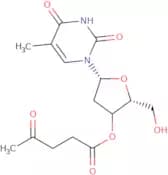
CAS:<p>5-Carboxymethylaminomethyl- 2'-O-methyluridine (5CmAMU) is a modified nucleobase that is categorized as a modified base. It is an analog of uridine, which has been shown to be effective against tuberculosis in mice. 5CmAMU inhibits the methylation of rRNA and DNA by binding to the enzyme RNA methyltransferase, thereby inhibiting transcription and replication. This modification has also been shown to inhibit cellular proliferation and promote apoptosis. 5CmAMU binds to guanine with a stoichiometry of 1:1, which provides evidence for its role in DNA synthesis and repair. The structural modifications on this molecule may lead to diagnostic applications or treatments for diseases such as tuberculosis.</p>Fórmula:C13H19N3O8Pureza:Min. 95%Forma y color:PowderPeso molecular:345.31 g/mol2'-Deoxy-3'-O-levulinoylthymidine
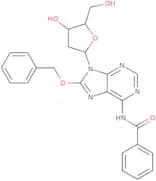
CAS:<p>2'-Deoxy-3'-O-levulinoylthymidine is a novel antiviral agent and a synthetic deoxyribonucleoside that is structurally similar to thymidine. It has been studied in vitro and in vivo for its antiviral activity against various viruses, including HIV type 1, HIV type 2, herpes simplex virus (HSV), varicella zoster virus (VZV), cytomegalovirus (CMV), and influenza A virus. 2'-Deoxy-3'-O-levulinoylthymidine has also shown anticancer properties in vitro. This drug inhibits the synthesis of DNA by competing with other nucleotides for incorporation into DNA during the elongation phase of replication. It also inhibits the synthesis of RNA by competing with other nucleotides for incorporation into RNA during transcription.</p>Fórmula:C15H20N2O7Pureza:Min. 95%Peso molecular:340.33 g/molN6-Benzoyl-8-benzyloxy-2'-deoxyadenosine
CAS:<p>N6-Benzoyl-8-benzyloxy-2'-deoxyadenosine is a novel nucleoside with anticancer and antiviral properties. It is an antiviral that inhibits the synthesis of viral DNA by blocking the incorporation of ribonucleotide triphosphates into DNA, while leaving intact the synthesis of deoxyribonucleotides and phosphoramidites. In addition, it is a potent inhibitor of cellular DNA polymerases that catalyze synthesis of DNA from deoxyribonucleoside triphosphates. N6-Benzoyl-8-benzyloxy-2'-deoxyadenosine also has antitumor activity in animal models.</p>Fórmula:C24H23N5O5Pureza:Min. 95%Peso molecular:461.5 g/mol3'-Deoxythymidine-5'-triphosphate lithium salt - 100mM aqueous solution
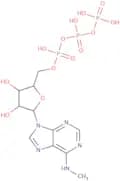
CAS:3'-Deoxythymidine-5'-triphosphate lithium salt - 100mM aqueous solution is a phosphoramidite. It is an antiviral agent that inhibits the replication of DNA and RNA viruses by inhibiting the synthesis of viral nucleic acid. 3'-Deoxythymidine-5'-triphosphate lithium salt - 100mM aqueous solution has been shown to be effective against some cancer cells with high purity and novel properties.Fórmula:C10H17N2O13P3·xLiPureza:Min. 95%Peso molecular:466.17 g/molN6-Methyladenosine-5'-triphosphate sodium salt - 10 mM aqueous solution
CAS:<p>Modulator of P2Y receptors</p>Fórmula:C11H18N5O13P3Pureza:Min. 95%Peso molecular:521.21 g/mol3'-O-Aminoacetoxythymidine 5'-O-triphosphate triethylammonium salt
<p>Please enquire for more information about 3'-O-Aminoacetoxythymidine 5'-O-triphosphate triethylammonium salt including the price, delivery time and more detailed product information at the technical inquiry form on this page</p>Fórmula:C13H22N3O14P3•(C6H15N)xPureza:Min. 99 Area-%Forma y color:PowderPeso molecular:537.25 g/mol8-Bromoadenosine 3',5'-cyclic monophosphorothioate, Sp-isomer sodium salt
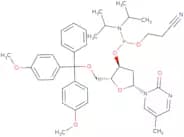
CAS:<p>8-Bromoadenosine 3',5'-cyclic monophosphate is a nucleotide analog that binds to RNA polymerase and blocks the elongation of RNA. It has been shown to stimulate axonal regeneration in the rat spinal cord, by increasing the level of glutamate in the extracellular space. 8-Bromoadenosine 3',5'-cyclic monophosphate also stimulates nerve growth factor (NGF) production and activates protein kinase C (PKC). This drug also inhibits apoptosis by inhibiting the activity of Mcl-1 protein, which is involved in mitochondrial membrane permeability.</p>Fórmula:C10H10BrN5O5PS·NaPureza:Min. 95%Forma y color:White to off-white solid.Peso molecular:446.51 g/mol2'-Deoxy-5'-O-DMT-5-methylzebularine 3'-CE phosphoramidite
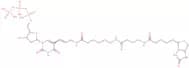
CAS:<p>2'-Deoxy-5'-O-DMT-5-methylzebularine 3'-CE phosphoramidite is a novel nucleoside that has been modified to contain a 5-methyl group at the 2′ position. It is phosphorylated with a phosphate group at the 3′ position and linked to an oligonucleotide via a 3′-O,O′-dimethoxytrityl (DMT) spacer. This novel nucleoside has antiviral activity against hepatitis C virus and cytomegalovirus, as well as anticancer properties. 2'-Deoxy-5'-O-DMT-5-methylzebularine 3'-CE phosphoramidite has shown antitumour activity in animal models of human breast cancer and melanoma.</p>Fórmula:C40H49N4O7PPureza:Min. 95%Forma y color:SolidPeso molecular:728.81 g/molBiotin-16-deoxyuridine-5'-triphosphate, lithium salt - 1 mM aqueous solution
CAS:<p>Biotin-16-deoxyuridine-5'-triphosphate, lithium salt (Biotin-16-dUTP) is a nucleotide analog that is used in the detection of RNA and DNA. It is incorporated into the growing DNA or RNA strand by DNA polymerase and then detected by an enzyme that can detect biotin. Biotin-16-dUTP has been shown to be effective in identifying the occipital cortex during basic protein localization studies. The use of biotin-16-dUTP has also been shown to increase immune response as well as neuronal death in vivo models. This drug has also been shown to cause necrotic cell death in hl-60 cells, which may be due to its ability to inhibit creatine kinase and interfere with cellular ATP production. Biotin-16-dUTP has also been used for the detection of genome dna from HLA class I genes with monoclonal antibodies</p>Fórmula:C32H52N7O18P3S·xLiPureza:Min. 95%Forma y color:Colourless liquid.Peso molecular:947.78 g/mol6-Chloro-2-hydroxy-9-(2',3',5'-tri-O-acetyl-b-D-ribofuranosyl)purine
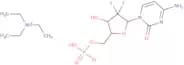
CAS:<p>6-Chloro-2-hydroxy-9-(2',3',5'-tri-O-acetyl-b-D-ribofuranosyl)purine is a novel nucleoside that has been shown to have anticancer activity. It is synthesized by the condensation of 2,6 dichloropurine with 3,5 diacetyl b ribofuranosyl chloride in the presence of triethylamine and pyridine. The compound has been shown to inhibit viral replication and induce apoptosis in cancer cells. 6C2H9(2',3',5'-tri-O-acetylb-D-ribofuranosyl)purine may also be useful for the treatment of human immunodeficiency virus (HIV) infection.</p>Fórmula:C16H17ClN4O8Pureza:Min. 95%Peso molecular:428.78 g/mol2'-Deoxy-2',2'-difluorocytidine 5'-monophosphate triethylammonium salt
<p>2'-Deoxy-2',2'-difluorocytidine 5'-monophosphate triethylammonium salt is an antiviral nucleotide that inhibits the synthesis of viral DNA by competing with natural substrates. It has been shown to be a potent activator of the phosphoramidite method, which is a synthetic method for the production of oligonucleotides. This nucleotide is synthesized by reacting 2-deoxy-2',2'-difluorocytidine 5'-triphosphate with TEA in DMF. The CAS number for this compound is 62533-81-7 and it has a molecular weight of 298.3 Da.</p>Pureza:Min. 95%2,4,6-Trimethoxy-pyrimidine
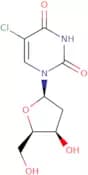
CAS:Producto controlado<p>2,4,6-Trimethoxy-pyrimidine is a heterobicyclic compound that contains three methoxy groups. It is a synthetic nucleobase that can be found in the nucleosides uridine and cytidine, as well as in other compounds such as pyrimidines. 2,4,6-Trimethoxy-pyrimidine has been shown to be reactive to nucleophilic solutes and has been used with success in the synthesis of lactams. The isomers of this compound have different efficiencies for reaction with nucleophilic solutes.</p>Pureza:Min. 95%3'-epi-5-chloro-2'-deoxyuridine
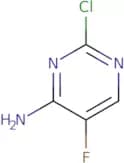
CAS:<p>3'-epi-5-chloro-2'-deoxyuridine is a nucleotide analog that has been shown to inhibit the growth of cells in tissue culture. It is not active against bacteria, but can be used as an antineoplastic agent for the treatment of cancer. 3'-epi-5-chloro-2'-deoxyuridine is metabolized by a number of enzymes, including mononucleotide reductase, thymidylate synthase, and cytosine deaminase. The reaction mechanism for this drug has been studied using nuclear dna polymerases and proteases. The metabolism of 3'-epi-5-chloro-2'-deoxyuridine results in its incorporation into DNA by means of an enzymatic reaction with DNA polymerase. The incorporation of the analog into DNA leads to cell death due to lysis or inhibition of protein synthesis.</p>Fórmula:C9H11ClN2O5Pureza:Min. 95%Peso molecular:262.65 g/mol4-Amino-2-chloro-5-fluoropyrimidine
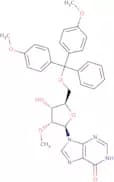
CAS:<p>4-Amino-2-chloro-5-fluoropyrimidine is a chlorinating agent that is used in the synthesis of 4,5-dichloropyrimidine and 4,6-dichloropyrimidine. It is also used for the synthesis of oxychloride by reacting with phosphorus oxychloride or phosphorus.</p>Pureza:Min. 95%5'-O-DMT-2'-O-methylinosine
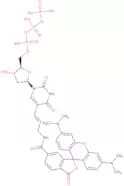
CAS:<p>5'-O-DMT-2'-O-methylinosine is a monophosphate nucleotide that has antiviral effects. It is synthesized from the synthetic nucleoside 5'-O-DMT-2'-deoxyuridine and 2'-O-methylinosine. The synthesis of 5'-O-DMT-2'-O-methylinosine is achieved through phosphoramidite chemistry, which produces a novel antiviral agent with high purity and quality. This compound has been shown to inhibit HIV replication in vitro, but further research is needed to determine its efficacy in vivo.</p>Fórmula:C32H32N4O7Pureza:Min. 95%Peso molecular:584.63 g/mol5-Aminoallyl- 2'-deoxyuridine 5'-triphosphate, labeled with 5/6-TAMRA - 1mM aqueous solution
CAS:5-Aminoallyl-2'-deoxyuridine 5'-triphosphate is a novel chemical compound that is modified with 5/6-TAMRA and has anticancer, antiviral, and antitumor properties. It is an activator of ribonucleosides and deoxyribonucleosides. CAS No. 151345-35-6Fórmula:C37H40N5O18P3Pureza:Min. 95%Peso molecular:935.66 g/mol5-Aminoallyl-2'-deoxyuridine
CAS:<p>5-Aminoallyl-2'-deoxyuridine is a bifunctional alkylating agent that has low affinity for DNA. It is used in the laboratory to measure the rate of synthesis of thymidylate, which is one of the four deoxythymidylate needed for DNA synthesis. 5-Aminoallyl-2'-deoxyuridine has been shown to be a stable complex with sulfoxide, which can be used as an alkylation agent in the laboratory. 5-Aminoallyl-2'-deoxyuridine has also been shown to have high affinity for cellular nucleic acids in l1210 cells and have a high uptake. The sequence of 5-aminoallyl-2'-deoxyuridine is: 5-(N-(2-(5-aminoallylamino)ethyl)-N-(carboxyethyl)glycine)-2',3',5'-triiod</p>Fórmula:C12H18N4O4Pureza:Min. 95%Forma y color:PowderPeso molecular:282.3 g/molN4-Benzoyl-5'-O-DMT-2'-ethylfluoro-5-methylcytidine
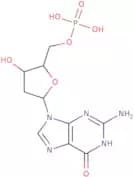
<p>N4-Benzoyl-5'-O-DMT-2'-ethylfluoro-5-methylcytidine is a synthetic nucleoside that inhibits the enzyme ribonucleotide reductase. It has antiviral and anticancer activities.</p>Pureza:Min. 95%2'-Deoxyguanosine-5'-monophosphate free acid
CAS:<p>2'-Deoxyguanosine-5'-monophosphate free acid (dGMP) is a nucleotide that can be used as a substrate to measure the activity of protein kinase C. It is also a precursor in DNA synthesis, and its incorporation into DNA is catalyzed by polymerase chain reaction. 2'-Deoxyguanosine-5'-monophosphate free acid has been shown to inhibit transcriptional regulation, which may be related to its interaction with nuclear DNA. Furthermore, it has been shown to have an antioxidant effect due to its ability to donate electrons. 2'-Deoxyguanosine-5'-monophosphate free acid has also been shown to react with sodium salts in plasma mass spectrometry experiments, and titration calorimetry experiments have shown that it reacts with calcium ions in vitro.br></p>Fórmula:C10H14N5O7PPureza:Min. 95%Peso molecular:347.22 g/molγ-[(6-Azidohexyl)-imido]-ATP sodium
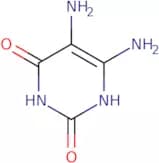
Please enquire for more information about γ-[(6-Azidohexyl)-imido]-ATP sodium including the price, delivery time and more detailed product information at the technical inquiry form on this pageFórmula:C16H28N9O12P3•NaxPureza:Min. 95%5,6-Diaminouracil
CAS:<p>5,6-Diaminouracil is a nitrogen-containing heterocyclic compound that inhibits bacterial enzymes. 5,6-Diaminouracil is used as a pharmaceutical preparation for the treatment of cancer, and has been shown to be effective against various cancers, including colon cancer and breast cancer. 5,6-Diaminouracil can inhibit the growth of cells by binding to DNA and inhibiting DNA synthesis. This drug also has potent antitumor activity. 5,6-Diaminouracil has been used in analytical chemistry as an analytical method for determining the purity of products such as pharmaceuticals or dyes. The potency of this drug was determined electrochemically using cyclic voltammetry and it was found to have a constant inhibitory effect on tumor cell growth at low concentrations.</p>Fórmula:C4H7ClN4O2Pureza:Min. 95%Peso molecular:178.58 g/mol2'-TFA-NH-dG
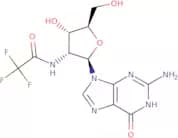
CAS:<p>2'-TFA-NH-dG is a novel nucleoside analog that is used as an antiviral and anticancer agent. It is a synthetic monophosphate with a modified 2'-hydroxyl group and a deoxyribose sugar backbone. It has been shown to inhibit HIV replication in vitro by interfering with the synthesis of viral DNA and RNA, which may be due to its ability to bind to the viral reverse transcriptase enzyme. 2'-TFA-NH-dG has also been shown to have anticancer activity against human A549 cells in vitro by inhibiting the proliferation of these cells. This drug is available for purchase as a white powder at CAS No. 144089-98-5.</p>Fórmula:C12H13F3N6O5Pureza:Min. 95%Peso molecular:378.26 g/mol6-Chloro-N4-methyl-4,5-pyrimidinediamine
CAS:<p>6-Chloro-N4-methyl-4,5-pyrimidinediamine is a monophosphate nucleotide. It is a synthetic compound that is used as an antiviral agent and as an anticancer drug. The compound has been shown to inhibit the replication of DNA by inhibiting the activity of DNA polymerase. 6-Chloro-N4-methyl-4,5-pyrimidinediamine also inhibits the synthesis of RNA by inhibiting the enzyme RNA polymerase. As a result, this compound is toxic to cells because it prevents protein production and replication. This product has high purity and high quality. It can be used in phosphoramidites, which are necessary for the production of DNA and RNA in cells.</p>Pureza:Min. 95%



![O6-Benzyl-N2,3-etheno-2'-phenoxythioxomethyl-3',5'-O-[tetrakis(isopropyl)-1,3-disiloxanediyl] guan…](/_next/image/?url=https%3A%2Fstatic.cymitquimica.com%2Fproducts%2F3D%2Fthumb-webp%2FNB16631.webp&w=3840&q=75)
![7-Benzyl-4-chloro-5,6,7,8-tetrahydropyrido[3,4-d]pyrimidine](/_next/image/?url=https%3A%2Fstatic.cymitquimica.com%2Fproducts%2F3D%2Fthumb-webp%2FNB57451.webp&w=3840&q=75)







![8-Bromo-9-[3',5'-O-(1,1,3,3-tetraisopropyl-1,3-disiloxanediyl)-2'-deoxy-b-D-ribofuranosyl]guanine](/_next/image/?url=https%3A%2Fstatic.cymitquimica.com%2Fproducts%2F3D%2Fthumb-webp%2FNB04668.webp&w=3840&q=75)








![γ-[(6-Azidohexyl)-imido]-ATP sodium](/_next/image/?url=https%3A%2Fstatic.cymitquimica.com%2Fproducts%2F3D%2Fthumb-webp%2FNA183120.webp&w=3840&q=75)