Nucleósidos
Se han encontrado 3569 productos de "Nucleósidos"
5’-O-DMT cET-N2-isopropylguanosine 3’-OCE amidite
CAS:Please enquire for more information about 5'-ODMT cEt G Phosphoramidite including the price, delivery time and more detailed product information at the technical inquiry form on this page
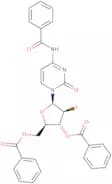
Fórmula:C46H56N7O9PPeso molecular:881.95 g/mol3',5'-Di-O-Benzoyl-N4-benzoyl-2'-deoxy-2'-fluoroarabinocytidine
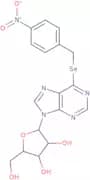
CAS:3',5'-Di-O-Benzoyl-N4-benzoyl-2'-deoxy-2'-fluoroarabinocytidine is a novel nucleoside analogue that has been synthesized to inhibit the activity of DNA polymerase. This compound is also an activator of diphosphate and ribonucleoside monophosphate. 3',5'-Di-O-Benzoyl-N4-benzoyl-2'-deoxy-2'-fluoroarabinocytidine has been shown to inhibit the replication of herpes simplex virus type 1 in cell culture and the replication of human cytomegalovirus in cell culture. 3',5'-Di-O-Benzoyl-N4-benzoyl-2'-deoxy-- 2'-fluoroarabinocytidine does not have any antiviral activity against HIV.Pureza:Min. 95%4'-Nitrobenzoyl-6-selenoinosine
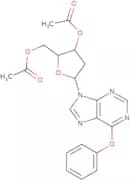
CAS:4'-Nitrobenzoyl-6-selenoinosine is a monophosphate nucleoside that is synthesized by the phosphoramidite method. It has been shown to have antiviral and anticancer activities. The compound inhibits the synthesis of DNA and RNA, which may be due to its ability to inhibit the enzyme ribonucleotide reductase. 4'-Nitrobenzoyl-6-selenoinosine has also been shown to activate cellular transcription factors such as NF-κB and AP-1, resulting in increased expression of genes involved in apoptosis.Fórmula:C17H15N5O7SePureza:Min. 95%Peso molecular:480.29 g/mol3',5'-Di-o-acetyl-O6-phenyl-2'-deoxyinosine
CAS:3',5'-Di-O-acetyl-O6-phenyl-2'-deoxyinosine is a nucleoside analog that has antiviral and anticancer activities. It is an activator of the enzyme ribonucleotide reductase and has been shown to be effective against herpes simplex virus type 1 and 2, cytomegalovirus, Epstein Barr virus, human immunodeficiency virus type 1, and Kaposi sarcoma cells. 3',5'-Di-O-acetyl-O6-phenyl-2'-deoxyinosine also inhibits the production of tumor necrosis factor alpha (TNFα), which can cause inflammatory reactions in the body. This compound is a modified nucleoside with high purity and quality. It has CAS number 133471-06-4.Fórmula:C20H20N4O6Pureza:Min. 95%Peso molecular:412.4 g/mol(5'S)-8,5'-Cyclodeoxyadenosine CE phosphoramidite
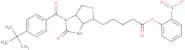
CAS:(5'S)-8,5'-Cyclodeoxyadenosine CE phosphoramidite is a nucleoside that is used in the synthesis of DNA. It is an analog of adenosine and has antiviral and anticancer properties. It also has been shown to inhibit the growth of certain types of cancer cells by inhibiting the production of deoxyribonucleosides. (5'S)-8,5'-Cyclodeoxyadenosine CE phosphoramidite can be used as a monophosphate or as a diphosphate for incorporation into DNA strands. This compound belongs to the group of modified nucleosides, which are synthetically produced compounds that are different from naturally occurring nucleosides found in DNA. (5'S)-8,5'-Cyclodeoxyadenosine CE phosphoramidite is purified and has high purity when purchased from us.Fórmula:C47H50N7O7PPureza:Min. 95%Peso molecular:855.92 g/molN1-(4-(t-Butyl)benzoyl)-D-(+)biotin 2-nitrophenyl ester
CAS:N1-(4-(t-Butyl)benzoyl)-D-(+)biotin 2-nitrophenyl ester is a novel nucleoside analogue and phosphoramidite. It has been modified to have an acyclic carbon chain with a 4-hydroxybenzoyl group at the C2 position. This compound is an activator of DNA synthesis, and it can be used for the synthesis of deoxyribonucleosides. The purity of this compound is 99%. The CAS number for this compound is 869354-61-0.
Fórmula:C27H31N3O6SPureza:Min. 95%Peso molecular:525.6 g/mol5'-O-DMT-N2-DMF-guanosine-3'-succinyl CPG 1000 Å
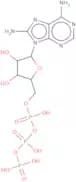
5'-O-DMT-N2-DMF-guanosine-3'-succinyl CPG 1000 Å is a nucleoside, modified with succinyldiimidazopropylcarbodiimide. It is an activator of phosphoramidites and is used in the synthesis of DNA and RNA. 5'-O-DMT-N2-DMF-guanosine-3'-succinyl CPG 1000 Å has shown anticancer and antiviral properties in vitro.Pureza:Min. 95%8-Aminoadenosine-5'-triphosphate sodium salt - 10mM aqueous solution
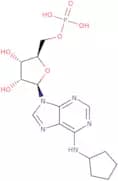
CAS:8-Aminoadenosine-5'-triphosphate sodium salt is a phosphoramidite that is used to synthesize antiviral nucleosides. It is a high quality product that can be used as an activator in the synthesis of ribonucleosides and deoxyribonucleosides. 8-Aminoadenosine-5'-triphosphate sodium salt has been shown to inhibit the growth of cancer cells.Fórmula:C10H17N6O13P3·xNaPureza:Min. 95%Peso molecular:522.2 g/molN6-Cyclopentyladenosine-5'-O-monophosphate
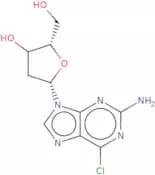
CAS:N6-Cyclopentyladenosine-5'-O-monophosphate is a nucleoside that is a substrate for RNA polymerase and is involved in the regulation of transcription. It also has been shown to be localized in the nucleus, cytoplasm, and cell membrane. N6-Cyclopentyladenosine-5'-O-monophosphate is used in diagnosis as an immunochemical reagent for the detection of matrix metalloproteinases (MMPs) and it can be used to measure MMP-9 activity. The monoclonal antibody (mAb) against this nucleoside can be used to detect N6-Cyclopentyladenosine-5'-O-monophosphate in biological samples such as human serum or cell culture.Fórmula:C15H22N5O7PPureza:Min. 95%Peso molecular:415.34 g/mol6-Chloro-9-(2-deoxy-b-L-erythro-pentofuranosyl)-9H-purin-2-amine
CAS:6-Chloro-9-(2-deoxy-b-L-erythro-pentofuranosyl)-9H-purin-2-amine is a novel antiviral and anticancer agent. It is an analog of adenosine that inhibits viral replication by inhibiting DNA synthesis. 6CePP2A is an activator of nucleoside deoxyribonucleotidyltransferase, which converts dATP to dTTP.Fórmula:C10H12ClN5O3Pureza:Min. 95%Peso molecular:285.69 g/molN4-Benzoyl-2'-deoxy-5'-O-DMT-2'-trifluoroacetamidocytidine
N4-Benzoyl-2'-deoxy-5'-O-DMT-2'-trifluoroacetamidocytidine is a novel nucleoside analog that is activated by ribonucleotide reductase. This compound inhibits the synthesis of DNA and RNA in cells, which leads to the inhibition of cellular proliferation. N4-Benzoyl-2'-deoxy-5'-O-DMT-2'-trifluoroacetamidocytidine has been shown to be effective against cancer cells, as well as antiviral and antiretroviral activity. It is also active against drug resistant strains of HIV.Fórmula:C39H35F3N4O8Pureza:Min. 95%Peso molecular:744.71 g/mol2-(sec-Butylthio)pyrimidine-5-carbaldehyde
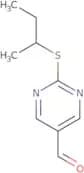
CAS:2-(sec-Butylthio)pyrimidine-5-carbaldehyde is a molecule that inhibits cell growth and angiogenesis. It was found to inhibit the phosphorylation of specific proteins, leading to the inhibition of cell growth and angiogenesis. This compound has been shown to be effective against prostate cancer cells in vitro and in vivo, as well as in a mouse model for breast cancer. In this model, the drug inhibited tumor growth without any apparent toxicity to normal tissues. 2-(sec-Butylthio)pyrimidine-5-carbaldehyde has been tested as a potential antiangiogenic agent in mice, with results showing no adverse effects on animals.Fórmula:C9H12N2OSPureza:Min. 95%Peso molecular:196.27 g/mol4-(Dimethoxymethyl)pyrimidine
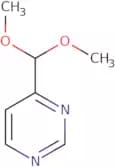
CAS:4-(Dimethoxymethyl)pyrimidine is a nitrogen heterocycle that is prepared by the reaction of formamide and nitrate. This compound has been shown to inhibit the replication of viruses such as HIV, herpes simplex virus type 2 (HSV-2), or vesicular stomatitis virus (VSV). 4-(Dimethoxymethyl)pyrimidine also binds to uracil in RNA, inhibiting RNA synthesis and leading to cell death. This compound can also be used as a precursor for the preparation of 2-aminopyrimidine, which is used in the synthesis of other compounds. 4-(Dimethoxymethyl)pyrimidine is used in organic synthesis for the preparation of benzene derivatives, such as nitrobenzene. This compound can also be synthesized by reacting formamide with toluene in an ultrasonic bath.
Fórmula:C7H10N2O2Pureza:Min. 95%Peso molecular:154.17 g/mol4-Amino-1-(2',3',5'-tri-O-tert-butyldimethylsilyl-b-D-ribofuranosyl)-imidazo[4,5-c]pyridine
CAS:4-Amino-1-(2',3',5'-tri-O-tert-butyldimethylsilyl-b-D-ribofuranosyl)-imidazo[4,5-c]pyridine is a novel nucleoside analogue that has high purity and high quality. It is an activator of DNA synthesis, diphosphate and monophosphate of deoxyribonucleosides, ribonucleosides and analogues. 4-Amino-1-(2',3',5'-tri-O-tert-butyldimethylsilyl-b-D-ribofuranosyl)-imidazo[4,5-c]pyridine has been shown to have antiviral activities against herpes simplex virus type 1 (HSV1) in cell culture.Fórmula:C29H56N4O4Si3Pureza:Min. 95%Peso molecular:609.04 g/mol4',5'-Didehydro-2',5'-dideoxy-2'-fluorouridine
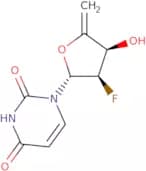
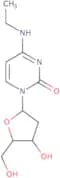
CAS:4',5'-Didehydro-2',5'-dideoxy-2'-fluorouridine is a monophosphate of the nucleoside 5FU. It is an antiviral and anticancer agent that inhibits viral DNA synthesis by competitively inhibiting the activity of thymidylate synthase, which converts dUMP to dTMP. 4',5'-Didehydro-2',5'-dideoxy-2'-fluorouridine also induces apoptosis in neoplastic cells. This compound has high purity and quality, and can be used as a phosphoramidite for the synthesis of modified oligonucleotides.Fórmula:C10H10FNO4Pureza:Min. 95%Peso molecular:227.19 g/molN4-Ethyl-2'-deoxycytidine
CAS:N4-Ethyl-2'-deoxycytidine is a novel nucleoside analog that inhibits the activity of DNA polymerase. It is used as an anticancer, antiviral and antiretroviral agent. N4-Ethyl-2'-deoxycytidine has been shown to be active against herpes simplex virus type 1 (HSV-1), HSV-2, cytomegalovirus (CMV), human immunodeficiency virus type 1 (HIV-1) and HIV-2 in vitro. This drug also has antiangiogenic properties due to its ability to inhibit the synthesis of vascular endothelial growth factor A. N4-Ethyl-2'-deoxycytidine is a modified nucleoside that can be phosphorylated by cellular enzymes, which activates it by converting it into a monophosphate or diphosphate form. This drug inhibits the production of RNA from DNA and also prevents protein
Fórmula:C11H17N3O4Pureza:Min. 95%Peso molecular:255.27 g/molN6-Monobutyryl-2'-deoxyadenosine 3',5'-cyclic monophosphate sodium salt
CAS:N6-Monobutyryl-2'-deoxyadenosine 3',5'-cyclic monophosphate sodium salt is a novel antiviral and anticancer agent that is a synthetic nucleoside analogue. It has been shown to be effective at inhibiting the growth of human cancer cells in vitro and in vivo. N6-Monobutyryl-2'-deoxyadenosine 3',5'-cyclic monophosphate sodium salt binds to viral RNA, resulting in inhibition of protein synthesis and cell death.Fórmula:C14H18N5O6P·NaPureza:Min. 95%Peso molecular:406.29 g/mol4-Amino-6-hydroxy-2-methylpyrimidine
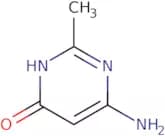
CAS:4-Amino-6-hydroxy-2-methylpyrimidine (4AMMP) is a heterocyclic compound that belongs to the group of pyrimidines. It has been shown to react with morpholine and acrylic acid in an oxidation sequence. The reaction proceeds through an elimination, forming formaldehyde, which condenses with hydrolyzed piperazine to give the final product. 4AMMP can also be alkylated with a variety of reagents such as methyl iodide or dimethyl sulfate.
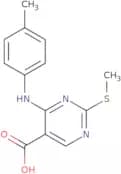
Fórmula:C5H7N3OPureza:Min. 95%Forma y color:PowderPeso molecular:125.13 g/mol2-(Methylthio)-4-(P-Tolylamino)Pyrimidine-5-Carboxylic Acid
CAS:2-(Methylthio)-4-(P-tolylamino)pyrimidine-5-carboxylic acid is an anticancer drug that is a novel, modified nucleoside. It has been shown to be active as a monophosphate and diphosphate in vitro. 2-(Methylthio)-4-(P-tolylamino)pyrimidine-5-carboxylic acid has also been shown to have antiviral activity against HIV and herpes simplex virus type 1 (HSV1).Fórmula:C13H13N3O2SPureza:Min. 95%Peso molecular:275.33 g/mol2'-Deoxy-5'-DMT-5-[3-(trifluoroacetylamino)-1-propynyl]-uridine 3'-CE phosphoramidite
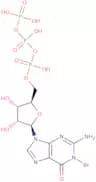
CAS:2'-Deoxy-5'-DMT-5-[3-(trifluoroacetylamino)-1-propynyl]-uridine 3'-CE phosphoramidite is a novel modified nucleoside that is synthesized by the reaction of 2'-deoxy-5'-DMT-5-[3-(trifluoroacetylamino)-1-propynyl] uridine with bis(2,4,6-trimethylbenzoyl)phosphine and then with tetrazole. This product inhibits the synthesis of viral RNA and DNA and has been shown to be effective against cancer cells in vitro.Fórmula:C44H49F3N5O9PPureza:Min. 95%Peso molecular:879.86 g/mol8-Bromoguanosine-5'-triphosphate sodium salt - 10 mM aqueous solution
CAS:8-Bromoguanosine-5'-triphosphate sodium salt is a nucleotide analog that inhibits the enzyme ribonucleotide reductase. This drug inhibits bacterial growth by interfering with protein synthesis and cell division. It binds to the purine riboswitch, which is an allosteric regulatory binding site on the ribosome, inactivating it. 8-Bromoguanosine-5'-triphosphate sodium salt also binds to the active site of bacterial RNA polymerase and inhibits DNA synthesis. The activity of this drug has been shown using a bacteriophage system in which the enzyme protein synthesis was inhibited by 8-bromoguanosine-5'-triphosphate sodium salt.Fórmula:C10H15N5O14P3Br·xNaPureza:Min. 95%Peso molecular:602.08 g/mol3'-Chloro-3'-deoxy-5'-O-tritylthymidine
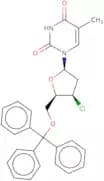
CAS:3'-Chloro-3'-deoxy-5'-O-tritylthymidine (3CT) is an antiviral and anticancer drug that is a modified nucleoside. It is synthesized by reacting 3'-chloro-5'-O-tritylthymidine with trichloroacetonitrile. 3CT inhibits the synthesis of DNA and RNA, which may have antiviral and anticancer effects. It can be used to treat hepatitis B virus, herpes simplex virus, human papillomavirus, Epstein-Barr virus, and Kaposi's sarcoma. 3CT has been shown to be effective in treating cancer cells in culture by inhibiting DNA synthesis.Fórmula:C29H27ClN2O4Pureza:Min. 95%Peso molecular:503 g/mol2,6-Dichloro-9-(3',5'-di-O-benzoyl-2'-deoxy-2'-fluoro-a-D-arabinofuranosyl)purine
2,6-Dichloro-9-(3',5'-di-O-benzoyl-2'-deoxy-2'-fluoro-a-D-arabinofuranosyl)purine is a nucleoside that is used in the synthesis of antiviral drugs. It is a modified monophosphate with a 3',5'-di-O-benzoyl group and 2'-deoxyribose. This substance can be prepared from the corresponding 2,6-dichloropurine by reaction with chloroacetaldehyde diethyl acetal. 2,6 Dichloro 9-(3',5'-di-O-benzoyl) purine has been shown to have anticancer activity against various human cancer cell lines in vitro and in vivo.Pureza:Min. 95%1,5-Anhydro-2,3-dideoxy-2-(N2-isobutyrylguanidin-1-yl)-D-glucitol
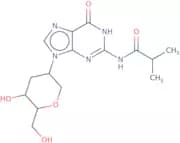
1,5-Anhydro-2,3-dideoxy-2-(N2-isobutyrylguanidin-1-yl)-D-glucitol is a novel, activator ribonucleosides deoxyribonucleosides diphosphate phosphoramidites modified anticancer antiviral monophosphate nucleosides synthetic high purity CAS No. It has been shown to have anticancer and antiviral properties. This compound also inhibits the replication of HIV in vitro.Fórmula:C15H21N5O5Pureza:Min. 95%Peso molecular:351.37 g/mol8-Amino-2'-deoxy-N6,N8-di-DMF-5'-O-DMT-adenosine 3'-CE phosphoramidite
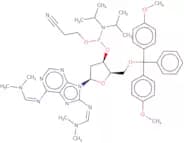
CAS:8-Amino-2'-deoxy-N6,N8-di-DMF-5'-O-DMT-adenosine 3'-CE phosphoramidite is a novel nucleoside analog with antiviral and anticancer properties. It is synthesized by reacting 8-aminoimidazo[2,1-b]thiazole 1,3(2H)-dione (AITD) with N6,N8-diisopropyl dATP to form the aminothiazole phosphate intermediate. This intermediate is then reacted with 5'-O-(4,4'-dimethoxytrityl)-2',3',5' triphosphate (DMTrP) to produce the desired product. The synthesis of 8AAODMTAP has been shown to be more efficient than other synthesized nucleosides due to its high purity and lack of impurities.Fórmula:C46H59N10O6PPureza:Min. 95%Peso molecular:879 g/mol2',3'-Dideoxyguanosine-5'-O-(1-thiotriphosphate)
CAS:2',3'-Dideoxyguanosine-5'-O-(1-thiotriphosphate) (2,3'-ddGTP) is a nucleoside that is synthesized using phosphoramidite chemistry. It has antiviral and anticancer activity, as well as the ability to activate cellular transcription. 2,3'-Dideoxyguanosine-5'-O-(1-thiotriphosphate) can be used in the synthesis of modified nucleosides or in the synthesis of novel nucleosides. The compound was found to inhibit DNA replication by binding to the enzyme ribonucleotide reductase. 2,3'-Dideoxyguanosine-5'-O-(1-thiotriphosphate) can also be used for DNA sequencing and as a cytotoxic agent in cancer chemotherapy.Fórmula:C10H16N5O11P3SPureza:Min. 95%Peso molecular:507.25 g/mol3'-Azido-2',3'-dideoxy-5'-O-DMT-5-methylcytidine
3'-Azido-2',3'-dideoxy-5'-O-DMT-5-methylcytidine (Zidovudine) is a nucleoside analog that inhibits the replication of human immunodeficiency virus type 1. It is phosphorylated by cellular enzymes to form the active triphosphate form, which incorporates into viral DNA and causes chain termination. Zidovudine has been used in the treatment of HIV infection and AIDS. This drug also has antiviral activity against other retroviruses such as HIV type 2 and measles virus, as well as some DNA viruses, such as herpes simplex type 1. Zidovudine may be useful for the treatment of cancer, particularly Kaposi's sarcoma.
Pureza:Min. 95%8-Bromo-N6-(dimethylaminomethylidene)-2'-deoxyadenosine
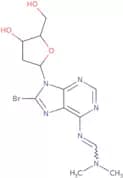
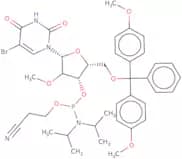
CAS:8-Bromo-N6-(dimethylaminomethylidene)-2'-deoxyadenosine is a phosphoramidite that is used in the preparation of antiviral nucleosides and monophosphate. It has been shown to have anticancer activity. 8-Bromo-N6-(dimethylaminomethylidene)-2'-deoxyadenosine is synthesized by reacting an acid halide with a 2'-deoxyribonucleotide. This reaction produces a 2'-bromo adenosine derivative, which is then reacted with dimethylamine to produce the desired product. The synthesis of 8-bromo-N6-(dimethylaminomethylidene)-2'-deoxyadenosine can be performed on a large scale using an automated process.Fórmula:C13H17BrN6O3Pureza:Min. 95%Peso molecular:385.22 g/mol5-Bromo-5'-O-DMT-2'-O-methyluridine 3'-CE phosphoramidite
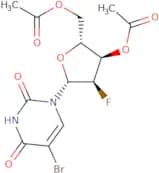
5-Bromo-5'-O-DMT-2'-O-methyluridine 3'-CE phosphoramidite is a novel, modified nucleoside and diphosphate that has antiviral activity. It is synthesized from 5-bromouracil and 2'-O-methyluridine by the use of a high purity reagent. The product is an anticancer agent that can be used to treat different types of cancer. This compound has also shown to have high purity and high quality.Fórmula:C40H48BrN4O9PPureza:Min. 95%Peso molecular:839.71 g/mol3',5'-Di-O-acetyl-5-bromo-2'-deoxy-2'-fluorouridine
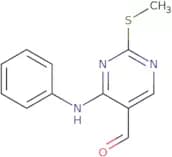
CAS:3',5'-Di-O-acetyl-5-bromo-2'-deoxy-2'-fluorouridine is a novel antiviral agent that has been synthesized as a high quality, high purity monophosphate. It is a modified nucleoside that is used to synthesize phosphoramidites. It has antiviral activity against herpes simplex virus type 1 and 2, and cytomegalovirus. 3',5'-Di-O-acetyl-5-bromo-2'-deoxy-2'-fluorouridine is also an inhibitor of the DNA polymerase enzyme and inhibits the synthesis of viral DNA in infected cells. This drug can be used for the treatment of infections caused by these viruses.Fórmula:C13H14BrFN2O7Pureza:Min. 95%Peso molecular:409.16 g/mol2-Methylsulfanyl-4-phenylamino-pyrimidine-5-carbaldehyde
CAS:2-Methylsulfanyl-4-phenylamino-pyrimidine-5-carbaldehyde is a Ribonucleside, Deoxyribonucleoside, Activator, Antiviral, Synthetic and Modified DNA Nucleoside. It has been shown to inhibit viral replication in vitro by interfering with the formation of the viral diphosphate. 2-Methylsulfanyl-4-phenylamino-pyrimidine-5-carbaldehyde is a ribonucleotide that is synthesized from commercially available starting materials. This compound has shown to be active against HIV type 1 virus in vitro and has been proposed as a potential antiviral agent for the treatment of AIDS.
2-Methylsulfanyl-4-phenylamino pyrimidine 5 carbaldehyde (2MSAP) was found to be active against HIV type 1 virus in vitro and has been proposed as a potential antiviral agent for the treatment ofFórmula:C12H11N3OSPureza:Min. 95%Peso molecular:245.3 g/mol5'-O-DMT-5-[N-(2-(trifluoroacetamido)ethyl)-3-E-acrylamido]-2'-deoxyuridine
CAS:5'-O-DMT-5-[N-(2-(trifluoroacetamido)ethyl)-3-E-acrylamido]-2'-deoxyuridine is a nucleoside analog that is an activator of DNA polymerase. It has been shown to have anticancer activity in vitro and in vivo. 5'-O-DMT-5-[N-(2-(trifluoroacetamido)ethyl)-3-E-acrylamido]-2'-deoxyuridine was found to inhibit the proliferation of leukemia cells, human colon cancer cells, and human prostate cancer cells. This compound also inhibits viral replication by affecting the synthesis of viral DNA and RNA. 5'-O-DMT-5-[N-(2-(trifluoroacetamido)ethyl)-3-E-acrylamido]-2'-deoxyuridine may be used as a research tool for studying the mechanism of action of antiviral drugs suchFórmula:C37H37F3N4O9Pureza:Min. 95%Peso molecular:738.74 g/mol2-Amino-8-(2-deoxy-β-D-ribofuranosyl)-imidazo[1,2-α]-1,3,5-triazin-4(8H)-one
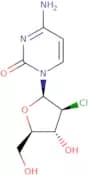
CAS:2-Amino-8-(2-deoxy-β-D-ribofuranosyl)-imidazo[1,2-α]-1,3,5-triazin-4(8H)-one is a modified nucleoside analog with the following structure: the core heterocyclic structure is a fused imidazole-triazine ring, there is a 2-amino group at position 2 of the imidazole ring and it has a 2-deoxy-β-D-ribofuranose sugar attached at the 8-position of the heterocyclic ring, making it structurally related to DNA nucleosides.Fórmula:C10H13N5O4Pureza:Min. 95%Forma y color:PowderPeso molecular:267.24 g/mol1-(2'-Chloro-2'-deoxy-b-D-arabinofuranosyl)cytosine
CAS:1-(2'-Chloro-2'-deoxy-b-D-arabinofuranosyl)cytosine is a synthetic, modified nucleoside that can be phosphorylated to its monophosphate form. It is an inhibitor of DNA synthesis and the replication of viral DNA. 1-(2'-Chloro-2'-deoxy-b-D-arabinofuranosyl)cytosine has been shown to have anticancer activity in vitro and in vivo. This drug is also active against some RNA viruses such as hepatitis B virus and human immunodeficiency virus type 1 (HIV).Fórmula:C9H12ClN3O4Pureza:Min. 95%Peso molecular:261.66 g/molN2-Isobutyryl-2'-O-(2-methylacetamido)guanosine
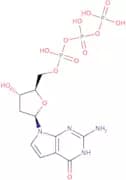
N2-Isobutyryl-2'-O-(2-methylacetamido)guanosine is a modified nucleoside with antiviral, anticancer and antiretroviral activity. It is a novel monophosphate that has been shown to be effective against hepatitis B and HIV. N2-Isobutyryl-2'-O-(2-methylacetamido)guanosine inhibits the synthesis of viral DNA by acting as an activator of DNA polymerases.Pureza:Min. 95%7-Deaza-2'-deoxyguanosine-5'-triphosphate lithium salt - 100mM aqueous solution
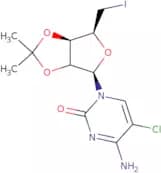
CAS:7-Deaza-2'-deoxyguanosine-5'-triphosphate lithium salt is a nucleoside analog that inhibits telomerase. It binds to the catalytic subunit of telomerase, which is an RNA-dependent DNA polymerase that synthesizes telomeres during DNA replication. This binding prevents the enzyme from extending the 3' end of the DNA strand, inhibiting cell proliferation and leading to apoptosis. Telomerase inhibition has been shown to have an inhibitory effect on insulin resistance in mice. 7-Deaza-2'-deoxyguanosine-5'-triphosphate lithium salt also inhibits protein kinases, but does not inhibit phosphatases or other enzymes.Fórmula:C11H17N4O13P3·xLiPureza:Min. 95%Peso molecular:506.19 g/mol5-Chloro-5'-deoxy-5'-iodo-2',3'-O-isopropylidenecytidine
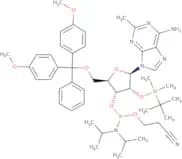
5-Chloro-5'-deoxy-5'-iodo-2',3'-O-isopropylidenecytidine is a nucleoside analog that has antiviral, anticancer, and high purity properties. It is an activated nucleotide that can be incorporated into DNA or RNA. 5-Chloro-5'-deoxy-5'-iodo-2',3'-O-isopropylidenecytidine is a modified nucleoside with the deoxyribose sugar replaced by an isopropylidene group. This modification prevents the drug from being metabolized and excreted from the body. The drug is used to treat various cancers such as leukemia and lymphoma, as well as herpes simplex virus infections. It also has been shown to have antimicrobial properties against bacteria, fungi, and viruses.Fórmula:C12H15ClIN3O4Pureza:Min. 95%Peso molecular:427.63 g/mol2'-O-tert-Butyldimethylsilyl-5'-O-DMT-C2-methyladenosine 3'-CE phosphoramidite
CAS:2'-O-tert-Butyldimethylsilyl-5'-O-DMT-C2-methyladenosine 3'-CE phosphoramidite is an antiviral agent that inhibits the synthesis of DNA. It can be used to treat AIDS, because it inhibits the reverse transcriptase enzyme. 2'-O-tert-Butyldimethylsilyl-5'-O-DMT-C2-methyladenosine 3'-CE phosphoramidite also has anticancer properties, which is due to its ability to inhibit RNA and protein synthesis in cancer cells. This compound has been synthesized by reacting 5'-O-DMT cytidine with methylacetoacetate under standard conditions. The modified nucleoside has a high purity, high quality, and novel structure.
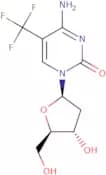
Fórmula:C47H64N7O7SiPureza:Min. 95%Peso molecular:867.14 g/mol2'-Deoxy-5-(trifluoromethyl)cytidine
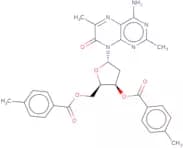
CAS:2'-Deoxy-5-(trifluoromethyl)cytidine is a synthetic nucleoside analogue that inhibits the cytidine deaminase enzyme. It is used in the treatment of some types of leukemia and other cancers. The compound, which has a trifluoromethyl group on the 2' position, binds to the active site of cytidine deaminase and prevents it from functioning. This leads to an accumulation of thymidylate, which is required for DNA synthesis. The tumor tissue also contains high concentrations of this drug and its metabolites, making it more effective against cancer cells than normal cells. 2'-Deoxy-5-(trifluoromethyl)cytidine has been shown to inhibit anabolism in tumor tissue in the presence of high concentrations of phosphorylases, which are enzymes that catalyze reactions that break down carbohydrates and proteins into smaller molecules such as glucose or amino acids.Fórmula:C10H12F3N3O4Pureza:Min. 95%Peso molecular:295.22 g/mol4-Amino-2,6-dimethyl-8-(2'-deoxy-3',5'-di-O-toluoyl-a-D-ribofuranosyl)-7-pteridone
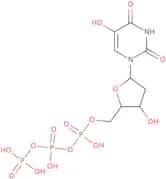
4-Amino-2,6-dimethyl-8-(2'-deoxy-3',5'-di-O-toluoyl-a-D-ribofuranosyl)-7-pteridone is a novel nucleoside that has been modified by the addition of a 2'-deoxy, 3',5'-di-O-toluoyl group on the sugar moiety. This modification increases the stability of 4AMDT in serum and enhances its antiviral activity against DNA and RNA viruses. It also inhibits the proliferation of cancer cells and induces cell death by inhibiting protein synthesis.Fórmula:C29H29N5O6Pureza:Min. 95%Peso molecular:543.57 g/mol2'-Deoxy-5-hydroxyuridine 5'-triphosphate
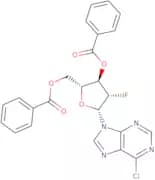
CAS:2'-Deoxy-5-hydroxyuridine 5'-triphosphate (doxorubicin) is a cytotoxic and chemotherapeutic agent that interferes with DNA replication. It is an oxidized form of the natural pyrimidine base thymine. The drug blocks DNA synthesis by preventing the incorporation of uracil into the newly synthesized strand, which causes strand breaks. Doxorubicin has been shown to be effective in treating a variety of cancers, including those of the breast, ovaries, bladder, and stomach. This drug can also cause severe side effects such as heart damage and hearing loss due to its interaction with cellular oxygen metabolism.Pureza:Min. 95%6-Chloro-9-(3',5'-di-O-benzoyl-2'-Deoxy-2'-fluoro-b-D-arabinofuranosyl)purine
CAS:6-Chloro-9-(3',5'-di-O-benzoyl-2'-Deoxy-2'-fluoro-b-D-arabinofuranosyl)purine is a nucleoside that is used as an anticancer and antiviral agent. It is synthesized from 9-(3',5'-di-O-benzoyl)-2'-deoxyribofuranosyl chloride, which is then chlorinated to form 6-chloro purine. This product has been shown to be active against human DNA tumor cells and other viruses in vitro. 6CPA, like other nucleosides, can be phosphorylated on the 3' or 5' position of the sugar moiety, yielding monophosphate or diphosphate derivatives respectively. The monophosphate derivative of 6CPA has a higher cytotoxicity than the diphosphate derivative. The deoxyribose sugar moiety can
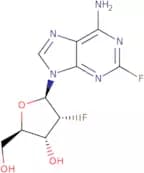
Fórmula:C24H18CIFN4O5Pureza:Min. 95%Peso molecular:496.89 g/mol9-(2'-Deoxy-2'-fluoro-b-D-ribofuranosyl)-2-fluoroadenine
CAS:9-(2'-Deoxy-2'-fluoro-b-D-ribofuranosyl)-2-fluoroadenine is a modified nucleoside that is used as an antiviral and anticancer agent. It acts as an activator for the synthesis of DNA, RNA, and protein. 9-(2'-Deoxy-2'-fluoro-b-D-ribofuranosyl)-2-fluoroadenine also inhibits the growth of cancer cells by interfering with the division process. This drug is synthesized from 9-(5'-deoxy-5'-iodo-b-D-ribofuranosyl) -2,6 difluoro adenine (diFdA). The Ribonucleosides are then prepared in a similar manner to other nucleosides by using phosphoramidites. The product is then purified using HPLC.
Fórmula:C10H11F2N5O3Pureza:Min. 95%Forma y color:White PowderPeso molecular:287.23 g/molChemical phosphorylating reagent (cpr)
CAS:Chemical phosphorylating reagent (CPR) is a powerful tool for the study of kinases, which are enzymes that regulate cellular processes such as cell division and apoptosis. CPR has been shown to be effective in inhibiting the activity of certain kinases that are involved in tumor growth and progression. It has also been used as an anticancer agent, inducing apoptosis in cancer cells. CPR is an analog of toxaphene and labetalol, two compounds with known kinase inhibitor activity. This reagent has been tested on human urine samples and Chinese hamster ovary cells, demonstrating its potential as a valuable research tool for studying kinase signaling pathways and developing new cancer therapies.Fórmula:C5H10O5Pureza:Min. 95%Peso molecular:150.13 g/molThymidine-5'-diphosphate-6-deoxy-D-allose
Thymidine-5'-diphosphate-6-deoxy-D-allose (TDP) is a high quality monophosphorylated nucleoside that is used as an activator, anticancer, and antiviral agent. TDP has been modified to improve the efficacy and safety of cancer treatments by enhancing the cytotoxicity of chemotherapeutics. TDP also has antiviral properties and can be used in the treatment of HIV infections by inhibiting viral replication.
Pureza:Min. 95%3'-Azido-3'-deoxy-5-methylcytidine
CAS:3'-Azido-3'-deoxy-5-methylcytidine (AZDMC) is a novel nucleoside analog that inhibits viral replication. AZDMC is an activator of cellular DNA synthesis, which is essential for the replication of DNA and the production of RNA. It also has antiviral activity against influenza A and B viruses. The chemical name for AZDMC is 3'-azido-3'-deoxy-5-methylcytidine monophosphate (AMP). The CAS number for AZDMC is 1282040-14-5. It can be synthesized with high purity and quality by Ribonucleosides, Modified, Deoxyribonucleosides, Nucleosides, Phosphoramidites.
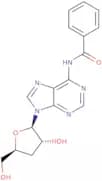
Pureza:Min. 95%N6-Benzoyl-3'-deoxyadenosine
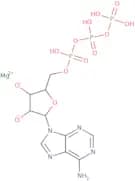
CAS:N6-Benzoyl-3'-deoxyadenosine is a nucleoside analogue that is used as a substrate for DNA polymerase. The efficiency of this compound has been shown to be higher than other nucleotides. In addition, N6-Benzoyl-3'-deoxyadenosine has been shown to be an efficient donor in the ligation reaction and can also act as a competitive inhibitor of topoisomerase II. N6-Benzoyl-3'-deoxyadenosine is a scissile substrate for DNA topoisomerase II and cleaves at the same site as dATP. This compound has been shown to be active against both Gram-positive bacteria and Mycobacterium tuberculosis with high selectivity.Fórmula:C17H17N5O4Pureza:Min. 95%Peso molecular:355.35 g/molAdenosine 5'-(tetrahydrogen triphosphate)
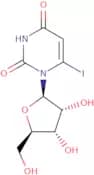
CAS:Adenosine is a nucleoside consisting of adenine and ribose. It is used in biochemical analysis to quantify the cytosolic Ca2+ concentration, which is an important cellular signal that regulates many cellular processes. Adenosine stimulates the uptake of Ca2+ by binding to the monophosphate-activated protein (AMPAR), which results in the opening of voltage-gated calcium channels. These channels allow Ca2+ to enter the cell, increasing its intracellular concentration. Adenosine also has been shown to stimulate muscle contraction through increased release of Ca2+. This drug also possesses inhibitory effects on synaptic transmission and may have anti-inflammatory properties due to its ability to inhibit proteolytic enzymes in muscle cells.Fórmula:C10H14MgN5O13P3Pureza:Min. 95%Peso molecular:529.47 g/mol6-Iodo-uridine
CAS:6-Iodo-uridine is an antiviral drug that is used to treat tuberculosis, influenza, and hepatitis. It has a propionyl group in place of the hydroxyl group on the pyrimidine ring. This substitution stabilizes the molecule and prevents it from being broken down by enzymes in the body. 6-Iodo-uridine can be synthesized from uridine through a cross-coupling reaction with formaldehyde and propionaldehyde. 6-Iodo-uridine can also be synthesized by coupling orotic acid 5′ monophosphate decarboxylase with formaldehyde.
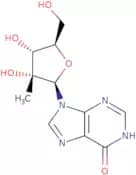
Fórmula:C9H11IN2O6Pureza:Min. 95%Peso molecular:370.1 g/mol2'-C-Methylinosine
CAS:2'-C-Methylinosine is an analog of 2'-deoxyinosine that is used as a prodrug for the treatment of hepatitis B virus infection. It has been shown to inhibit RNA synthesis in cell cultures by competitively inhibiting the activity of rna-dependent RNA polymerase. This inhibition leads to the accumulation of unprocessed, inactive ribonucleotides, which are eventually degraded by cellular enzymes. 2'-C-Methylinosine is an analog of 2'-deoxyinosine that has been modified at the C2 position with methyl groups (hence its name). The modification increases the stability and solubility of this molecule. Clinical trials have shown that 2'-C-Methylinosine can be used to treat hepatitis B virus infection when combined with other drugs such as lamivudine or entecavir.
Fórmula:C11H14N4O5Pureza:Min. 95%Peso molecular:282.25 g/mol




![4-Amino-1-(2',3',5'-tri-O-tert-butyldimethylsilyl-b-D-ribofuranosyl)-imidazo[4,5-c]pyridine](/_next/image/?url=https%3A%2Fstatic.cymitquimica.com%2Fproducts%2F3D%2Fthumb-webp%2FNA04493.webp&w=3840&q=75)

![2'-Deoxy-5'-DMT-5-[3-(trifluoroacetylamino)-1-propynyl]-uridine 3'-CE phosphoramidite](/_next/image/?url=https%3A%2Fstatic.cymitquimica.com%2Fproducts%2F3D%2Fthumb-webp%2FPD138044.webp&w=3840&q=75)



![5'-O-DMT-5-[N-(2-(trifluoroacetamido)ethyl)-3-E-acrylamido]-2'-deoxyuridine](/_next/image/?url=https%3A%2Fstatic.cymitquimica.com%2Fproducts%2F3D%2Fthumb-webp%2FND08236.webp&w=3840&q=75)
![2-Amino-8-(2-deoxy-β-D-ribofuranosyl)-imidazo[1,2-α]-1,3,5-triazin-4(8H)-one](/_next/image/?url=https%3A%2Fstatic.cymitquimica.com%2Fproducts%2F3D%2Fthumb-webp%2FNA145593.webp&w=3840&q=75)