Nucleósidos
Los nucleósidos son building blocks fundamentales de los ácidos nucleicos, compuestos por una base nitrogenada unida a una molécula de azúcar. En esta sección, puede encontrar una amplia variedad de nucleósidos esenciales para la investigación en biología molecular, bioquímica y farmacología. Estos compuestos juegan roles cruciales en la síntesis de ADN y ARN, y son vitales en varios procesos metabólicos. Los nucleósidos se utilizan para estudiar material genético, desarrollar terapias antivirales y anticancerígenas, y comprender los mecanismos celulares. En CymitQuimica, proporcionamos nucleósidos de alta calidad para apoyar sus necesidades de investigación y desarrollo, asegurando pureza y fiabilidad para sus aplicaciones experimentales.
Se han encontrado 3569 productos de "Nucleósidos"
Ordenar por
Pureza (%)
0
100
|
0
|
50
|
90
|
95
|
100
8-Azido-ATP-γ-biotin sodium
8-Azido-ATP is a novel nucleoside that has been shown to be an activator of DNA and RNA synthesis in human cells. It is synthesized by the enzymatic transfer of a gamma-biotin moiety from ATP to dATP, resulting in 8-azido-ATP. This drug has antiviral and anticancer activity and has been shown to inhibit the replication of HIV. The 8-azido-ATP can be used as an activator for purine nucleotide incorporation into DNA or RNA, which may help with cancer treatment or prevention. 8-Azido-ATP also inhibits the growth of certain viruses, such as herpes simplex virus type 1 (HSV1) and cytomegalovirus (CMV).Fórmula:C25H41N12O14P3S•NaxPureza:Min. 95%Forma y color:White/Off-White SolidPeso molecular:858.65 g/molN6-Benzoyl-9-(2'-deoxy-5’-O-DMT-2’-fluoro-b-D-arabinofuranosyl)adenine 3’-CE-phosphoramidite
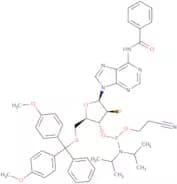
CAS:N6-Benzoyl-9-(2'-deoxy-5’-O-DMT-2’-fluoro-b-D-arabinofuranosyl)adenine 3’-CE-phosphoramidite is an antiviral agent that inhibits the replication of DNA. This compound was synthesized in the laboratory, and has not been found in nature. N6-Benzoyl-9-(2'-deoxy-5’-O--DMT--2’--fluoro--b--D--arabinofuranosyl)adenine 3’--CE--phosphoramidite is a novel compound that is effective against HIV and other viruses. It also has anticancer properties, which may be due to its ability to inhibit the transcription of genes involved in cell proliferation.Pureza:Min. 95%5-Hydroxymethyl-2’-β-C-methyluridine
CAS:5-Hydroxymethyl-2’C-methyluridine is a modified nucleoside that is an activator of cellular DNA synthesis. It is a synthetic compound that has been shown to be active against cancer cells in vitro. 5-Hydroxymethyl-2’C-methyluridine has also been used to inhibit the replication of various viruses, including herpes simplex virus type 1 and 2, cytomegalovirus, and human immunodeficiency virus type 1. This drug was shown to be safe and effective in clinical trials for the treatment of HIV/AIDS patients with no adverse side effects.Fórmula:C11H16N2O7Pureza:Min. 95%Forma y color:PowderPeso molecular:288.25 g/molN2-DMF-5'-O-DMT-2'-O-methylguanosine 3'-CE phosphoramidite
<p>N2-DMF-5'-O-DMT-2'-O-methylguanosine 3'-CE phosphoramidite is a novel ribonucleotide with high purity and high quality. It is an activator of DNA synthesis and can be used in the synthesis of DNA, monophosphate, and diphosphate. N2-DMF-5'-O-DMT-2'-O-methylguanosine 3'-CE phosphoramidite is used for the preparation of anticancer drugs, antiviral agents, and other nucleosides.</p>Fórmula:C44H55N8O8PPureza:Min. 95%Forma y color:White PowderPeso molecular:854.95 g/mol3’-Deoxy-3’-fluoro-N6-hydroxyadenosine
CAS:3’-Deoxy-3’-fluoro-N6-hydroxyadenosine (3'-DF) is an antiviral nucleoside that inhibits viral DNA synthesis and has shown cytotoxic effects in human cancer cells. 3'-DF is a novel chemical compound that was first synthesized in 1994. It is a nucleotide analog that is structurally related to adenosine, with the exception of the fluoro atom at position 6 on the ribose sugar. 3'-DF inhibits DNA polymerase and RNA polymerase by competitively binding to the ribonucleotide reductase enzyme, inhibiting the production of new RNA and DNA molecules. This compound also has been shown to inhibit protein synthesis in cancer cells without affecting normal cells.Pureza:Min. 95%1,2,3-Triazole-4-carboxamide, 5-b-D-ribofuranosyl-5'-triphosphate-nucleoside triethyl ammonium salt
<p>1,2,3-Triazole-4-carboxamide, 5-b-D-ribofuranosyl-5'-triphosphate-nucleoside triethyl ammonium salt is a phosphoramidite that belongs to the class of ribonucleosides. It has been shown to be effective against viral diseases and cancer. The novel modifications in this nucleoside include the incorporation of a triethyl ammonium salt. This nucleoside has been shown to be active against HIV and cytomegalovirus (CMV). 1,2,3-Triazole-4-carboxamide, 5-b-D ribofuranosyl -5'-triphosphate nucleoside triethyl ammonium salt also has anticancer properties.</p>Fórmula:C8H12N4O14P3Pureza:Min. 95%Peso molecular:481.12 g/mol1-(3'-azido-3'-deoxy-b-D-ribofuranosyl)-5-nitro-2(1H)-pyridinone
CAS:<p>1-(3'-azido-3'-deoxy-b-D-ribofuranosyl)-5-nitro-2(1H)-pyridinone is a nucleoside analog that has antiviral and anticancer activities. It has been shown to be an activator of cellular DNA polymerase γ, which is involved in the DNA chain elongation process during DNA replication. 1-(3'-azido-3'-deoxy-b-D-ribofuranosyl)-5-nitro-2(1H)-pyridinone also inhibits the activity of human T cell leukemia virus type 1 (HTLV1) reverse transcriptase by binding to its active site and preventing the synthesis of viral DNA. This compound has a high quality with a purity > 98% and is not radioactive or toxic.</p>Pureza:Min. 95%4’,5’-Didehydro-5’-deoxy-5-methyluridine
CAS:<p>4’,5’-Didehydro-5’-deoxy-5-methyluridine is a monophosphate nucleoside that is used as an antiviral agent. It has been shown to be active in the treatment of HIV and hepatitis B. 4’,5’-Didehydro-5’-deoxy-5-methyluridine also has anticancer properties and has been shown to inhibit cell proliferation in vitro by interfering with DNA synthesis. This product is an intermediate for the synthesis of other nucleosides and phosphoramidites.</p>Pureza:Min. 95%N4-Benzoyl-2'-deoxy-5'-O-pixylcytidine
CAS:N4-Benzoyl-2'-deoxy-5'-O-pixylcytidine is a novel nucleoside that is structurally related to cytidine. It is synthesized from 2'-deoxycytidine monophosphate and 4-benzoylpixyl chloride. N4-Benzoyl-2'-deoxy-5'-O-pixylcytidine has antiviral, antiangiogenic and anticancer properties, as well as the ability to inhibit the replication of DNA in cells. This compound can be used for synthesis of phosphoramidites, which are used in the production of oligonucleotides.Fórmula:C35H29N3O6Pureza:Min. 95%Peso molecular:587.64 g/mol2'-O-(N-Methylanthraniloyl)-3'-deoxy-adenosine-5'-triphosphate triethylammonium salt
CAS:2'-O-(N-Methylanthraniloyl)-3'-deoxy-adenosine-5'-triphosphate triethylammonium salt is a novel antiviral and anticancer compound. It is an analogue of adenosine, which inhibits the synthesis of viral RNA and DNA. This compound can also be used to treat certain types of cancer. 2'-O-(N-Methylanthraniloyl)-3'-deoxy-adenosine-5'-triphosphate triethylammonium salt is chemically synthesized by reacting anthranilic acid with 3',5'-dideoxyadenosine 5' triphosphoric acid.Fórmula:C18H23N6O13P3Pureza:Min. 95%Peso molecular:624.33 g/molN2-Isobutyryl-2'-deoxy-5'-O-pixylguanosine
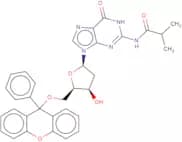
<p>N2-Isobutyryl-2'-deoxy-5'-O-pixylguanosine is a modified nucleotide that has been shown to be an activator of the protein kinase C and may have anticancer and antiviral properties. N2-Isobutyryl-2'-deoxy-5'-O-pixylguanosine is a synthetic nucleoside that is structurally similar to ribonucleosides and deoxyribonucleosides, but contains a modified base. The nucleotide is activated by phosphorylation and then undergoes hydrolysis in the cell to form diphosphate. This product has CAS No. 125965-04-3, purity at 99%, and high quality.</p>Fórmula:C33H31N5O6Pureza:Min. 95%Peso molecular:593.64 g/molTricyclic nucleoside phosphate
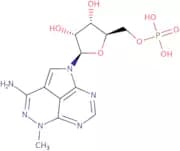
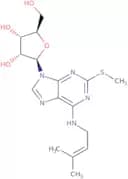
CAS:<p>Akt activation inhibitor</p>Fórmula:C13H17N6O7PPureza:Min. 95%Peso molecular:400.28 g/mol2-Methylthio-N6-isopentenyladenosine
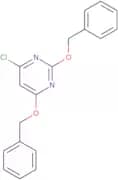
CAS:A nucleoside analogue of adenosine that arises from post-transcriptional modification. In humans, this is mediated by the enzyme CDK5RAP1 in mitochondrial transfer RNA (tRNA) at amino acid 37. Deficiency for this modification, for example due to CDK5RAP1 deficiency, leads to impaired mitochondrial protein synthesis. This has implications for mitochondrial diseases, as well as cancer, type II diabetes and vitiligo. Synthetic ms2i6A can be used to raise monoclonal antibodies against this nucleotide in vivo.Fórmula:C16H23N5O4SPureza:Min. 95%Forma y color:White PowderPeso molecular:381.45 g/mol2,4-bis(Benzyloxy)-6-chloropyrimidine
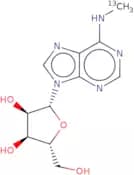
CAS:<p>This study investigates the association between the use of 2,4-bis(benzyloxy)-6-chloropyrimidine (BCP) and lowering in the risk of developing breast cancer in women. The study is based on a national dataset that includes all Danish women who were enrolled in the Danish Breast Cancer Screening Program from 1995 to 2009. The covariates collected include age, weight, height, family history of breast cancer, parity, and hormone replacement therapy. This research was conducted by researchers at various universities in Denmark.</p>Pureza:Min. 95%N-(13C-Methyl)adenosine
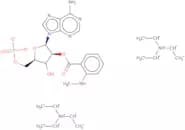
N-(13C-Methyl)adenosine is a modified nucleoside with antiviral activity. It is an analog of adenosine and has been shown to inhibit the replication of DNA viruses, such as herpes simplex virus type 1 and type 2, varicella zoster virus, and cytomegalovirus. This drug has also been found to be effective in animal models against human immunodeficiency virus (HIV) infection. N-(13C-Methyl)adenosine does not inhibit the replication of cellular RNA viruses such as influenza A virus or vesicular stomatitis virus.Pureza:Min. 95%Peso molecular:3,656.49 g/mol2'/3'-(N-Methylanthraniloyl)-adenosine-5'-monophosphate triethylammonium salt
CAS:<p>2'/3'-(N-Methylanthraniloyl)-adenosine-5'-monophosphate triethylammonium salt is an antiviral agent that is based on ribonucleosides. This drug has been shown to be effective against cancer and herpes simplex virus type 1 (HSV-1) and may have potential as a treatment for HIV. It also inhibits the growth of tumors in animal models. 2'/3'-(N-Methylanthraniloyl)-adenosine-5'-monophosphate triethylammonium salt is synthesized by reacting ribonucleosides with N-(2,2,2,-trimethylpropyl)anthranilic acid chloride in the presence of triethylamine. The resulting product can be purified by column chromatography or recrystallization.</p>Fórmula:C18H21N6O8PPureza:Min. 95%Peso molecular:480.37 g/mol3'-Azido-3'-deoxythymidine 5'-monophosphate sodium salt
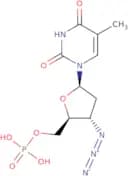
CAS:<p>3'-Azido-3'-deoxythymidine 5'-monophosphate sodium salt is a synthetic nucleoside that is structurally related to thymidine. It has antiviral and anticancer properties, as well as the potential for use in gene therapy. 3'-Azido-3'-deoxythymidine 5'-monophosphate sodium salt is active against herpes simplex virus type 1 (HSV-1) and HSV-2, human immunodeficiency virus type 1 (HIV-1), human papillomavirus types 16 and 18 (HPV), Epstein Barr Virus (EBV), and cytomegalovirus (CMV). 3'-Azido-3'-deoxythymidine 5'-monophosphate sodium salt inhibits the production of HIV by preventing the viral reverse transcriptase from synthesizing DNA from RNA.</p>Fórmula:C10H13N5NaO7PPureza:Min. 95%Peso molecular:369.23 g/mol5-Chloro-2'-deoxycytidine
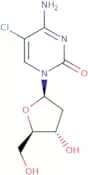
CAS:<p>5-Chloro-2'-deoxycytidine (5-Cl-dC) is a nucleoside analog that inhibits DNA synthesis by blocking the action of thymidylate synthase. It can be used in animal models to study bowel diseases, such as ulcerative colitis and Crohn's disease. 5-Cl-dC has been shown to be effective in treating the effects of radiation and chemical toxicity in HL60 cells, a type of human leukemia cell line. 5-Cl-dC has also been shown to enhance the cytotoxicity of eosinophil peroxidase, which is an enzyme that may be involved in the pathogenesis of asthma. This drug is currently being evaluated for its safety and efficacy in clinical trials involving patients with myelodysplastic syndrome or acute myeloid leukemia who are at risk for developing leukemia.</p>Fórmula:C9H12CIN3O4Pureza:Min. 95%Forma y color:PowderPeso molecular:261.67 g/mol3-(3-Amino-3-carboxypropyl)uridine
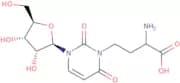
CAS:<p>3-(3-Amino-3-carboxypropyl)uridine is an uridine analog that is used in the study of protein synthesis. It can be used to determine the amino acid sequence of a protein, or to identify proteins with similar sequences. 3-(3-Amino-3-carboxypropyl)uridine can also be used to study enzymatic reactions, such as those involved in the synthesis of polypeptides. This molecule has been shown to produce disulfide bonds and form covalent bonds with other molecules. The three-dimensional structure of this molecule has been determined by NMR spectroscopy and X-ray crystallography.</p>Fórmula:C13H19N3O8Pureza:Min. 95%Forma y color:PowderPeso molecular:345.31 g/molCytidyl-3'-5'-guanosine ammonium
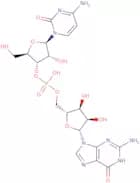
CAS:Cytidyl-3'-5'-guanosine ammonium salt is a modified nucleoside that has antiviral and anticancer properties. It is synthetically made by modifying the phosphate groups of cytidine and guanosine with phosphoramidites. Cytidyl-3'-5'-guanosine ammonium salt has been shown to activate protein kinase C, which may be related to its anticancer activity.Fórmula:C19H25N8O12PPureza:Min. 95%Forma y color:PowderPeso molecular:588.42 g/mol