Nucleósidos
Los nucleósidos son building blocks fundamentales de los ácidos nucleicos, compuestos por una base nitrogenada unida a una molécula de azúcar. En esta sección, puede encontrar una amplia variedad de nucleósidos esenciales para la investigación en biología molecular, bioquímica y farmacología. Estos compuestos juegan roles cruciales en la síntesis de ADN y ARN, y son vitales en varios procesos metabólicos. Los nucleósidos se utilizan para estudiar material genético, desarrollar terapias antivirales y anticancerígenas, y comprender los mecanismos celulares. En CymitQuimica, proporcionamos nucleósidos de alta calidad para apoyar sus necesidades de investigación y desarrollo, asegurando pureza y fiabilidad para sus aplicaciones experimentales.
Se han encontrado 3569 productos de "Nucleósidos"
Ordenar por
Pureza (%)
0
100
|
0
|
50
|
90
|
95
|
100
N4-Benzoyl-1-(a-D-mannopyranosyl)cytosine
N4-Benzoyl-1-(a-D-mannopyranosyl)cytosine is a modified deoxyribonucleoside that has antiviral and anticancer activities. It is a phosphoramidite, which can be converted to nucleosides using standard methods. N4-Benzoyl-1-(a-D-mannopyranosyl)cytosine is also an activator of the DNA polymerase enzyme and a high quality, novel anti-cancer drug.Fórmula:C17H19N3O7Pureza:Min. 95%Forma y color:White to off-white powder.Peso molecular:377.35 g/mol(2'R)-N-Benzoyl-2'-deoxy-2'-fluoro-2'-methylcytidine 3',5'-d
CAS:(2'R)-N-Benzoyl-2'-deoxy-2'-fluoro-2'-methylcytidine 3',5'-diphosphate (2'R)-N-benzoyl-2'-deoxy-2'-fluoro-2'-methylcytidine 3',5'-diphosphate) is a modified nucleoside that is an antiviral, anticancer, and activator of DNA synthesis. It has been shown to be the first synthetic nucleotide analogue to have significant activity against HIV in vitro. The synthesis of this compound starts with the diphosphate or monophosphate form of cytidine. The phosphate group is removed and replaced with a 2'R benzoyl group. This process is followed by fluorination and methylation steps. Finally, the 5' hydroxyl group is cleaved to give 2'R -N benzoyl 2'-deoxy-2'-fluoro-2'-Fórmula:C31H26FN3O7Pureza:Min. 95%Peso molecular:571.55 g/molN4-Benzoyl-2'-O-tert-butyldimethylsilyl-5'-O-DMT-cytidine 3'-CE phosphoramidite
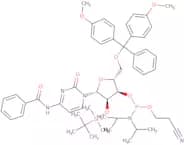
CAS:N4-Benzoyl-2'-O-tert-butyldimethylsilyl-5'-O-DMT-cytidine 3'-CE phosphoramidite is a high purity, Ribonuclesides, Anticancer, High quality, Antiviral, Nucleosides, CAS No. 118380-84-0, Deoxyribonucleosides, Modified, monophosphate and Phosphoramidites. It is an important reagent for the synthesis of DNA and RNA oligonucleotides. This product has novel properties as an anticancer drug and antiviral agent.Fórmula:C52H66N5O9PSiPureza:Min. 95%Forma y color:PowderPeso molecular:964.19 g/mol3'-Azido-3'-deoxythymidine-methyl-D3-2,3,4-tri-O-acetyl-b-D-glucuronide methyl ester
Producto controlado3'-Azido-3'-deoxythymidine-methyl-D3-2,3,4-tri-O-acetyl-b-D-glucuronide methyl ester (AZT) is a novel nucleoside compound that is a phosphoramidite. AZT has antiviral activity against various DNA and RNA viruses, including HIV. It is also effective in the treatment of cancer. AZT inhibits viral replication by competitively inhibiting the incorporation of diphosphate into viral DNA or RNA. This process prevents the synthesis of new virus particles and the spread of infection to healthy cells. In addition, AZT may inhibit tumor growth by interfering with cell division and DNA synthesis.Fórmula:C23H26D3N5O13Pureza:Min. 95%Peso molecular:586.52 g/molcis-Zeatin-o-glucoside riboside
CAS:<p>Cis-Zeatin-o-glucoside riboside is a plant metabolite that belongs to the class of phenylpropanoids. It is the product of the conversion of zeatin by a polyphenol oxidase. Cis-Zeatin-o-glucoside riboside has been found in plants, such as Eucomis and Alnifolia, at levels ranging from 0.2 to 1%. This metabolite is also present in animal tissues, such as rat brain and bovine mammary gland. The metabolic pathway for cis-Zeatin-o-glucoside riboside has been elucidated through tissue culture experiments with Eucomis and 24-epibrassinolide. The biosynthesis of this metabolite involves a two step process: first, an oxidative cleavage of zeatin to indole-3-acetyl l -aspartic acid and then conversion to</p>Fórmula:C21H31N5O10Pureza:Min. 95%Peso molecular:513.5 g/molO6-Chlorophenyl-I ce-phosphoramidite
CAS:Please enquire for more information about O6-Chlorophenyl-I ce-phosphoramidite including the price, delivery time and more detailed product information at the technical inquiry form on this pageFórmula:C52H64ClN6O8PSiPureza:Min. 95%Peso molecular:995.6 g/molTFA-ap-dU
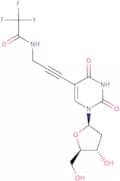
CAS:<p>TFA-ap-dU is a modified, ribonucleosides that are used in DNA synthesis. The polymerase chain reaction (PCR) technique can be used to generate a large number of copies of a specific sequence of nucleotides from the original DNA template. This product is used for antiviral and anticancer research. TFA-ap-dU has been shown to be effective against Hepatitis B virus and Human Immunodeficiency Virus (HIV). It is also an activator of DNA and RNA synthesis.</p>Fórmula:C14H14F3N3O6Pureza:Min. 95%Peso molecular:377.27 g/mol2-Chloro-3-deazaadenosine
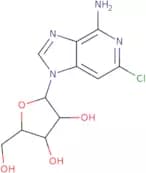
CAS:<p>2-Chloro-3-deazaadenosine is an antiviral drug that inhibits the synthesis of DNA by acting as a competitive inhibitor for adenosine. It has been shown to be effective in the treatment of hepatitis B virus and herpes simplex virus infections. 2-Chloro-3-deazaadenosine prevents the incorporation of the natural nucleoside adenosine into DNA, which leads to inhibition of viral replication and cell division. This drug also has been shown to inactivate liver cells in bovines, which may account for its toxicity. The synthesis of 2-chloroadenosine is difficult and laborious due to its glycosylation, making it more expensive than other analogues that are more easily synthesized.</p>Fórmula:C11H13ClN4O4Pureza:Min. 95%Forma y color:PowderPeso molecular:300.7 g/molBiotin-5-uridine-5'-triphosphate, lithium salt - 1 mM aqueous solution
<p>Biotin-5-uridine-5'-triphosphate, lithium salt - 1 mM aqueous solution is a monoclonal antibody. It is used in the diagnosis of lung cancer. The antibody binds to markers present on the tumor cells and can be detected by immunohistochemistry (IHC) or immunofluorescence (IF). The antibody may also be used to identify submucosal tumors that are not palpable.</p>Fórmula:C22H34N5O17P3S·xLiPureza:Min. 95%Peso molecular:765.52 g/molCarbodine
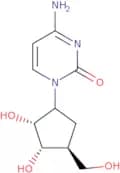
CAS:Carbocyclic analog of cytidineFórmula:C10H15N3O4Pureza:Min. 95%Forma y color:PowderPeso molecular:241.24 g/molThymidine 5'- triphosphate-3'-monophosphate
CAS:Thymidine 5'-triphosphate-3'-monophosphate is a nucleoside that is used in the synthesis of DNA. It is an activator of anticancer drugs, and has been shown to have antiviral properties. Thymidine 5'-triphosphate-3'-monophosphate can be used for the treatment of viral diseases such as herpes simplex virus type 1 (HSV-1), herpes simplex virus type 2 (HSV-2), cytomegalovirus (CMV), and human immunodeficiency virus (HIV) infection. This nucleoside also plays a role in the prevention of tumor growth and metastasis because it inhibits DNA synthesis.Fórmula:C10H18N2O17P4Pureza:Min. 95%Peso molecular:562.15 g/mol6-Chloropurine-9-b-D-glucoside
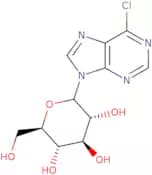
CAS:<p>6-Chloropurine-9-b-D-glucoside is a nucleoside that belongs to the family of modified nucleosides. It is used as an activator and a phosphoramidate in the synthesis of oligonucleotides. 6-Chloropurine-9-b-D-glucoside is also used in anticancer therapy because it inhibits DNA, RNA, and protein synthesis. 6CPG has antiviral activity against herpes virus and other viruses. This compound has been shown to have antiinflammatory activities by inhibiting the production of prostaglandins. 6CPG is also classified as a carcinogen by the International Agency for Research on Cancer (IARC).</p>Fórmula:C11H13CIN4O5Pureza:Min. 95%Peso molecular:420.16 g/mol2',3'-O-Isopropylidene-6-thioinosine
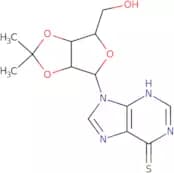
CAS:<p>2',3'-O-Isopropylidene-6-thioinosine is a fluorinated analogue of 6-thioguanine, which is an important precursor in the synthesis of nucleotides. The compound contains a fluorine atom at the 2' position and a sulfur atom at the 3' position of the ribose ring. It is soluble in organic solvents and can be used as a tracer for biochemical studies. The thermal stability of 2',3'-O-Isopropylidene-6-thioinosine has been demonstrated by molecular modelling and thermally induced filtration experiments. Molecular modeling has also shown that 2',3'-O-Isopropylidene-6-thioinosine binds to the active site of uridine phosphorylase, which is involved in pyrimidine salvage pathways in cells.<br>2',3'-O-Isopropylidene-6-thioinos</p>Fórmula:C13H16N4O4SPureza:Min. 95%Peso molecular:324.36 g/mol4-(2-Cyanoethylthio)-5'-O-DMT-thymidine 3'-CE phosphoramidite
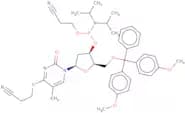
4-(2-Cyanoethylthio)-5'-O-DMT-thymidine 3'-CE phosphoramidite is a novel, modified nucleoside with antiviral activity. It is activated by the addition of a DMT group to its 5' end and has an anticancer effect. The monophosphate form of 4-(2-Cyanoethylthio)-5'-O-DMT-thymidine 3'-CE phosphoramidite has been shown to inhibit viral DNA synthesis in vitro and to be cytotoxic against human cancer cell lines. 4-(2-Cyanoethylthio)-5'-O-DMT- thymidine 3'-CE phosphoramidite is a high quality, high purity product that can be used as a nucleoside or nucleotide in anticancer drugs.Fórmula:C43H52N5O7PSPureza:Min. 95%Peso molecular:813.96 g/molN6-Acetyl-2'-deoxy-5'-O-DMT-adenosine 3'-CE phosphoramidite
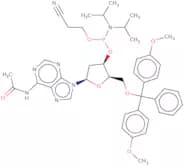
CAS:N6-Acetyl-2'-deoxy-5'-O-DMT-adenosine 3'-CE phosphoramidite is a novel, modified, activator with antiviral and anticancer properties. It is the monophosphate of the acetylated 2'-deoxyadenosine 3'-cyanoethylphosphoramidite and has been shown to be effective in inhibiting DNA synthesis in cell cultures. This product is synthesized using high purity reagents and purification techniques.Fórmula:C42H50N7O7PPureza:Min. 95%Forma y color:SolidPeso molecular:795.86 g/molN4-Acetyl-5'-O-DMT-2'-O-triisopropylsilyloxymethyl-5-methylcytidine 3'-CE phosphoramidite
CAS:N4-Acetyl-5'-O-DMT-2'-O-triisopropylsilyloxymethyl-5-methylcytidine 3'-CE phosphoramidite is a novel nucleoside phosphoramidite. It has been synthesized and purified by using the latest technology. It is a monophosphate, which is used in the synthesis of DNA, RNA, and other nucleic acids. It can be used for anticancer research and as a pharmaceutical intermediate.Fórmula:C52H74N5O10PSiPureza:Min. 95%Forma y color:White/Off-White SolidPeso molecular:988.23 g/molN6-Acetyl-2'-deoxy-5'-O-DMT-adenosine
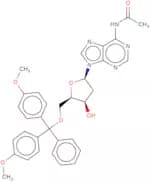
<p>N6-Acetyl-2'-deoxy-5'-O-DMT adenosine is a modified nucleoside that can be used as an antiviral or anticancer agent. It has been shown to inhibit the replication of HIV in vitro and in vivo, and also inhibits the replication of hepatitis B virus. N6-Acetyl-2'-deoxy-5'-O-DMT adenosine is active against cancer cells in vitro and inhibits the growth of human breast cancer xenografts in athymic mice. This compound also has high purity, high quality, and novel properties.</p>Fórmula:C33H33N5O6Pureza:Min. 95%Peso molecular:595.65 g/mol2’-Chloro-2’-deoxyadenosine
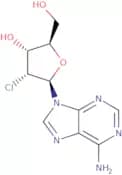
CAS:<p>2’-Chloro-2’-deoxyadenosine (2CDA) is a synthetic nucleoside analogue that is used as an antineoplastic agent for the treatment of non-Hodgkin lymphoma and histiocytic lymphoma. It is typically used in combination with other cytotoxic drugs. 2CDA has been shown to be effective against resistant tumor cell lines and has been used to treat patients with metastatic breast cancer, Hodgkin lymphoma, and multiple myeloma. The drug can cause thrombocytopenia, which may be due to its effects on platelets or bone marrow cells. Other toxicities include bone marrow suppression, nausea, vomiting, diarrhea, anorexia, and liver damage. Patients who are at risk for these toxicities should be closely monitored.</p>Fórmula:C10H12ClN5O3Pureza:Min. 95%Forma y color:PowderPeso molecular:285.69 g/mol5-O-Tritylinosine
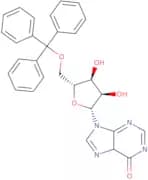
CAS:5-O-Tritylinosine is a modified nucleoside that has shown anticancer and antiviral properties. It is the monophosphate ester of 5-methyluracil and has been shown to inhibit DNA synthesis in vitro. 5-O-Tritylinosine has also been shown to inhibit the replication of herpes simplex virus type 1, which may be due to its ability to inhibit viral DNA polymerase.Fórmula:C29H26N4O5Pureza:Min. 95%Peso molecular:510.54 g/mol2-Amino-2'-deoxyadenosine 5'-triphosphate
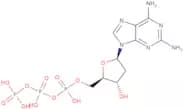
CAS:2-Amino-2'-deoxyadenosine 5'-triphosphate (2ADP) is a nucleotide that is involved in the synthesis of DNA. It is an important part of the process of DNA replication, as it provides the necessary energy to drive reactions that synthesize new DNA strands. It also has anti-viral properties and can be used as a molecular probe to detect acid. 2ADP is detectable with most common detection methods, such as UV/visible absorbance spectroscopy, fluorescence spectroscopy, and chemiluminescence. It is one of the three triphosphates found in cells and can be used to polymerize RNA by adding ribose phosphate groups to the sugar molecule in RNA. This reaction requires ATP, which produces AMP, ADP, and 2ADP.Fórmula:C10H17N6O12P3Pureza:Min. 95%Peso molecular:506.2 g/mol