Nucleósidos
Los nucleósidos son building blocks fundamentales de los ácidos nucleicos, compuestos por una base nitrogenada unida a una molécula de azúcar. En esta sección, puede encontrar una amplia variedad de nucleósidos esenciales para la investigación en biología molecular, bioquímica y farmacología. Estos compuestos juegan roles cruciales en la síntesis de ADN y ARN, y son vitales en varios procesos metabólicos. Los nucleósidos se utilizan para estudiar material genético, desarrollar terapias antivirales y anticancerígenas, y comprender los mecanismos celulares. En CymitQuimica, proporcionamos nucleósidos de alta calidad para apoyar sus necesidades de investigación y desarrollo, asegurando pureza y fiabilidad para sus aplicaciones experimentales.
Se han encontrado 3569 productos de "Nucleósidos"
Ordenar por
Pureza (%)
0
100
|
0
|
50
|
90
|
95
|
100
N6-Benzoyl-3'-deoxy-5'-O-DMT-adenosine
CAS:N6-Benzoyl-3'-deoxy-5'-O-DMT-adenosine is a modified nucleoside that has been synthesized to be an activator of ribonucleotide reductase. This product can be used in the preparation of oligoribonucleotides or phosphoramidites for therapeutic purposes. N6-Benzoyl-3'-deoxy-5'-O-DMT-adenosine is also a novel antiviral agent with anticancer activity.Fórmula:C38H35N5O6Pureza:Min. 95%Peso molecular:657.71 g/mol2'-O-tert-Butyldimethylsilyl-5'-O-DMT-N6-methyladenosine 3'-CE phosphoramidite
<p>2'-O-tert-Butyldimethylsilyl-5'-O-DMT-N6-methyladenosine 3'-CE phosphoramidite is a novel, synthetic phosphoramidite that is used as an activating group for the synthesis of DNA. This nucleoside has antiviral and anticancer properties. It is also a ribonucleoside that has been modified to include a tertiary butyl dimethyl silyl group and an N6 methyl adenosine moiety.</p>Fórmula:C47H64N7O7PSiPureza:Min. 95%Forma y color:White to off-white solid.Peso molecular:898.11 g/mol3'-Epi gemcitabine
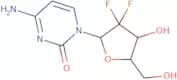
CAS:3'-Epi-GEMCITABINE is a nucleoside phosphoramidite that is used in the synthesis of DNA and RNA. It is an antiviral agent and also has anticancer activity. 3'-Epi-GEMCITABINE inhibits the growth of cells by inhibiting DNA synthesis, which leads to cell death. The chemical name for 3'-epigemcitabine is 2',3'-dideoxyinosine monophosphate. 3'-Epi-GEMCITABINE can be synthesized from 2',3'-dideoxyinosine monophosphate and 5-bromo-2'-deoxyuridine diphosphate.Fórmula:C9H11F2N3O4Pureza:Min. 95%Peso molecular:263.2 g/mol3'-O-Propargylguanosine
<p>3'-O-Propargylguanosine is a ribonucleoside that is structurally related to guanosine. It has antiviral and anticancer activities, but its most important function is as a substrate for the synthesis of DNA and RNA. The compound is used in the preparation of nucleosides and nucleotides, which are used in DNA synthesis. 3'-O-Propargylguanosine can be synthesized from diphosphate, phosphoramidites, or modified monophosphate. The CAS number for this product is 583-85-4.</p>Fórmula:C13H15N5O5Pureza:Min. 95%Forma y color:PowderPeso molecular:321.29 g/mol5’-O-DMT-N2-isobutyryl-2’-O-propargylguanosine
CAS:5’-O-DMT-N2-isobutyryl-2’-O-propargylguanosine is an antiviral, anticancer, and nucleoside monophosphate. It is a novel and modified nucleoside. This product has high purity, high quality, and is also a phosphoramidite.Pureza:Min. 95%2'-Deoxyguanosine-5'-triphosphate sodium salt - 100mmol solution
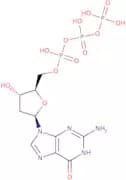
CAS:<p>2'-Deoxyguanosine-5'-triphosphate sodium salt is a triphosphate with antiviral and antifungal activity. It has been shown to inhibit the proliferation of HL60 cells and induce apoptosis in IL-2 receptor-bearing cells. The compound inhibits the growth of opportunistic fungi, such as Aspergillus niger and Candida albicans, by binding to deoxyguanosine residues in DNA. The compound also blocks polymerase activity, preventing DNA replication. 2'-Deoxyguanosine-5'-triphosphate sodium salt is used as a model system for studying the binding of nucleoside analogs to DNA. This drug is prepared as an injection solution for intravenous administration.</p>Fórmula:C10H16N5O13P3Pureza:Min. 95%Peso molecular:507.18 g/molMethyl 2,4-dimethoxypyrimidine-5-carboxylate
CAS:<p>Methyl 2,4-dimethoxypyrimidine-5-carboxylate is a novel anticancer drug that inhibits the growth of cancer cells by blocking DNA polymerase. It is a monophosphate nucleoside analogue that is phosphorylated to methyl 2,4-dimethoxypyrimidine-5′-diphosphate. This compound has been shown to be more effective than other nucleosides in inhibiting the growth of human leukemia cells and it may have potential as a therapeutic agent for treatment of some forms of cancer.</p>Pureza:Min. 95%1-(2'-Deoxy-5'-O-DMT-3'-O-nitrophenylsulphonyl-b-D-lyxofuranosyl)thymine
CAS:1-(2'-Deoxy-5'-O-DMT-3'-O-nitrophenylsulphonyl-b-D-lyxofuranosyl)thymine is a synthetic nucleoside that is used as an activator of phosphoramidites. It has been shown to be active against cancer cells and viruses. 1-(2'-Deoxy-5'-O-DMT-3'-O-nitrophenylsulphonyl-b-D-lyxofuranosyl)thymine can be modified to produce other nucleosides, including deoxyribonucleosides, ribonucleosides, or monophosphate nucleotides. 1-(2'-Deoxy-5'-O-DMT-3'-O-nitrophenylsulphonyl -b -D -lyxofuranosyl)thymine has not yet been approved for use in humans.Fórmula:C37H35N3O11SPureza:Min. 95%Peso molecular:729.75 g/molN4-Benzoyl-5'-O-DMT-2'-O-methyl-5-methylcytidine
CAS:N4-Benzoyl-5'-O-DMT-2'-O-methyl-5-methylcytidine is a modified nucleoside that is used as an antiviral. It is phosphorylated by the enzyme kinase to form a diphosphate, which inhibits viral DNA synthesis by inhibiting the action of DNA polymerases. N4-Benzoyl-5'-O-DMT-2'-O-methyl-5-methylcytidine has been shown to have anticancer activity in vitro and in vivo. The drug also has high purity and quality, making it suitable for use in laboratory research.Fórmula:C39H39N3O8Pureza:Min. 95%Forma y color:Slightly Yellow PowderPeso molecular:677.74 g/molN4-Benzoyl-5'-O-tert-butyldimethylsilyl-2'-deoxy-5-iodocytidine
N4-Benzoyl-5'-O-tert-butyldimethylsilyl-2'-deoxy-5-iodocytidine is an antiviral drug that inhibits viral DNA synthesis by blocking the conversion of ribonucleotides to deoxyribonucleotides. It is a nucleoside analog that is used for the treatment of cancer and for the prevention of AIDS. N4-Benzoyl-5'-O-tert-butyldimethylsilyl-2'-deoxy-5 -iodocytidine is synthesized in high purity, with a purity level of > 98%. This product can be used as an activator or ligand in phosphoramidite synthesis.Fórmula:C22H30IN3O5SiPureza:Min. 95%Forma y color:PowderPeso molecular:571.48 g/molN6-Propargyladenosine
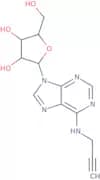
CAS:N6-Propargyladenosine is an alkyne functionalised nucleoside.Fórmula:C13H15N5O4Pureza:Min. 95%Forma y color:PowderPeso molecular:305.29 g/mol2'-Deoxy-5'-O-DMT-2'-fluoro-N6-phenoxyacetyladenosine 3'-CE phosphoramidite
<p>2'-Deoxy-5'-O-DMT-2'-fluoro-N6-phenoxyacetyladenosine 3'-CE phosphoramidite is a modified nucleoside that has been shown to inhibit the growth of cancer cells. It is synthesized by the reaction of 2'-deoxy-5'-O-dimethoxytriphenylmethyl adenosine 3'-chloroethylphosphoramidite and 2',6' -difluoroaniline in an organic solvent. The product is purified by silica gel column chromatography, followed by recrystallization from a mixture of methanol and water. This novel nucleoside may prove to be a useful anticancer agent as it inhibits the growth of cancer cells without producing any apparent toxicity for normal cells.</p>Pureza:Min. 95%2'-Deoxy-N2-isobutyryl-3'-O-levulinoylguanosine
CAS:<p>2'-Deoxy-N2-isobutyryl-3'-O-levulinoylguanosine is a monophosphate antiviral agent that inhibits the synthesis of viral RNA by blocking the activity of DNA polymerase. It has been shown to be active against Herpes simplex virus type 1 and 2 (HSV1, HSV2) and cytomegalovirus (CMV). This compound also has anticancer activity due to its ability to inhibit cell proliferation and induce apoptosis in cancer cells. The antiviral activity of 2'-deoxy-N2-isobutyryl-3'-O-levulinoylguanosine is not limited to herpes viruses and also includes HIV, human T lymphotropic virus type I (HTLV1), and human cytomegalovirus. This product is synthesized with high purity, high quality, and high yield.</p>Fórmula:C19H25N5O6Pureza:Min. 95%Peso molecular:419.44 g/molU-13C10, U-[15N2]-mono-Labelled Thymidylyl-3'-5'-thymidine ammonium (compound A)
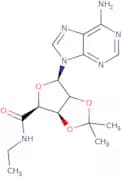
U-13C10, U-[15N2]-mono-Labelled Thymidylyl-3'-5'-thymidine ammonium (compound A) is a novel anticancer drug that is synthesized by phosphoramidite chemistry. It is an activator of DNA synthesis and has been shown to be cytotoxic against cancer cells in vitro. This compound is also a high quality nucleoside analogue. The molecular weight of this compound is 434.4 g/mol and it has a CAS number of 81633-09-9.Fórmula:C20H30N5O12PPureza:Min. 95%Peso molecular:563.45 g/mol5'-Ethylcarboxamido-2',3'-O-isopropylideneadenosine
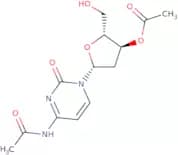
CAS:<p>5'-Ethylcarboxamido-2',3'-O-isopropylideneadenosine is an activator that can be used to treat cancer. It is synthesized from the natural amino acid inosine by replacing the amine group with ethyl carboxamide. The synthesis of this molecule is currently in progress. This product has shown anticancer activity and antiviral effects, as well as high purity and novel properties.</p>Fórmula:C15H20N6O4Pureza:Min. 95%Peso molecular:348.36 g/molN4-Acetyl-3'-O-acetyl-2'-deoxycytidine
CAS:<p>N4-Acetyl-3'-O-acetyl-2'-deoxycytidine is a novel, modified nucleoside that contains a phosphoramidate linkage. It has been shown to have anticancer and antiviral properties. N4-Acetyl-3'-O-acetyl-2'-deoxycytidine is also an activator of the immune system and has been shown to be effective against HIV.</p>Pureza:Min. 95%Biotin-11-2-deoxyuridine-5-triphosphate tetralithium salt
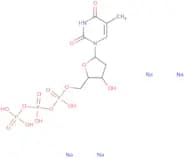
CAS:Biotin-11-2-deoxyuridine-5-triphosphate tetralithium salt is a modified nucleoside that is used in antiviral and anticancer treatments. The deoxyribonucleosides are synthesized by coupling biotin to 2'-deoxyuridine 5'-triphosphate, which is then reacted with lithium tetralithium chloride. This product has been shown to be an activator of DNA synthesis and can induce the proliferation of cancer cells. Biotin-11-2-deoxyuridine-5-triphosphate tetralithium salt has been shown to inhibit the growth of both human immunodeficiency virus (HIV) and murine leukemia virus (MLV). Biotin-11-2-deoxyuridine-5-triphosphate tetralithium salt is also used in the synthesis of ribonucleosides for use in DNA research. ItFórmula:C24H41N6O17P3S·4LiPureza:Min. 95%Peso molecular:886.41 g/molThymidine 5'- triphosphate lithium salt - 100mM aqueous solution
CAS:<p>Thymidine 5’-triphosphate tetralithium salt (dTTP) is a crucial component in chemical biology research. It is a modified form of thymidine, containing three phosphate groups. Important in DNA replication and repair, dTTP acts as a substrate for DNA polymerases during polymerase chain reactions (PCR), facilitating the amplification of specific DNA sequences. In addition, in DNA sequencing, dTTP is incorporated into newly synthesized DNA strands, allowing precise determination of nucleotide sequences.</p>Fórmula:C10H17N2O14P3·xLiPureza:Min. 95%Peso molecular:482.17 g/mol6-Bromo-4-chloropyrido[2,3-d]pyrimidine
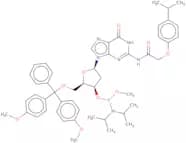
CAS:6-Bromo-4-chloropyrido[2,3-d]pyrimidine is a pyrimidine derivative that has been synthesized using cyclization and condensation techniques. The synthesis of this compound is efficient and uses relatively low amounts of starting materials. It can be made using microwave irradiation in a high yield. 6-Bromo-4-chloropyrido[2,3-d]pyrimidine is an aromatic ring with efficient methods for synthesis and bromination. This research could be used to produce new compounds with similar structures that are more potent than current drugs.Pureza:Min. 95%2'-Deoxy-5'-O-DMT-N2-(4-isopropylphenoxyacetyl)guanosine 3'-Me phosphoramidite
2'-Deoxy-5'-O-DMT-N2-(4-isopropylphenoxyacetyl)guanosine 3'-Me phosphoramidite is a modified nucleoside monophosphate with antiviral and anticancer activity. It is synthesized by the reaction of 2'-deoxyguanosine 5'-O-DMT (dG) with 4-isopropylphenoxyacetic acid in the presence of triethylamine and tetrazole. The product is purified by crystallization. This compound has been shown to inhibit replication of human immunodeficiency virus type 1 (HIV-1) in human lymphocytes, which may be due to its ability to inhibit the synthesis of DNA, RNA, or both.Fórmula:C49H59N6O9PPureza:Min. 95%Peso molecular:907.03 g/mol








![U-13C10, U-[15N2]-mono-Labelled Thymidylyl-3'-5'-thymidine ammonium (compound A)](/_next/image/?url=https%3A%2Fstatic.cymitquimica.com%2Fproducts%2F3D%2Fthumb-webp%2FTM32169.webp&w=3840&q=75)

![6-Bromo-4-chloropyrido[2,3-d]pyrimidine](/_next/image/?url=https%3A%2Fstatic.cymitquimica.com%2Fproducts%2F3D%2Fthumb-webp%2FNB44335.webp&w=3840&q=75)