Nucleósidos
Los nucleósidos son building blocks fundamentales de los ácidos nucleicos, compuestos por una base nitrogenada unida a una molécula de azúcar. En esta sección, puede encontrar una amplia variedad de nucleósidos esenciales para la investigación en biología molecular, bioquímica y farmacología. Estos compuestos juegan roles cruciales en la síntesis de ADN y ARN, y son vitales en varios procesos metabólicos. Los nucleósidos se utilizan para estudiar material genético, desarrollar terapias antivirales y anticancerígenas, y comprender los mecanismos celulares. En CymitQuimica, proporcionamos nucleósidos de alta calidad para apoyar sus necesidades de investigación y desarrollo, asegurando pureza y fiabilidad para sus aplicaciones experimentales.
Se han encontrado 3569 productos de "Nucleósidos"
Ordenar por
Pureza (%)
0
100
|
0
|
50
|
90
|
95
|
100
3'-Azido-2',3'-dideoxy-5'-O-DMT-5-methylcytidine
<p>3'-Azido-2',3'-dideoxy-5'-O-DMT-5-methylcytidine (Zidovudine) is a nucleoside analog that inhibits the replication of human immunodeficiency virus type 1. It is phosphorylated by cellular enzymes to form the active triphosphate form, which incorporates into viral DNA and causes chain termination. Zidovudine has been used in the treatment of HIV infection and AIDS. This drug also has antiviral activity against other retroviruses such as HIV type 2 and measles virus, as well as some DNA viruses, such as herpes simplex type 1. Zidovudine may be useful for the treatment of cancer, particularly Kaposi's sarcoma.</p>Pureza:Min. 95%3'-O-Acetyl-5-benzylaminocarbonyl-2'-O-methyl-5'-O-DMT-uridine
<p>3'-O-Acetyl-5-benzylaminocarbonyl-2'-O-methyl-5'-O-DMT-uridine is a novel, modified nucleoside. This product is an activator of the ribonucleotide reductase enzyme and is used as a precursor in the synthesis of deoxyribonucleosides. It has antiviral activity against herpes simplex virus type 1 and cytomegalovirus. It has also been shown to have anticancer properties, as it inhibits DNA synthesis and tumor cell proliferation without affecting healthy cells. 3'-O-Acetyl-5-benzylaminocarbonyl-2'-O-methyl-5'-O-DMT uridine is synthesized from 5-(3,4,5)-trimethoxybenzaldehyde, 2′(2,6 dichloro)amino]methyl]benzeneacetic acid methyl ester and 5</p>Pureza:Min. 95%1-(b-D-Arabinofuranosyl)-5-iodouracil
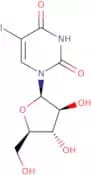
CAS:<p>1-(b-D-Arabinofuranosyl)-5-iodouracil is a synthetic nucleoside that has antiviral and anticancer properties. It is a monophosphate nucleotide that inhibits viral RNA synthesis by inhibiting the enzyme ribonucleotide reductase, which converts ribonucleotides to deoxyribonucleotides. This inhibitor also blocks DNA synthesis by preventing the incorporation of b-D-arabinofuranosyl monophosphate into DNA. 1-(b-D-Arabinofuranosyl)-5-iodouracil has been shown to be effective in treating various types of cancer, including breast, lung, and prostate cancers. It also exhibits antitumor activity against certain human leukemia cells.</p>Fórmula:C9H11IN2O6Pureza:Min. 95%Peso molecular:370.1 g/mol3',5'-Di-O-acetyl-5-bromo-2'-deoxy-2'-fluorouridine
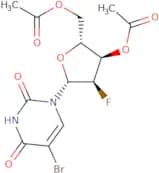
CAS:<p>3',5'-Di-O-acetyl-5-bromo-2'-deoxy-2'-fluorouridine is a novel antiviral agent that has been synthesized as a high quality, high purity monophosphate. It is a modified nucleoside that is used to synthesize phosphoramidites. It has antiviral activity against herpes simplex virus type 1 and 2, and cytomegalovirus. 3',5'-Di-O-acetyl-5-bromo-2'-deoxy-2'-fluorouridine is also an inhibitor of the DNA polymerase enzyme and inhibits the synthesis of viral DNA in infected cells. This drug can be used for the treatment of infections caused by these viruses.</p>Fórmula:C13H14BrFN2O7Pureza:Min. 95%Peso molecular:409.16 g/mol2-Methylsulfanyl-4-phenylamino-pyrimidine-5-carbaldehyde
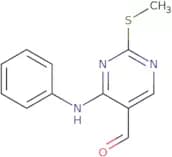
CAS:<p>2-Methylsulfanyl-4-phenylamino-pyrimidine-5-carbaldehyde is a Ribonucleside, Deoxyribonucleoside, Activator, Antiviral, Synthetic and Modified DNA Nucleoside. It has been shown to inhibit viral replication in vitro by interfering with the formation of the viral diphosphate. 2-Methylsulfanyl-4-phenylamino-pyrimidine-5-carbaldehyde is a ribonucleotide that is synthesized from commercially available starting materials. This compound has shown to be active against HIV type 1 virus in vitro and has been proposed as a potential antiviral agent for the treatment of AIDS.<br>2-Methylsulfanyl-4-phenylamino pyrimidine 5 carbaldehyde (2MSAP) was found to be active against HIV type 1 virus in vitro and has been proposed as a potential antiviral agent for the treatment of</p>Fórmula:C12H11N3OSPureza:Min. 95%Peso molecular:245.3 g/mol5'-O-DMT-5-[N-(2-(trifluoroacetamido)ethyl)-3-E-acrylamido]-2'-deoxyuridine
CAS:5'-O-DMT-5-[N-(2-(trifluoroacetamido)ethyl)-3-E-acrylamido]-2'-deoxyuridine is a nucleoside analog that is an activator of DNA polymerase. It has been shown to have anticancer activity in vitro and in vivo. 5'-O-DMT-5-[N-(2-(trifluoroacetamido)ethyl)-3-E-acrylamido]-2'-deoxyuridine was found to inhibit the proliferation of leukemia cells, human colon cancer cells, and human prostate cancer cells. This compound also inhibits viral replication by affecting the synthesis of viral DNA and RNA. 5'-O-DMT-5-[N-(2-(trifluoroacetamido)ethyl)-3-E-acrylamido]-2'-deoxyuridine may be used as a research tool for studying the mechanism of action of antiviral drugs suchFórmula:C37H37F3N4O9Pureza:Min. 95%Peso molecular:738.74 g/mol2-Amino-8-(2-deoxy-β-D-ribofuranosyl)-imidazo[1,2-α]-1,3,5-triazin-4(8H)-one
CAS:<p>2-Amino-8-(2-deoxy-β-D-ribofuranosyl)-imidazo[1,2-α]-1,3,5-triazin-4(8H)-one is a modified nucleoside analog with the following structure: the core heterocyclic structure is a fused imidazole-triazine ring, there is a 2-amino group at position 2 of the imidazole ring and it has a 2-deoxy-β-D-ribofuranose sugar attached at the 8-position of the heterocyclic ring, making it structurally related to DNA nucleosides.</p>Fórmula:C10H13N5O4Pureza:Min. 95%Forma y color:PowderPeso molecular:267.24 g/mol1-(2'-Chloro-2'-deoxy-b-D-arabinofuranosyl)cytosine
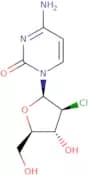
CAS:1-(2'-Chloro-2'-deoxy-b-D-arabinofuranosyl)cytosine is a synthetic, modified nucleoside that can be phosphorylated to its monophosphate form. It is an inhibitor of DNA synthesis and the replication of viral DNA. 1-(2'-Chloro-2'-deoxy-b-D-arabinofuranosyl)cytosine has been shown to have anticancer activity in vitro and in vivo. This drug is also active against some RNA viruses such as hepatitis B virus and human immunodeficiency virus type 1 (HIV).Fórmula:C9H12ClN3O4Pureza:Min. 95%Peso molecular:261.66 g/mol7-Deaza-2'-deoxyguanosine-5'-triphosphate lithium salt - 100mM aqueous solution
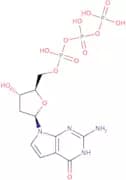
CAS:7-Deaza-2'-deoxyguanosine-5'-triphosphate lithium salt is a nucleoside analog that inhibits telomerase. It binds to the catalytic subunit of telomerase, which is an RNA-dependent DNA polymerase that synthesizes telomeres during DNA replication. This binding prevents the enzyme from extending the 3' end of the DNA strand, inhibiting cell proliferation and leading to apoptosis. Telomerase inhibition has been shown to have an inhibitory effect on insulin resistance in mice. 7-Deaza-2'-deoxyguanosine-5'-triphosphate lithium salt also inhibits protein kinases, but does not inhibit phosphatases or other enzymes.Fórmula:C11H17N4O13P3·xLiPureza:Min. 95%Peso molecular:506.19 g/mol5-Chloro-5'-deoxy-5'-iodo-2',3'-O-isopropylidenecytidine
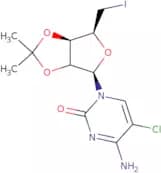
5-Chloro-5'-deoxy-5'-iodo-2',3'-O-isopropylidenecytidine is a nucleoside analog that has antiviral, anticancer, and high purity properties. It is an activated nucleotide that can be incorporated into DNA or RNA. 5-Chloro-5'-deoxy-5'-iodo-2',3'-O-isopropylidenecytidine is a modified nucleoside with the deoxyribose sugar replaced by an isopropylidene group. This modification prevents the drug from being metabolized and excreted from the body. The drug is used to treat various cancers such as leukemia and lymphoma, as well as herpes simplex virus infections. It also has been shown to have antimicrobial properties against bacteria, fungi, and viruses.Fórmula:C12H15ClIN3O4Pureza:Min. 95%Peso molecular:427.63 g/mol2'-O-tert-Butyldimethylsilyl-5'-O-DMT-C2-methyladenosine 3'-CE phosphoramidite
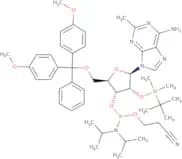
CAS:<p>2'-O-tert-Butyldimethylsilyl-5'-O-DMT-C2-methyladenosine 3'-CE phosphoramidite is an antiviral agent that inhibits the synthesis of DNA. It can be used to treat AIDS, because it inhibits the reverse transcriptase enzyme. 2'-O-tert-Butyldimethylsilyl-5'-O-DMT-C2-methyladenosine 3'-CE phosphoramidite also has anticancer properties, which is due to its ability to inhibit RNA and protein synthesis in cancer cells. This compound has been synthesized by reacting 5'-O-DMT cytidine with methylacetoacetate under standard conditions. The modified nucleoside has a high purity, high quality, and novel structure.</p>Fórmula:C47H64N7O7SiPureza:Min. 95%Peso molecular:867.14 g/mol4-Amino-2,6-dimethyl-8-(2'-deoxy-3',5'-di-O-toluoyl-a-D-ribofuranosyl)-7-pteridone
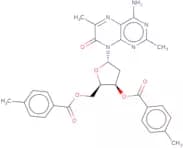
<p>4-Amino-2,6-dimethyl-8-(2'-deoxy-3',5'-di-O-toluoyl-a-D-ribofuranosyl)-7-pteridone is a novel nucleoside that has been modified by the addition of a 2'-deoxy, 3',5'-di-O-toluoyl group on the sugar moiety. This modification increases the stability of 4AMDT in serum and enhances its antiviral activity against DNA and RNA viruses. It also inhibits the proliferation of cancer cells and induces cell death by inhibiting protein synthesis.</p>Fórmula:C29H29N5O6Pureza:Min. 95%Peso molecular:543.57 g/mol2'-Deoxy-5-hydroxyuridine 5'-triphosphate
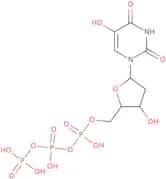
CAS:<p>2'-Deoxy-5-hydroxyuridine 5'-triphosphate (doxorubicin) is a cytotoxic and chemotherapeutic agent that interferes with DNA replication. It is an oxidized form of the natural pyrimidine base thymine. The drug blocks DNA synthesis by preventing the incorporation of uracil into the newly synthesized strand, which causes strand breaks. Doxorubicin has been shown to be effective in treating a variety of cancers, including those of the breast, ovaries, bladder, and stomach. This drug can also cause severe side effects such as heart damage and hearing loss due to its interaction with cellular oxygen metabolism.</p>Pureza:Min. 95%6-Chloro-9-(3',5'-di-O-benzoyl-2'-Deoxy-2'-fluoro-b-D-arabinofuranosyl)purine
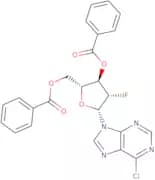
CAS:<p>6-Chloro-9-(3',5'-di-O-benzoyl-2'-Deoxy-2'-fluoro-b-D-arabinofuranosyl)purine is a nucleoside that is used as an anticancer and antiviral agent. It is synthesized from 9-(3',5'-di-O-benzoyl)-2'-deoxyribofuranosyl chloride, which is then chlorinated to form 6-chloro purine. This product has been shown to be active against human DNA tumor cells and other viruses in vitro. 6CPA, like other nucleosides, can be phosphorylated on the 3' or 5' position of the sugar moiety, yielding monophosphate or diphosphate derivatives respectively. The monophosphate derivative of 6CPA has a higher cytotoxicity than the diphosphate derivative. The deoxyribose sugar moiety can</p>Fórmula:C24H18CIFN4O5Pureza:Min. 95%Peso molecular:496.89 g/molGuanosine 5'-triphosphate trisodium hydrate
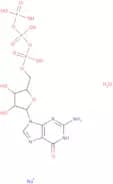
CAS:<p>Guanosine 5'-triphosphate trisodium hydrate is a novel antiviral agent that was discovered in the course of a research program to find new antiviral agents. It is an activator of guanylyl cyclase and it has been shown to have high quality and high purity. Guanosine 5'-triphosphate trisodium hydrate binds to ribonucleosides and deoxyribonucleosides, preventing their incorporation into viral DNA or RNA. This compound also has anticancer activity.</p>Fórmula:C10H18N5NaO15P3Pureza:Min. 95%Peso molecular:564.19 g/mol3'-Azido-3'-deoxy-5-methylcytidine
CAS:<p>3'-Azido-3'-deoxy-5-methylcytidine (AZDMC) is a novel nucleoside analog that inhibits viral replication. AZDMC is an activator of cellular DNA synthesis, which is essential for the replication of DNA and the production of RNA. It also has antiviral activity against influenza A and B viruses. The chemical name for AZDMC is 3'-azido-3'-deoxy-5-methylcytidine monophosphate (AMP). The CAS number for AZDMC is 1282040-14-5. It can be synthesized with high purity and quality by Ribonucleosides, Modified, Deoxyribonucleosides, Nucleosides, Phosphoramidites.</p>Pureza:Min. 95%N6-Benzoyl-3'-deoxyadenosine
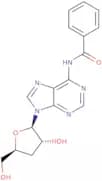
CAS:N6-Benzoyl-3'-deoxyadenosine is a nucleoside analogue that is used as a substrate for DNA polymerase. The efficiency of this compound has been shown to be higher than other nucleotides. In addition, N6-Benzoyl-3'-deoxyadenosine has been shown to be an efficient donor in the ligation reaction and can also act as a competitive inhibitor of topoisomerase II. N6-Benzoyl-3'-deoxyadenosine is a scissile substrate for DNA topoisomerase II and cleaves at the same site as dATP. This compound has been shown to be active against both Gram-positive bacteria and Mycobacterium tuberculosis with high selectivity.Fórmula:C17H17N5O4Pureza:Min. 95%Peso molecular:355.35 g/mol2',3'-Anhydroinosine
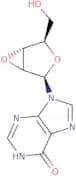
CAS:2',3'-Anhydroinosine is an analog of the purine nucleoside inosine, which has been synthesized by catalytic dehalogenation of 2-fluoro-adenosine. The synthesis of this compound is based on a chemical reaction between 2-fluoro-adenosine and sodium hydroxide. This reaction produces 2',3'-anhydroinosine as a byproduct. 2',3'-Anhydroinosine inhibits the enzyme purine nucleoside phosphorylase, which prevents the conversion of inosine to hypoxanthine. This prevents purines from being used for protein synthesis, leading to cell death.Fórmula:C10H10N4O4Pureza:Min. 95%Peso molecular:250.21 g/molUridylyl-2'-5'-uridine ammonium salt
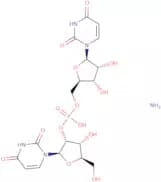
CAS:Uridylyl-2'-5'-uridine ammonium salt is a monophosphate nucleoside that is a synthetic compound of uridine. It is an antiviral agent and has been shown to be effective against DNA viruses such as herpes simplex virus and Epstein-Barr virus. Uridylyl-2'-5'-uridine ammonium salt binds to the viral DNA, preventing the replication process from occurring. This drug also has anticancer properties, which are attributed to its ability to inhibit DNA synthesis in cells.Fórmula:C18H23N4O14P·NH3Pureza:Min. 95%Peso molecular:567.41 g/molb-Nicotinamide adenine dinucleotide phosphate potassium salt hydrate
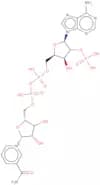
CAS:b-Nicotinamide adenine dinucleotide phosphate potassium salt hydrate is a novel anticancer compound that has been shown to inhibit the growth of cancer cells in vitro. The mechanism of action of b-NADP+ is still unknown, but it may involve the inhibition of ribonucleoside reductase and deoxyribonucleoside reductase. It also inhibits viral DNA synthesis, which can be an effective antiviral drug. b-NADP+ is a nucleotide analogue that is synthesized from diphosphate and monophosphate forms, which are activated by phosphoramidites.Fórmula:C21H28N7O17P3•K•(H2O)2Pureza:Min. 95%Peso molecular:818.5 g/mol



![5'-O-DMT-5-[N-(2-(trifluoroacetamido)ethyl)-3-E-acrylamido]-2'-deoxyuridine](/_next/image/?url=https%3A%2Fstatic.cymitquimica.com%2Fproducts%2F3D%2Fthumb-webp%2FND08236.webp&w=3840&q=75)
![2-Amino-8-(2-deoxy-β-D-ribofuranosyl)-imidazo[1,2-α]-1,3,5-triazin-4(8H)-one](/_next/image/?url=https%3A%2Fstatic.cymitquimica.com%2Fproducts%2F3D%2Fthumb-webp%2FNA145593.webp&w=3840&q=75)