Disolventes no polares
Se han encontrado 184 productos de "Disolventes no polares"
2-Iodobenzenesulfonic acid
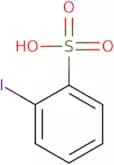
CAS:2-Iodobenzenesulfonic acid is a synthetic molecule with a molecular weight of 169.27 g/mol. It is an acidic salt that reacts with nucleophilic substitutions, such as hydroxyl groups and heterocycles. 2-Iodobenzenesulfonic acid has been studied using molecular modeling techniques to identify its pharmacophore and the key features that may be important for binding to the active site of the enzyme. The results of these studies show that the most important features are a sulfonyl group, two hydroxyl groups, and an aromatic ring.
Fórmula:C6H5IO3SPureza:Min. 95%Forma y color:Slightly Yellow PowderPeso molecular:284.07 g/mol1,2-Dimethoxy-4,5-dinitrobenzene
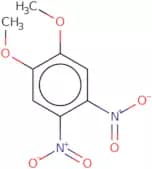
CAS:1,2-Dimethoxy-4,5-dinitrobenzene is a fluorescent compound that can be used as a probe to study the response elements in DNA. It has been shown to inhibit HDAC activity and induce nuclear translocation of Nrf2 in wild-type mice. 1,2-Dimethoxy-4,5-dinitrobenzene has also been shown to decrease the level of plasma protein carbonyls in cancer patients. This molecule has analytical applications for determining the presence of it's target compounds in biological samples.Fórmula:C8H8N2O6Pureza:Min. 95%Forma y color:PowderPeso molecular:228.16 g/molIsopropyl benzenesulfonate
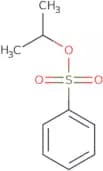
CAS:Isopropyl benzenesulfonate is an ester compound that reacts with the chlorine atom to produce a sulfonic acid. It has antimicrobial properties and is used in the production of quinoline derivatives, which are aliphatic hydrocarbons that have been found to be effective in the treatment of cancer. Isopropyl benzenesulfonate also has potential as a cross-linking agent for ester compounds, due to its ability to react with both aromatic hydrocarbons and radiation. It can be synthesized by reacting a phase liquid chromatography solution with hydroxyl group or patterning with a solid catalyst. Isopropyl benzenesulfonate has carbonyl groups that are reactive with other chemicals and may be used as a reagent for storing reactive substances.Fórmula:C9H12O3SPureza:Min. 95%Forma y color:Colorless Clear LiquidPeso molecular:200.26 g/mol1-(2-Bromoethoxy)-4-chloro-benzene
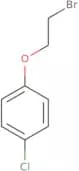
CAS:1-(2-Bromoethoxy)-4-chloro-benzene is a monomer that is soluble in organic solvents and has been shown to be an electron donor. The reaction mechanism of the bromination of 1-(2-bromoethoxy)-4-chlorobenzene involves the formation and subsequent decomposition of a radical anion, which is stabilized by the solvent acetonitrile. This monomer can also be used as a sensitizer for polymerization reactions. The yield of this product has been found to increase with increasing amounts of ethanol in the solution. 1-(2-Bromoethoxy)-4-chlorobenzene can also undergo an intramolecular cyclization to form a five membered ring with two stereogenic centers. 1-(2-Bromoethoxy)-4-chlorobenzene yields optical rotation values that are dependent on the concentration of water in the solution and it has beenFórmula:C8H8BrClOPureza:Min. 95%Forma y color:Off-White PowderPeso molecular:235.51 g/mol1-Iodo-4-nitrobenzene
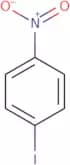
CAS:1-Iodo-4-nitrobenzene is an insecticide with a nitro group. It is synthesized by the asymmetric synthesis of diazonium salt and hydroxyl group in the presence of a solid catalyst, such as palladium. 1-Iodo-4-nitrobenzene can be used as a coupling reagent for Suzuki coupling reactions, halide transfer reactions, and other multi-walled carbon transfer reactions. It has also been reported to have neuroprotective effects against Parkinson's disease in levopimaric acid model system. 1-Iodo-4-nitrobenzene has also been shown to inhibit the proliferation of neuro2a cells.Fórmula:C6H4INO2Pureza:Min. 95%Forma y color:Slightly Yellow PowderPeso molecular:249.01 g/mol1-Hydroxy-2,3-dimethylbenzene
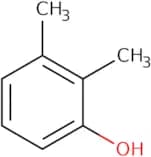
CAS:1-Hydroxy-2,3-dimethylbenzene (1,2-DMB) is a chemical compound that is used as an industrial catalyst. It has been shown to be an efficient catalyst for the treatment of wastewater, and has been studied in the removal of nitrogen from industrial gases. 1,2-DMB has also been found to be active against bacteria such as Pseudomonas aeruginosa and Staphylococcus aureus. This compound reacts with copper ions to form an organometallic complex, which then reacts with trifluoroacetic acid in an organic solution to form an aldehyde group.
Fórmula:C8H10OPureza:Min. 95%Forma y color:Off-White PowderPeso molecular:122.16 g/mol3,5-Dibromo-4-hydroxytoluene
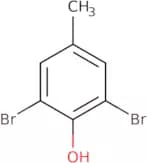
CAS:3,5-Dibromo-4-hydroxytoluene (DBHT) is a brominated aromatic hydrocarbon. It has been shown to be an efficient debrominating agent for bromophenols and chloride, which are two major environmental pollutants. DBHT can also catalyze the conversion of styrene to benzene and acetic acid in the presence of hydrogen, as well as methylating styrene. This chemical is an effective catalyst for the formation of metabolic intermediates and crystal x-ray diffraction studies have shown that DBHT is a good substrate for enzyme activity.Fórmula:C7H6Br2OPureza:Min. 95%Forma y color:White To Yellow To Light Brown SolidPeso molecular:265.93 g/mol5-Propyl-1,3-benzenediol
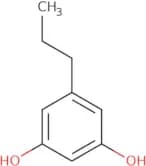
CAS:5-Propyl-1,3-benzenediol is a chemical compound that is found in cannabis. It has been shown to have anti-inflammatory and neuroprotective effects in vitro. 5-Propyl-1,3-benzenediol also inhibits the growth of cancer cells in vivo by inducing apoptosis.
5-Propyl-1,3-benzenediol can be synthesized from cannabidiol with high yield and selectivity by a one-pot reaction. This product has not been studied for toxicity or other side effects on humans.Fórmula:C9H12O2Pureza:Min. 95%Forma y color:PowderPeso molecular:152.19 g/mol4-Methoxybenzenesulfonyl chloride
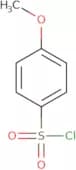
CAS:4-Methoxybenzenesulfonyl chloride is a water-soluble and colorless solid that is used in the treatment of wastewater. It binds to hydroxyl groups and copper complexes, which are present in high concentrations in wastewater. 4-Methoxybenzenesulfonyl chloride can be used as an analytical reagent for determining binding constants, as well as for the separation of amyloid proteins. This compound has been shown to have anti-inflammatory properties by inhibiting the production of pro-inflammatory cytokines such as tumor necrosis factor (TNF) and interleukin (IL)-1β. 4-Methoxybenzenesulfonyl chloride also has activity against certain cancers such as L1210 leukemia cells in mice and diphenyl ethers.Fórmula:C7H7ClO3SPureza:Min. 97 Area-%Forma y color:Brown Off-White PowderPeso molecular:206.65 g/mol4-Amino-N-(2-phenylethyl)benzenesulfonamide
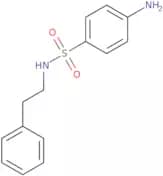
CAS:4-Amino-N-(2-phenylethyl)benzenesulfonamide (4APBS) is a histone deacetylase inhibitor. It has been shown to inhibit the histone methyltransferase activity of EZH2, which is important for regulating gene expression, in cells treated with 4APBS. This inhibition leads to increased levels of the transcriptional coactivator β-catenin and reduced levels of tumor suppressor genes. These changes ultimately lead to an increase in cancer cell proliferation and decreased apoptosis. 4APBS also interacts with hormone receptors that are found on the surface of cells and can regulate cellular functions such as proliferation, differentiation, or apoptosis.Fórmula:C14H16N2O2SPureza:Min. 95%Forma y color:Off-White PowderPeso molecular:276.36 g/molTrimethyl 1,3,5-benzene tricarboxylate
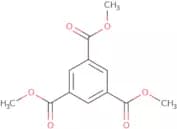
CAS:Trimethyl 1,3,5-benzene tricarboxylate is a chemical compound that belongs to the group of polycarboxylic acids. It is used as a polymerization agent in the manufacture of ionic polymers. The first step in this process is cationic polymerization, which involves the reaction between trimethyl 1,3,5-benzene tricarboxylate and sodium citrate to form an ion pair. This process can be followed by hydrolysis with hydrochloric acid and sodium carbonate to release the carboxylate anion from the polymer chain and regenerate trimethyl 1,3,5-benzene tricarboxylate. Trimethyl 1,3,5-benzene tricarboxylate has been shown to have optical properties that depend on its molecular weight and metal surface interactions. It can also be used as a chelating agent for zinc diethyld
Fórmula:C12H12O6Pureza:Min. 95%Forma y color:White PowderPeso molecular:252.22 g/mol2-Iodo-3-fluoronitrobenzene
CAS:2-Iodo-3-fluoronitrobenzene is a chemical compound that is used as a building block for the synthesis of pharmaceuticals, agrochemicals and other organic compounds. It is also used as a reagent in organic synthesis. This compound can be used as a reactant to produce various products with different functional groups. 2-Iodo-3-fluoronitrobenzene has a high quality and versatility, which makes it useful in the synthesis of many different types of molecules.Fórmula:C6H3FINO2Pureza:Min. 95%Forma y color:White PowderPeso molecular:267 g/molp-Toluenesulfonic acid monohydrate
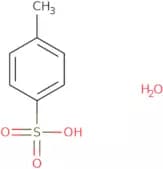
CAS:p-Toluenesulfonic acid monohydrate is a white, crystalline solid that is soluble in water. It is used as a catalyst for the synthesis of various organic compounds and pharmaceuticals. p-Toluenesulfonic acid monohydrate has been shown to have an effect on the thermal expansion of certain polymers and to be useful for preparation of medicinal preparations with high uptake. This compound can also be used as a carbon source for the production of various organic compounds.Fórmula:CH3C6H4SO3H·H2OForma y color:PowderPeso molecular:190.22 g/mol1-Bromo-2-fluoro-3-nitrobenzene
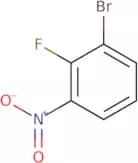
CAS:1-Bromo-2-fluoro-3-nitrobenzene is a synthetic chemical that is used as an intermediate in the synthesis of various dyes. It can be obtained by the diazotization of acetyl nitrite and acetonitrile, followed by acetylation with acetic anhydride and hydrolysis with sodium hydroxide. The bromoaniline formed after this reaction is then converted to 1-bromo-2-fluoro-3-nitrobenzene by refluxing it with nitric acid. This chemical can also be synthesized from bromines and chloride in the presence of a diazo salt. It reacts with fluoride or halogens to produce fluorobenzene derivatives, which are used as intermediates for other organic compounds.Fórmula:C6H3BrFNO2Pureza:Min. 95%Forma y color:Yellow PowderPeso molecular:220 g/mol3-Bromobenzenesulfonyl chloride
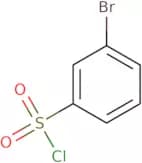
CAS:3-Bromobenzenesulfonyl chloride is a molecule that can be used to inhibit the uptake of 3-bromobenzoate. The inhibition of uptake is due to the desymmetrization of the unsymmetrical, 3-bromobenzoate. This reaction leads to an increase in the concentration of 3-bromobenzoate. Inhibition studies have shown that 3-bromobenzenesulfonyl chloride has an inhibitory effect on cancer cells and apoptosis pathway. The structural studies have shown that this drug is synthetic and biphenyl can be synthesized from it. T-cell lymphomas have been shown to be inhibited by this drug and heart disease has also been inhibited.Fórmula:C6H4BrClO2SPureza:Min. 95%Peso molecular:255.52 g/molalpha-Hydroxy-alpha-phenylbenzeneacetic acid (3-endo)-8-azabicyclo[3.2.1]oct-3-yl ester hydrochloride
CAS:Please enquire for more information about alpha-Hydroxy-alpha-phenylbenzeneacetic acid (3-endo)-8-azabicyclo[3.2.1]oct-3-yl ester hydrochloride including the price, delivery time and more detailed product information at the technical inquiry form on this pageFórmula:C21H23NO3·HClPureza:Min. 95%Forma y color:White PowderPeso molecular:373.87 g/molPotassium 3-(phenylsulfonyl)benzenesulfonate
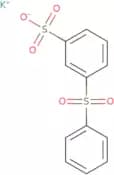
CAS:Potassium 3-(phenylsulfonyl)benzenesulfonate is a chemical compound that is used as an anti-aging agent. It has been shown to reduce the viscosity of acrylonitrile, and is most effective when it is at a concentration of 1%. Potassium 3-(phenylsulfonyl)benzenesulfonate also reduces the strain on polymer fibers, which can be caused by temperatures or deionized water. The optimum temperature for this compound is about 50°C. Potassium 3-(phenylsulfonyl)benzenesulfonate does not have any adverse effects with other chemicals in the production process, and does not react with hexamethylenetetramine or aminopropyl naphthenate. This chemical also has a low cost and high tolerance for additives such as styrene or additives such as resistant
Fórmula:C12H9KO5S2Pureza:Min. 95%Forma y color:PowderPeso molecular:336.43 g/mol1,4-Benzenedicarboxylic acid, monoethyl ester
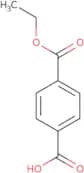
CAS:1,4-Benzenedicarboxylic acid, monoethyl ester (1,4-BDE) is a monomer that is used in the manufacture of polycarbonates and other plastics. 1,4-BDE is also used as a solvent for xylene and butanol. It has been shown to be useful in the production of polyester fibers. The monomer can be synthesized by reacting ethylene with terephthalic acid or dimethyl terephthalate (DMT). This reaction produces 1,4-BDE and methanol as byproducts. The process is carried out at temperatures of 250 °C to 300 °C and under atmospheric pressure. The purified product can be isolated using distillation or extraction with organic solvents such as benzene or butanol. The reaction can be carried out in the presence of ruthenium, which acts as a catalyst.Fórmula:C10H10O4Pureza:Min. 95%Forma y color:White PowderPeso molecular:194.18 g/mol2,5-Dimethyl-1,4-benzenediamine
CAS:2,5-Dimethyl-1,4-benzenediamine is an amine that is used as a reagent in organic synthesis. It is also used to derivatize other molecules and as a precursor to other compounds. 2,5-Dimethyl-1,4-benzenediamine has been shown to be a good nucleophile and can react with electrophiles such as difluoride and the metal ion Ag(I). The reaction rate of 2,5-dimethyl-1,4-benzenediamine can be determined using high performance liquid chromatography or electrospray ionization. This compound can be synthesized from phenylmagnesium bromide and methyl iodide in the presence of aluminium chloride. It is possible to immobilize 2,5-dimethyl-1,4-benzenediamine on mesoporous silica by attaching it to the surface of the porous material with aminopFórmula:C8H12N2Pureza:Min. 95%Forma y color:Beige To Brown SolidPeso molecular:136.19 g/mol



![alpha-Hydroxy-alpha-phenylbenzeneacetic acid (3-endo)-8-azabicyclo[3.2.1]oct-3-yl ester hydrochlor…](/_next/image/?url=https%3A%2Fstatic.cymitquimica.com%2Fproducts%2F3D%2Fthumb-webp%2FFH55814.webp&w=3840&q=75)