Enzimas en Proteínas Recombinantes
Las enzimas aceleran las reacciones químicas, actuando como catalizadores biológicos, actuando sobre sustratos y convirtiéndolos en diferentes moléculas llamadas productos. Estas proteínas son indispensables en procesos bioquímicos y aplicaciones industriales, facilitando reacciones en condiciones suaves con alta especificidad y eficiencia. En CymitQuimica, ofrecemos una amplia selección de enzimas de alta calidad para apoyar sus aplicaciones en investigación, industriales y clínicas.
Se han encontrado 3315 productos de "Enzimas en Proteínas Recombinantes"
Ordenar por
Pureza (%)
0
100
|
0
|
50
|
90
|
95
|
100
Amylase protein
<p>Alpha Amylase (Amylase, α-Amylase, 1,4-α-D-glucan glucanohydrolase, glycogenase, ptyalin; systematic name 4-α-D-glucan glucanohydrolase; EC 3.2.1.1, CAS Number [9000-90-2]) is an enzyme that catalyses hydrolysis of large polysacharides into smaller fragments. Alpha amylase targets alpha bonds of 1→4 glycosidic linkages of poly- and oligosaccharides with three or more D-glucose units. One unit of Alpha Amylase will catalyze the hydrolysis of 1.0 μmol of 2-chloro-4-nitrophenyl-α-D-maltotrioside to yield 2-chloro-4-nitrophenol per minute at 37°C. Human salivary Alpha Amylase is supplied as clear, colorless liquid solution at ≥2000U/mL, specific activity ≥200 U/mg protein. Store at -20°C on arrival.</p>Pureza:Min. 95%Plasmin
CAS:<p>Plasmin, human is a serin protease which present in the blood and is involved in the cleavage of cross-linked fibrin, a process known as fibrinolysis.One unit will produce one micromole of P-Nitroanilide from D-Val-Leu-Lys-P-Nitroanilide per minute at pH 7.5 at 37°C</p>EUCODIS® CalB02 IA, engineered variant of Candida antarctica Lipase B, immobilized by adsorption on hydrophobic carrier - ELCB02IA
<p>Lipases belong to the family of esterases and naturally act on triglycerides at lipid-water interfaces. Lipases/esterases can be used as versatile tools in hydrolytic reactions, esterifications and transesterification reactions in industrial and food applications. The CalB02 IA lipase has been immobilized on a hydrophobic carrier by adsorption. The immobilized CalB02 lipase has a temperature optimum in the 40 - 50 °C range and pH optimum between pH 5 and 8.</p>eXrase DNA Endonuclease, research-grade
CAS:<p>eXrase DNA endonuclease from enGenes is a recombinant endonuclease from Serratia marcescens produced in E. coli. Effectively and efficiently degrades all forms of DNA and RNA, reducing sample viscosity without proteolytic activity. As effective and efficient as other nucleases on the market, eXrase DNA endonuclease is the most cost-effective way to improve proteins yields and improve sample handing. Presented as a ready to use colourless liquid, formulated in Tris buffer at pH 8.0 with 50 % glycerol (v/v). This research grade eXrase has low endotoxin, max 0.25 EU/kU.eXrase DNA endonuclease is suitable for the effective breakdown of nucleic acids in numerous biotech settings: • Removal of residual host DNA from biotechnological products to meet regulatory standards • Reduction of viscosity and streamlined purification in downstream processing of fermentation procedures. • Reduction of viscosity in in upstream fermentation processes • Extraction and/or synthesis of flavouring nucleotides • Enhanced bioavailability of nucleotides in specific feed products • DNA degradation for the removal or prevention of biofilm formationeXrase DNA endonuclease from enGenes is made by a proprietary microbial fermentation process utilizing Escherichia coli cells. This enzyme facilitates the hydrolysis of phosphodiester bonds in various forms of DNA and RNA, including single-stranded, double-stranded, linear, circular, or supercoiled configurations, yielding smaller oligonucleotides typically composed of 2-4 base pairs. Unit-Definition: One unit (U) of the enzyme is defined as the amount required to digest calf thymus DNA, yielding acid-soluble oligonucleotides equivalent to a ΔA260nm of 1.0 within a 30-minute timeframe at pH 8.0 and 37°C. This standardization allows for consistent measurement of enzymatic activity across different batches.</p>Aspartic acid proteinase
CAS:<p>Aspartic acid proteinase is a type of proteolytic enzyme, which originates from various biological sources including humans, fungi, and plants. It is characterized by its action via two critical aspartic acid residues in the active site, which facilitate the hydrolysis of peptide bonds in proteins. This enzyme operates optimally in acidic environments, making it crucial in processes like digestion and protein processing within cellular compartments such as lysosomes.</p>Lipase from Candida antarctica
CAS:<p>Lipase from *Candida antarctica* is an enzyme-based biocatalyst, which is derived from the yeast *Candida antarctica*. This enzyme operates via a catalytic mechanism that involves the hydrolysis of ester bonds in lipid substrates, thereby facilitating the breakdown of fats into glycerol and free fatty acids. Its catalytic efficiency and stability in various conditions make it highly versatile for industrial applications.</p>Fórmula:C11H9N3O2•NaForma y color:PowderPeso molecular:233.10 g/molEUCODIS® CalB01 ICE, engineered variant of Candida antarctica Lipase B, covalent immobilization on hydrophobic carrier - ELCB01ICE
<p>Lipases belong to the family of esterases and naturally act on triglycerides at lipid-water interfaces. Lipases/esterases can be used as versatile tools in hydrolytic reactions, esterifications and transesterification reactions in industrial and food applications. The CalB01 ICE lipase has been immobilized on a hydrophobic carrier by a covalent linkage. The immobilized CalB01 lipase has a temperature optimum in the 40 - 50 °C range and pH optimum between pH 5 and 8.</p>Phosphorylase B from rabbit muscle
CAS:<p>Phosphorylase B is an enzymatic protein, specifically an isoform of glycogen phosphorylase, derived from rabbit muscle. This enzyme plays a critical role in glycogen metabolism by catalyzing the phosphorolytic cleavage of α(1→4) glycosidic bonds in glycogen, releasing glucose-1-phosphate. The rabbit muscle source provides a well-studied model due to its high enzyme activity and availability, facilitating in-depth biochemical and structural analysis.</p>Pureza:Min. 95%EUCODIS® Nitrilhydratase 23, recombinant enzyme - ENH023
<p>Nitrile hydratase 23 recombinantly expressed in E. coli comes in a freeze-dried formulation. Nitrile hydratases can be utilized to convert nitriles into their corresponding amides, e.g. to produce acrylamide from acrylonitrile. Additional applications include the removal of nitriles from industrial wastewater. Our nitrile hydratases have been tested for hydrolysis of the following substrates:cyclohexanecarbonitrile, cinnamonitrile, benzonitrile, methacrylonitrile, pivalonitrile.</p>Creatinase
<p>Creatinase is an enzyme (EC 3.5.3.3) that catalyzes the conversion of creatine to sarcosine and urea.</p>Luciferase from Vibrio fischeri
CAS:<p>Luciferase enzymes sourced from Vibrio fischeri</p>Forma y color:PowderAminoacyl tRNA synthetase-IN-1
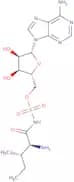
CAS:<p>Enzyme involved in protein translation and catalyzes the aminoacylation reaction</p>Fórmula:C16H25N7O7SPureza:Min. 95%Forma y color:PowderPeso molecular:459.48 g/moleXrase DNA Endonuclease, tech-grade
CAS:<p>eXrase DNA endonuclease from enGenes is a recombinant endonuclease from Serratia marcescens produced in E. coli. Effectively and efficiently degrades all forms of DNA and RNA, reducing sample viscosity without proteolytic activity. As effective and efficient as other nucleases on the market, eXrase DNA endonuclease is the most cost-effective way to improve proteins yields and improve sample handing. Presented as a ready to use colourless liquid, formulated in Tris buffer at pH 8.0 with 50 % glycerol (v/v). This tech grade version is our most cost effective endonuclease for R&D applications. eXrase DNA endonuclease is suitable for the effective breakdown of nucleic acids in numerous biotech settings: • Removal of residual host DNA from biotechnological products to meet regulatory standards • Reduction of viscosity and streamlined purification in downstream processing of fermentation procedures. • Reduction of viscosity in in upstream fermentation processes • Extraction and/or synthesis of flavouring nucleotides • Enhanced bioavailability of nucleotides in specific feed products • DNA degradation for the removal or prevention of biofilm formationeXrase DNA endonuclease from enGenes is made by a proprietary microbial fermentation process utilizing Escherichia coli cells. This enzyme facilitates the hydrolysis of phosphodiester bonds in various forms of DNA and RNA, including single-stranded, double-stranded, linear, circular, or supercoiled configurations, yielding smaller oligonucleotides typically composed of 2-4 base pairs. Unit-Definition: One unit (U) of the enzyme is defined as the amount required to digest calf thymus DNA, yielding acid-soluble oligonucleotides equivalent to a ΔA260nm of 1.0 within a 30-minute timeframe at pH 8.0 and 37°C. This standardization allows for consistent measurement of enzymatic activity across different batches.</p>Alcohol Oxidase - vacuum-dried powder, >0.6 units/mg solid
CAS:<p>Alcohol oxidase (EC 1.1.3.13) is an enzyme that catalyzes the following chemical reaction: a primary alcohol + O2 + H2O ⇌ an aldehyde + H2O2 One unit of alcohol oxidase will oxidize 1.0 µmole of methanol to formaldehyde per min at pH 7.5 and 25 °C.</p>Sphingomyelinase from bacillus cereus
CAS:<p>Sphingomyelinase (SMase, Sphingomyelin phosphodiesterase, systematic name sphingomyelin cholinephosphohydrolase; EC 3.1.4.12) is an enzyme that hydrolyses sphingomyelin into phosphocholine and ceramide. One unit of sphingomyelinase will hydrolyze 1.0 µmole of chromogenic substrate analogue per minute at pH 7.4 and 37 °C.</p>Pureza:Min. 95%Glutathione Reductase, baker's yeast
CAS:<p>Glutathione Reductase, baker's yeast, is an enzyme derived from the yeast species *Saccharomyces cerevisiae*. This enzyme is sourced from baker's yeast, providing a renewable and consistent product for various biochemical applications. Its mode of action involves catalyzing the reduction of glutathione disulfide (GSSG) to the sulfhydryl form glutathione (GSH), using NADPH as an electron donor. This reaction is crucial for maintaining the intracellular redox balance by regenerating GSH, the primary cellular antioxidant.</p>Nitrilase
CAS:<p>Nitrilase (nitrile aminohydrolase; EC 3.5.5.1) in an enzyme that catalyzes hydrolysis of nitriles to carboxilic acids and ammonia: R-CN + 2 H2O → R-COO- + NH4+ One unit of nitrilase will yield 1.0 μmol of ammonia per minute under optimal reaction conditions using acrylonitrile as a substrate.</p>Pureza:Min. 95%C. rugosa Lipase 03, CRL 3 from Candida rugosa - ELCR03
<p>Lipases belong to the family of esterases and naturally act on triglycerides at lipid-water interfaces. Lipases/esterases can be used as versatile tools in hydrolytic reactions, esterifications and transesterification reactions in industrial and food applications. The Lipase 03 from the yeast Candida rugosa has a temperature optimum in the 30 - 50 °C range and pH optimum between pH 7 and 8.</p>Lipoprotein lipase
CAS:<p>Lipoprotein lipase is a critical enzyme used to modulate lipid processing, primarily sourced from mammalian tissues. It functions by hydrolyzing triglycerides present in circulating chylomicrons and very low-density lipoproteins. This enzymatic process liberates free fatty acids, which can subsequently be utilized as energy by peripheral tissues or stored in adipose tissue. Lipoprotein lipase is pivotal in lipid metabolism, participating in maintaining homeostasis of plasma lipid levels.</p>Pureza:Min. 95%Phosphoglucose isomerase from baker′s yeast (S. cerevisiae), Type III, ammonium sulfate suspension, ≥400 units/mg protein (biuret)
CAS:<p>Glucose-6-phosphate isomerase (GPI, phosphoglucose isomerase/phosphoglucoisomerase, PGI, phosphohexose isomerase, PHI; EC 5.3.1.9) is an enzyme that catalyses isomerisation between Glucose-6-phosphate and Fructose-6-phosphate: G6P ⇌ F6P One unit of GPI will convert 1.0 mmole of Fructose-6-phosphate to Glucose-6-phosphate per minute at pH 7.4 and 25 °C.</p>Pureza:Min. 95%Forma y color:Suspensionα-Mannosidase
CAS:<p>α-Mannosidase (α-D-mannopyranosidase, 1,2-α-mannosidase, 1,2-α-D-mannosidase, exo-α-mannosidase, α-D-mannosidase, systematic name α-D-mannoside mannohydrolase; EC 3.2.1.24) is an enzyme that cleaves α-mannose to produce glucose. One unit of α-Mannosidase will hydrolyze 1.0 µmole of chromogenic phosphate mimic p-nitrophenyl-α-p-mannoside to p-nitrophenol in 1 minute at pH 5.0 and 37°C.</p>Peso molecular:65.4 g/molCreatinase from pseudomonas sp.
CAS:<p>Creatinase (EC 3.5.3.3) is an enzyme that catalyzes the fellowing reaction: creatine + H2O ⇌ sarcosine + ureaOne unit of creatinase will hydrolyze 1.0 µmole of creatine into sarcosine and urea per min at pH 7.5 and 37 °C.</p>Pureza:Min. 95%Recombinant Isocitrate Dehydrogenase
CAS:<p>Recombinant Isocitrate Dehydrogenase is a bioengineered enzyme, which is derived from microbial or eukaryotic expression systems designed to mirror its naturally occurring form. This enzyme catalyzes the oxidative decarboxylation of isocitrate to alpha-ketoglutarate, utilizing NADP+ as a cofactor in the process. Its mode of action involves the conversion of isocitrate to alpha-ketoglutarate with the concomitant reduction of NADP+ to NADPH.</p>Pureza:Min. 95%Secreted Phospholipase A2-IIA, human, recombinant
<p>The secreted phospholipase A2-IIA (sPLA2-IIA, PLA2, systematic name phosphatidylcholine 2-acylhydrolase; EC 3.1.1.4) is an enzyme that catalyses the hydrolysis of glycerophospholipids at the sn2 position, yielding 1-acylglycerophosphocholine and a fatty acid. One unit of secreted phospholipase A2-IIA will hydrolyze 1.0 μmole of substrate per min under optimal conditions.</p>Pureza:Min. 95%α-N-Acetylglucosaminidase
CAS:<p>α-N-Acetylglucosaminidase (recombinant Human NAGLU Protein), degrades heparan sulfate by hydrolysis of terminal GlcNAc resides in N-acetyl-alpha-D-glucosaminides of heparan sulfate.Activity is measured by its ability to hydrolyse 4-Nitrophenyl 2-acetamido-2-deoxy-a-D-glucopyranoside EN03208 or EM31027. The specific activity is >900 pmol/min/μg, as measured under the decribed conditions.</p>Pureza:(Sds-Page) Min. 95%Formaldehyde Dehydrogenase
CAS:<p>Formaldehyde dehydrogenase (EC 1.2.1.46) is an enzyme that catalyzes the following reaction: formaldehyde + NAD+ + H2O ⇌ formate + NADH + H+ One unit of formaldehyde dehydrogenase will convert 1.0 µmole of formaldehyde to formic acid per minute at pH 7.5 and 37°C in the presence of NAD+.NAD+ is available here.</p>Alkaline phosphatase
CAS:<p>One unit of alkaline phosphatase (EC 3.1.3.1) will hydrolyze 1.0 µmol of 4-nitrophenyl phosphate per min at 25°C and pH 9.6.</p>Pureza:Min. 95%Forma y color:PowderCitrate synthase
CAS:<p>Citrate synthase (E.C. 2.3.3.1) is an enzyme that catalyzes the following reaction: acetyl-CoA + oxaloacetate + H2O → citrate + CoA-SHOne unit of citrate synthase will form 1.0 μmole of citrate from acetyl-CoA and oxalacetate per min at pH 8.0 and 37 °C.Origin is porcine heart.Molecular weight ~ 49kDa (monomer) and ~ 98kDa (dimer)</p>Fórmula:C197H238O43S6Forma y color:PowderPeso molecular:3,486 g/molImmobilized Lipase Kit, 7 unique immobilized EUCODIS® Lipases, immobilized by adsorption and covalent binding - ELIM Kit
<p>Lipases belong to the family of esterases and naturally act on triglycerides at lipid-water interfaces. Lipases/esterases can be used as versatile tools in hydrolytic reactions, esterifications and transesterification reactions in industrial and food applications. The immobilized Lipase kit contains 7 different lipases, immobilised on a hydrophobic carrier either by adsorption or covalent linkage. Immobilized lipases can be utilized in various reaction types, and are optimal for all reactions in organic solvents or solvent-free systems.</p>Proteinase, Bacillus subtilis, sutilain
CAS:<p>Proteinase, Bacillus subtilis, sutilain is a proteolytic enzyme, which is derived from the bacterium Bacillus subtilis. This enzyme exhibits a serine-type mechanism of action, characterized by its ability to cleave peptide bonds in proteins efficiently. It catalyzes the hydrolysis of proteins into peptides and amino acids, facilitating the breakdown of complex proteins into simpler, soluble forms.</p>Pureza:Min. 95%Forma y color:PowderChymase
CAS:<p>Chymase (alternative names mast cell protease 1, mast cell serine proteinase, skeletal muscle protease, EC 3.4.21.39) is a serine protease, found in mast cells and basophil granulocytes.</p>Pureza:Min. 95%Serratiopeptidase
CAS:<p>Serratiopeptidase (serratio peptidase, serratia peptidase, serrapeptidase, serratia E-15 protease, serralysin, serrapeptase; EC 3.4.24.40) is a proteolitic enzyme (proteinase) that is produced by Serratia marcescens.</p>Pureza:Min. 95%Forma y color:PowderUrate oxidase (from Yeast)
CAS:<p>Urate Oxidase, also known as uricase, catalizes the following reaction: Uric acid + O2 + H2O → 5-hydroxyisourate + H2O2.</p>Fórmula:C18H26N5O14PPureza:Min. 95%Peso molecular:567.4 g/molAminopeptidase I from streptomyces griseus
CAS:<p>Aminopeptidase I is a specialized proteolytic enzyme derived from the actinobacterium Streptomyces griseus. This enzyme functions by catalyzing the cleavage of amino acids from the N-terminus of peptides, which plays a pivotal role in protein metabolism and regulation. The source of this enzyme, Streptomyces griseus, is well-regarded for producing a variety of bioactive compounds owing to its rich genetic and biochemical repertoire.</p>Aconitase (human recombinant)
CAS:<p>Aconitase catalyzes isomerization of citrate to isocitrate via cis-aconitate. Systemic enzyme name is aconitate hydratase; EC 4.2.1.3.</p>Pureza:Min. 95%PNPase
<p>Specific activity: >500 units/mg-protein.Unit definition: One unit will polymerize 1.0 micro mole of ADP, releasing 1.0 micro mole of inorganic phosphate in 15 minutes at pH 9.1 at 37 °C.</p>Carboxypeptidase Y, from S. cerevisiae, recombinant, lyophilized - ECPY001
CAS:<p>Carboxypeptidase Y (EC 3.4.16.1) is an exopeptidase enzyme. It hydrolyzes peptide bonds of C-terminal residues and it remains active in the presence of urea at low to moderate concentrations. One unit of the Carboxypeptidase Y will hydrolyze 1.0 μmole of a chromogenic peptide substrate, releasing C-terminal alanine and generating a light-absorbing product. Carboxypeptidase Y has been obtained from yeast S. cerevisiae, has a broad substrate specificity and can therefore be used in sequence analysis of proteins. Carboxypeptidase Y has a temperature optimum in the 20 – 30 °C range and pH optimum between pH 6 and 7.</p>Casein Kinase 2
<p>Casein kinase 2 (CK2, CSNK2; EC 2.7.11.1) is a constitutively active serine and threonine protein kinase. It plays a role in a range of cellular processes, including DNA repair, cell cycle control, metabolic regulation, circadian rhythms and more. Its known substrates include hundreds of proteins. One unit of CK2 will phosphorylate of 1 pmol of of peptide substrate in 1 minute at 30°C and presence of ATP.</p>Fórmula:C45H73N19O24Pureza:Min. 95%Peso molecular:1,264.17 g/molCitrate lyase from klebsiella pneumonia ≥0.20 unit/mg solid
CAS:<p>Citrate lyase (also known as ATP citrate synthase, EC 2.3.3.8) is an enzyme that catalyzes the following reaction:citrate + ATP + CoA → oxaloacetate + Acetyl-CoA + ADP + PiEnzymatic activity: One unit will convert 1.0 micromole of citrate to oxalacetate per minute at pH 7.6 and 25 °C in the presence of required cofactors. Citrate lyase is supplied lyophylized, with activity ≥0.20 unit/mg solid.</p>Pureza:Min. 95%Amidase, from Rhodococcus sp., recombinant, lyophilized - EAM02
CAS:<p>Amidase (EC 3.5.1.4) is a hydrolase acting on carbon-nitrogen bonds in linear amides and can be used in the hydrolysis of amides to acids. Amidase 02 is of bacterial origin (R. erythropolis and has been produced in E.coli).</p>Ubiquitin thiolesterase UCHL1
CAS:<p>Ubiquitin thiolesterase UCHL1 (Ubiquitin carboxy-terminal hydrolase L1; EC 3.1.2.15) is an enzyme that hydrolyses small C-terminal ubiquitin adducts to regenerate ubiquitin.</p>Superoxide dismutase PEG
<p>Superoxide dismutase coupled to polyethylene glycol. Superoxide dismutase (EC 1.15.1.1) is an enzyme that catalyzes the following reaction: 2 H+ + 2 O2− → O2 + H2O2 thus converting an extremely reactive and cytotoxic superoxide radical into oxygen and (significantly less reactive) hydrogen peroxide.</p>Butyrylcholinesterase
<p>Butyrylcholinesterase (BCHE, BuChE, PCHE, pseudocholinesterase, plasma cholinesterase, Acylcholine acyl-hydrolase, Choline esterase; EC 3.1.1.8, CAS No [9001-08-5]) is an enzyme that made in the liver and found mainly in blood plasma. It catalyzes the following reaction: Acylcholine + H2O → choline + carboxylic acidOne unit of Butyrylcholinesterase will change absorbance by 0.2 milliunits (mA) per minute at optimal buffer conditions and 37 ̊C. Equine serum butyrylcholinesterase is supplied as white to pale grey-green powder with activity of ≥50U/mg and specific activity of ≥300U/mg protein. It can be dissolved at 5 mg/mL concentration in 50 mM Tris-HCl pH 7.3 - 7.5, giving colorless to slightly green solution. Equine serum butyrylcholinesterase is activated by Ca2+, optimum pH 7-8, KM=18 µM (butyrylthiocholine at 25°C). Store at -20°C on arrival.</p>Chitinase
CAS:<p>Chitinase (systematic name (1→4)-2-acetamido-2-deoxy-β-D-glucan glycanohydrolase, EC 3.2.1.14) is a hydrolase that breaks down glycosidic bonds in chitin. One unit of chitinase will yield 1.0 mg of N-acetyl-D-glucosamine from chitin per hour at pH 6.0 and 25 °C.</p>Fórmula:C17H16N8ZnPureza:Min. 95%Peso molecular:397.74 g/molLactase - >300U/mg
CAS:<p>beta-Galactosidase (EC 3.2.1.23, shortly beta-Gal, also know as lactase) catalyses the hydrolysis of beta-d-galactoside in the presence of water to galactose and alcohol, or lactose into glucose and galactose. beta-Gal has a molecular weight of 540,000 and is composed of four identical subunits of MW 135,000, each with an independent active site. The enzyme has divalent metals as cofactors, with chelated Mg2+ ions required to maintain active site conformation. The molecule contains numerous sulfhydryl groups and is glycosylated.</p>Aminopeptidase, Aeromonas proteolytica
CAS:<p>One unit of Aminopeptidase (3.4.11.10) will hydrolyze 1.0 μmole of L-leucine p-nitroanilide to p-nitroaniline and L-leucine per min at pH 8.0 and 25 °C.</p>Lipase Kit, 25 unique EUCODIS® lipases, recombinant - EL Kit
<p>Lipases belong to the family of esterases and naturally act on triglycerides at lipid-water interfaces. Lipases/esterases can be used as versatile tools in hydrolytic reactions, esterifications and transesterification reactions in industrial and food applications. The Lipase kit contains 25 lipases with different pH and temperature optima and substrate specificity properties.</p>EUCODIS® CalB02 ICE, engineered variant of Candida antarctica Lipase B, covalent immobilization on hydrophobic carrier - ELCB02ICE
<p>Lipases belong to the family of esterases and naturally act on triglycerides at lipid-water interfaces. Lipases/esterases can be used as versatile tools in hydrolytic reactions, esterifications and transesterification reactions in industrial and food applications. The CalB02 ICE lipase has been immobilized on a hydrophobic carrier by a covalent linkage. The immobilized CalB02 lipase has a temperature optimum in the 40 - 50 °C range and pH optimum between pH 5 and 8.</p>β-1,4-Galactosyltransferase 1
<p>β-1,4-Galactosyltransferase 1 is an enzyme that catalyzes the synthesis of the glycosaminoglycan-protein linkage in proteoglycans.</p>