


Otros
Se han encontrado 6270 productos de "Otros"
Ordenar por
Pureza (%)
0
100
|
0
|
50
|
90
|
95
|
100
Aldol® 484 acetate, Biosynth Patent: EP 2427431 and US 8940909
CAS:Producto controlado<p>Aldol® 484 acetate is a chromogenic substrate for carboxylesterases yielding a red precipitate. In contrast to classical indoxyl substrates, Aldol substrates work not only under aerobic but also under anaerobic conditions</p>Fórmula:C22H16ClFN2O3Pureza:Min. 95.0 Area-%Peso molecular:410.83 g/mol5-Bromo-3-indolyl β-D-glucuronide cyclohexylammonium
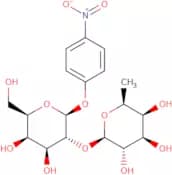
CAS:<p>chromogenic substrate for beta-glucuronidase</p>Fórmula:C14H14BrNO7•C6H13NPureza:Min. 95%Forma y color:PowderPeso molecular:487.34 g/mol4-Nitrophenyl 2-O-(b-L-fucopyranosyl)-b-D-galactopyranoside
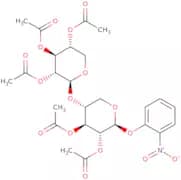
CAS:<p>4-Nitrophenyl 2-O-(b-L-fucopyranosyl)-b-D-galactopyranoside is a high-quality chromogenic substrate with excellent sensitivity specifically designed for enzymes' activity detection. This pNP substrate enables rapid, accurate, and measurable colorimetric visualization of enzymatic hydrolysis reactions. Researchers can easily and effectively monitor the release of 4-nitrophenol as a yellow product under laboratory conditions, allowing for convenient comparative analysis and identification of enzyme levels in various samples.</p>Pureza:Min. 95%Forma y color:White SolidPeso molecular:447.39 g/mol2-Nitrophenyl 2,2',3,3',4'-penta-O-acetyl-b-D-xylobioside
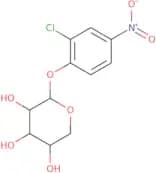
CAS:<p>2-Nitrophenyl 2,2',3,3',4'-penta-O-acetyl-b-D-xylobioside is an oligosaccharide that is used as a substrate for the transport of nucleic acid molecules. It can be used to study the function of membrane transport proteins and their homologues. This compound has been shown to inhibit the growth of corynebacterium glutamicum and trisaccharide emissions.</p>Pureza:Min. 95%Peso molecular:613.52 g/mol2-Chloro-4-nitrophenyl β-D-xylopyranoside
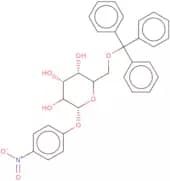
CAS:<p>2-Chloro-4-nitrophenyl β-D-xylopyranoside is a fluorogenic substrate that can be used for the detection of β-glucuronidase activity in food testing, environmental testing, and diagnostics. It has been shown to be an effective substrate for detecting β-glucuronidase activity with a high degree of sensitivity and specificity. 2CNPX can also be used as a chromogenic substrate for the detection of β-glucuronidase activity in food testing and environmental testing. The conjugate form of this substrate is useful for immunochemical assays, such as enzyme linked immunosorbent assay (ELISA) or radioimmunoassay (RIA). This product is also used as a ligand in fluorescence resonance energy transfer (FRET) assays.<br>2CNPX can be used to detect β-glucuronidase activity by chemiluminescence</p>Fórmula:C11H12ClNO7Pureza:Min. 95%Peso molecular:305.67 g/mol4-Nitrophenyl 6-O-trityl-a-D-glucopyranoside
CAS:<p>4-Nitrophenyl 6-O-trityl-a-D-glucopyranoside is a high-quality trityl pNP substrate that performs excellently in various enzymatic assays. Containing a trityl-protected sugar moiety, this substrate is perfect for investigating alpha-D-glucopyranoside-specific enzymes and providing precise data for your experiments.</p>Pureza:Min. 95%Peso molecular:543.56 g/molAldol® 458 phosphate, disodium salt, Biosynth Patent: EP 2427431 and US 8940909
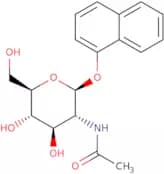
CAS:<p>Aldol® 458 phosphate is a chromogenic and fluorogenic enzyme substrate used for detection of phosphatase activity. The colorless enzyme substrate is cleaved by phosphatases secreted by bacteria grown in liquid media, yielding yellow color and green fluorescence. Aldol® 458 phosphate can also be used in assays involving phosphatase-coupled antibodies in immunoassay applications (ELISA). Aldol® 458 phosphate can be used under aerobic and anaerobic conditions.</p>Fórmula:C16H12NNa2O6PPureza:Min. 95.0 Area-%Peso molecular:391.22 g/mol1-Naphthyl 2-acetamido-2-deoxy-b-D-glucopyranoside
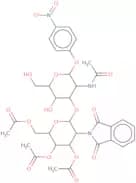
CAS:<p>1-Naphthyl 2-acetamido-2-deoxy-b-D-glucopyranoside is a chromogenic substrate commonly used to assay the activity of enzymes that cleave N-acetyl-beta-D-glucosaminide, such as beta-N-acetylglucosaminidase. Upon cleavage by the enzyme of interest, the substrate releases a yellow-colored 1-naphthylamine, which can be measured spectrophotometrically. This substrate is widely used in biomedical research and drug discovery for studying lysosomal storage disorders, bacterial infections, and neurological diseases.</p>Pureza:Min. 95%Peso molecular:347.36 g/mol4-Nitrophenyl 2-acetamido-3-O-(3,4,6-tri-O-acetyl-2-deoxy-2-phthalimido-b-D-glucopyranosyl)-2-deoxy-a-D-galactopyranoside
<p>4-Nitrophenyl 2-acetamido-3-O-(3,4,6-tri-O-acetyl-2-deoxy-2-phthalimido-b-D-glucopyranosyl)-2-deoxy -a -D -galactopyranoside is a Fluorogenic substrate that is used in the detection of beta glucuronidase activity. It can be used for food testing, staining, environmental testing and chromogenic substrate for diagnostic purposes. It has a CAS number of 184840–55–9 and is available in high purity and quality. 4NPPAG is an enzyme substrate that is used to measure the amount of beta glucuronidase activity in culture media by chemiluminescence or bioluminescence.</p>Pureza:Min. 95%Peso molecular:759.67 g/mol4-Nitrophenyl b-D-cellohexaoside
CAS:<p>4-Nitrophenyl b-D-cellohexaoside is a substrate for many enzymes and can be used to detect the presence of these enzymes in biological samples. It can also be used to detect the presence of bacteria, fungi, parasites, and viruses. 4-Nitrophenyl b-D-cellohexaoside is an excellent substrate for enzyme reactions that produce a chromogenic or fluorogenic product. This product is often conjugated with other compounds such as antibodies or antigens to form an immunoassay. 4-Nitrophenyl b-D-cellohexaoside is made from a high purity chemical by a process called nitration with sodium nitrate and sulfuric acid.</p>Pureza:Min. 95%Peso molecular:1,111.95 g/mol4-Nitrophenyl 2,6-di-O-benzoyl-a-D-galactopyranoside
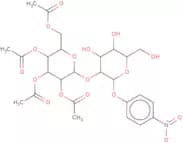
CAS:<p>4-Nitrophenyl 2,6-di-O-benzoyl-a-D-galactopyranoside is a specialized chromogenic substrate for the accurate evaluation of α-galactosidase activity. Upon enzymatic hydrolysis, it generates the chromophore 4-nitrophenol, which can be conveniently quantified by absorbance spectroscopy. The substrate features a unique benzoylated galactopyranoside moiety for enhanced selectivity and compound stability. This high-quality substrate is perfect for various research, analytical, and diagnostic applications involving α-galactosidase detection or quantification.</p>Pureza:Min. 95%Peso molecular:509.46 g/mol4-Nitrophenyl 2-O-(2,3,4,6-tetra-O-acetyl-a-D-mannopyranosyl)-a-D-mannopyranoside
<p>4-Nitrophenyl 2-O-(2,3,4,6-tetra-O-acetyl-a-D-mannopyranosyl)-a-D-mannopyranoside is a fluorogenic substrate that is used as a diagnostic tool and can be used to detect the presence of β--glucosidase in the gut. It is also used as a conjugate with enzymes such as peroxidase or alkaline phosphatase for use in enzyme catalyzed reactions. The product has been shown to be active against a variety of bacteria, including Staphylococcus aureus and Escherichia coli. This product has been shown to produce chemiluminescence when incubated with horseradish peroxidase and hydrogen peroxide. This product is light sensitive and should be stored at room temperature away from direct sunlight.</p>Pureza:Min. 95%Peso molecular:631.54 g/molBCM® Histamine-producing bacteria Broth
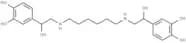
<p>Histamine (Scombrotoxin) fish poisoning is the most frequent cause of fish poisoning incidents today. Cymit Quimica's BCM®; Histamine-producingbacteria Broth (C-0450) is a growth medium for the detection of histamine-producing bacteria in food and water samples. The medium contains an indicator that turns orange to red due to metabolites released by histidine decarboxylase.</p>Hexoprenaline
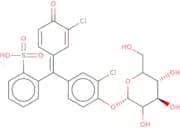
CAS:<p>Hexoprenaline is a stimulant of adrenergic beta 2 receptors used as a bronchodilator, antiasthmatic agent, and tocolytic agent.</p>Fórmula:C22H32N2O6Forma y color:SolidPeso molecular:420.5Chlorophenol red b-D-galactopyranoside
CAS:<p>Used in biological studies as a chromogenic substrate for β-galactosidase; red color.Chlorophenol red indicates changes of pH in the range of 4.8 to 6.7 by turning the solution from yellow (at pH 4.8) to violet (at pH 6.7). Converted as signalogenic moiety of an enzyme substrate, chlorophenol red beta-D-galactopyranoside has a good proven sensitivity in the detection of beta-galactosidase activity in transfected mammalian cells, when compared to ONPG (o-nitrophenyl-beta-D-galactopyranoside) (Eustice, 1991)</p>Fórmula:C25H22Cl2O10SPureza:Min. 95%Forma y color:Orange Red PowderPeso molecular:585.41 g/molNaphthol AS-OL acetate
CAS:<p>Modified naphtol AS substrate used in histochemical and cytochemical staining</p>Pureza:Min. 95%Peso molecular:335.35 g/mol4-Nitrophenyl b-D-cellopentaoside
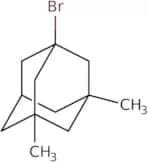
CAS:<p>Substrates for endoglucanase and beta-cellobiohydrolase activity in the study of digestive system in Zygentoma as an insect model for high cellulase activity</p>Fórmula:C36H55NO28Pureza:Min. 95%Forma y color:PowderPeso molecular:949.81 g/mol1-Bromo-3,5-dimethyladamantane
CAS:<p>Intermediate in the synthesis of memantine</p>Fórmula:C12H19BrPureza:Min. 95%Peso molecular:243.18 g/molBenzaldehyde
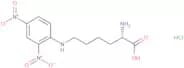
CAS:Producto controlado<p>Benzaldehyde</p>Fórmula:C7H6OForma y color:Colorless LiquidPeso molecular:106.041862,4-Dinitrophenyl)-L-lysine hydrochloride monohydrate
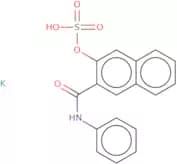
CAS:<p>2,4-Dinitrophenyl)-L-lysine hydrochloride monohydrate is a lysine derivative that has been modified with a 2,4-dinitrophenyl group. It could be used as an enzyme substrate to monitor enzymes that recognize and modify lysine residues, such as lysine methyltransferases and demethylases, lysine acylases and lysine oxidases.</p>Pureza:Min. 95%Forma y color:PowderPeso molecular:348.74 g/molNaphthol AS sulphate potassium
CAS:<p>Modified naphtol AS substrate used in histochemical and cytochemical staining</p>Fórmula:C17H13NO5S•KPureza:Min. 95%Forma y color:PowderPeso molecular:382.45 g/mol1-Naphthyl-α-D-mannopyranoside
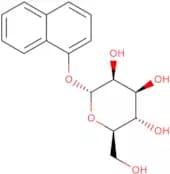
CAS:<p>1-Naphthyl-alpha-D-mannopyranoside is a chromogenic substrate. It is used in diagnostics and as a reagent for enzymatic analysis of alpha-mannosidase activity in culture media, food testing, and environmental testing.</p>Fórmula:C16H18O6Pureza:Min. 95%Forma y color:PowderPeso molecular:306.31 g/molClemastine
CAS:<p>Clemastine (Meclastin) is an antagonist of the H1 receptor and exhibits anti-inflammatory effects.</p>Fórmula:C21H26ClNOPureza:99.21%Forma y color:SolidPeso molecular:343.896-Benzoyl-2-naphthylphosphate disodium salt
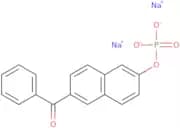
CAS:<p>6-Benzoyl-2-naphthylphosphate disodium salt is a chromogenic substrate used to detect and quantify alkaline phosphatase activity. After enzymatic hydrolysis, 6-benzoyl-2-naphthol is released, which can be detect or even further react with other reagents (e.g. Fast Red) to increase the intensity of the colorimetric signal. It is used in common applications such as ELISA, immunohistochemistry and Western Blotting.</p>Pureza:Min. 95%Peso molecular:374.24 g/mol4-Nitrophenyl a-D-maltotetraoside
CAS:<p>4-Nitrophenyl alpha-D-maltotetraoside is a chromogenic substrate used for the detection of alpha-glucosidase and alpha-amylase activity. The four glucose units in the molecule are hydrolyzed by the enzyme, releasing 4-nitrophenol and allowing for easy colorimetric measurement of enzymatic activity</p>Pureza:Min. 95%Peso molecular:787.67 g/mol4-Nitrophenyl 2-acetamido-2-deoxy-4-O-(β-D-galactopyranosyl)-α-D-glucopyranoside
CAS:<p>4-Nitrophenyl 2-acetamido-2-deoxy-4-O-(β-D-galactopyranosyl)-α-D-glucopyranoside is a high-quality chromogenic pNP enzyme substrate specifically designed to enable effective and accurate detection of enzyme activity. By utilizing this advanced substrate, researchers and professionals can perform a range of applications, including activity assays, enzyme inhibition studies, and substrate specificity profiling. This substrate's unique properties result in exceptional sensitivity and throughput, ensuring effective results for a wide variety of enzyme assays.</p>Fórmula:C20H28N2O13Pureza:Min. 90%Forma y color:White PowderPeso molecular:504.44 g/mol4-Nitrophenyl 2-azido-2-deoxy-b-D-galactopyranoside
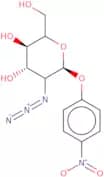
<p>4-Nitrophenyl 2-azido-2-deoxy-beta-D-galactopyranoside is a chromogenic substrate for beta-galactosidase. Upon hydrolysis, para-nitrophenol is released yielding a yellowish colour. 4-Nitrophenyl 2-azido-2-deoxy-beta-D-galactopyranoside is used in different applications such as the Bacterial enzyme assays (e.g., E. coli detection)</p>Pureza:Min. 95%Forma y color:White To Off-White SolidPeso molecular:326.26 g/mol3-Amino-9-ethylcarbazole
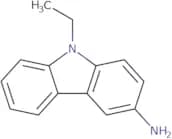
CAS:<p>3-Amino-9-ethylcarbazole is a peroxidase substrate suitable for use in immunoblotting and immunohistochemical staining procedures. This substrate produces an insoluble end product that is red in color and can be observed visually.</p>Fórmula:C14H14N2Pureza:Min. 95%Forma y color:Beige PowderPeso molecular:210.27 g/mol4-Nitrophenyl b-globo-N-tetraoside
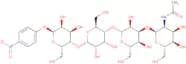
CAS:<p>4-Nitrophenyl beta-galactoside (pNP-Gal) is a chromogenic substrate commonly used in enzymatic assays to detect and quantify the presence of beta-galactosidase. It is hydrolyzed by the enzyme to release 4-nitrophenol, which produces a yellow color that can be measured spectrophotometrically. Similarly, 4-Nitrophenyl beta-glucoside (pNP-Glc) can be used to assay beta-glucosidase activity. 4-Nitrophenyl beta-globotrioside (pNP-Glo) is a similar compound that has been designed as a substrate for glycosidases that cleave terminal beta-galactosyl-(1->3)-N-acetylgalactosamine residues. In these assays, the release of 4-nitrophenol can be measured to determine the activity of the enzyme under study. The use of chromogenic substrates like pNP-Glo allows for the rapid and reliable detection of glycosidase activity in a variety of biological samples.</p>Pureza:Min. 95%Forma y color:PowderPeso molecular:828.72 g/mol4-Aminoantipyrine
CAS:<p>4-Aminoantipyrine has been used as an analgesic and anti-inflammatory agent. It can also target peroxidase enzymes to produce a red color</p>Fórmula:C11H13N3OForma y color:Off-White To Yellow SolidPeso molecular:203.24 g/mol2-Chloro-4-nitrophenyl 2-acetamido-2-deoxy-β-D-glucopyranoside
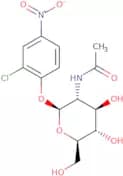
CAS:<p>2-Chloro-4-nitrophenyl 2-acetamido-2-deoxy-β-D-glucopyranoside is a chromogenic substrate used for beta-N-acetylglucosaminidase assays. Upon enzymatic hydrolysis, 2-chloro-4-nitrophenol is released, which has a yellowish color. It is used in diagnostic applications such as lysosomal storage disorder diagnosis (for example, Tay-Sachs disease) and glycosidase inhibition studies.</p>Fórmula:C14H17ClN2O8Pureza:Min. 98 Area-%Forma y color:White PowderPeso molecular:376.75 g/molRemazol brilliant blue R D-xylan
<p>Remazol Brilliant Blue R D-xylan is a chromogenic substrate used for the detection and quantification of xylanase enzyme activity. This substrate consists of a xylan polymer backbone covalently linked to the Remazol Brilliant Blue R dye. Upon cleavage by xylanase enzymes, the dye is released, producing a vibrant blue color that can be easily measured spectrophotometrically. This substrate is widely used in various applications, including the study of xylanase-producing microorganisms, optimization of enzyme production, and evaluation of enzyme kinetics.</p>Pureza:Min. 95%Forma y color:PowderNaphthol AS-CL phosphate
CAS:<p>Modified naphtol AS substrate used in histochemical and cytochemical staining</p>Pureza:Min. 95%Peso molecular:407.74 g/molFulvestrant (R enantiomer)
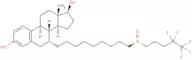
CAS:<p>Fulvestrant R enantiomer is the less active R enantiomer of Fulvestrant. Fulvestrant is a potent estrogen receptor antagonist with an IC50 of 9.4 nM.</p>Fórmula:C32H47F5O3SPureza:98%Forma y color:SolidPeso molecular:606.77Fulvestrant (S enantiomer)
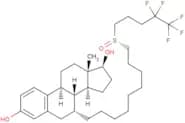
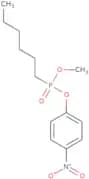
CAS:<p>Fulvestrant S enantiomer is the less active S enantiomer of Fulvestrant. Fulvestrant is a potent estrogen receptor antagonist with an IC50 of 9.4 nM.</p>Fórmula:C32H47F5O3SPureza:98%Forma y color:SolidPeso molecular:606.77Methyl 4-nitrophenyl hexylphosphonate
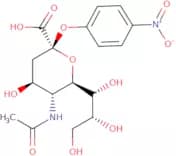
CAS:<p>Methyl 4-nitrophenyl hexylphosphonate is a phosphonate inhibitor of the enzyme serine esterase. It has been shown to be more potent than other irreversible inhibitors such as ethyl 4-nitrophenyl hexylphosphonate and methyl 4-nitrophenoxybutyl phosphate. This compound is an immobilized form of the methyl 4-nitrophenyl hexylphosphonate that is immobilized on an inert surface, such as silica gel, via a covalent bonding process. The immobilization of the molecule ensures that it will not leach from the surface and is stable over time. The molecular weight of this substance is 411.5 Daltons and its molecular formula is C8H15NO4P. This substance has a diameter of 0.8 nm and can be found in crystalline form with a melting point of 143 degrees Celsius at atmospheric pressure. Methyl 4-nitrophenyl</p>Fórmula:C13H20NO5PPureza:Min. 95%Peso molecular:301.27 g/mol2-O-(4-Nitrophenyl)-a-D-N-acetylneuraminic acid
CAS:<p>2-O-(4-Nitrophenyl)-a-D-N-acetylneuraminic acid, also known as p-nitrophenyl N-acetylneuraminic acid, is a chromogenic substrate specifically designed for the detection and quantification of neuraminidase (sialidase) activity. Upon cleavage by neuraminidase, it releases a yellow-colored product, 4-nitrophenol, which can be easily monitored spectrophotometrically at 405 nm. This substrate is widely used in various applications, including enzyme kinetics studies, inhibitor screening, and the determination of neuraminidase activity in biological samples such as viruses, bacteria, and cell lysates. It is particularly useful for studying the enzymatic properties of neuraminidases from different sources and for the development of novel antiviral and antibacterial agents targeting neuraminidase activity.</p>Fórmula:C17H22N2O11Pureza:Min. 90 Area-%Forma y color:White PowderPeso molecular:430.36 g/mol2-Nitrobenzyl 2-deoxy-2-fluoro-L-fucopyranoside
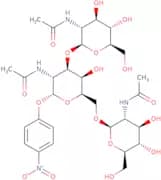
<p>The photorelease of 2-deoxy-2-fluoro-L-fucose from 2-nitrobenzyl-2-deoxy-2-fluoro-L-fucopyranoside was performed under a 365 nm LED illumination. It has been shown in plant cells this liberated 2-deoxy-2-fluoro-L-fucose can be converted by the endogenous metabolic machinery into the corresponding nucleotide-sugar, which then efficiently inhibits Golgi-localized fucosyltransferases.</p>Fórmula:C13H16FNO6Pureza:Min. 95%Forma y color:PowderPeso molecular:301.27 g/mol4-Nitrophenyl 2-acetamido-3,6-di-O-(2-acetamido-2-deoxy-b-D-glucopyranosyl)-2-deoxy-a-D-galactopyranoside
CAS:<p>4-Nitrophenyl 2-acetamido-3,6-di-O-(2-acetamido-2-deoxy-b-D-glucopyranosyl)-2-deoxy-a-D-galactopyranoside is a fluorogenic substrate that is used in enzyme assays to detect the presence of an enzyme. The substrate reacts with the enzyme to produce a fluorescent product. 4NPAAG can be used for diagnostics, culture media, food testing and environmental testing.</p>Fórmula:C30H44N4O18Pureza:Min. 95%Peso molecular:748.69 g/mol4-Nitrophenyl-myo-inositol-1-yl phosphate
CAS:<p>4-Nitrophenyl-myo-inositol-1-yl phosphate is a highly specific chromogenic substrate used for the detection, quantification, and characterization of phosphoinositide phosphatases. When cleaved by the target enzyme, it generates a highly absorbing 4-nitrophenyl moiety, producing a yellow color that can be measured spectrophotometrically. This versatile substrate is valuable in examining phosphoinositide phosphatase activity, enzyme kinetics, substrate specificity, and inhibition studies in various cellular processes, including signal transduction, lipid metabolism, and membrane trafficking.</p>Pureza:Min. 95%Peso molecular:381.23 g/mol4-Nitrophenyl a-L-galactopyranoside
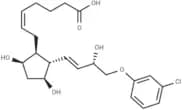
<p>Chromogenic substrate targeting alpha-D-galactosidase</p>Pureza:Min. 95%Peso molecular:301.25 g/molCloprostenol
CAS:<p>Cloprostenol is a synthetic prostaglandin and PGF2α analogue used in animals to terminate pregnancy and induce corpus luteum dissolution.</p>Fórmula:C22H29ClO6Pureza:99.81%Forma y color:Clear Colorless To Light Yellowish LiquidPeso molecular:424.92[L-Leu]6-Leuprolide (5-Oxo-L-prolyl-L-histidyl-L-tryptophyl-L-seryl-L-tyrosyl-L-leucyl-L-leucyl-L-arginyl-N-ethyl-L-prolinamide)
CAS:<p>Lactams, nesoi</p>Fórmula:C59H84N16O12Forma y color:Off-White PowderPeso molecular:1208.64546[D-His]-Leuprolide (5-Oxo-L-prolyl-D-histidyl-L-tryptophyl-L-seryl-L-tyrosyl-D-leucyl-L-leucyl-L-arginyl-N-ethyl-L-prolinamide)
CAS:Lactams, nesoiFórmula:C59H84N16O12Forma y color:Off-White PowderPeso molecular:1208.64546[D-Ser]-Leuprolide (5-Oxo-L-prolyl-L-histidyl-L-tryptophyl-D-seryl-L-tyrosyl-D-leucyl-L-leucyl-L-arginyl-N-ethyl-L-prolinamide)
CAS:<p>Lactams, nesoi</p>Fórmula:C59H84N16O12Forma y color:Off-White PowderPeso molecular:1208.64546[Pro(Ac)]1-Leuprolide (5-Oxo-N-acetyl-L-prolyl-L-histidyl-L-tryptophyl-L-seryl-L-tyrosyl-D-leucyl-L-leucyl-L-arginyl-N-ethyl-L-prolinamide)
CAS:Lactams, nesoiFórmula:C61H86N16O13Forma y color:Off-White PowderPeso molecular:1250.65603[Ser(Ac)]4-Leuprolide (5-Oxo-L-prolyl-L-histidyl-L-tryptophyl-N-acetyl-L-seryl-L-tyrosyl-D-leucyl-L-leucyl-L-arginyl-N-ethyl-L-prolinamide)
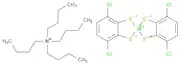
CAS:Lactams, nesoiFórmula:C61H86N16O13Forma y color:Off-White PowderPeso molecular:1250.65603Tetrabutylammonium bis(3,6-dichloro-1,2-benzenedithiolato)nickelate
CAS:Fórmula:C28H40Cl4NNiS4Pureza:98%Peso molecular:719.3893Ref: IN-DA00DDW7
Producto descatalogadoBenz[b]indeno[1,2-d]pyran-3,4,6a,9,10(6H)-pentol, 7,11b-dihydro-,(6aS,11bR)-
CAS:Fórmula:C16H14O6Pureza:97%Forma y color:SolidPeso molecular:302.27876





















![Benz[b]indeno[1,2-d]pyran-3,4,6a,9,10(6H)-pentol, 7,11b-dihydro-,(6aS,11bR)-](/_next/image/?url=https%3A%2Fstatic.cymitquimica.com%2Fproducts%2FIN%2Fthumb-webp%2FDA00I98R.webp&w=3840&q=75)