Otros
Se han encontrado 6274 productos de "Otros"
Ordenar por
Pureza (%)
0
100
|
0
|
50
|
90
|
95
|
100
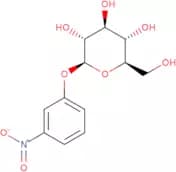
3-Nitrophenyl β-D-glucopyranoside
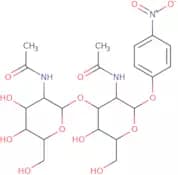
CAS:<p>3-Nitrophenyl beta-D-glucopyranoside is a chromogenic enzyme substrate commonly used to assay for beta-glucosidase activity. Upon hydrolysis by the enzyme, it produces a yellow product that can be easily detected by spectrophotometry. This substrate is often used in the field of carbohydrate chemistry and biochemistry to study enzyme kinetics and inhibition in both in vitro and in vivo systems.</p>Fórmula:C12H15NO8Pureza:Min. 95%Forma y color:White Yellow PowderPeso molecular:301.25 g/mol4-Nitrophenyl 2-acetamido-3-O-(2-acetamido-2-deoxy-b-D-glucopyranosyl)-2-deoxy-a-D-galactopyranoside
CAS:<p>4-Nitrophenyl 2-acetamido-3-O-(2-acetamido-2-deoxy-beta-D-glucopyranosyl)-2-deoxy-alpha-D-galactopyranoside is a chromogenic substrate for alpha-galactosidase. Upon hydrolysis, para-nitrophenol is released yielding a yellowish colour. 4-Nitrophenyl 2-acetamido-3-O-(2-acetamido-2-deoxy-beta-D-glucopyranosyl)-2-deoxy-alpha-D-galactopyranoside is used in different applications such as the Fabry disease diagnosis, glycolipid metabolism studies</p>Pureza:Min. 98 Area-%Forma y color:White PowderPeso molecular:545.49 g/molAldol® 470 phosphate, disodium salt, Biosynth Patent: EP 2427431 and US 8940909
CAS:<p>Aldol 470 phosphate is a chromogenic substrate for phosphatases yielding a yellow precipitate. Furthermore it shows some fluorescence (excitationat 320 nm to 490 nm). In contrast to classical indoxyl substrates, Aldolsubstrates work not only under aerobic but also under anaerobic conditions.</p>Fórmula:C23H18NNa2O7PPureza:Min. 95.0 Area-%Peso molecular:497.34 g/molChlorophenol red-β-D-cellotrioside
CAS:<p>Chromogenic substrate for cellulases; red color</p>Fórmula:C37H42Cl2O20SPureza:Min. 95%Forma y color:Orange to red solid.Peso molecular:909.69 g/molAldol® 455 β-D-galactopyranoside, Biosynth Patent: EP 2427431 and US 8940909
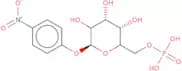
CAS:<p>Aldol® 455 beta-D-galactopyranoside is a chromogenic substrate for the enzyme β-galactosidase. It is used to detect the activity of β-galactosidase in cell culture, and has been shown to be highly purified and of high quality. This product can be used as a ligand for receptor binding studies or as an agent in enzyme substrates in fluorescence and chemiluminescence reactions.</p>Fórmula:C27H24ClNO7Pureza:Min. 93.0 Area-%Peso molecular:509.94 g/mol4-Nitrophenyl b-D-glucopyranoside-6-phosphate
CAS:<p>4-Nitrophenyl beta-D-glucopyranoside-6-phosphate is a chromogenic substrate for glucose-6-phosphatase. Upon hydrolysis, para-nitrophenol is released yielding a yellowish colour. 4-Nitrophenyl beta-D-glucopyranoside-6-phosphate is used in different applications such as the Glycogen storage disease diagnosis (e.g., von Gierke disease)</p>Fórmula:C12H16NO11PPureza:Min. 98 Area-%Forma y color:PowderPeso molecular:381.23 g/mol6-Chloro-3-indoxyl-β-D-galactopyranoside
CAS:<p>6-Chloro-3-indoxyl-beta-D-galactopyranoside is a chromogenic substrate for beta-galactosidase that yields a salmon or rose-coloured precipitate and hence is also known as Salmon-Gal. It can be used in conjunction with isopropyl-beta-D-thiogalactopyranoside (IPTG) as an alternative to the chromogenic substrate 5-bromo-4-chloro-3-indolyl beta-D-galactopyranoside (X-Gal) for detection of beta-galactosidase activity in bacterial colonies in colorimetric assays. Where beta-galactosidase expressed from a reporter gene in molecular biology experiments, recombinant colonies on growth plates are salmon-coloured while non-recombinants appear as white. Use of nitroblue tetrazolium salt (NBT) with Salmon-Gal may provide faster results, yielding a clear, purple precipitate, than for Salmon-Gal alone. In conjunction with 5-bromo-4-chloro-3-indolyl-beta-D-glucoside (X-Glc), Salmon-Gal is useful for simultaneous detection of GUS and Lac activities in the same medium.</p>Fórmula:C14H16ClNO6Pureza:Min. 98.0 Area-%Peso molecular:329.74 g/mol5-Bromo-6-chloro-3-indolyl sulfate potassium salt
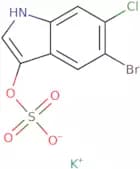
CAS:<p>5-Bromo-6-chloro-3-indolyl sulfate potassium salt is a fluorogenic substrate that can be used for food testing. It is a conjugate of 5-bromo-6-chloroindolylsulfate and potassium, which is dissolved in buffer solution. This product can also be used as a chromogenic substrate in environmental testing, an enzyme substrate in diagnostics, and a ligand for bioluminescence. It has high purity and quality, and can be used for chemiluminescence or bioluminescence. The CAS number for this product is 6581-24-4.</p>Fórmula:C8H4BrClNO4S·KPureza:Min. 95%Forma y color:PowderPeso molecular:364.64 g/mol4-(Bromomethyl)phenyl-β-D-triacetylglucuronic acid methyl ester
<p>4-(Bromomethyl)phenyl-beta-D-triacetylglucuronic acid methyl ester, also known as 4-bromo-4'-(N,N-dimethylamino)biphenyl, is a bioluminescent substrate. It is used for the detection of beta-glucuronidase activity in biological samples and for the detection of bacterial β-glucuronidase activity in culture media. Beta-glucuronidase catalyzes the hydrolysis of glucuronic acid by breaking down a conjugate molecule into two smaller molecules, which can be detected using bioluminescence. 4-(Bromomethyl)phenyl-beta-D-triacetylglucuronic acid methyl ester is a chromogenic substrate that has been shown to be an excellent ligand in biomolecular research because it reacts with many different enzymes. This product is highly pure and</p>Fórmula:C20H23BrO10Pureza:Min. 95 Area-%Peso molecular:503.29 g/mol6-Chloro-4-(2-chlorophenyl)-2-quinazolinecarboxaldehyde
CAS:<p>6-Chloro-4-(2-chlorophenyl)-2-quinazolinecarboxaldehyde is a colorimetric reagent that can be used to detect Cl. It has been shown to react with Cl in the presence of an acidic solution and produce a red color. The reagent is stable in organic solvents, such as chloroform, but decomposes in water. 6-Chloro-4-(2-chlorophenyl)-2-quinazolinecarboxaldehyde is also used to detect chloride by titrimetric or polarographic methods.</p>Fórmula:C15H8Cl2N2OPureza:Min. 95%Forma y color:Off-White PowderPeso molecular:303.14 g/mol3-Nitrophenyl b-D-galactopyranoside
CAS:<p>Chromogenic substrate targeting beta-galactosidase</p>Fórmula:C12H15NO8Forma y color:PowderPeso molecular:301.25 g/molNaphthol AS-BI β-L-fucopyranoside
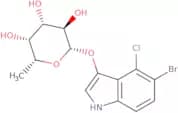
CAS:<p>Substrate for the detection of beta-D-fucosidase</p>Fórmula:C24H24BrNO7Pureza:Min. 95%Peso molecular:518.35 g/mol5-Bromo-6-chloro-3-indolyl α-D-glucopyranoside
CAS:<p>5-Bromo-6-chloro-3-indolyl α-D-glucopyranoside is a chromogenic substrate that yields a magenta-colored product after cleavage. The chromophore 5-bromo-6-chloro-indoxyl is released, generating the observable color. It is used in Pompe disease diagnostics, a glycogen storage disorder, that measures the deffiency of alpha-glucosidase (GAA) that could lead to the accumulation of glycogen in lysosomes.</p>Fórmula:C14H15BrClNO6Pureza:Min. 95%Forma y color:PowderPeso molecular:408.63 g/mol3-Indolyl 2-acetamido-2-deoxy-b-D-galactopyranoside
<p>3-Indolyl 2-acetamido-2-deoxy-b-D-galactopyranoside is a fluorogenic substrate that reacts with the enzyme β-galactosidase to produce a blue product. This product can be used to diagnose the presence of β-galactosidase in culture media, as well as in food and environmental testing. 3IAG is also a chromogenic substrate that can be used for detection of β-galactosidase activity.</p>Pureza:Min. 95%Peso molecular:336.34 g/molNaphthol AS-D
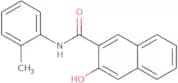
CAS:<p>Naphthol AS-D is a diagnostic chemical for phosphatase enzymes and is used to stain cells, tissues, and body fluids for diagnosis. The chemical reacts with the amino groups of proteins in cells and produces a brown color. Naphthol AS-D is not toxic to living cells in concentrations below 5%. It stains basophilic leukemia cells as well as brain cells. This chemical can be used to diagnose cutaneous lesions, such as psoriasis or melanoma, which are difficult to diagnose by standard methods. present in these lesions and produce a brown color.</p>Fórmula:C18H15NO2Pureza:Min. 95%Forma y color:PowderPeso molecular:277.32 g/mol3-Indolyl 2-acetamido-2-deoxy-b-D-glucopyranoside
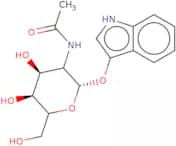
CAS:<p>3-Indolyl 2-acetamido-2-deoxy-b-D-glucopyranoside is a substrate used for the detection of the enzyme N-acetylglucosaminidase (NAG). The enzyme hydrolyzes the NAG conjugate, releasing indole that can be detected through a colorimetric assay. This method is commonly used in clinical chemistry to evaluate kidney function, as NAG is excreted in urine and increased levels may indicate renal injury or disease. The indole NAG assay is also used in microbiology to detect the presence of NAG-producing bacteria.</p>Pureza:Min. 95%Peso molecular:336.34 g/mol4-Nitrophenyl phosphate, bis(cyclohexylammonium) salt
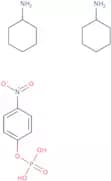
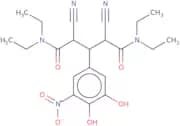
CAS:<p>Chromogenic substrate yielding a soluble yellow chromophor for the colorimetric assay of phosphatases.</p>Fórmula:C18H32N3O6PPureza:97.0 To 103.0%Peso molecular:417.45 g/mol2,4-Dicyano-3-(3,4-dihydroxy-5-nitrophenyl)-N1,N1,N5,N5-tetraethylpentanediamide
<p>2,4-Dicyano-3-(3,4-dihydroxy-5-nitrophenyl)-N1,N1,N5,N5-tetraethylpentanediamide is a white crystalline solid that is used as an analytical reference standard in HPLC. It is used for the determination of purity and impurities in pharmaceuticals and drug products. This compound can be custom synthesized or obtained from natural sources. It can be found in the USP Drug Impurity Standards and the European Pharmacopoeia.</p>Fórmula:C21H27N5O6Pureza:Min. 95%Peso molecular:445.47 g/molAldol® 484 β-D-glucopyranoside, Biosynth Patent: EP 2427431 and US 8940909
CAS:<p>Aldol® 484 beta-D-glucopyranoside is a chromogenic and fluorogenic enzyme substrate used for detection of beta-glucosidase activity. The colorless enzyme substrate is cleaved by bacteria producing beta-glucosidase in liquid or solid media, yielding intense red color and green fluorescent signal. Aldol® 484 beta-D-glucopyranoside can be used under aerobic and anaerobic conditions.</p>Fórmula:C26H24ClFN2O7Pureza:Min. 95%Forma y color:PowderPeso molecular:530.93 g/mol2-Nitrophenyl-N-acetyl-β-D-glucosaminide
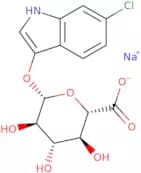
CAS:<p>Chromogenic β-Glucosaminidase substrate yielding a yellow absorbent solution upon cleavage.</p>Fórmula:C14H18N2O8Pureza:Min. 99 Area-%Peso molecular:342.31 g/mol6-Chloro-3-indolyl b-D-glucuronide sodium salt
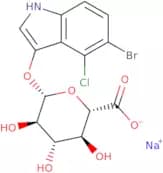
CAS:<p>6-Chloro-3-indolyl b-D-glucuronide sodium salt is a chromogenic substrate for beta-glucuronidase, a reporter gene used to monitor gene expression by detecting the enzyme's activity. It yields a salmon colored precipitate upon cleavage.</p>Pureza:Min. 95%Forma y color:PowderPeso molecular:365.7 g/mol5-Bromo-4-chloro-3-indolyl b-D-glucuronide sodium salt
CAS:<p>Chromogenic substrate for beta-glucuronidase</p>Fórmula:C14H12BrClNNaO7Pureza:Min. 98 Area-%Forma y color:White Off-White PowderPeso molecular:444.59 g/mol5-Bromo-4-chloro-3-indoxyl-β-D-xylopyranoside
CAS:<p>5-Bromo-4-chloro-3-indoxyl-beta-D-xylopyranoside is a fluorogenic substrate that can be used to measure the activity of bacterial esterases. The enzyme cleaves the xylose moiety from 5-bromo-4-chloro-3-indoxyl, yielding indoxyl as an intermediate product. This reaction can be catalyzed by esterases found in bacteria, which hydrolyze esters containing a single hydroxyl group at one end and a carboxylic acid or alcohol at the other end. Indoxyl is fluorescent and can be detected using a fluorimeter. 5BX is also chromogenic, so it can be used as an enzyme substrate for detecting beta galactosidase activity in bacteria such as Mycobacterium smegmatis or Escherichia coli.<br>5BX is also used to detect chemilumines</p>Fórmula:C13H13BrClNO5Peso molecular:378.61 g/molRef: 3D-B-7750
1gA consultar5gA consultar10gA consultar500mgA consultar2500mgA consultar-Unit-ggA consultar5-Bromo-4-chloro-3-indoxyl-N-acetyl-β-D-glucosaminide
CAS:<p>Chromogenic substrate for N-acetyl-β-D-glucosaminidase yielding a blue precipitate. Contained in certain mycological culture media. Used in histochemistry.</p>Fórmula:C16H18BrClN2O6Pureza:Min. 99.5 Area-%Peso molecular:449.69 g/mol5-Bromo-4-chloro-3-indoxyl phosphate, p-toluidine salt, high grade
CAS:<p>A substrate for visualising alkaline phosphatase activity. It produces a purple insoluble end product that is detected visually, when used together with nitroblue tetrazolium. The substrate system is versatile and has functions in a variety of applications, including Northern, Southern, and Western blotting, in situ hybridization, ELISAs, microarray and immunohistochemistry. DMF soluble.</p>Fórmula:C15H15BrClN2O4PPureza:Min. 98.0 Area-%Peso molecular:433.63 g/mol4-Chloro-3-indoxyl-β-D-galactopyranoside
CAS:<p>Chromogenic substrate for β-D-galactosidase yielding a precipitate. Mostly used in histochemistry.</p>Fórmula:C14H16ClNO6Peso molecular:329.74 g/mol2-O-(4-Nitrophenyl)-a-D-N-acetylneuraminic acid sodium salt
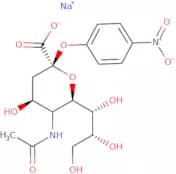
CAS:<p>2-O-(4-Nitrophenyl)-alpha-D-N-acetylneuraminic acid sodium salt is a chromogenic substrate used to detect the enzymatic activity of neuraminidase or sialidase. After cleavage, the nitrophenyl moiety is released exhibiting a light yellowish color. 2-O-(4-Nitrophenyl)-alpha-D-N-acetylneuraminic acid sodium salt is used in bacterial neuraminidase activity assays.</p>Pureza:Min. 95%Forma y color:Yellow PowderPeso molecular:452.35 g/mol1-Naphthyl β-D-glucopyranoside
CAS:<p>1-Naphthyl β-D-glucopyranoside can be used as a chromogenic substrate for beta-glucosidases. It can also be used as a fluorogenic substrate to study carbohydrate metabolism and in screening enzyme inhitibitors in pharmacologic research.</p>Fórmula:C16H18O6Pureza:Min. 95%Forma y color:White Off-White PowderPeso molecular:306.31 g/mol5-Bromo-4-chloro-3-indoxyl phosphate, dilithium salt hydrate
<p>5-Bromo-4-chloro-3-indoxyl phosphate, dilithium salt hydrate is a chromogenic substrate used to detect the specific enzymatic activity of alkaline phosphatase. After cleavage, 5-bromo-4-chloro-indoxyl is released, resulting in a blue to blue-green color change in bacterial colonies or media. 5-Bromo-4-chloro-3-indoxyl phosphate, dilithium salt hydrate is used in ELISA and molecular biology assays such as lacZ reporter systems.</p>Fórmula:C8H4BrClLi2NO4P(anhydrousbasis)Pureza:Min. 98 Area-%Forma y color:PowderPeso molecular:338.34 g/mol4-Nitrophenyl-α-D-galactopyranoside
CAS:<p>Chromogenic substrate yielding a soluble chromophore for the colorimetric assay of α-D-galactosidase upon cleavage. Used for the detection of hydrolases in tissues and membranes.</p>Fórmula:C12H15NO8Pureza:Min. 99.0 Area-%Peso molecular:301.26 g/mol4-Nitrophenyl 4,6-benzylidene-α-D-glucopyranoside
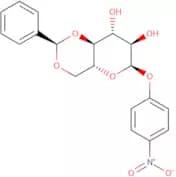
CAS:<p>4-Nitrophenyl 4,6-benzylidene-alpha-D-glucopyranoside is a chromogenic substrate for alpha-glucosidase. Upon hydrolysis, para-nitrophenol is released yielding a yellowish colour. 4-Nitrophenyl 4,6-benzylidene-alpha-D-glucopyranoside is used in different applications such as the Pompe disease diagnosis, glycogen metabolism research</p>Fórmula:C19H19NO8Pureza:Min. 95%Forma y color:PowderPeso molecular:389.36 g/mol3-Indoxyl caprylate
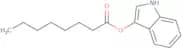
CAS:<p>3-Indoxyl caprylate is a chemiluminescent substrate that is used in the detection of bacteria. It has been shown to be a very sensitive and selective fluorogenic substrate for the detection of bacterial activity, which can be used with an appropriate enzyme reaction. 3-Indoxyl caprylate has also been shown to be a potent quencher of bioluminescence, and can be used as a chromogenic substrate in diagnostic assays. 3-Indoxyl caprylate is often used as a culture media supplement or food additive to enhance its growth properties. It has been found to have high purity and quality levels, making it suitable for use in diagnostics and research.</p>Pureza:Min. 95%Peso molecular:259.34 g/mol1-Methyl 2-(4-methyl-2-oxo-2H-1-benzopyran-7-yl)ethanedioate
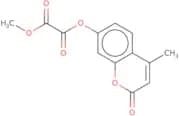
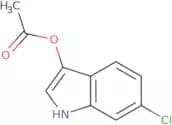
CAS:<p>Inorganic phosphate targeted colorimetric probe</p>Fórmula:C13H10O6Pureza:Min. 95%Peso molecular:822.35 g/mol6-Chloro-3-indoxyl-3-acetate
CAS:<p>6-Chloro-3-indoxyl-3-acetate is a chromogenic substrate for carboxylesterase yielding a salmon colored precipitate upon cleavage. Mainly used in histochemistry.</p>Pureza:Min. 95%Forma y color:White PowderPeso molecular:209.63 g/mol2-Nitrophenyl α-D-glucopyranoside
CAS:<p>2-Nitrophenyl a-D-glucopyranoside is a chromogenic substrate commonly used to assay the activity of glucosidases. Upon cleavage of the glycosidic bond by glucosidases, the released 2-nitrophenyl group yields a yellow color detectable by spectrophotometry. This substrate has high sensitivity and is widely used in a variety of applications, including drug discovery and enzyme kinetics studies.</p>Fórmula:C12H15NO8Pureza:Min. 95%Forma y color:White to off-white solid.Peso molecular:301.25 g/mol5-Bromo-4-chloro-3-indoxyl-β-L-fucopyranoside
CAS:<p>This product is a chromogenic substrate that is used in the detection of alkaline phosphatase and other enzymes. It is also used in food testing, staining, and diagnostics. This product has high purity with a CAS number of 125328-84-9.</p>Fórmula:C14H15BrClNO5Pureza:Min. 99 Area-%Peso molecular:392.63 g/molRef: 3D-B-7138
10mgA consultar25mgA consultar50mgA consultar100mgA consultar250mgA consultar-Unit-ggA consultar2-Nitrophenyl a-D-galactopyranoside
CAS:<p>2-Nitrophenyl alpha-D-galactopyranoside is a chromogenic substrate used to detect the enzymatic activity of alpha-galactosidase. After cleavage, the nitrophenyl moiety is released exhibiting a light yellowish color. 2-Nitrophenyl alpha-D-galactopyranoside is used in Fabry disease screening.</p>Fórmula:C12H15NO8Pureza:Min. 95%Forma y color:White Off-White PowderPeso molecular:301.25 g/mol1-Naphthyl b-D-glucuronide sodium salt
CAS:<p>1-Naphthyl b-D-glucuronide sodium salt is a chromogenic substrate commonly used to assay the activity of beta-glucuronidase enzymes. It is hydrolyzed by beta-glucuronidase to yield a yellow-colored product, 1-naphthol, which can be quantified spectrophotometrically. This substrate is widely used in diagnostic tests for detection of beta-glucuronidase activity, particularly in clinical microbiology for the identification of E. coli and other enteric bacteria. With its sodium salt form, it boasts increased solubility in aqueous solutions, ensuring seamless integration into various experimental settings.</p>Fórmula:C16H15NaO7Pureza:Min. 95%Forma y color:PowderPeso molecular:342.28 g/molAldol® 458 nonanoate, Biosynth Patent: EP 2427431 and US 8940909
CAS:Producto controlado<p>Aldol 458 nonanoate is a high quality, chromogenic and fluorogenic substrate for use in enzymatic, chemiluminescent, and immunochemical reactions. Aldol 458 nonanoate is used as a chromogenic substrate for the detection of glucose oxidase activity in culture media and as a fluorogenic substrate for the detection of glucose oxidase activity in environmental testing. This product has CAS number 2484872-52-6.</p>Fórmula:C25H29NO4Pureza:Min. 98.0 Area-%Peso molecular:407.5 g/molAldol® 515 palmitate, Biosynth Patent: EP 2427431 and US 8940909
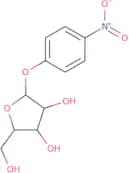
CAS:<p>Aldol® 515 palmitate is a chromogenic substrate that is used in food testing, diagnostics, and other applications. It has a high purity and is conjugated to various ligands for specific applications. Aldol® 515 palmitate is an excellent chemiluminescent substrate for the detection of ATP and other nucleotides. It also has high bioluminescence activity for the detection of adenosine-5'-triphosphate (ATP) or luciferin as well as enzyme substrates to measure β-galactosidase or β-glucuronidase activity.</p>Fórmula:C39H50N2O3Pureza:Min. 95.0 Area-%Peso molecular:594.83 g/mol4-Nitrophenyl b-L-arabinofuranoside
CAS:<p>Chromogenic substrate targeting alpha-L-arabinofuranosidase</p>Pureza:Min. 95%Forma y color:White/Off-White SolidPeso molecular:271.22 g/mol4-Nitrophenyl-β-L-fucopyranoside
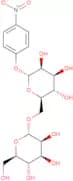
CAS:<p>4-Nitrophenyl-beta-L-fucopyranoside is a chromogenic substrate used in the determination of alpha-glucosidase activity. The formation of phenol from 4-nitrophenyl leads to the production of a yellow color that can be quantified by measuring its absorbance at 490 nm. This assay is based on the principle that alpha-glucosidase hydrolyzes sucrose into glucose and fructose, which are then oxidized to form 4-nitrophenol and 4-nitroanomeric acid, respectively. The reaction product is detected by measuring the absorption at 490 nm.</p>Fórmula:C12H15NO7Peso molecular:285.26 g/mol4-Nitrophenyl 6-O-(a-D-mannopyranosyl)-a-D-mannopyranoside
CAS:<p>4-Nitrophenyl 6-O-(alpha-D-mannopyranosyl)-alpha-D-mannopyranoside is a chromogenic substrate for alpha-mannosidase. Upon hydrolysis, para-nitrophenol is released yielding a yellowish colour. 4-Nitrophenyl 6-O-(alpha-D-mannopyranosyl)-alpha-D-mannopyranoside is used in different applications such as the Lysosomal storage disorder diagnosis (e.g., alpha-mannosidosis)</p>Pureza:Min. 95%Forma y color:PowderPeso molecular:463.39 g/mol6-Chloro-3-indoxyl-β-D-glucuronic acid methyl ester, Biosynth Patent: EP 2718458 and US 9127303
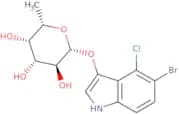
<p>6-Chloro-3-indoxyl-beta-D-glucuronic acid methyl ester is a chemiluminescent substrate that is used to measure the activity of enzymes in the beta-galactosidase family. This product is a white crystalline solid that dissolves in water and ethanol. 6-Chloro-3-indoxyl-beta-D-glucuronic acid methyl ester has been shown to be stable for at least two years when stored at -20°C. It can be used for diagnostic purposes, such as the detection of bacterial infections, or as an enzyme substrate in biochemistry studies.</p>Pureza:Min. 95%5-Bromo-4-chloro-3-indoxyl-β-D-fucopyranoside
CAS:<p>Chromogenic substrate for β-D-fucosidase yielding a blue precipitate.</p>Fórmula:C14H15BrClNO5Pureza:Min. 99.0 Area-%Peso molecular:392.64 g/mol4-Nitrophenyl a-L-arabinopyranoside
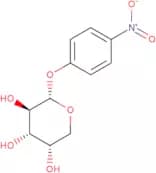
CAS:<p>Substrate for a-L-arabinopyranosidase</p>Fórmula:C11H13NO7Pureza:Min. 98 Area-%Forma y color:White PowderPeso molecular:271.22 g/mol5-Bromo-4-chloro-3-indoxyl myristate
CAS:<p>5-Bromo-4-chloro-3-indoxyl myristate is a chemiluminescent substrate that can be used in the detection of peroxide. It reacts with hydrogen peroxide to emit light, which can be detected using a luminometer. 5-Bromo-4-chloro-3-indoxyl myristate is also used for the detection of bacteria, such as Staphylococcus aureus and Escherichia coli, by staining. The compound is also used for diagnostic tests to identify diseases such as tuberculosis. 5-Bromo-4-chloro-3 indoxyl myristate is soluble in organic solvents and water, not toxic, and has a high purity level.</p>Fórmula:C22H31BrClNO2Pureza:Min. 98 Area-%Peso molecular:456.86 g/molRef: 3D-B-7408
1gA consultar5gA consultar10gA consultar25gA consultar2500mgA consultar-Unit-ggA consultar5-Bromo-4-chloro-3-indoxyl-α-D-mannopyranoside
CAS:<p>Chromogenic substrate specific for α-D-mannosidase. Yields a blue precipitate upon cleavage. Identification of Listeria species.</p>Fórmula:C14H15BrClNO6Pureza:Min. 99 Area-%Peso molecular:408.64 g/molRef: 3D-B-7409
1gA consultar5gA consultar10gA consultar25gA consultar2500mgA consultar-Unit-ggA consultar5-Bromo-3-indoxyl caprylate
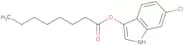
CAS:<p>5-Bromo-3-indoxyl caprylate is a fluorogenic substrate that can be used for the detection of β-galactosidase. It is an enzyme substrate that can be used to measure β-galactosidase activity in cell culture media. It has a high purity and high quality. 5-Bromo-3-indoxyl caprylate is also used as a chromogenic substrate for the detection of β-galactosidase. This product has a CAS number of 133950-69-3.</p>Fórmula:C16H20BrNO2Pureza:Min. 99 Area-%Peso molecular:338.24 g/mol6-Chloro-1H-indol-3-yl octanoate
CAS:<p>6-Chloro-1H-indol-3-yl octanoate is a fluorogenic substrate that can be used to detect enzymes such as phosphatases, lipases, esterases, and proteases. 6-Chloro-1H-indol-3-yl octanoate is a ligand for metal ions such as Cu(II), Ni(II) and Zn(II). This product has high purity and quality. It is an enzyme substrate for many enzymes such as phosphatases, lipases, esterases, and proteases. This product can be used in diagnostics of various substances including food testing, environmental testing and staining. 6CIO is a chromogenic substrate that can be used to detect bioluminescence reactions.<br>6CIO is CAS No. 159954-35-5.</p>Pureza:Min. 95%Peso molecular:293.79 g/mol