Otros
Se han encontrado 6274 productos de "Otros"
Ordenar por
Pureza (%)
0
100
|
0
|
50
|
90
|
95
|
100
Aldol® 458 β-D-galactopyranoside, Biosynth Patent: EP 2427431 and US 8940909
CAS:<p>Aldol® 458 beta-D-galactopyranoside is a chromogenic and fluorogenic enzyme substrate used for detection of ?-galactosidase activity. The colorless enzyme substrate is cleaved by lactose utilizing bacteria grown in liquid or solid media, yielding yellow coloration and green fluorescence. Aldol® 458 beta-D-galactopyranoside can also be used in ?-galactosidase gene reporter assays or immunoassay applications (ELISA). Aldol® 458 beta-D-galactopyranoside can be used under aerobic and anaerobic conditions.</p>Fórmula:C22H23NO8Pureza:Min. 95.0 Area-%Peso molecular:429.42 g/mol5-Bromo-4-chloro-3-indolyl myristate
CAS:<p>5-Bromo-4-chloro-3-indolyl myristate is a chromogenic substrate used to detect the specific enzymatic activity of lipase or esterase. After cleavage, 5-bromo-4-chloro-indoxyl is released, resulting in a blue to blue-green color change in bacterial colonies or media. 5-Bromo-4-chloro-3-indolyl myristate is used in screening assays for pancreatic lipase deficiency and lipid metabolism studies.</p>Fórmula:C22H31BrClNO2Pureza:Min. 95%Forma y color:PowderPeso molecular:456.84 g/mol6-Chloro-3-indolyl β-D-cellobioside
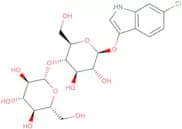
CAS:<p>6-Chloro-3-indolyl b-D-cellobioside is a chromogenic substrate that produces a salmon-pink color after enzymatic cleavage. It is used for detecting the activity of beta-D-cellobiosidase in enzyme assays.</p>Pureza:Min. 95%Forma y color:White To Off-White SolidPeso molecular:491.87 g/mol3,4-Cyclohexenoesculetin β-D-galactopyranoside
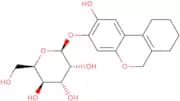
CAS:<p>Chromogenic substrate for beta-galactosidase</p>Fórmula:C19H22O9Pureza:Min. 95 Area-%Forma y color:PowderPeso molecular:394.37 g/mol4-Nitrophenyl b-D-ribofuranoside
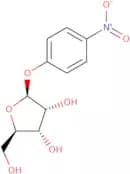
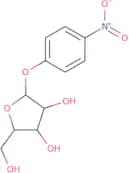
CAS:<p>4-Nitrophenyl β-D-ribofuranoside is a synthetic chromogenic molecule designed to profile phosphorolytic enzyme activity, specifically ribonucleoside-hydrolyzing enzymes. Upon hydrolysis by these enzymes, it releases a 4-nitrophenolic compound, which can be monitored spectrophotometrically at 405-410 nm as a quantitative indicator of enzyme activity. This substrate is suitable for studying ribonucleoside-hydrolyzing enzymes, such as ribo- and deoxyribonucleases, in various biological systems and, in turn, could help advance our understanding of nucleic acid metabolism, gene function, and regulatory processes.</p>Fórmula:C11H13NO7Pureza:Min. 97 Area-%Forma y color:White PowderPeso molecular:271.22 g/mol4-Nitrophenyl-α-D-maltohexaoside
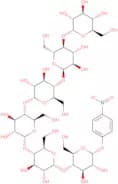
CAS:<p>Chromogenic substrate for α-amylase yielding a yellow solution upon cleavage.</p>Fórmula:C42H65NO33Pureza:Min. 97.0 Area-%Peso molecular:1,111.97 g/mol2-Nitrophenyl b-D-xylopyranoside
CAS:<p>Chromogenic substrates targeting beta-xylosidase</p>Pureza:Min. 95%Forma y color:PowderPeso molecular:271.22 g/mol5-Bromo-4-chloro-3-indoxyl-N-acetyl-β-D-galactosaminide
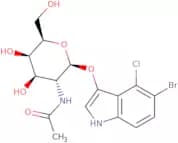
CAS:<p>5-Bromo-4-Chloro-3-Indoxyl-N-Acetyl-Beta-D-Galactosaminide is a chromogenic substrate for detecting beta-galactosidase and GalNAc-transferase enzymes. Upon hydrolysis by the enzyme, it produces a blue-green colored compound that can be detected visually or measured spectrophotometrically. This substrate is useful in characterizing the activity of Beta-Galactosidase and GalNAc-transferase enzymes involved in glycobiology research and diagnostic applications.</p>Fórmula:C16H18BrClN2O6Pureza:Min. 98 Area-%Forma y color:Crystalline PowderPeso molecular:449.68 g/molLipase substrate
CAS:<p>Synthetic chromogenic substrate for detection of lipase enzyme activity that produces a red coloured product, Suitable for use in serum of plasma matrices. This lipase substrate is commonly used in veterinary diagnostics for monitoring and detecting canine pancreatitis,</p>Fórmula:C45H69NO8Peso molecular:752.03 g/mol5-Bromo-4-chloro-3-indolyl palmitate
CAS:<p>5-Bromo-4-chloro-3-indolyl palmitate is a chromogenic substrate used to detect the specific enzymatic activity of lipase. After cleavage, 5-bromo-4-chloro-indoxyl is released, resulting in a blue to blue-green color change in bacterial colonies or media. 5-Bromo-4-chloro-3-indolyl palmitate is used in lipase activity assays or cystic fibrosis diagnostics.</p>Pureza:Min. 95%Forma y color:PowderPeso molecular:484.9 g/mol5-Bromo-6-chloro-3-indoxyl phosphate, disodium salt monohydrate
CAS:<p>5-Bromo-6-chloro-3-indoxyl phosphate, disodium salt monohydrate is a substrate used to visualize phosphatase activity via showing magenta colored end product when used with Nitroblue Tetrazolium.</p>Fórmula:C8H6BrClNNa2O5PPureza:Min. 99.0 Area-%Peso molecular:388.45 g/mol4-Nitrophenyl 2-acetamido-2-deoxy-a-D-galactopyranoside
CAS:<p>4-Nitrophenyl 2-acetamido-2-deoxy-alpha-D-galactopyranoside is a chromogenic substrate for alpha-N-acetylgalactosaminidase. Upon hydrolysis, para-nitrophenol is released yielding a yellowish colour. 4-Nitrophenyl 2-acetamido-2-deoxy-alpha-D-galactopyranoside is used in different applications such as the diagnosis of Schindler-Kanzaki disease and other lysosomal storage disorders.</p>Fórmula:C14H18N2O8Pureza:Min. 98%Forma y color:White PowderPeso molecular:342.3 g/mol3-Indoxyl caprylate
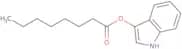
CAS:<p>3-Indoxyl caprylate is an enzyme substrate used in a variety of diagnostic applications, including the detection of various bacterial and viral infections. It is used as a substrate for beta-galactosidase, which can be detected by bioluminescence or chromogenic substrates. 3-Indoxyl caprylate also serves as a ligand for receptor binding and has been shown to bind to CD4 receptors on human T cells. 3-Indoxyl caprylate is also used as an enzyme substrate in the detection of DNA polymerases, RNA polymerases, and ATPases. This product is available with a high purity that ranges from 98% to 99%. 3-Indoxyl caprylate is soluble in water, alcohols, acetone, acetic acid, and chloroform.</p>Fórmula:C16H21NO2Peso molecular:259.35 g/molRef: 3D-I-5690
1gA consultar5gA consultar10gA consultar500mgA consultar2500mgA consultar-Unit-ggA consultarAldol® 495 nonanoate, Biosynth Patent: EP 2427431 and US 8940909
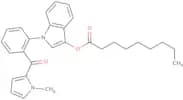
CAS:Producto controlado<p>Aldol 495 nonanoate is a bioluminescent substrate that can be used to measure the activity of Aldolase, which is an enzyme that catalyzes the conversion of glyceraldehyde-3-phosphate and dihydroxyacetone phosphate to D-glyceraldehyde. This substrate is used in various diagnostic assays, including food testing and staining. Aldol 495 nonanoate was developed by Cymit Quimica Pharmaceuticals and has been patented by EP 2427431 and US 8940909.</p>Fórmula:C29H31ClN2O3Pureza:Min. 95.0 Area-%Peso molecular:491.02 g/mol5-Bromo-3-indoxyl caprylate
CAS:<p>5-Bromo-3-indoxyl caprylate is a fluorogenic substrate that can be used for the detection of β-galactosidase. It is an enzyme substrate that can be used to measure β-galactosidase activity in cell culture media. It has a high purity and high quality. 5-Bromo-3-indoxyl caprylate is also used as a chromogenic substrate for the detection of β-galactosidase. This product has a CAS number of 133950-69-3.</p>Fórmula:C16H20BrNO2Pureza:Min. 99 Area-%Peso molecular:338.24 g/mol2-Chloro-4-nitrophenyl b-D-maltoside
<p>2-Chloro-4-nitrophenyl b-D-maltoside is a fluorescent substrate used in diagnostic kits. It is used to detect the presence of beta-glucuronidase enzymes, which are found in many bacteria and fungi. 2-Chloro-4-nitrophenyl b-D-maltoside has been shown to be a superior substrate for beta-glucuronidase as it can be used at lower concentrations and is more stable than other substrates. The enzyme hydrolyzes the 2,4 nitrophenyl ester bond and releases the fluorogenic product 4-(2'-hydroxyethyl)benzene diazonium chloride (HED). This product emits light under ultraviolet light, making it ideal for use in Bioluminescence Assays.</p>Pureza:Min. 95%Aldol® 495 inositol-phosphate, ammonium salt, Biosynth Patent: EP 2427431 and US 8940909
CAS:<p>Aldol® 495 inositol-phosphate is a chromogenic and fluorogenic enzyme substrate used for detection of phosphatidylinositol specific phospholipase C activity (PI-PLC, EC 4.6.1.13). The colorless enzyme substrate is cleaved by PI-PLC or PI-PLC-positive microorganisms in liquid or solid media, yielding orange color. In addition, green fluorescence is generated when a suitable matrix is present, e.g. PE-Pellets or cellulose acetate filter. Aldol® 495 inositol-phosphate is suitable for use in liquid and solid media, under aerobic as well as anaerobic conditions.</p>Fórmula:C26H29ClN3O10PPureza:Min. 95.0 Area-%Peso molecular:609.95 g/mol6-Chloro-3-indoxyl-β-D-glucuronic acid, cyclohexylammonium salt
CAS:<p>6-Chloro-3-indoxyl-beta-D-glucuronic acid (cyclohexylammonium salt) is a chromogenic substrate for beta-glucuronidase yielding a salmon colored precipitate upon cleavage.</p>Fórmula:C20H27ClN2O7Pureza:Min. 98.0 Area-%Peso molecular:442.90 g/molp-Nitrophenylphosphorylcholine
CAS:<p>p-Nitrophenylphosphorylcholine is a substrate molecule for enzymes that catalyze phospholipid biosynthesis. It is the most common substrate used to study the enzyme activity of phosphatidylcholine synthase and phospholipase A2 in human serum. The reaction mechanism is not well understood, but it appears to involve autocatalysis and an initial nucleophilic attack by p-nitrophenolate on the carbonyl carbon atom of the choline moiety. p-Nitrophenylphosphorylcholine has been shown to exhibit receptor activity on cells, which may be due to its ability to bind with basic proteins. This compound can also inhibit meiosis in Drosophila melanogaster and increase levels of natriuretic peptides in rats, as well as cause cell lysis and polymerase chain reactions in mammalian cells.</p>Fórmula:C11H17N2O6PPeso molecular:304.24 g/molN-α-CBZ-L-citrulline-p-nitroanilide
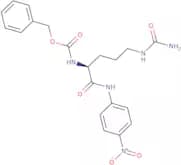
CAS:<p>Nalpha-CBZ-L-Citrulline-p-nitroanilide is a synthetic chromogenic enzyme substrate used in protease enzymatic stutides. After hydrolysis, p-nitroaniline is released, which produces a yellow color detectable spectrophotometrically at 405 nm.</p>Fórmula:C20H23N5O6Pureza:Min. 95%Peso molecular:429.43 g/molAldol® 458 nonanoate solution, 0.75 M in DMSO, Biosynth Patent: EP 2427431 and US 8940909
CAS:Producto controlado<p>Aldol 458 nonanoate solution is a high quality, enzyme substrate that can be used for a number of applications. It has been shown to be an excellent chromogenic substrate, bioluminescence, ligand and chemiluminescence. Aldol 458 nonanoate solution has also been used for the detection of staining and diagnostics. The compound is a conjugate with an excellent binding affinity to proteins. This product can be used in food testing, culture media, fluorogenic substrate and environmental testing. CAS No. 2484873-15-4</p>Fórmula:C25H29NO4Pureza:Of Solute (Hplc) 98.0 To 100.0 Area-%Peso molecular:407.51 g/mol5-Bromo-6-chloro-3-indoxyl butyrate
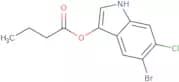
CAS:<p>5-Bromo-6-chloro-3-indoxyl butyrate is a chromogenic substrate that yields a magenta-colored product after cleavage. The chromophore 5-bromo-6-chloro-indoxyl is released, generating the observable color. It is used in lipid digestion assays.</p>Fórmula:C12H11BrClNO2Pureza:Min. 95%Forma y color:PowderPeso molecular:316.58 g/molAldol® 455 β-D-glucopyranoside, Biosynth Patent: EP 2427431 and US 8940909
CAS:<p>Aldol® 455 beta-D-glucopyranoside is a chromogenic and fluorogenic enzyme substrate used for detection of beta-glucosidase activity. The colorless enzyme substrate is cleaved by beta-glucosidase producing bacteria grown in liquid or solid media, yielding a yellow color and green to orange fluorescence. Aldol® 455 beta-D-glucopyranoside can be used under aerobic and anaerobic conditions.</p>Fórmula:C27H24ClNO7Pureza:Min. 92.0 Area-%Peso molecular:509.94 g/mol5-Bromo-4-chloro-3-indoxyl-α-D-fucopyranoside
CAS:<p>5-Bromo-4-chloro-3-indoxyl-alpha-D-fucopyranoside is a photosynthetic agent that belongs to the class of fucopyranosides. It is a non-proteinogenic amino acid that has been shown to be encoded in chloroplasts and mitochondria in photosynthetic organisms. 5B4C3IF has also been found to be involved in the synthesis of polynucleotides and polypeptides, as well as the regulation of biomass.</p>Fórmula:C14H15BrClNO5Peso molecular:392.64 g/molRef: 3D-B-7134
1gA consultar5gA consultar250mgA consultar500mgA consultar2500mgA consultar-Unit-ggA consultar4-Nitrophenyl 2,3,4,6-tetra-O-acetyl-b-D-thioglucopyranoside
CAS:<p>4-Nitrophenyl 2,3,4,6-tetra-O-acetyl-b-D-thioglucopyranoside is a fluorescent dye that is used in recording and registration. It has been shown to be a very sensitive reporter of protein interactions in living cells. This dye binds to proteins via the hydroxyl groups on its sugar moiety, and has been shown to bind to a variety of proteins such as myosin light chain kinase and phosphatidylinositol 4-kinase. The fluorescent properties of this dye make it useful for tracking protein localization in the cell.</p>Pureza:Min. 95%Peso molecular:485.46 g/mol4-Nitrophenyl-α-D-glucopyranoside, β-Anomer < 0.1%
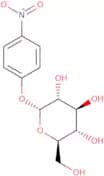
CAS:<p>4-Nitrophenyl-alpha-D-glucopyranoside, beta-Anomer is a chromogenic sugar that can be used as an indicator for the presence of 4-nitrophenol. It is a highly reactive compound that spontaneously reacts with nitrobenzene to form a dinitroaniline. This anomeric structure is easily oxidized by air and light to form the corresponding o-dinitroaniline. When this reaction occurs, this substance changes color from yellow to red.</p>Fórmula:C12H15NO8Pureza:Min. 99.0 Area-%Peso molecular:301.26 g/mol4-Nitrophenyl 2-acetamido-2-deoxy-b-D-glucopyranoside-6-sulfate
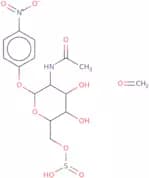
<p>4-Nitrophenyl 2-acetamido-2-deoxy-b-D-glucopyranoside is a chemiluminescent substrate that can be used in the detection of various enzymes. This product has been tested for sterility and purity, and it has passed all tests. It is also free of any detectable levels of heavy metals or other contaminants. 4NP2AG6S is a high quality bioluminescent substrate with CAS No. 71498-92-5. It is a fluorescent compound that reacts with an enzyme to produce light. The reaction can be detected by measuring the emitted light intensity at 680 nm (max).</p>Pureza:Min. 95%2-Nitrophenyl-1-thio-β-D-galactopyranoside
CAS:<p>2-Nitrophenyl-1-thio-beta-D-galactopyranoside is a nitroaryl compound that can be synthesized from beta-D-galactopyranosides and nitric acid. It has a molecular conformation that is stabilized by hydrogen bonds, which allows it to form supramolecular assemblies with other molecules. The nitro group in this molecule is responsible for the formation of the nitro group in 1,2,4,5,-tetranitrobenzene.</p>Fórmula:C12H15NO7SPeso molecular:317.32 g/molRef: 3D-N-5100
1gA consultar5gA consultar10gA consultar500mgA consultar2500mgA consultar-Unit-ggA consultar2-(N-Hexadecanoylamino)-4-nitrophenylphosphocholine hydroxide
CAS:<p>2-(N-Hexadecanoylamino)-4-nitrophenylphosphocholine hydroxide, often abbreviated as HDA-PC, is a chromogenic substrate for acid sphingomyelinase enzyme. HDA-PC is used as a key substrate for measuring the activity of this enzyme, responsible for catalyzing the hydrolysis of sphingomyelin to ceramide. The activity assay for this measuring this enzyme's acitivy is to detect a deficiency (or lack) of the enzyme which is directly related to the Niemann-Pick disease.</p>Fórmula:C27H50N3O8PPureza:Min. 95%Forma y color:Off-White PowderPeso molecular:575.68 g/mol2-Nitrophenyl b-L-fucopyranoside
CAS:<p>2-Nitrophenyl beta-L-fucopyranoside is a chromogenic substrate used to detect the enzymatic activity of beta-L-fucosidase. After cleavage, the nitrophenyl moiety is released exhibiting a light yellowish color. 2-Nitrophenyl beta-L-fucopyranoside is used in bacterial fucose metabolism studies to identify and quantify the enzymatic activity in, for example, Bacteroides spp..</p>Pureza:Min. 98 Area-%Forma y color:PowderPeso molecular:285.25 g/mol3-Indoxyl phosphate, p-toluidine salt
CAS:Producto controlado<p>3-Indoxyl phosphate, p-toluidine salt is a fluorogenic substrate that can be used for the detection of β-galactosidase. 3-Indoxyl phosphate, p-toluidine salt is a highly active chromogenic substrate that can be used as a diagnostic tool in the food industry to determine whether or not milk has been adulterated with animal milk. This product is also used in environmental testing to detect bacteria and fungi. 3-Indoxyl phosphate, p-toluidine salt is a high purity, high quality conjugate that can be used for the detection of β-galactosidase.</p>Fórmula:C8H8NO4P·C7H9NPureza:Min. 98 Area-%Peso molecular:320.28 g/mol5-Bromo-4-chloro-3-indoxyl-α-L-arabinopyranoside
<p>5-Bromo-4-chloro-3-indoxyl-alpha-L-arabinopyranoside is a fluorogenic substrate that can be used in enzyme and chromogenic assays. It is a high purity, stable product with a CAS number of 53673-61-7. This product has been shown to have fluorescence properties under acidic conditions, as well as chemiluminescence properties when exposed to an oxidizing agent. This compound can be used for the detection of bacterial activity in culture media and for the detection of pathogens in environmental samples. The conjugate can also be used for food testing.</p>Fórmula:C13H13BrClNO5Peso molecular:378.61 g/molN-Acetyl-5-bromo-3-indoxyl-2,3,4-tri-O-acetyl-β-D-glucuronic acid methyl ester
<p>N-Acetyl-5-bromo-3-indoxyl-2,3,4-tri-O-acetyl-beta-D-glucuronic acid methyl ester is a chromogenic substrate that can be used for the detection of bile acids and bilirubin in food testing. It is a conjugate of an acetylated 2,3,4 triacetyl glucuronic acid methyl ester with 5 bromo 3 indoxyl. This product has high purity and high quality.</p>Fórmula:C23H24BrNO11Pureza:Min. 98.0 Area-%Peso molecular:570.34 g/molRef: 3D-A-0702
5gA consultar10gA consultar25gA consultar50gA consultar2500mgA consultar-Unit-ggA consultar4-Nitrophenyl 3-O-(β-D-glucopyranosyl)-α-D-glucopyranoside
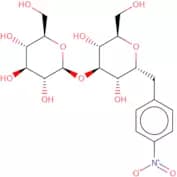
<p>4-Nitrophenyl 3-O-(beta-D-glucopyranosyl)-alpha-D-glucopyranoside is a chromogenic substrate for alpha-glucosidase. Upon hydrolysis, para-nitrophenol is released yielding a yellowish colour. 4-Nitrophenyl 3-O-(beta-D-glucopyranosyl)-alpha-D-glucopyranoside is used in different applications such as the Gaucher disease screening, carbohydrate metabolism studies</p>Fórmula:C18H25NO13Pureza:Min. 95%Peso molecular:463.39 g/mol5-Bromo-4-chloro-3-indoxyl oleate
CAS:<p>5-Bromo-4-chloro-3-indoxyl oleate is a chromogenic substrate used to detect the specific enzymatic activity of lipase. After cleavage, 5-bromo-4-chloro-indoxyl is released, resulting in a blue to blue-green color change in bacterial colonies or media. 5-Bromo-4-chloro-3-indoxyl oleate is used in lipid metabolism disorder screening.</p>Fórmula:C26H37BrClNO2Pureza:Min. 95%Forma y color:PowderPeso molecular:510.93 g/mol5-Bromo-4-chloro-3-indoxyl choline phosphate
CAS:<p>5-Bromo-4-chloro-3-indoxyl choline phosphate is a synthetic enzyme substrate for detecting phosphatidylcholine-specific phospholipase C.</p>Fórmula:C13H17BrClN2O4PPureza:Min. 99 Area-%Peso molecular:411.63 g/mol2-Naphthyl-α-D-glucopyranoside
CAS:<p>2-Naphthyl-α-D-glucopyranoside is a substrate for α-glucosidase. 2-Naphthol is released upon hydrolyzation. By simultaneous coupling with a suitable staining reagent, such as hexazonium p-rosaniline, the corresponding reddish-brown azo-dye is formed. Naphthols can also be detected by fluorescence analysis.</p>Fórmula:C16H18O6Pureza:Min. 98.0 Area-%Peso molecular:306.32 g/mol4-Nitrophenyl b-L-arabinofuranoside
CAS:<p>Chromogenic substrate targeting alpha-L-arabinofuranosidase</p>Pureza:Min. 95%Forma y color:White/Off-White SolidPeso molecular:271.22 g/mol5-Bromo-4-chloro-3-indoxyl myristate
CAS:<p>5-Bromo-4-chloro-3-indoxyl myristate is a chemiluminescent substrate that can be used in the detection of peroxide. It reacts with hydrogen peroxide to emit light, which can be detected using a luminometer. 5-Bromo-4-chloro-3-indoxyl myristate is also used for the detection of bacteria, such as Staphylococcus aureus and Escherichia coli, by staining. The compound is also used for diagnostic tests to identify diseases such as tuberculosis. 5-Bromo-4-chloro-3 indoxyl myristate is soluble in organic solvents and water, not toxic, and has a high purity level.</p>Fórmula:C22H31BrClNO2Pureza:Min. 98 Area-%Peso molecular:456.86 g/molRef: 3D-B-7408
1gA consultar5gA consultar10gA consultar25gA consultar2500mgA consultar-Unit-ggA consultar5-Bromo-6-chloro-3-indoxyl phosphate, p-toluidine salt
CAS:<p>Substrate for visualizing alkaline phosphatase activity. Produces a magenta colored insoluble end product that is detected visually, when used together with Nitroblue tetrazolium. The substrate system is versatile and functions in a variety of applications, including Northern, Southern, and Western blotting, in situ hybridization, ELISAs and immunohistochemistry. DMF soluble.</p>Fórmula:C15H15BrClN2O4PPureza:Min. 98.0 Area-%Peso molecular:433.63 g/mol5-Bromo-4-chloro-3-indoxyl-α-D-mannopyranoside
CAS:<p>Chromogenic substrate specific for α-D-mannosidase. Yields a blue precipitate upon cleavage. Identification of Listeria species.</p>Fórmula:C14H15BrClNO6Pureza:Min. 99 Area-%Peso molecular:408.64 g/molRef: 3D-B-7409
1gA consultar5gA consultar10gA consultar25gA consultar2500mgA consultar-Unit-ggA consultarAldol® 467 β-D-galactopyranoside, Biosynth Patent: EP 2427431 and US 8940909
CAS:<p>Aldol® 467 beta-D-galactopyranoside is a chromogenic and fluorogenic enzyme substrate used for detection of beta-galactosidase activity. The colorless product is cleaved by lactose-utilizing bacteria grown in liquid or solid media, yielding yellow coloration and green fluorescence. Aldol® 467 beta-D-galactopyranoside can also be used in beta-galactosidase gene reporter assays or immunoassay applications (ELISA). Aldol® 467 beta-D-galactopyranoside can be used under aerobic and anaerobic conditions.</p>Fórmula:C29H28ClNO9Pureza:Min. 95%Forma y color:PowderPeso molecular:570 g/molAldol® 458 nonanoate, Biosynth Patent: EP 2427431 and US 8940909
CAS:Producto controlado<p>Aldol 458 nonanoate is a fluorogenic substrate that can be used in the detection of enzyme activity particularly C8/C9-esterases, lipases activity producing a yellow/green-orange color. Aldol 458 nonanoate reacts with enzymes, such as oxidoreductases and hydrolases, to produce light. This product is a conjugate of aldol 458 nonanoate and an enzyme substrate for the detection of these enzymes. It has been shown to be useful in food testing, staining, fluorogenic substrate, environmental testing, chromogenic substrate, conjugate, high purity, enzyme substrate for diagnostics and ligand.</p>Fórmula:C25H29NO4Pureza:Min. 95%Peso molecular:407.5 g/mol4-Nitrophenyl trans-ferulate
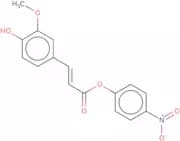
CAS:<p>Substrate for feruloyl esterases</p>Fórmula:C16H13NO6Pureza:Min. 98 Area-%Forma y color:PowderPeso molecular:315.28 g/molAlizarin-2-β-D-galactopyranoside
CAS:<p>Chromogenic substrate targeting beta- galactosidase and whose color is dependent on the metal chelating.Alizarin-2-beta-D-galactopyranoside is a chromogenic substrate for enzymes based on alizarin and has been reported for the detection of bacterial beta-galactosidase by researchers at the University of Northumbria and the Freeman Hospital, Newcastle upon Tyne in the UK (James, 2000).</p>Fórmula:C20H18O9Pureza:Min. 98.0 Area-%Peso molecular:402.36 g/molAldol® 515 acetate, Biosynth Patent: EP 2427431 and US 8940909
CAS:<p>Aldol® 515 acetate is a chromogenic and fluorogenic substrate, used for detection of esterase activity. The colorless product is cleaved by purified esterase, or esterase secreted by microorganisms in liquid or solid media, yielding a red color and red fluorescence signal when Aldol® 355 fluorescence enhancer or a suitable matrix is present. Aldol® 515 acetate can be used under aerobic and anaerobic conditions. Well detectable color/fluorescence of bacterial colonies or liquid cultures is obtained within 16-48 h. In the presence of a purified esterase, color and fluorescence develops within minutes to few hours.</p>Fórmula:C25H22N2O3Pureza:Min. 95.0 Area-%Peso molecular:398.45 g/mol6-Chloro-3-indoxyl-3-acetate
CAS:<p>Chromogenic substrate for carboxylesterase yielding a salmon colored precipitate upon cleavage. Mainly used in histochemistry.</p>Fórmula:C10H8ClNO2Peso molecular:209.63 g/molAldol® 470 nonanoate, Biosynth Patent: EP 2427431 and US 8940909
CAS:Producto controlado<p>Aldol® 470 nonanoate is a chromogenic substrate with a molecular weight of 496.5 g/mol. Aldol® 470 nonanoate has been used to detect the presence of L-amino acids using a fluorogenic assay. This substrate can be used as a ligand in an enzyme-linked immunosorbent assay (ELISA) to measure the concentration of L-amino acids in food and drink samples, as well as in diagnostics for detecting fluoroquinolone resistance in bacteria. Aldol® 470 nonanoate is also used in the detection of bioluminescence and chemiluminescence reactions. CAS No.: 2484872-50-4</p>Fórmula:C32H35NO5Pureza:Min. 95.0 Area-%Peso molecular:513.62 g/mol4-Nitrophenyl-β-D-maltopyranoside
CAS:<p>Chromogenic beta-maltosidase substrate</p>Fórmula:C18H25NO13Pureza:Min. 95%Forma y color:White PowderPeso molecular:463.39 g/mol4-Nitrophenyl-β-D-cellobioside
CAS:<p>Chromogenic substrate for β-D-Cellobiosidase yielding a yellow solution upon cleavage.</p>Fórmula:C18H25NO13Pureza:Min. 98 Area-%Peso molecular:463.39 g/mol