Antibióticos naturales y semisintéticos
Los antibióticos naturales y semisintéticos se caracterizan por estructuras químicas con anillos heterocíclicos y grupos funcionales activos que inhiben el crecimiento de microorganismos. Sus estructuras les permiten interactuar con los procesos vitales de las bacterias, lo que los hace útiles como tratamientos para infecciones bacterianas. Los antibióticos semisintéticos pueden ser modificados para mejorar el espectro de actividad o la resistencia a la degradación.
En CymitQuimica ofrecemos antibióticos naturales y semisintéticos de alta calidad para investigación en microbiología y desarrollo farmacéutico.
Se han encontrado 6341 productos de "Antibióticos naturales y semisintéticos"
Ordenar por
Pureza (%)
0
100
|
0
|
50
|
90
|
95
|
100
Ref: 4Z-D-176016
Producto descatalogadoRef: 4Z-E-413
Producto descatalogadoRef: 4Z-S-467
Producto descatalogadoRef: 4Z-R-2319
Producto descatalogadoRef: 4Z-D-176041
Producto descatalogadoRef: 4Z-R-077021
Producto descatalogadoRef: 4Z-V-032028
Producto descatalogadoRef: 4Z-A-192103
Producto descatalogadoRef: 4Z-E-110017
Producto descatalogadoRef: 4Z-T-399001
Producto descatalogadoRef: 4Z-A-4224
Producto descatalogadoRef: 4Z-C-156040
Producto descatalogadoRef: 4Z-PC-155006
Producto descatalogadoRef: 4Z-C-158028
Producto descatalogadoRef: 4Z-B-081029
Producto descatalogadoRef: 4Z-R-1830
Producto descatalogadoRef: 4Z-P-0455
Producto descatalogadoRef: 4Z-P-0453
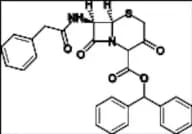
Producto descatalogadoSultamicillin EP Impurity C (Ampicillin, Piperacillin EP Impurity A)
CAS:Fórmula:C16H19N3O4SPeso molecular:349.41Ref: 4Z-S-081002
Producto descatalogadoRef: 4Z-P-0454
Producto descatalogadoN-Nitroso Benzylpenicillin Potassium EP Impurity E (N-Nitroso Benzylpenicillin (Benzathine), Benzylpenicillin Sodium EP Impurity E, N-Nitroso Benzylpenicillin (Procaine) EP Impurity B) (Mixture of Diastereomers)
Fórmula:C16H19N3O6SPeso molecular:381.40Ref: 4Z-P-0463
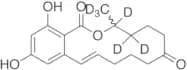
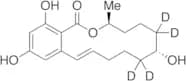
Producto descatalogadorac Zearalenone-d6
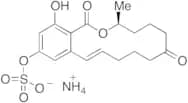
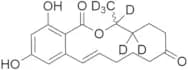
CAS:Producto controlado<p>Applications Estrogenic mycotoxin produced by Fusarium fungi commonly found in grains. One of a group of compounds known as resorcylic acid lactones.Environmental contaminants; Food contaminants<br> Not a dangerous good if item is equal to or less than 1g/ml and there is less than 100g/ml in the package<br>References Tanaka, T., et al.: J. Agric. Food Chem., 36, 979 (1988), Hamilton, S., et al.: Anticancer Res., 16, 3597 (1996), Hecht, S., et al.: Cancer Lett., 150, 49 (2000), Hussein, H., et al.: Toxicology, 167, 101 (2001), Lim, H., et al.: J. Immunol., 175, 4180 (2005),<br></p>Fórmula:C18H16D6O5Forma y color:BeigePeso molecular:324.40Zearalenone 4-Sulfate Ammonium Salt
CAS:Producto controladoFórmula:C18H25NO8SForma y color:NeatPeso molecular:415.46Deoxynivalenol
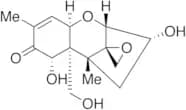
CAS:Producto controlado<p>Applications Deoxynivalenol is a tricothecene mycotoxin and potent protein synthesis inhibitor. Deoxynivalenol exhibits cytotoxic activity in vivo via the ribotoxic stress response. Deoxynivalenol induces p38-mediated gene expression and apoptosis in leukocytes; activity results in systemic expression of interleukin-6 (IL-6) and other proinflammatory cytokines. Also induces migration of NF-κB into the nucleus.Environmental contaminants; Food contaminants<br> Not a dangerous good if item is equal to or less than 1g/ml and there is less than 100g/ml in the package<br>References Bae, et al.: Toxicol. Sci., 105, 59 (2008), Shi, et al.: Toxicol. Sci., 109, 247 (2009), Krishnaswamy, et al.: Free Radic. Biol. Med., 49 50 (2010),<br></p>Fórmula:C15H20O6Forma y color:NeatPeso molecular:296.32Fumonisin B1
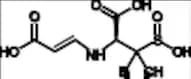
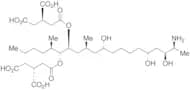
CAS:<p>Stability Hygroscopic<br>Applications A mycotoxin produced by mold associated with corn. Fungal metabolite believed to cause leukoencephalomalacia in horses.Environmental contaminants; Food contaminants<br>References Monbaliu, S., et al.: J. Agric. Food Chem., 58, 10475 (2010), Klosowski, G., et al.: Biores. Technol., 101, 9723 (2010), Soerensen, L., et al.: Anal. Bioanal. Chem., 398, 1535 (2010),<br></p>Fórmula:C34H59NO15Forma y color:NeatPeso molecular:721.83Fumonisin B3
CAS:Producto controlado<p>Stability Hygroscopic<br>Applications Fumonisin B3 is a mycotoxin present in corn. Fungal metabolite believed to cause leukoencephalomalacia in horses.<br>References Azcona-Olivera, J. et al.: J. Agric. Food Chem., 40, 531 (1992); Hopmans, E. et al.: J. Agric. Food Chem., 41, 1655 (1993); Monbaliu, S., et al.: J. Agric. Food Chem., 58, 10475 (2010), Klosowski, G., et al.: Biores. Technol., 101, 9723 (2010), Soerensen, L., et al.: Anal. Bioanal. Chem., 398, 1535 (2010),<br></p>Fórmula:C34H59NO14Forma y color:BeigePeso molecular:705.83Fumonisin B2
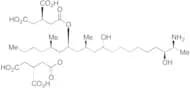
CAS:Producto controlado<p>Stability Hygroscopic, Toxic<br>Applications A mycotoxin produced by mold associated with corn. Inhibitor of sphingosine N-acyltransferase. Blocks the formation of ceramide from sphingosine.<br> Not a dangerous good if item is equal to or less than 1g/ml and there is less than 100g/ml in the package<br>References Monbaliu, S., et al.: J. Agric. Food Chem., 58, 10475 (2010), Klosowski, G., et al.: Biores. Technol., 101, 9723 (2010), Soerensen, L., et al.: Anal. Bioanal. Chem., 398, 1535 (2010),<br></p>Fórmula:C34H59NO14Forma y color:Off-WhitePeso molecular:705.83Ref: TR-F862755
Producto descatalogadoHT-2 Toxin (>85%)
CAS:Producto controlado<p>Stability Hygroscopic<br>Applications HT-2 Toxin is a trichothecene group mycotoxin. HT-2 Toxin is the 4-hydroxy analogue of T-2 Toxin (T002980) which has been shown to induce DNA damage and cell death on prolonged administration.Environmental contaminants; Food contaminants<br> Not a dangerous good if item is equal to or less than 1g/ml and there is less than 100g/ml in the package<br>References Weidner, M. et al.: J. Agric. Food Chem., 60, 5676 (2012); Choi, H. et al.: Toxicol. Appl. Pharmacol., 240, 46 (2009); Amuzie, C. et al.: Toxicol. Sci., 113, 412 (2010);<br></p>Fórmula:C22H32O8Pureza:>85%Forma y color:Off-WhitePeso molecular:424.48Zearalenone
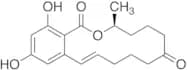
CAS:<p>Applications Estrogenic mycotoxin produced by Fusarium fungi commonly found in grains. One of a group of compounds known as resorcylic acid lactones.Environmental contaminants; Food contaminants<br> Not a dangerous good if item is equal to or less than 1g/ml and there is less than 100g/ml in the package<br>References Tanaka, T., et al.: J. Agric. Food Chem., 36, 979 (1988), Hamilton, S., et al.: Anticancer Res., 16, 3597 (1996), Hecht, S., et al.: Cancer Lett., 150, 49 (2000), Hussein, H., et al.: Toxicology, 167, 101 (2001), Lim, H., et al.: J. Immunol., 175, 4180 (2005),<br></p>Fórmula:C18H22O5Forma y color:White To Light BrownPeso molecular:318.36T-2 Toxin
CAS:Producto controlado<p>Applications T-2 Toxin is a tricothecene mycotoxin produced by fungi of the genus Fusarium. T-2 Toxin induces DNA damage and cell death on prolonged administration.Environmental contaminants; Food contaminants<br> Not a dangerous good if item is equal to or less than 1g/ml and there is less than 100g/ml in the package<br>References Kim, C., et al.: Cancer Res., 57, 3115 (1997), Bottrel, R., et al.: Antimicrob. Agents Chemother., 1999, 43, 856 (1999), Murray, P., et al.: J. Immunol., 178, 2623 (2007), Choi, H., et al.: Toxicol. Appl. Pharmacol., 240, 46 (2009), Amuzie, C., et al.: Toxicol. Sci., 113, 412 (2010),<br></p>Fórmula:C24H34O9Forma y color:White SolidPeso molecular:466.52β-Zearalenol-d4 (Major)
CAS:Producto controlado<p>Stability Light Sensitive<br>Applications Isotope labelled β-Zearalenol is an more active metabolite of Zearalenone (Z270500), a estrogenic mycotoxin produced by Fusarium fungi commonly found in grains.<br> Not a dangerous good if item is equal to or less than 1g/ml and there is less than 100g/ml in the package<br>References Olsen, M., et al.: Acta Pharmacol. Toxicol., 48, 15 (1981), Chang, W., et al.: Food Chem. Toxicol., 22, 887 (1984), El Golli, E., et al.: Toxicol Lett., 166, 122 (2006), Hassen, W., et al.: Toxicology, 232, 294 (2007), Benzoni, E., et al.: Reprod. Toxicol., 25, 461 (2008),<br></p>Fórmula:C18H20D4O5Forma y color:NeatPeso molecular:324.4rac Zearalenone-d6 (major)
CAS:Producto controladoFórmula:C18H16D6O5Forma y color:NeatPeso molecular:324.40α-Zearalenol-d4 (Major)
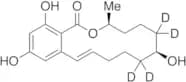
CAS:Producto controlado<p>Applications α-Zearalenol-d4 is the isotope labelled metabolite of Zearalenone (Z270500), an estrogenic mycotoxin produced by Fusarium fungi commonly found in grains.<br>References Olsen, M., et al.: Acta Pharmacol. Toxicol., 48, 15 (1981), Chang, W., et al.: Food Chem. Toxicol., 22, 887 (1984), El Golli, E., et al.: Toxicol Lett., 166, 122 (2006), Hassen, W., et al.: Toxicology, 232, 294 (2007), Benzoni, E., et al.: Reprod. Toxicol., 25, 461 (2008),<br></p>Fórmula:C18H20D4O5Forma y color:NeatPeso molecular:324.415-O-Demethyl Tacrolimus
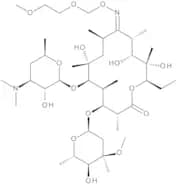
CAS:<p>Tacrolimus is a macrolide that is used as an immunosuppressive drug. It has been shown to bind to the FK-binding protein, which in turn inhibits calcineurin. This prevents the release of IL-2, TNF-α and other cytokines. The immunosuppressive effects of tacrolimus have been evaluated using analytical methods such as coefficients, affinity, and monitoring techniques such as immunoassays and agglutination. These techniques are used to evaluate the plasma concentration of tacrolimus. Tacrolimus also binds to proteins in the blood samples and can be detected by turbidimetric or electrochemiluminescence immunoassay reagents.</p>Fórmula:C43H67NO12Pureza:Min. 95%Peso molecular:789.99 g/mol4H-Furo[2,3-c]pyranyl Mupirocin Sodium Impurity
CAS:<p>Impurity Mupirocin EP Impurity D<br>Stability Hygroscopic<br>Applications Mupirocin (M794000) impurity. (Mupirocin EP Impurity D) The rearrangement isomer of Mupirocin is prepared using an enzyme-catalyzed, selective deesterification.<br>References Sime, J.T., et al.: Tetrahedron Lett., 28, 5169 (1987),<br></p>Fórmula:C26H43O9·NaForma y color:NeatPeso molecular:522.6015-Acetyl Deoxynivalenol (~90%)
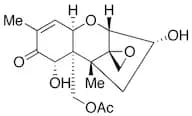
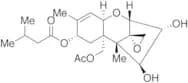
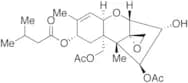
CAS:Producto controlado<p>Applications A mycotoxin produced by the fungi Fusarium culmorum and Fusarium graminearum, inhibits protein synthesis.Environmental contaminants; Food contaminants<br> Not a dangerous good if item is equal to or less than 1g/ml and there is less than 100g/ml in the package<br>References Ashraf, A.; et al.: Int. J. Biol. Biotechnol., 4, 391 (2007), Burlakoti, R., et al.: App. Environ. Microbiol., 74, 6513 (2008), Steinmetz, W., et al.: Eur. J. Med. Chem., 44, 4485 (2009), Zhang, Y., et al.: Phytopathol., 99, 95 (2009),<br></p>Fórmula:C17H22O7Pureza:~90%Forma y color:WhitePeso molecular:338.353-Acetyldeoxynivalenol
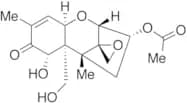
CAS:Producto controlado<p>Stability Appears to decompose in DMSO<br>Applications 3-Acetyldeoxynivalenol is a trichothecene mycotoxin that is produced in a plant-pathogenic fungus, Fusarium graminearum Schwabe.Environmental contaminants; Food contaminants<br> Not a dangerous good if item is equal to or less than 1g/ml and there is less than 100g/ml in the package<br>References Beyer, M., et al.: Int. J. Food. Microbiol., 119, 153 (2007); Schiefer, H.B., et al.: Can. J. Comp. Med., 49, 315 (1985); Mirocha, C.J., et al.: App. Enviro.Microbiol., 55, 1315 (1989);<br></p>Fórmula:C17H22O7Forma y color:WhitePeso molecular:338.35















![4H-Furo[2,3-c]pyranyl Mupirocin Sodium Impurity](/_next/image/?url=https%3A%2Fstatic.cymitquimica.com%2Fproducts%2FTR%2Fthumb-webp%2FF864850.webp&w=3840&q=75)