Carbohidratos y glucoconjugados
Los carbohidratos son compuestos orgánicos formados por carbono, hidrógeno y oxígeno, y su estructura básica está constituida por monosacáridos. Estos se pueden unir para formar disacáridos, oligosacáridos o polisacáridos, dependiendo de la cantidad de unidades monoméricas. Los carbohidratos tienen un papel fundamental en el almacenamiento de energía, la estructura celular y la comunicación celular. Sus derivados se utilizan en productos farmacéuticos, como edulcorantes y excipientes.
En CymitQuimica disponemos de una amplia variedad de carbohidratos y sus derivados para investigación y aplicaciones industriales.
Se han encontrado 5006 productos de "Carbohidratos y glucoconjugados"
Ordenar por
Pureza (%)
0
100
|
0
|
50
|
90
|
95
|
100
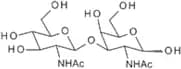
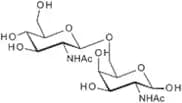
2-Acetamido-3-O-(2-acetamido-2-deoxy-b-D-glucopyranosyl)-2-deoxy-D-galactopyranose
CAS:<p>2-Acetamido-3-O-(2-acetamido-2-deoxy-b-D-glucopyranosyl)-2-deoxy-D-galactopyranose is a methylated, saccharide, Polysaccharide. It is a custom synthesis of a carbohydrate sugar. It is fluorinated to increase its bioavailability. 2 Acetamido 3 O 2 acetamido 2 deoxy b D glucopyranosyl 2 deoxy D galactopyranose has CAS No. 95673 98 6 and the molecular weight is 524.87 g/mol. It has a purity of >99% and comes in powder form.</p>Fórmula:C16H28N2O11Pureza:Min. 95%Forma y color:White PowderPeso molecular:424.4 g/molGlobotriose-sp-biotin
<p>Globotriose-sp-biotin is a custom synthesis that contains a fluorinated, methylated, and modified monosaccharide. It is a synthetic oligosaccharide with glycosylation at the reducing end. Globotriose-sp-biotin can be used in the modification of polysaccharides and complex carbohydrates to improve their bioactivity. This product has a CAS number of 127798-73-5 and is listed as an Oligosaccharide under Glycosylations in the Carbohydrate section.</p>Pureza:Min. 95%Forma y color:PowderMonofucosyllacto-N-hexaose II
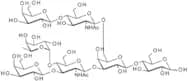
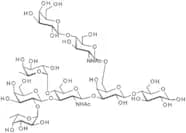
CAS:<p>Monofucosyllacto-N-hexaose II is a tetraol that is used as a reagent in the synthesis of enantioenriched and synthetically tetrasaccharidic products. Monofucosyllacto-N-hexaose II can be obtained by the reaction of Grignard reagents with glucose or by stereoselective reduction of an alpha, beta unsaturated ketone. The presence of the glucose residue in Monofucosyllacto-N-hexaose II makes it an acceptor for esterification reactions. This compound has chiral centers due to its two stereogenic centers at C2 and C3, which are both beta positions on the glucose residue. Monofucosyllacto-N-hexaose II also has a free hydroxyl group at C5 that can be esterified to produce chiral esters.</p>Fórmula:C46H78N2O35Pureza:Min. 95%Peso molecular:1,219.1 g/molDigalactosyldiacylglycerol - 10mg/ml in Chloroform-Methanol
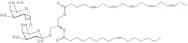
CAS:<p>In plants and algae, the two main galactolipids, monogalactosyldiacyglycerol (MGDG) and digalactosyldiacyglycerol (DGDG), are synthesized by galactosyltransferases in the plastid envelope. They have been linked to the anti-inflammatory and cancer benefits of a green leafy vegetable diet in humans due to their ability to regulate the levels of free radicals like nitric oxide (NO)</p>Fórmula:C51H84O15Pureza:Min. 95%Forma y color:PowderPeso molecular:937.2 g/mol3,6-Di-O-acetyl-4-O-(2,3,4,6-tetra-O-acetyl-b-D-galactopyranosyl)-D-glucal
CAS:<p>3,6-Di-O-acetyl-4-O-(2,3,4,6-tetra-O-acetyl-b-D-galactopyranosyl)-D-glucal is a nacetyllactosamine that is structurally similar to the natural substrate for lactohexosaminidase. This compound inhibits the enzyme activity of this enzyme and other related enzymes. 3,6-Di-O-acetyl-4,6 D -glucal has been shown to inhibit endothelial cell growth in vitro. It also binds to the receptor on endothelial cells and blocks the signal pathways involved in cell growth. The glucose moiety of 3,6 Di O acetyl 4,6 D glucal inhibits lipases by binding to their active sites.</p>Fórmula:C24H32O15Pureza:Min. 95%Forma y color:White PowderPeso molecular:560.5 g/molAcarbose Impurity E
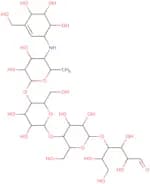
CAS:<p>Acarbose Impurity E is an impurity found in acarbose. It is a natural, API impurity and is a synthetic impurity standard. Acarbose Impurity E has been used in drug development research and development, as well as in the HPLC analysis of acarbose to generate a pharmacopoeia-grade purity standard.</p>Pureza:Min. 95%Maltotridecaose
CAS:<p>Maltotridecaose is a sugar alcohol with an acceptor group that can be introduced into a cavity in a molecule. It is a sweetener that has been shown to have oligosaccharide properties, which are the molecules that comprise dietary carbohydrates. Maltotridecaose can be found as an unlabeled ingredient in foods such as sugar-free chewing gum, chocolate, and ice cream. The debranching of maltotridecaose occurs by way of glucans and licheniformis.</p>Fórmula:C78H132O66Pureza:Min. 95%Forma y color:White/Off-White SolidPeso molecular:2,125.84 g/molLacto-N-neofucopentaose
<p>Neutral pentasasaccharide naturally present in human breast milk</p>Fórmula:C32H55NO25Pureza:Min. 90 Area-%Forma y color:PowderPeso molecular:853.77 g/mol6'-Sialyllactose-BSA
<p>Sialyllactose-BSA is a complex carbohydrate that is used in the synthesis of saccharides. It has been modified with fluorination to create a 6'-sialyllactose-BSA, which is a monosaccharide. This product can be custom synthesized and it's purity is high. The product can be methylated or glycosylated, and it has been click-modified for fluorescence labeling.</p>Pureza:Min. 95%Forma y color:PowderPeso molecular:72,318 g/molMiglustat hydrochloride
CAS:<p>Miglustat hydrochloride (N-Butyldeoxynojirimycin hydrochloride) is an inhibitor of glucosylceramide synthase and can be used for studies about Type I Gaucher</p>Fórmula:C10H22ClNO4Pureza:99.85%Forma y color:SolidPeso molecular:255.74Zopolrestat
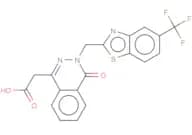
CAS:<p>Zopolrestat (CP 73850) is a potent inhibitor of aldose reductase (IC50 = 3.1 nM).</p>Fórmula:C19H12F3N3O3SPureza:99.74%Forma y color:SolidPeso molecular:419.38COR659
CAS:<p>COR659: suppresses alcohol/chocolate intake in rats; enhances GABAB receptor, blocks CB1 receptor.</p>Fórmula:C16H16ClNO3SPureza:99.75%Forma y color:SolidPeso molecular:337.82b-D-Gentiotriose
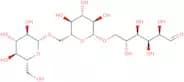
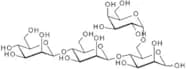
CAS:<p>b-D-Gentiotriose is a synthetic fluorinated monosaccharide that is used in the synthesis of oligosaccharides and polysaccharides. This product can be customized for glycosylation, methylation, or click modification. The purity level of this product is greater than 99%, making it suitable for use in pharmaceuticals, food additives, and other applications.</p>Fórmula:C18H32O16Pureza:Min. 95%Peso molecular:504.44 g/mol2-(Acetylamino)-2-deoxy-3-O-β-D-glucopyranuronosyl-β-D-glucopyranose
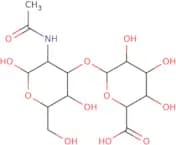
CAS:<p>2-(Acetylamino)-2-deoxy-3-O-β-D-glucopyranuronosyl-β-D-glucopyranose is an analog of atropine that has shown potential as an anticancer agent. It acts as a kinase inhibitor, specifically targeting protein kinases involved in cancer cell growth and survival. This compound has been found in Chinese urine and has been shown to induce apoptosis in human tumor cells. As a potent inhibitor of kinases, it may have potential as a therapeutic agent for the treatment of various types of cancer.</p>Fórmula:C14H23NO12Pureza:Min. 95%Peso molecular:397.33 g/molAcarbose EP Impurity H
CAS:<p>Acarbose EP Impurity H is an impurity of acarbose, a drug product used in the treatment of type II diabetes. Acarbose is a natural product and its synthesis starts from a chemical called alpha-D-glucopyranosyl-3-O-[2,4,6-trichloro-3-(trifluoromethyl)phenyl]pyridine. Acarbose is metabolized by the liver to form Acarbose EP Impurity H. The metabolism studies of this impurity have shown that it has niche pharmacological properties. Acarbose EP Impurity H can be used as an analytical or API impurity for HPLC standard or as a synthetic intermediate for pharmaceutical research and development.</p>Fórmula:C25H43NO17Pureza:Min. 95%Peso molecular:629.61 g/molTrehalose 6-tetradecanoate
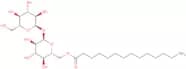
CAS:<p>Trehalose 6-tetradecanoate is a custom synthesis of an oligosaccharide that is modified by methylation, glycosylation, and carbamylation. It is a polysaccharide that has been modified with click chemistry. Trehalose 6-tetradecanoate is a high purity product that can be used in the synthesis of other compounds.</p>Fórmula:C26H48O12Pureza:Min. 95%Peso molecular:552.65 g/molDisialyl, monofucosyllacto-N-hexaose
CAS:<p>Disialyl, monofucosyllacto-N-hexaose is a synthetic oligosaccharide also found in human milk</p>Fórmula:C68H112N4O51Pureza:Min. 95%Peso molecular:1,801.61 g/molAcarbose EP Impurity G
CAS:<p>Acarbose EP Impurity G is a pharmaceutical grade impurity that is used as a reference standard for HPLC and LC-MS analysis. Acarbose EP Impurity G is a metabolite of acarbose and can be found in human plasma. It has been shown that Acarbose EP Impurity G induces the metabolism of glucose, which may be due to its ability to inhibit the activity of alpha-glucosidase. Acarbose EP Impurity G also inhibits the activity of pancreatic beta-cells, leading to impaired insulin secretion.</p>Fórmula:C31H53NO23Pureza:Min. 95%Peso molecular:807.75 g/molHeparin disaccharide I-H trisodium salt
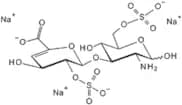
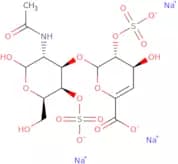
CAS:<p>Heparin disaccharide I-H trisodium salt is a high purity, custom synthesis, methylated, glycosylated, fluorinated, complex carbohydrate with a CAS number of 136098-04-9. It has been modified by the addition of a saccharide group and can be used for research purposes.</p>Fórmula:C12H16NNa3O16S2Pureza:Min. 95 Area-%Forma y color:PowderPeso molecular:563.35 g/molGum cassia tora
CAS:<p>Cassia gum is obtained from the ground purified endosperm of the seeds of Cassia tora and Cassia obtusifolia (Fam. Leguminosae) containing less than 0.05% of Cassia occidentalis. It consists mainly of high molecular weight (approximately 200,000-300,000) <br>The polysaccharide is composed of galactomannans with a mannose:galactose ratio of about 5:1. The seeds are dehusked and degermed by thermal and mechanical treatment followed by milling and screening of the endosperm. The ground endosperm is purified by extraction with isopropanol. It is used as a thickener, emulsifier, foam stabilizer, moisture retention agent and texturizing agent in cheese, frozen dairy desserts and mixes, meat products and poultry products.</p>Pureza:Min. 95%Methyl a-D-laminaribioside
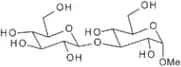
CAS:<p>Methyl a-D-laminaribioside is a modified glycosylation product of D-Laminaribiose. It is an oligosaccharide that has been modified with methyl and fluorine groups. The modification of the sugars with these functional groups increases the stability and solubility of the molecule. Methyl a-D-laminaribioside is used in research for its ability to be click modified, polysaccharides, or saccharides, as well as being used in synthetic chemistry as a sugar to modify other molecules. Methyl a-D-laminaribioside is also used in medicine as an anti-inflammatory agent. Methyl a-D-laminaribioside can be synthesized by custom synthesis and has CAS number 7115-19-7.</p>Fórmula:C13H24O11Pureza:Min. 95%Forma y color:PowderPeso molecular:356.32 g/molBlood Group A type III/IV linear trisaccharide
<p>GalNAca1-3Galb1-3GalNAc</p>Fórmula:C22H38N2O16Pureza:Min. 95%Peso molecular:586.54 g/molAcarbose EP Impurity F
CAS:<p>Acarbose EP Impurity F is an analytical impurity that is found in Acarbose EP, a drug product. Acarbose EP Impurity F is a synthetic compound and is not present in any natural products. The CAS number for this impurity is 83116-09-0. Acarbose EP Impurity F has been shown to be pharmacologically active in animal studies, but the specific activity of this impurity has not been determined. Acarbose EP Impurity F is used as an impurity standard in HPLC analysis of Acarbose EP and as a custom synthesis. Acarbose EP Impurity F may also be used as a research and development phase, niche product or as a drug development research compound.</p>Fórmula:C31H53NO23Pureza:Min. 95%Peso molecular:807.75 g/molPidotimod diketopiperazine-6-propanoic acid
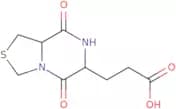
CAS:<p>Pidotimod is an impurity in the drug product, which is a synthetic diketopiperazine-6-propanoic acid. Pidotimod is an impurity standard that is used in the development of drugs and as a pharmacopoeia. It has been shown to be metabolized by human liver microsomes and human erythrocytes.</p>Fórmula:C9H12N2O4SPureza:Min. 95%Peso molecular:244.27 g/molAMG 837 calcium hydrate
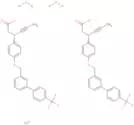
CAS:<p>AMG 837 calcium hydrate is a potent GPR40 agonist with an EC50 of 13 nM.</p>Fórmula:C52H44CaF6O8Pureza:98.07%Forma y color:SolidPeso molecular:950.97b-D-Fructofuranosyl a-D-glucopyranoside 6-octanoate
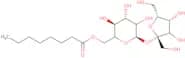
CAS:<p>b-D-Fructofuranosyl a-D-glucopyranoside 6-octanoate is a saccharide that is used as an intermediate for the synthesis of polysaccharides. This compound can be used to synthesize glycosylated oligosaccharides with high purity and good yields. It can also be used in the preparation of complex carbohydrates, including fluorinated sugar derivatives.</p>Pureza:Min. 95%a-D-Galactosyl-mannotriose
CAS:<p>a-D-Galactosyl-mannotriose is a complex oligosaccharide, which is derived from plant materials such as leguminous seeds. Its mode of action involves selectively promoting the growth of beneficial gut bacteria, particularly bifidobacteria and lactobacilli, through its structural composition that resists hydrolysis by human digestive enzymes. This non-digestibility allows it to reach the colon intact, where it can exert its prebiotic effects.</p>Fórmula:C24H42O21Pureza:Min. 95 Area-%Forma y color:White PowderPeso molecular:666.58 g/molNeolactotetraosylceramide
CAS:<p>Neolactotetraosylceramide (NT4) is a glycoconjugate that is found in human serum. It has been shown to bind to the receptor site of monoclonal antibodies and inhibit the binding of tumor necrosis factor-α (TNF-α), which is involved in immune system regulation. NT4 has also been shown to block the activity of receptors on human neutrophils, which may be due to its structural similarity to lactotetraosylceramide. NT4 has been implicated as a potential cause for autoimmune diseases and cancer tissues, due to its structural similarity with glycoproteins that are found on cell surfaces. The optimum pH for NT4 is 7.5 and its glycan structure consists of two mannose residues linked by an alpha-1,6 linkage. This glycoconjugate binds well with blood group A and B antigens, but not with blood group O antigen. NT4 elicits antibody response</p>Fórmula:C62H114N2O23Pureza:Min. 95%Peso molecular:1,255.57 g/molCellobiose-6'-phosphate
CAS:<p>produced as the sodium salt</p>Fórmula:C13H25O14PPureza:Min. 95%Peso molecular:436.3 g/molNA3F N-Glycan
CAS:<p>NA3F is a N-glycan that is found on various glycoproteins and glycolipids. It consists of sialic acid, galactose, and fucose sugars in the ratio 3:2:1. NA3F N-glycans are synthesized by the removal of the terminal sialic acid residue from an Asn-linked oligosaccharide precursor. These types of glycans are found on high mannose (HMan) and hybrid (HHyb) glycans. The synthesis of NA3F N-glycan requires the activity of two enzymes: peptidase and sialyltransferase. The enzyme peptidase cleaves an α(1,4)-linked oligosaccharide at the nonreducing end to form a free α(1,6) linked oligosaccharide with a terminal α(1,2) linked mannose residue. This process releases the terminal</p>Fórmula:C82H137N5O60Pureza:Min. 95%Peso molecular:2,152.96 g/molα,β-Trehalose
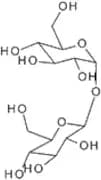
CAS:<p>α,β-Trehalose is a carbohydrate that is found in many organisms and has been shown to have biochemical properties such as energy metabolism, enzyme activities, and x-ray diffraction data. Trehalose has a phase transition temperature of around 98°C, which makes it an ideal sugar for food preservation. Trehalose can also be used as a sugar substitute with the same sweetness level as sucrose. The chemical stability of trehalose allows it to be used as a preservative in food and beverages. Trehalose has been shown to be nontoxic in animal studies with doses up to 2000 mg/kg body weight. It also has an optimum pH of 7 and is stable at high temperatures.</p>Fórmula:C12H22O11Pureza:Min. 95 Area-%Forma y color:White PowderPeso molecular:342.3 g/molNeu5Ac(a2-6)Gal(b1-4)GalNAc
CAS:<p>Neu5Ac(a2-6)Gal(b1-4)GalNAc is a synthetic, fluorinated monosaccharide. It is an oligosaccharide that has been custom synthesized and glycosylated. It is a complex carbohydrate that has been modified with methylation and click chemistry. Neu5Ac(a2-6)Gal(b1-4)GalNAc has CAS number 383365-43-3. This product is available in high purity and can be used in the synthesis of polysaccharides.</p>Fórmula:C25H42N2O19Pureza:Min. 95%Peso molecular:674.6 g/molXyloglucan heptasaccharide
CAS:<p>Xyloglucan is a heptasaccharide that is an important component of the plant cell wall. Xyloglucan heptasaccharides are found in the cell walls of many plants, including banana and potato. Xyloglucan heptasaccharides are composed of alternating glucose and xylose residues, with a glycosidic linkage between two xylose residues. This linkage can be hydrolyzed by α-amyrinase to yield two xylose monomers. The conformational properties of xyloglucan depend on its stereochemistry, which has been shown to affect its ability to inhibit inflammatory bowel disease (IBD). Xyloglucan heptasaccharides have also been shown to bind to bacterial cells, inhibiting their growth.</p>Fórmula:C39H66O33Pureza:Min. 95%Forma y color:PowderPeso molecular:1,062.92 g/molSalacinol
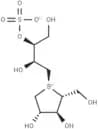
CAS:<p>Salacinol is a naturally occurring alpha-glucosidase inhibitor isolated from an Ayurvedic traditional medicine Salacia reticulata.</p>Fórmula:C9H18O9S2Forma y color:SolidPeso molecular:334.37Galactostatin
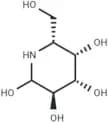
CAS:<p>Galactostatin is an inhibitor of β-galactosidase.</p>Fórmula:C6H13NO5Forma y color:SolidPeso molecular:179.171Maltohexaose spacer fluorescein
<p>Fluorescent diagnostic reagent used for tumor diagnosis</p>Pureza:Min. 95%6-α-D-Glucopyranosyl maltotriose-13C6
CAS:<p>Please enquire for more information about 6-α-D-Glucopyranosyl maltotriose-13C6 including the price, delivery time and more detailed product information at the technical inquiry form on this page</p>Fórmula:C6C18H42O21Pureza:Min. 95%Peso molecular:672.53 g/molβ-D-Galactopyranosyl-(1-4)-β-D-galactopyranosyl-(1-4)-D-galactose
CAS:<p>b-D-Galactopyranosyl-(1-4)-b-D-galactopyranosyl-(1-4)-D-galactose is a fluorinated saccharide that contains three fluorine atoms. The chemical formula for this product is C8H12F3O11. It is a white powder and the molecular weight of the compound is 514.06 g/mol. b-D-Galactopyranosyl-(1-4)-b-D-galactopyranosyl-(1-4)-D-galactose can be custom synthesized to meet your desired specifications, such as modification, purity, and other criteria. This product has been shown to be useful in glycosylation reactions and click chemistry applications.</p>Fórmula:C18H32O16Pureza:Min. 95%Peso molecular:504.44 g/molDigalactosylceramide
CAS:<p>Digalactosylceramide is a bioactive glycosphingolipid, which is derived from the cellular membranes of certain bacteria and plants. This compound plays a significant role in modulating immune responses through its interaction with the immune system. Its mode of action involves binding to specific receptors on immune cells, influencing cell signaling pathways that are crucial for the regulation of the immune response, including the modulation of cytokine production and immune cell activation.</p>Fórmula:C46H87NO13Pureza:Min. 95%Forma y color:PowderPeso molecular:862.18 g/molDisialyllacto-N-hexaose I
CAS:<p>Disialyllacto-N-hexaose I is a complex carbohydrate that belongs to a class of saccharides called polysaccharides. Disialyllacto-N-hexaose I is synthesized through the methylation and glycosylation of sucrose. It has been modified by Click chemistry with a maleimide group to create an amide bond between the terminal alpha position on the glucose residue and the terminal alpha position on the N-acetylglucosamine residue. This modification can be used for Polysaccharide analysis, such as MALDI TOF MS. Disialyllacto-N-hexaose I has a CAS number of 137636-98-7 and has been shown to have high purity without any impurities or contaminants.</p>Fórmula:C62H102N4O47Pureza:Min. 95%Peso molecular:1,655.47 g/mol2-Acetamido-6-O-(2-acetamido-2-deoxy-b-D-galactopyranosyl)-2-deoxy-3-O-(b-D-galactopyranosyl)-D-glucopyranose
<p>A GalNAc trisaccharide</p>Pureza:Min. 95%NGA5B N-Glycan
CAS:<p>NGA5B N-Glycan is a custom synthesis that can be modified by fluorination, methylation, and monosaccharide. It is synthesized from natural and synthetic substances. This N-glycan is a modification of glycans that have been shown to have anti-cancer effects. The glycosylation of the saccharide has been shown to have anti-inflammatory properties.</p>Fórmula:C82H136N8O56Pureza:Min. 95%Forma y color:PowderPeso molecular:2,129.98 g/molSodium alginate, viscosity 100 - 150 mPa.s
CAS:<p>Sodium alginate is a soluble fiber that is extracted from brown seaweed. It is a natural carbohydrate that can be modified to create a variety of sugar-based derivatives, such as Oligosaccharides, Monosaccharides, and Custom Synthesis. Sodium alginate has been modified with Fluorination, Methylation, Glycosylation, and Click Modification to create high-purity products for various applications.</p>Pureza:90.8 To 106.0%Forma y color:PowderCellooctaose
CAS:<p>Cellooctaose is a synthetic, water-soluble oligosaccharide with a molecular weight of 1,000 daltons. It is produced by the reaction of propionate and intramolecular hydrogen with a water molecule to form glycosidic bonds. Cellooctaose can be used as a coating for pharmaceutical tablets and capsules to prevent dissolution in gastric acid. Cellooctaose is homologous to cellulose and has been used in recombinant protein production for the purpose of modifying viscosity. Cellooctaose has also been shown to inhibit the growth of cancer cells via lysosomal membrane permeability enhancement. This may be due to its ability to bind to fatty acids on the surface of cancer cells, which then leads to increased cell death.</p>Fórmula:C48H82O41Pureza:Min. 95%Forma y color:PowderPeso molecular:1,315.14 g/molChondroitin disaccharide di-triS tetrasodium salt
<p>Chondroitin disaccharide di-triS tetrasodium salt is a synthetic, custom synthesis, and a glycosylation of chondroitin disaccharide. It is an oligosaccharide that has been modified with fluorination, monosaccharide, methylation, and click modification. The CAS No. for this compound is</p>Fórmula:C14H17NNa4O20S3Pureza:Min. 95%Forma y color:PowderPeso molecular:707.44 g/mol2-Acetamido-6-O-(2-acetamido-2-deoxy-b-D-glucopyranosyl)-2-deoxy-D-galactopyranose
CAS:<p>2-Acetamido-6-O-(2-acetamido-2-deoxy-β-D-glucopyranosyl)-2,3,4,6-tetraacetamido-2,3,4,6,-tetra deoxygalactose is an acetylated disaccharide that is used in the synthesis of 6 fluoro 3 indoxyl beta D galactopyranoside. It is a residue of polysaccharides and proteins. 2 Acetamido 6 O 2 acetamido 2 deoxy β D glucopyranosyl 2 deoxy D galactopyranose is a disaccharide that can be found as a component of many polysaccharides and proteins.</p>Fórmula:C16H28N2O11Pureza:Min. 95%Peso molecular:424.4 g/molDifucosyllacto-N-hexaose (c)
CAS:<p>Difucosyllacto-N-hexaose (c) is an oligosaccharide that can be found in human breast milk. It has been shown to have an anti-inflammatory effect on the ileum, which may be due to its ability to stimulate the production of short-chain fatty acids in the large intestine and inhibit the release of proinflammatory cytokines.</p>Fórmula:C52H88N2O39Pureza:Min. 95%Peso molecular:1,365.25 g/molChondroitin disaccharide di-diSB trisodium salt
CAS:<p>Chondroitin disaccharide di-diSB trisodium salt is a chondroitin sulfate binding agent that can be used in the diagnosis of subcutaneous tumors. It binds to the chondroitin sulfate component of proteoglycans and stains these proteins under light microscopy. This agent can also be used to detect monoclonal antibodies that bind to the chondroitin sulfate component of proteoglycans. The detection of this agent may be done by enzyme-linked immunosorbent assay or fluorescence microscopy.</p>Fórmula:C14H18NNa3O17S2Pureza:Min. 95%Forma y color:PowderPeso molecular:605.39 g/molSialyl Lewis X cholesterol
<p>Sialyl Lewis X Cholesterol is a synthetically modified sugar</p>Pureza:Min. 95%6'-α-Sialyl-N-acetyllactosamine-sp-biotin
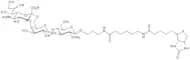
CAS:<p>6'-a-Sialyl-N-acetyllactosamine-sp-biotin is a recombinant modified oligosaccharide. It is an Oligosaccharide that is synthesized by the methylation of 6'-sialyllactose with acetic anhydride and triethylamine in DMF. It has a molecular weight of 805.00 Da and a CAS number of 1038746-08-5. 6'-a-Sialyl-N-acetyllactosamine-sp-biotin may be used as a monomer for click chemistry, as well as for other applications in carbohydrate chemistry, such as the synthesis of polysaccharides and complex carbohydrates. This product has high purity and can be custom synthesized to order.</p>Fórmula:C44H74N6O22SPureza:Min. 95%Forma y color:White PowderPeso molecular:1,071.15 g/mol