Cetonas y Derivados
Las cetonas son compuestos orgánicos que contienen un grupo carbonilo (C=O) unido a dos átomos de carbono, formando una estructura en la que el grupo carbonilo está flanqueado por grupos alquilo o arilo. En farmacología, las cetonas se utilizan en la formulación de APIs debido a su capacidad para mejorar la solubilidad y estabilidad de los principios activos. Algunas cetonas tienen propiedades antiinflamatorias, analgésicas y antimicrobianas. Los derivados de cetonas incluyen compuestos en los que el grupo carbonilo está modificado, como los enoles, que tienen aplicaciones en la síntesis de fármacos y como intermediarios químicos en la fabricación de otros compuestos bioactivos. Los derivados de cetonas se utilizan en el diseño de nuevos medicamentos, incluidos aquellos para tratar enfermedades neurodegenerativas, trastornos metabólicos y ciertos tipos de cáncer, gracias a sus efectos específicos sobre enzimas y procesos celulares.
Se han encontrado 2393 productos de "Cetonas y Derivados"
Ordenar por
Pureza (%)
0
100
|
0
|
50
|
90
|
95
|
100
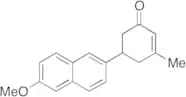
5-(6-Methoxy-2-naphthalenyl)-3-methyl-2-cyclohexen-1-one
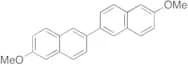
CAS:Producto controladoFórmula:C18H18O2Forma y color:NeatPeso molecular:266.336,6'-Dimethoxy-2,2'-binaphthalene
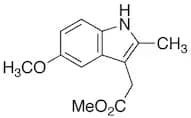
CAS:Producto controlado<p>Applications 6,6'-Dimethoxy-2,2'-binaphthalene, can be used for the synthesis of novel classes of non-steroidal substrate mimetics, as inhibitors of human CYP17. It is also an impurity of Nabumetone (N200500), a non-steroidal anti-inflammatory drug, acting as anti-inflammatory agent.<br>References Kumpulainen, H., et al.: J. Med. Chem., 49, 1207 (2006); Pinto-Bazurco, M. A. E., et al.: Bioorg. Med. Chem. Lett., 18, 267 (2008);<br></p>Fórmula:C22H18O2Forma y color:NeatPeso molecular:314.38Methyl 5-Methoxy-2-methylindole-3-acetate
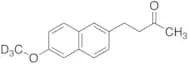
CAS:Producto controlado<p>Applications Intermediate in the preparation of Indomethacin<br>References Kalgutkar, A.S., et al.: Bioorg. Med. Chem., 13, 6810 (2005),<br></p>Fórmula:C13H15NO3Forma y color:NeatPeso molecular:233.26Nabumetone-d3
CAS:Producto controlado<p>Applications Labelled Nabumetone. Anti-inflammatory. Antibacterial.<br>References Kumpulainen, H., et al.: J. Med. Chem., 49, 1207 (2006),<br></p>Fórmula:C152H3H13O2Forma y color:NeatPeso molecular:231.30N-Desethyl 3-Bromo Lidocaine
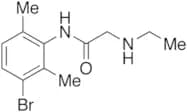
CAS:Producto controlado<p>Applications Intermediate in the preparation of hydroxylated Lidocaine metabolites.<br></p>Fórmula:C12H17BrN2OForma y color:NeatPeso molecular:285.18(S)-(+)-Ibuprofen Propylene Glycol Ester
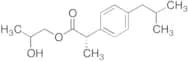
CAS:Producto controladoFórmula:C16H24O3Forma y color:NeatPeso molecular:264.363,4-Methylenedioxy Propiophenone
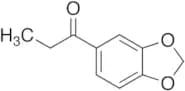
CAS:Producto controlado<p>Applications Intermediate in the production of Isosafrole and Ethylone.<br>References Katoch-Rouse, R., et al.: J. Med. Chem., 46, 642 (2003), Andrade, E., et al.: Chem. Biodivers., 5, 197 (2008),<br></p>Fórmula:C10H10O3Forma y color:NeatPeso molecular:178.18(±)-Ibuprofen-d3, Sodium Salt (α-methyl-d3)
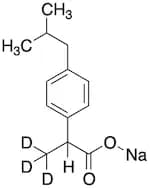
CAS:Producto controlado<p>Applications (±)-Ibuprofen-d3, Sodium Salt (alpha-methyl-d3) (CAS# 1219805-09-0) is a useful isotopically labeled research compound.<br></p>Fórmula:C13H14D3NaO2Forma y color:NeatPeso molecular:231.29Nabumetone Dimer Impurity
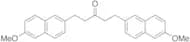
CAS:Producto controlado<p>Impurity Nabumetone Dimer Impurity<br>Applications An impurity in a Nabumetone (N200500) drug substance.<br>References Friedel, H., et al.: Drugs, 35, 504 (1988), Davies, N., et al.: Clin. Pharmacokinet., 33, 403 (1997),<br></p>Fórmula:C27H26O3Forma y color:NeatPeso molecular:398.49N-(4-Hydroxyphenyl)propanamide
CAS:<p>The N-(4-hydroxyphenyl)propionamide (HPPA) is a synthetic drug that binds to the human liver. It has been shown to be effective in preventing implantation of fertilized eggs, and can be used as a diagnostic agent for determining the presence of HPPA in human liver tissue. HPPA is also used as a diluent for other drugs. The HPPA binds to chromatographic components and can be detected using electrochemical detection, which allows it to be used as a targetable probe for cancer research. HPPA is also used to study iontophoretic transport of ions across reconstituted membranes in vitro.</p>Fórmula:C9H11NO2Pureza:(%) Min. 97%Peso molecular:165.19 g/molPelubiprofen
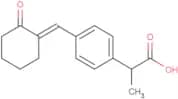
CAS:<p>Pelubiprofen is a non-steroidal anti-inflammatory agent and a COX-2 inhibitor, which effectively reduces PGE(2) production by inhibiting COX activity.</p>Fórmula:C16H18O3Pureza:99.69%Forma y color:SolidPeso molecular:258.31Nabumetone dimer
CAS:<p>Nabumetone is a nonsteroidal anti-inflammatory drug that is metabolized by the liver to form a dimer. The major metabolite of nabumetone is the dimer, which has been used as an impurity standard for this drug. Nabumetone has been shown to inhibit prostaglandin synthesis, and its metabolites have been studied for their effects on various enzymes.</p>Fórmula:C27H26O3Pureza:Min. 95%Peso molecular:398.49 g/mol(2-Amino-2-(hydroxymethyl)propane-3-ol-1-yl) (5-benzoyl-2,3-dihydro-1H-pyrrolizine-1-carboxylate), racemic
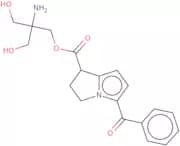
<p>Racemic 2-amino-2-(hydroxymethyl)propane-3-ol-1-yl (5-benzoyl-2,3-dihydro-1H-pyrrolizine-1-carboxylate) is a synthetic drug product. It is used in research and development as an impurity standard. It is also used to synthesize drug products, which are custom synthesis and not commercially available. The racemate is a metabolite of the natural compound "Lysergic acid" and has been studied for its effects on metabolism.</p>Fórmula:C19H22N2O5Pureza:Min. 95%Peso molecular:358.39 g/mol3-Carboxy-a-methyl-benzeneacetic acid
CAS:<p>3-Carboxy-a-methyl-benzeneacetic acid (3CMA) is an impurity in the synthesis of 3,4-methylenedioxyphenylacetone. It is a preservative that has been analysed as a potential source of contamination in pharmaceutical preparations. 3CMA has been shown to be effective at inhibiting the growth of bacteria, yeast and moulds. The analysis time for 3CMA is typically 8 hours or less. The parameters that are used to analyse 3CMA include the use of acetonitrile, optimal porosity and efficiency. The analytical methods used for 3CMA include chromatographic and chromolith methods.</p>Fórmula:C10H10O4Pureza:Min. 95%Peso molecular:194.18 g/mol6-Benzoyl-2,3-dihydro-1H-pyrrolizine-1-carboxylic acid, racemic
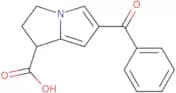
CAS:<p>6-Benzoyl-2,3-dihydro-1H-pyrrolizine-1-carboxylic acid, racemic is a drug product that is used as an analytical standard in the development of new drugs. It is also used to study the metabolism of drugs. 6BPDC has been shown to inhibit bacterial growth by binding to DNA and RNA, thereby preventing transcription and replication. This metabolite can be synthesized in the laboratory.</p>Fórmula:C15H13NO3Pureza:Min. 95%Peso molecular:255.27 g/mol5-Benzoyl-2,3-dihydro-1H-pyrrolizine-1-carboxylic acid - Racemic
CAS:<p>5-Benzoyl-2,3-dihydro-1H-pyrrolizine-1-carboxylic acid - Racemic (5BPC) is a drug that is used for the treatment of pain. It has been shown to be safe and effective in treating postoperative pain when given by intravenous infusion or as an oral tablet. 5BPC has minimal toxicity and is metabolized primarily by the liver with a half life of 2.6 hours. The drug has been found to have pharmacokinetic properties that allow it to be used safely in patients with hepatic impairment and in those recovering from abdominal surgery. 5BPC is a prodrug that undergoes biotransformation by esterases into its active form, pyrrolizidine alkaloid (PA). PA acts as a nonsteroidal anti-inflammatory agent and inhibits prostaglandin synthesis, which leads to analgesia. This drug also has minimal drug interactions because</p>Fórmula:C15H13O3NPureza:Min. 95%Peso molecular:255.27 g/molN-(4-Hydroxyphenyl)acetamide sulfate-d3 sodium
CAS:Producto controlado<p>Please enquire for more information about N-(4-Hydroxyphenyl)acetamide sulfate-d3 sodium including the price, delivery time and more detailed product information at the technical inquiry form on this page</p>Fórmula:C8H6D3NO5S•NaPureza:Min. 95%Peso molecular:257.24 g/molTramadol Hydrochloride CIV
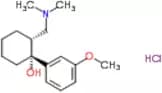
CAS:Producto controladoAromatic amino-alcohol-phenols, aromatic amino-acid-phenols and other aromatic amino compounds with oxygen functionFórmula:C16H25NO2·HCIForma y color:White Crystalline PowderPeso molecular:403.10083Tramadol Related Compound A CIV ((RS,SR)-1-(3-Methoxyphenyl)-2-(dimethylaminomethyl)cyclohexanol hydrochloride)
CAS:Producto controladoAromatic amino-alcohol-phenols, aromatic amino-acid-phenols and other aromatic amino compounds with oxygen functionFórmula:C16H25NO2·HClForma y color:White PowderPeso molecular:263.188533-Chloro-4-hydroxyacetanilide
CAS:<p>3-Chloro-4-hydroxyacetanilide is a chemical compound that belongs to the class of acetanilides. It has long-term toxicity and is used as a drug substance in the production of aniline derivatives. 3-Chloro-4-hydroxyacetanilide has been shown to be carcinogenic in hamsters. The long term exposure to this chemical was shown to cause liver damage and increased incidence of tumours in rats. This drug also contains impurities and traces of chloride, chlorine, and thionyl chloride, which are toxic substances that can cause irritation or burns on contact with skin or eyes.</p>Fórmula:C8H8ClNO2Pureza:Min. 95%Peso molecular:185.61 g/mol