Cetonas y Derivados
Las cetonas son compuestos orgánicos que contienen un grupo carbonilo (C=O) unido a dos átomos de carbono, formando una estructura en la que el grupo carbonilo está flanqueado por grupos alquilo o arilo. En farmacología, las cetonas se utilizan en la formulación de APIs debido a su capacidad para mejorar la solubilidad y estabilidad de los principios activos. Algunas cetonas tienen propiedades antiinflamatorias, analgésicas y antimicrobianas. Los derivados de cetonas incluyen compuestos en los que el grupo carbonilo está modificado, como los enoles, que tienen aplicaciones en la síntesis de fármacos y como intermediarios químicos en la fabricación de otros compuestos bioactivos. Los derivados de cetonas se utilizan en el diseño de nuevos medicamentos, incluidos aquellos para tratar enfermedades neurodegenerativas, trastornos metabólicos y ciertos tipos de cáncer, gracias a sus efectos específicos sobre enzimas y procesos celulares.
Se han encontrado 2393 productos de "Cetonas y Derivados"
Ordenar por
Pureza (%)
0
100
|
0
|
50
|
90
|
95
|
100
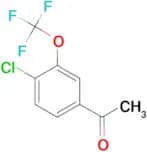
4′-Chloro-3′-(trifluoromethoxy)acetophenone
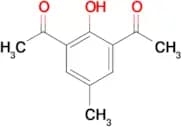
CAS:Fórmula:C9H6ClF3O2Forma y color:SolidPeso molecular:238.591,1′-(2-Hydroxy-5-methyl-1,3-phenylene)diethanone
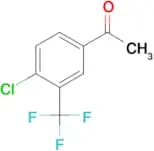
CAS:Fórmula:C11H12O3Pureza:95.0%Peso molecular:192.2144-Chloro-3-(trifluoromethyl)acetophenone
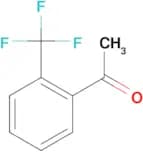
CAS:Fórmula:C9H6ClF3OPureza:98%Forma y color:SolidPeso molecular:222.592′-(Trifluoromethyl)acetophenone
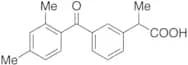
CAS:Fórmula:C9H7F3OPureza:98%Forma y color:Low Melting SolidPeso molecular:188.149rac-2’,4’-Dimethyl Ketoprofen
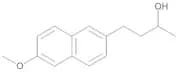
CAS:Producto controlado<p>Applications rac-2’,4’-Dimethyl Ketoprofen is an impurity of Ketoprofen (K200800), an anti-inflammatory and analgesic agent.<br>References Ueno, K., et al.: J. Med. Chem., 19, 941 (1976); Liversidge, G.G., Anal. Profiles Drug Subs., 10, 443 (1981); Jamali, F., et al.: Clin. Pharmacokinet., 19, 197 (1990)<br></p>Fórmula:C18H18O3Forma y color:NeatPeso molecular:282.332-Hydroxy Nabumetone
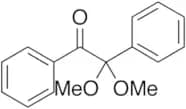
CAS:Producto controladoFórmula:C15H18O2Forma y color:White To Off-WhitePeso molecular:230.302,2-Dimethoxy-2-phenylacetophenone
CAS:<p>Applications 2,2-Dimethoxy-2-phenylacetophenone (cas# 24650-42-8) is a compound useful in organic synthesis.<br> Not a dangerous good if item is equal to or less than 1g/ml and there is less than 100g/ml in the package<br></p>Fórmula:C16H16O3Forma y color:White PowderPeso molecular:256.301-(3,4-Dimethylphenyl)ethanol
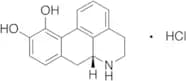
CAS:Producto controlado<p>Applications 1-(3,4-Dimethylphenyl)ethanol is an intermediate in the production of Medetomidine (M203250), α2-Adrenergic agonist. Sedative; analgesic.<br>References Kagechika, H., et al.: J. Med. Chem., 32, 1098 (1989), ; Scheinin, M., et al.: Br. J. Clin. Pharmacol., 24, 443 (1987),<br></p>Fórmula:C10H14OForma y color:NeatPeso molecular:150.22R-(-)-Norapomorphine Hydrochloride
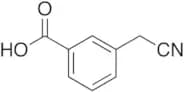
CAS:Producto controlado<p>Applications An Apomorphine derivative as inhibitor of amyloid-β (Aβ) fibril formation and their use in amyloidosis based disease.<br>References Howlett, D., et al.: Biochem. J., 340, 283 (1999), Kuner, P., et al.: J. Biol. Chem., 275, 1673 (2000), Ono, K., et al.: J. Neurosci. Res., 75, 742 (2004),<br></p>Fórmula:C16H15NO2•HClPureza:>90%Forma y color:NeatPeso molecular:253.3036463-(Cyanomethyl)benzoic Acid
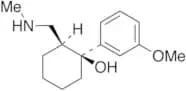
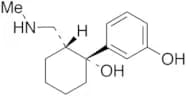
CAS:Producto controlado<p>Impurity Ketoprofen EP Impurity H<br>Applications 3-(Cyanomethyl)benzoic Acid (Ketoprofen EP Impurity H) is a reagent used in the synthesis of various pharmaceutically important compounds, such as its use in the synthesis of neprilysin inhibitors.<br>References Solomon, S.D., et al.: Lancet., 380 1387 (2012); Dadd, M.R., et al.: Enzyme. Microb. Tehcnol., 29, 20 (2001);<br></p>Fórmula:C9H7NO2Forma y color:NeatPeso molecular:161.16(-)-N-Desmethyl Tramadol
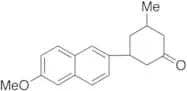
CAS:Producto controlado<p>Applications An optically active metabolite of Tramadol.<br> Not a dangerous good if item is equal to or less than 1g/ml and there is less than 100g/ml in the package<br>References Lintz, V.W., et al.: Arzneim.-Forsch./Drug Res., 31, II, 11, 1932 (1981)<br></p>Fórmula:C15H23NO2Forma y color:NeatPeso molecular:249.353-(6-Methoxy-2-naphthalenyl)-5-methylcyclohexanone (Impurity)
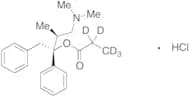
CAS:Fórmula:C18H20O2Forma y color:NeatPeso molecular:268.35L-Propoxyphene-d5 HCl (propionyl-d5)
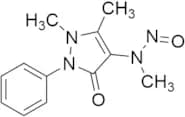
CAS:Producto controlado<p>Applications L-Propoxyphene-d5 Hydrochloride is the isotope labelled analog and L-isomer of Propoxyphene Hydrochloride (P831500); a controlled substance (opiate) and analgesic (narcotic). The α-DL-and D-diastereoisomers possess marked analgesic activity in contrast to the β-diastereoisomers which are substantially inactive. Oral administration of L-Propoxyphene Hydrochloride enhances the analgesic activity of D-Propoxyphene Hydrochloride.<br>References Goldenthal, E.I., et al.: Toxicol. Appl. Pharmacol., 18, 185 (1971); McEwan, B., et al.: Anal. Profiles Drug Subs., 1, 301 (1972); Murphy, P.J., et al.: J. Pharmacol. Exp. Ther., 199, 415 (1976)<br></p>Fórmula:C22H25D5ClNO2Forma y color:NeatPeso molecular:380.96N-(1,5-Dimethyl-3-oxo-2-phenyl-2,3-dihydro-1H-pyrazol-4-yl)-N-methylnitrous amide
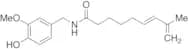
CAS:Producto controladoFórmula:C12H14N4O2Forma y color:NeatPeso molecular:246.2716,17-Dehydro Capsaicin
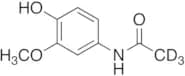
CAS:Producto controlado<p>Stability Light Sensitive<br>Applications A dehydrogenated metabolite of Capsaicin (C175680).<br> Not a dangerous good if item is equal to or less than 1g/ml and there is less than 100g/ml in the package<br>References Glinsukon, T., et al.: Toxicon, 18, 215 (1980), Obach, R., et al.: Drug Metab. Dispos., 29, 1599 (2001), Reilly, C., et al.: Toxicol. Sci., 73, 170 (2003),<br></p>Fórmula:C18H25NO3Forma y color:Off-White To BrownPeso molecular:303.43-Methoxy Acetaminophen-d3
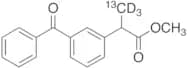
CAS:Producto controlado<p>Applications 3-Methoxy Acetaminophen-d3 is deuterium labeled 3-Methoxy Acetaminophen (M226050). 3-Methoxy Acetaminophen is a metabolite of Acetaminophen (A161220), an analgesic and antipyretic agent used as a pain reliever to treat headache, muscle aches, and arthritis (1,2,3).<br>References (1) McGill, M. R. and Jaeschke, H. Pharm Res. 30, 2174 (2013)(2) Fairbrother, J.E., et al.: Anal. Profiles Drug Subs., 3, 1 (1974) (3) Hinson, J.A., et al.: Rev. Biochem. Toxicol., 2, 103 (1980)<br></p>Fórmula:C92H3H8NO3Forma y color:NeatPeso molecular:184.207Ketoprofen-13CD3 Methyl Ester
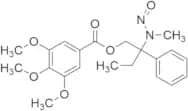
CAS:Producto controlado<p>Applications An intermediate for the synthesis of Labelled Ketoprofen.<br> Not a dangerous good if item is equal to or less than 1g/ml and there is less than 100g/ml in the package<br>References Derewenda, Z., et al.: J. Mol. Biol., 227, 818 (1992), Grochulski, P., et al.: J. Biol. Chem., 268, 12843 (1993).<br></p>Fórmula:C1613CH13D3O3Forma y color:NeatPeso molecular:272.32Trimebutine EP Impurity E-Nitroso
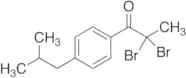
Producto controladoFórmula:C21H26N2O6Forma y color:NeatPeso molecular:402.4414'-Isobutyl-2,2-dibromopropiophenone
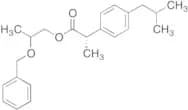
CAS:Producto controlado<p>Applications Intermediate in the synthesis of Ibuprofen.<br></p>Fórmula:C13H16Br2OForma y color:NeatPeso molecular:348.07(S)-(+)-Ibuprofen 2-(Benzyloxy)propan-1-yl Ester
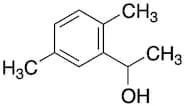
Producto controlado<p>Applications (S)-(+)-Ibuprofen 2-(Benzyloxy)propan-1-yl Ester is an intermediate in the synthesis of (S)-(+)-Ibuprofen Propylene Glycol Ester (I140100), a derivative of (S)-(+)-Ibuprofen (I140010), a nonsteroidal anti-inflammatory drug (NSAID).<br>References Busson, M., et al.: J. Int. Med Res., 14, 53 (1986), Meade, E.A., et al.: J. Biol. Chem., 268, 6610 (1993), Davies, N.M., et al.: Clin. Pharmacokinet., 34, 101 (1998),<br></p>Fórmula:C23H30O3Forma y color:NeatPeso molecular:354.4831-(2,5-Dimethylphenyl)ethanol
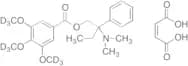
CAS:Producto controlado<p>Applications 1-(2,5-Dimethylphenyl)ethanol can be used as a reagent in reactions or as a aroma compound<br>References Zhou, J., et al.: Yuanyi Xuebao., 37, 1621-1628 (2010)<br></p>Fórmula:C10H14OForma y color:NeatPeso molecular:150.22Trimebutine-d9 Maleate Salt
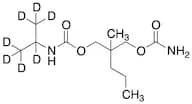
CAS:Producto controlado<p>Applications Trimebutine-d9 Maleate Salt, is the labeled analogue of Trimebutine Maleate Salt (T795605), acting as an opioid receptor agonist. Antispasmodic.<br>References Delvaux, M., et al.: J. Int. Med. Res., 25, 225 (1997), Lavit, M., et al.: Arzneim.-Forsch., 50, 640 (2000),<br></p>Fórmula:C22H20D9NO5·C4H4O4Forma y color:NeatPeso molecular:512.6(±)-Carisoprodol-d7 (iso-propyl-d7)
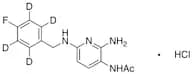
CAS:Producto controlado<p>Applications (±)-Carisoprodol-d7 (iso-propyl-d7) (CAS# 1218911-01-3) is a useful isotopically labeled research compound. As a deuterated drug analog, this compound can be used for inter-patient variability.<br>References Gant, T., et.al., U.S. Pat. Appl. Publ., 28,(2010);<br></p>Fórmula:C12H17D7N2O4Forma y color:NeatPeso molecular:267.38D 13223-d4 (Flupirtine Metabolite)
CAS:Producto controlado<p>Applications The major active labelled metabolite of Flupirtine in human plasma. A potassium channel opener<br>References Niebch, G., et al.: Arzneim.-Forsch., 42, 1343 (1992), Friedel, H., et al.: Drugs, 45, 548 (1993), Fu, I., et al.: J. Pharm. Biomed. Anal., 18, 347 (1998),<br></p>Fórmula:C14H12D4ClFN4OForma y color:NeatPeso molecular:314.78(+)-N,O-Didesmethyl Tramadol
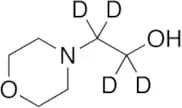
CAS:Producto controlado<p>Applications An optically active metabolite of Tramadol.<br>References Garrido, M., et al.: J. Pharmacol. Exp. Ther., 305, 710 (2003), Pedersen, R., et al.: Eur. J. Clin. Pharmacol., 62, 513 (2006),<br></p>Fórmula:C14H21NO2Forma y color:NeatPeso molecular:235.324-Morpholineethanol-d4
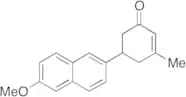
CAS:Producto controlado<p>Applications Labelled analogue 4-(2-Hydroxyethyl)morpholine, a morphiline derivative used in the preparation of ester prodrugs of naproxen. 4-(2-Hydroxyethyl)morpholine was also shown to induce repair in rat hepatocyte primary culture/DNA.<br></p>Fórmula:C6H9D4NO2Forma y color:NeatPeso molecular:135.205-(6-Methoxy-2-naphthalenyl)-3-methyl-2-cyclohexen-1-one
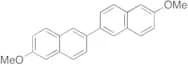
CAS:Producto controladoFórmula:C18H18O2Forma y color:NeatPeso molecular:266.336,6'-Dimethoxy-2,2'-binaphthalene
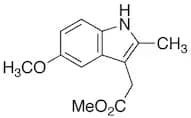
CAS:Producto controlado<p>Applications 6,6'-Dimethoxy-2,2'-binaphthalene, can be used for the synthesis of novel classes of non-steroidal substrate mimetics, as inhibitors of human CYP17. It is also an impurity of Nabumetone (N200500), a non-steroidal anti-inflammatory drug, acting as anti-inflammatory agent.<br>References Kumpulainen, H., et al.: J. Med. Chem., 49, 1207 (2006); Pinto-Bazurco, M. A. E., et al.: Bioorg. Med. Chem. Lett., 18, 267 (2008);<br></p>Fórmula:C22H18O2Forma y color:NeatPeso molecular:314.38Methyl 5-Methoxy-2-methylindole-3-acetate
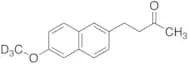
CAS:Producto controlado<p>Applications Intermediate in the preparation of Indomethacin<br>References Kalgutkar, A.S., et al.: Bioorg. Med. Chem., 13, 6810 (2005),<br></p>Fórmula:C13H15NO3Forma y color:NeatPeso molecular:233.26Nabumetone-d3
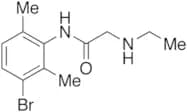
CAS:Producto controlado<p>Applications Labelled Nabumetone. Anti-inflammatory. Antibacterial.<br>References Kumpulainen, H., et al.: J. Med. Chem., 49, 1207 (2006),<br></p>Fórmula:C152H3H13O2Forma y color:NeatPeso molecular:231.30N-Desethyl 3-Bromo Lidocaine
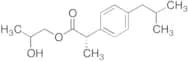
CAS:Producto controlado<p>Applications Intermediate in the preparation of hydroxylated Lidocaine metabolites.<br></p>Fórmula:C12H17BrN2OForma y color:NeatPeso molecular:285.18(S)-(+)-Ibuprofen Propylene Glycol Ester
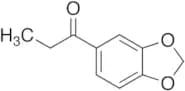
CAS:Producto controladoFórmula:C16H24O3Forma y color:NeatPeso molecular:264.363,4-Methylenedioxy Propiophenone
CAS:Producto controlado<p>Applications Intermediate in the production of Isosafrole and Ethylone.<br>References Katoch-Rouse, R., et al.: J. Med. Chem., 46, 642 (2003), Andrade, E., et al.: Chem. Biodivers., 5, 197 (2008),<br></p>Fórmula:C10H10O3Forma y color:NeatPeso molecular:178.18(±)-Ibuprofen-d3, Sodium Salt (α-methyl-d3)
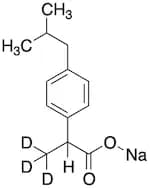
CAS:Producto controlado<p>Applications (±)-Ibuprofen-d3, Sodium Salt (alpha-methyl-d3) (CAS# 1219805-09-0) is a useful isotopically labeled research compound.<br></p>Fórmula:C13H14D3NaO2Forma y color:NeatPeso molecular:231.29Nabumetone Dimer Impurity
CAS:Producto controlado<p>Impurity Nabumetone Dimer Impurity<br>Applications An impurity in a Nabumetone (N200500) drug substance.<br>References Friedel, H., et al.: Drugs, 35, 504 (1988), Davies, N., et al.: Clin. Pharmacokinet., 33, 403 (1997),<br></p>Fórmula:C27H26O3Forma y color:NeatPeso molecular:398.49N-(4-Hydroxyphenyl)propanamide
CAS:<p>The N-(4-hydroxyphenyl)propionamide (HPPA) is a synthetic drug that binds to the human liver. It has been shown to be effective in preventing implantation of fertilized eggs, and can be used as a diagnostic agent for determining the presence of HPPA in human liver tissue. HPPA is also used as a diluent for other drugs. The HPPA binds to chromatographic components and can be detected using electrochemical detection, which allows it to be used as a targetable probe for cancer research. HPPA is also used to study iontophoretic transport of ions across reconstituted membranes in vitro.</p>Fórmula:C9H11NO2Pureza:(%) Min. 97%Peso molecular:165.19 g/mol

![5′-Acetyl-2′-fluoro-3-methyl-[1,1′-biphenyl]-4-carbaldehyde](/_next/image/?url=https%3A%2Fstatic.cymitquimica.com%2Fproducts%2F10%2Fthumb-webp%2FF628194.webp&w=3840&q=75)
![1-(6-Fluoro-[1,1′-biphenyl]-3-yl)ethanone](/_next/image/?url=https%3A%2Fstatic.cymitquimica.com%2Fproducts%2F10%2Fthumb-webp%2FF628181.webp&w=3840&q=75)
![1-[3-(ACETYLOXY)-4-METHOXYPHENYL]-ETHANONE](/_next/image/?url=https%3A%2Fstatic.cymitquimica.com%2Fproducts%2F10%2Fthumb-webp%2FF467729.webp&w=3840&q=75)