Detergentes
Subcategorías de "Detergentes"
Se han encontrado 745 productos de "Detergentes"
CYMAL-6 neopentyl glycol
CYMAL-6 neopentyl glycol (CYMAL-6) is a monoclonal antibody that binds to the chloride channel protein in human cells. CYMAL-6 has been shown to inhibit uptake of chloride ions, leading to an increase in extracellular pH and an inhibition of cellular respiration. It has been shown to be effective in patients with pigmentosa or hematological disorders such as leukemia and lymphoma. The structural studies on CYMAL-6 have shown that this drug can be used as a fluorescent probe for the study of chloride ion channels.Fórmula:C47H84O22Pureza:Min. 95%Peso molecular:1,001.16 g/molUndecylenyl b-D-maltoside
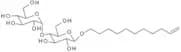
Undecylenyl b-D-maltoside is a high purity sugar that can be custom synthesized. It is fluorinated at the hydroxyl group, glycosylated, and methylated. This product is also available in various configurations including oligosaccharides, monosaccharides, and complex carbohydrates. Undecylenyl b-D-maltoside is a carbohydrate that can be used as a synthetic building block for the synthesis of other sugars. It can also be used for glycosylation reactions to create new glycoconjugates with improved properties. Undecylenyl b-D-maltoside is an oligosaccharide with a saccharide chain consisting of 10 units of D-glucose and one unit of D-mannose. The individual units are linked together by alpha 1,6 bonds.Fórmula:C23H42O11Pureza:Min. 95%Peso molecular:494.57 g/molOctanoyl-N-hydroxyethylglucamide
CAS:Octanoyl-N-hydroxyethylglucamide is a high purity custom synthesis that is a fluorinated, glycosylated, and methylated modification of glycine. It is an oligosaccharide that contains a saccharide and carbohydrate. Octanoyl-N-hydroxyethylglucamide has been shown to inhibit the growth of bacteria that are resistant to penicillin, ampicillin, erythromycin, and tetracycline.
Fórmula:C16H33NO7Pureza:Min. 95%Peso molecular:351.44 g/molOctyl a-L-rhamnopyranoside
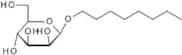
CAS:Octyl a-L-rhamnopyranoside is a custom-synthesized, fluorinated, methylated, monosaccharide with saccharide and polysaccharide modifications. It is used for the modification of glycoproteins in the synthesis of complex carbohydrates and as an intermediate in the preparation of monosaccharides and their derivatives. Octyl a-L-rhamnopyranoside is synthesized by condensing 1,2:3,4-di-O-isopropylidene D-mannitol with 5-(bromomethyl)benzene sulfonyl chloride to give 5-(Bromomethyl)benzene sulfonic acid. The acid is then reacted with octanoyl chloride to form octyl a-L-rhamnopyranoside. Octyl a-L-rhamnopyranoside has been shown to inhibit proteinFórmula:C14H28O5Pureza:Min. 95 Area-%Forma y color:PowderPeso molecular:276.37 g/molOctyl b-D-mannopyranoside
CAS:Octyl b-D-mannopyranoside is a sugar that belongs to the group of complex carbohydrates. It is used in chemical synthesis and is commonly used for click modification, fluorination, glycosylation, carbamoylation, methylation, and other modifications. Octyl b-D-mannopyranoside is a white or off-white powder that can be dissolved in water or alcohols. It has a molecular weight of 536.88 g/mol.
Fórmula:C14H28O6Pureza:Min. 95%Forma y color:White To Off-White SolidPeso molecular:292.37 g/molLauryl glucose neopentyl glycol
CAS:Lauryl glucose neopentyl glycol is a sugar that is used in the synthesis of glycoconjugates. It is synthesized from lauryl alcohol and neopentyl glycol. Lauryl glucose neopentyl glycol can be modified with fluorine, glycosylation, methylation, or modification. This compound has been shown to have anti-inflammatory properties and to inhibit the growth of prostate cancer cells.Fórmula:C31H60O12Pureza:Min. 95%Peso molecular:624.8 g/molRhamnolipids C12
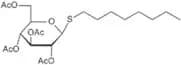
CAS:Rhamnose based 'green' surfactantFórmula:C18H34O7Pureza:Min. 95%Peso molecular:362.46 g/molOctyl 2,3,4,6-tetra-O-acetyl-b-D-thioglucopyranoside
CAS:Octyl 2,3,4,6-tetra-O-acetyl-b-D-thioglucopyranoside is a chemical that is used to evaluate renal injury. It is typically detected in the urine of patients with renal injury and can be correlated with prognosis. Octyl 2,3,4,6-tetra-O-acetyl-b-D-thioglucopyranoside has been shown to be useful for the diagnosis of renal injury by detecting protein or body fluid in the reagents and assays. This substance is also used to detect protein in body fluids such as urine.Fórmula:C22H36O9SPureza:Min. 95%Forma y color:White PowderPeso molecular:476.58 g/molCyclohexylpropanoyl-N-Hydroxyethylglucamide
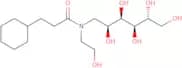
CAS:Cyclohexylpropanoyl-N-Hydroxyethylglucamide is a custom synthesis of a complex carbohydrate with high purity and high quality. This compound is an Oligosaccharide, Polysaccharide, and Modification. It is also a CAS No. 864434-14-0, Methylation, Glycosylation, Carbohydrate, Click modification, sugar and Fluorination. Cyclohexylpropanoyl-N-Hydroxyethylglucamide has been synthesized with Fluorination for use in the synthesis of new compounds.Fórmula:C17H33NO7Pureza:Min. 95%Peso molecular:363.45 g/molDodecyl 2-acetamido-3,4,6-tri-O-acetyl-2-deoxy-b-D-glucopyranoside
CAS:Dodecyl 2-acetamido-3,4,6-tri-O-acetyl-2-deoxy-b-D-glucopyranoside is a kinetic probe that can be used to measure the activity of cellular enzymes. The production of this probe is mediated by the enzyme profile and is influenced by kinetic parameters such as the substrate concentration, rate of reaction, and the concentrations of reactants. The profile can be determined by profiling experiments in which cells are grown with varying concentrations of substrate or varying rates of reaction. Dodecyl 2-acetamido-3,4,6-tri-O-acetyl-2-deoxyb -D -glucopyranoside can be used to study microorganisms such as bacteria and photosynthetic organisms that use polypeptides for catalysis. This probe can also be recycled to yield more probes for future experiments.Fórmula:C26H45NO9Pureza:Min. 95%Peso molecular:515.64 g/molHexyl 2-acetamido-3,4,6-tri-O-acetyl-2-deoxy-b-D-glucopyranoside
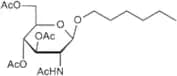
CAS:Hexyl 2-acetamido-3,4,6-tri-O-acetyl-2-deoxy-b-D-glucopyranoside is a compound that is used in the research of cellular biology. It was found to have a significant effect on gene expression levels. This compound has been shown to be able to alter the expression profile of cells and may be useful for understanding how different genes affect cell function. The high density microarray provides a highly sensitive and accurate way to measure changes in gene expression levels.Fórmula:C20H33NO9Pureza:Min. 95%Peso molecular:431.48 g/molOctadecyl 2-acetamido-3,4,6-tri-O-acetyl-2-deoxy-b-D-glucopyranoside
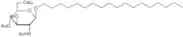
CAS:Octadecyl 2-acetamido-3,4,6-tri-O-acetyl-2-deoxy-b-D-glucopyranoside is a synthetic monosaccharide that has been modified with a click chemistry. It is also known as octadecyl 2-(N′,N′′-(diacetoxyacetyl)-2′,3′,4′,6′-triacetyl)alpha,alpha″-(1″→4″→1″)dideoxygalactopyranosiduronic acid. This compound is an oligosaccharide that consists of a chain of three sugar units and may have a glycosylation site at either position 1 or 4. Octadecyl 2-(N′,N′′-(diacetoxyacetyl)-2’,3’,4’,6’-triacetyl)alpha,alpha”-(Fórmula:C32H57NO9Pureza:Min. 95%Peso molecular:599.8 g/molHexadecyl 2-acetamido-3,4,6-tri-O-acetyl-2-deoxy-b-D-glucopyranoside
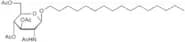
CAS:Hexadecyl 2-acetamido-3,4,6-tri-O-acetyl-2-deoxy-b-D-glucopyranoside (HAT) is an antibiotic that belongs to the class of macrolides. It has been shown to be heritable and its heritability is dependent on the type of animal species. HAT also has a basic structure with substituents that are either acidic or hydroxylated. The heterogeneity in this compound can be seen by the different lactation periods for different animals. Regression analysis was used to find out if there was a correlation between the lactation period and the basicity of HAT. This study found that there was no such correlation and therefore concluded that there is no relationship between HAT's basicity and its heritability.Fórmula:C30H53NO9Pureza:Min. 95%Peso molecular:571.74 g/molHexyl 2-acetamido-2-deoxy-b-D-glucopyranoside
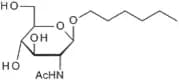
CAS:Hexyl 2-acetamido-2-deoxy-b-D-glucopyranoside is a sugar that is used in the study of immune reactions. It can be used to measure albumin levels and tissue samples, as well as in animal experiments. Hexyl 2-acetamido-2-deoxy-b-D-glucopyranoside has been shown to have toxic effects on cells, which may be due to its ability to inhibit DNA concentrations. This substance also has a directional fluorescence, which means that it will emit light in one direction only when stimulated with light of a certain wavelength.Fórmula:C14H27NO6Pureza:Min. 95%Peso molecular:305.37 g/molHeptyl b-D-thioglucopyranoside
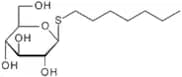
CAS:Heptyl b-D-thioglucopyranoside is a small molecule that is used as a regulator of the phosphatase enzyme (PP1). PP1 is an important enzyme in the regulation of cellular signaling pathways. Heptyl b-D-thioglucopyranoside interacts with the regulatory domain of PP1, which is required for its activity. The ligand binds to an antenna on the regulatory domain and induces conformational changes in the protein, leading to increased phosphatase activity. This small molecule also has two binding sites for ATP and L-phenylalanine, which are required for its regulatory function.Fórmula:C13H26O5SPureza:Min. 95%Peso molecular:294.41 g/mol4-Methylumbelliferyl α-L-idopyranosiduronic acid methyl ester
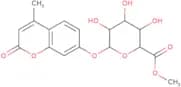
CAS:Please enquire for more information about 4-Methylumbelliferyl α-L-idopyranosiduronic acid methyl ester including the price, delivery time and more detailed product information at the technical inquiry form on this pageFórmula:C17H18O9Pureza:Min. 95%Peso molecular:366.3 g/molTetradecyl 2-acetamido-2-deoxy-b-D-glucopyranoside
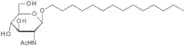
CAS:Tetradecyl 2-acetamido-2-deoxy-b-D-glucopyranoside is a custom synthesis, modification, fluorination, methylation, monosaccharide and synthetic compound. It is the CAS No. 152914-69-7. It is a saccharide composed of glucose that has been glycosylated with tetradecyl acetate in the alpha position and aminated with ammonia in the beta position. This product is also classified as a complex carbohydrate.Fórmula:C22H43NO6Pureza:Min. 95%Peso molecular:417.58 g/molDecyl 2-acetamido-2-deoxy-b-D-glucopyranoside
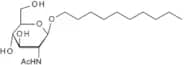
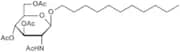
CAS:Decyl 2-acetamido-2-deoxy-b-D-glucopyranoside is a glycoside that is found in the cell walls of photosynthetic organisms. It is one of the main sugars found in bacteria, fungi, and plants. In these organisms, it is linked to amino acids through amido bonds. Decyl 2-acetamido-2-deoxy-b-D-glucopyranoside has been shown to be a substrate for galactosidases, β-glycosidases, and α mannosidases. The thermal analysis of this compound shows an exothermic transition at around 200°C that may indicate its involvement in a chemical reaction. This compound also has lyotropic properties and can form micelles in water with high concentrations. The thermal parameters for this molecule are T(transition) = 220°C ΔH(transition) = -6 kcal/Fórmula:C18H35NO6Pureza:Min. 95%Peso molecular:361.47 g/molUndecyl 2-acetamido-3,4,6-tri-O-acetyl-2-deoxy-b-D-glucopyranose
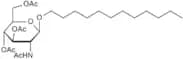
CAS:Undecyl 2-acetamido-3,4,6-tri-O-acetyl-2-deoxy-b-D-glucopyranose is a custom synthesis and modification of a carbohydrate that is used as a saccharide. It can be found in polysaccharides and oligosaccharides. This product has been modified with fluorination, methylation, glycosylation, and carbonylation. Undecyl 2-acetamido-3,4,6-tri-O-acetyl-2-deoxyb -D -glucopyranose is not currently CAS No. 1737252401 but is available for purchase on request.Fórmula:C25H43NO9Pureza:Min. 95%Peso molecular:501.61 g/mol1,2-o-Isopropylidene-α-D-glucofuranose
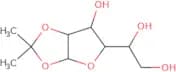
CAS:1,2-o-Isopropylidene-α-D-glucofuranose is a potent inhibitor of xylan, which is essential for the growth and development of cancer cells. This compound has been shown to inhibit the activity of several kinases involved in cancer cell proliferation, including protein kinase C and acetylcholine kinase. 1,2-o-Isopropylidene-α-D-glucofuranose exhibits anticancer properties and induces apoptosis in human cancer cells. It is an analog of aprepitant, a drug used to prevent chemotherapy-induced nausea and vomiting in cancer patients. This compound may have potential as a therapeutic agent for the treatment of various types of tumors.
Fórmula:C9H16O6Pureza:Min. 95%Peso molecular:220.22 g/mol