Detergentes
Los detergentes, clasificados bajo tensioactivos y detergentes, son compuestos esenciales diseñados para reducir la tensión superficial en varios productos, facilitando los procesos de limpieza y emulsificación. Esta sección incluye una amplia gama de tensioactivos, conocidos por su alta eficacia en alterar las propiedades superficiales. Entre ellos, los detergentes zwitteriónicos destacan por su naturaleza más suave y no desnaturalizante, lo que los hace ideales para aplicaciones que requieren una acción suave pero efectiva. Estos detergentes son cruciales tanto en entornos industriales como de laboratorio, donde ayudan a limpiar, emulsionar y estabilizar productos sin comprometer su integridad. Su versatilidad y eficacia los hacen indispensables en numerosas aplicaciones, desde productos de limpieza domésticos hasta reactivos de laboratorio especializados.
Subcategorías de "Detergentes"
Se han encontrado 747 productos de "Detergentes"
Ordenar por
Pureza (%)
0
100
|
0
|
50
|
90
|
95
|
100
Hexyl b-D-thioglucopyranoside
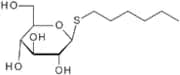
CAS:<p>Hexyl b-D-thioglucopyranoside is an insect pheromone that attracts male mealworms. It can be used for the detection of chiral elements, such as carbon and hydrogen. The profile of hexyl b-D-thioglucopyranoside is dynamically programmable and can be modified to detect different types of insects by changing the carbon skeleton. Hexyl b-D-thioglucopyranoside has been shown to have a strong electromagnetic activity, which may be due to its carbon skeleton.</p>Fórmula:C12H24O5SPureza:Min. 95%Forma y color:White To Off-White SolidPeso molecular:280.38 g/molDecyl glucose neopentyl glycol
CAS:<p>Decyl glucose neopentyl glycol is a molecule that is commonly used in cell-based assays to measure the hydrogen peroxide release by cells. It is also used to transport hydrogen peroxide, which is a reactive oxidative species, intracellularly and extracellularly. Decyl glucose neopentyl glycol has been shown to have a range of different isoforms in cellular systems. This allows it to be used as an effective fluorescent marker for the detection of hydrogen peroxide mediated events.</p>Fórmula:C35H68O12Pureza:Min. 95%Peso molecular:680.91 g/molUndecanoyl-N-hydroxyethylglucamide
CAS:<p>Undecanoyl-N-hydroxyethylglucamide is a custom synthesis that has been modified with fluorination, methylation, and click modification. It has a carbohydrate chain of monosaccharides and oligosaccharides. The saccharide is glycosylated to form a complex carbohydrate.</p>Fórmula:C19H39NO7Pureza:Min. 95%Peso molecular:393.52 g/molRhamnolipids C14-C14
CAS:<p>Rhamnose based 'green' surfactant</p>Fórmula:C34H64O9Pureza:Min. 95%Forma y color:PowderPeso molecular:616.88 g/molUndecyl b-D-maltopyranoside
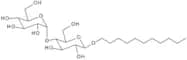
CAS:<p>Undecyl b-D-maltopyranoside is a cell culture reagent that belongs to the group of monomers. It is used in the synthesis of dodecyl maltoside and is also used as a substrate for bacterial enzymes. Undecyl b-D-maltopyranoside has been shown to inhibit the activity of leukotriene A4 hydrolase, an enzyme involved in the metabolism of leukotrienes. This product has been shown to be effective in chromatographic separation of metal ions from other components. Undecyl b-D-maltopyranoside can also be used for solubilizing peptides and proteins, including those that are neutral or have a low pH. This product is also used as a substrate for recombinant monoclonal antibodies and viral coat proteins.</p>Fórmula:C23H44O11Pureza:Min. 95%Forma y color:PowderPeso molecular:496.59 g/molDodecyl a-D-glucopyranoside
CAS:<p>Dodecyl a-D-glucopyranoside is a fatty acid that is found in the form of dodecyl glucoside. It has been shown to be effective against infectious diseases, such as pneumococcal infections and influenza. Dodecyl a-D-glucopyranoside inhibits bacterial growth by preventing the synthesis of lipopolysaccharides, which are important for the cell wall structure of Gram-negative bacteria. Dodecyl a-D-glucopyranoside also inhibits monoclonal antibody production, which may be due to its ability to inhibit protein synthesis. In addition, dodecyl a-D-glucopyranoside is used as an adjuvant in vaccines against autoimmune diseases.</p>Fórmula:C18H36O6Pureza:Min. 95%Forma y color:PowderPeso molecular:348.47 g/molNonyl b-D-thioglucopyranoside
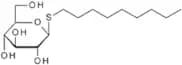
CAS:<p>Nonyl b-D-thioglucopyranoside is a methylating agent that can be used in the synthesis of oligosaccharides and polysaccharides. This compound is a fluorinated sugar that is used as an intermediate in the synthesis of saccharide derivatives. Nonyl b-D-thioglucopyranoside is also a highly pure, stable chemical that has been modified to meet customer specifications. It can be used for the preparation of glycosyl fluorides, which are used to modify monosaccharides and other carbohydrates.</p>Fórmula:C15H30O5SPureza:Min. 95%Peso molecular:322.46 g/molTween 65
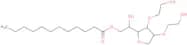
CAS:<p>Tween 65 is a polyoxyethylene sorbitan monooleate (polysorbate) surfactant that is used as a film-forming polymer and dispersing agent in solid preparations. Tween 65 has been shown to inhibit the proliferation of prostate cancer cells, which may be due to its ability to bind to anti-prostate specific antigen (anti-pcsk9) antibody causing the antibody to aggregate and form a particle. This process inhibits the interaction between the antibody and its target, preventing it from binding with PCSK9 protein. The addition of propranolol hydrochloride has been shown to increase the effectiveness of Tween 65.</p>Polysorbate 60
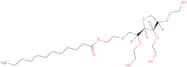
CAS:<p>Polysorbate 60 is a polyoxyethylene-polyoxypropylene block copolymer that is composed of two different saturated fatty acid chains. It has been used as a surfactant and stabilizer in the manufacture of pharmaceuticals, foods, cosmetics, and other products. Polysorbate 60 has been shown to inhibit the growth of epidermal cells by binding to epidermal growth factor (EGF) receptors on the cell surface. The effects of polysorbate 60 are also mediated through hydrogen bonding with the EGF receptor. The pharmacokinetic properties of polysorbate 60 have been studied in vitro using human serum. This polymer is used as an excipient in solid dispersions for oral administration and can be administered intravenously or subcutaneously. Polysorbate 60 is chemically stable at acidic pH levels and hydrochloric acid does not affect its structure. Polysorbate 60 also has protease activity against trypsin at high temperatures,</p>Fórmula:C64H126O26Pureza:Min. 95%Forma y color:Light (Or Pale) Yellow To Yellow Solid Or Liquid (May Vary)Peso molecular:1,311.67 g/mol1-Oxododecyl β-D-glucopyranoside
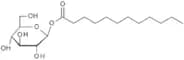
CAS:<p>1-Oxododecyl β-D-glucopyranoside is a synthetic compound that is used as an intermediate in the synthesis of oligosaccharides, monosaccharides, saccharides, and other carbohydrates. It has a purity of >98% and can be custom synthesized to meet your specifications. 1-Oxododecyl β-D-glucopyranoside is also available for purchase with fluorination, glycosylation, and methylation modifications. The CAS number for this product is 64395-92-2.</p>Fórmula:C18H34O7Pureza:Min. 95 Area-%Forma y color:PowderPeso molecular:362.46 g/molOctyl D-glucopyranoside
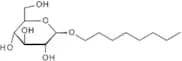
CAS:<p>Octyl D-glucopyranoside is a glucoside that is used as an analytical reagent. It has been shown to have detergent properties and can be used for the extraction of proteins. Octyl D-glucopyranoside also has a high binding affinity for guanine nucleotides, protein, and glycol ethers. The rate constant for the reaction between octyl D-glucopyranoside with the guanine nucleotide was found to be 0.25 x 10^(-5) s^(-1). This product can be used in biochemical research and chromatographic analysis.</p>Fórmula:C14H28O6Pureza:Min. 98 Area-%Forma y color:White PowderPeso molecular:292.37 g/molOleylamine, min. 95%
CAS:<p>Oleylamine, min. 95%</p>Fórmula:CH3(CH2)7CHCH(CH2)7CH2NH2Pureza:min. 95%Forma y color:colorless liq.Peso molecular:267.49Dodecyldimethyl(3-sulfopropyl)ammonium Hydroxide Inner Salt [for Biochemical Research]
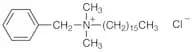
CAS:Fórmula:C17H37NO3SPureza:>98.0%(HPLC)(N)Forma y color:White to Almost white powder to crystalPeso molecular:335.55Benzylcetyldimethylammonium Chloride
CAS:Fórmula:C25H46ClNPureza:>97.0%(HPLC)Forma y color:White to Almost white powder to crystalinePeso molecular:396.10Oleoyl Polyoxylglycerides
Fatty substances of animal or vegetable orgin and mixtures thereof not elsewhere specified or includedForma y color:Clear Amber LiquidPropylene Glycol Dicaprylate/Dicaprate
CAS:Fatty substances of animal or vegetable orgin and mixtures thereof not elsewhere specified or includedFórmula:C10H20O2·C8H16O2·C3H8O2Forma y color:Colorless OilPeso molecular:356.55Polyglyceryl 3 Diisostearate
CAS:Polyethers, nesoiFórmula:C18H36O2(C3H8O3)xForma y color:Yellow LiquidPolyoxyl 20 Stearyl Ether
CAS:Polyethers, nesoiFórmula:(C2H4O)nC18H38OForma y color:SolidPeso molecular:314.5463Glyceryl Monolinoleate
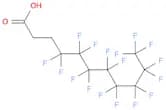
CAS:Oleic, linoleic or linolenic acidsFórmula:C21H38O4Forma y color:Yellow Liquid May Solidify At Room TemperaturePeso molecular:354.53 g/mol4,4,5,5,6,6,7,7,8,8,9,9,10,10,11,11,11-Heptadecafluoroundecanoic acid
CAS:Fórmula:C11H5F17O2Pureza:97%Forma y color:SolidPeso molecular:492.1291




![Dodecyldimethyl(3-sulfopropyl)ammonium Hydroxide Inner Salt [for Biochemical Research]](/_next/image/?url=https%3A%2Fstatic.cymitquimica.com%2Fproducts%2F3B%2Fthumb-webp%2FD3860.webp&w=3840&q=75)