


Metales
Los metales son elementos conocidos por sus propiedades características, como alta conductividad eléctrica y térmica, maleabilidad, ductilidad y brillo, lo que los hace esenciales en una amplia gama de aplicaciones industriales y de investigación. Estos elementos, incluyendo hierro, cobre, aluminio y oro, juegan roles críticos en sectores como la construcción, la electrónica, el transporte y la manufactura. En CymitQuimica, ofrecemos una diversa selección de metales de alta pureza diseñados para cumplir con los estrictos requisitos de las aplicaciones tanto de investigación como industriales. Nuestro catálogo incluye metales puros, aleaciones metálicas y compuestos metálicos, todos rigurosamente probados en cuanto a calidad y rendimiento. Al proporcionar metales de alta calidad, apoyamos a los investigadores y profesionales de la industria en la consecución de resultados precisos y eficientes en sus proyectos, facilitando avances en tecnología, ciencia de materiales e ingeniería.
Subcategorías de "Metales"
Se han encontrado 4493 productos de "Metales"
Ordenar por
Pureza (%)
0
100
|
0
|
50
|
90
|
95
|
100
Thallium(III) Trifluoroacetate
CAS:Fórmula:C6F9O6TlPureza:>95.0%(T)Forma y color:White to Light yellow to Light orange powder to crystalPeso molecular:543.43Manganese(III) Tetraphenylporphyrin Chloride
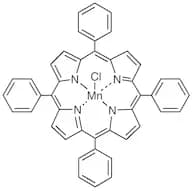
CAS:Fórmula:C44H28ClMnN4Pureza:>94.0%(HPLC)Forma y color:Dark green to Black powder to crystalPeso molecular:703.12[N-[α-[2-(Piperidinoacetamido)phenyl]benzylidene]glycinato]nickel
CAS:Fórmula:C22H23N3NiO3Pureza:>93.0%(T)Forma y color:Light yellow to Brown powder to crystalPeso molecular:436.14Sodium 2-Thiobarbiturate
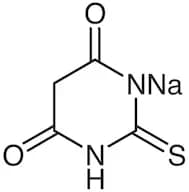
CAS:Fórmula:C4H3N2NaO2SPureza:>98.0%(T)Forma y color:White to Almost white powder to crystalPeso molecular:166.13Bismuth(III) Acetate
CAS:Fórmula:C6H9BiO6Pureza:>98.0%(T)Forma y color:White to Almost white powder to crystalPeso molecular:386.11(1,10-Phenanthroline)(trifluoromethyl)(triphenylphosphine)copper(I)
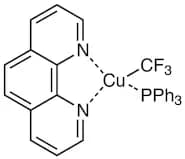
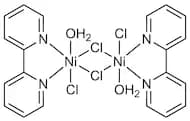
CAS:Fórmula:C31H23CuF3N2PPureza:>95.0%(T)Forma y color:Light yellow to Brown powder to crystalPeso molecular:575.05NiCl2Bpy・H2O Dimer
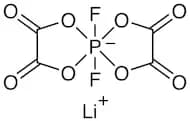
CAS:Fórmula:C20H20Cl4N4Ni2O2Pureza:>95.0%(T)Forma y color:White to Brown to Dark green powder to crystalPeso molecular:607.59Lithium Difluorobis(oxalato)phosphate
CAS:Fórmula:C4F2LiO8PForma y color:White to Light yellow powder to crystalPeso molecular:251.95[RuCl(p-cymene)((S)-xylbinap)]Cl
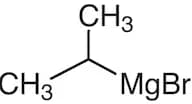
CAS:Fórmula:C62H62Cl2P2RuForma y color:Light yellow to Brown powder to crystalPeso molecular:1,041.10Isopropylmagnesium Bromide (15% in Tetrahydrofuran, ca. 1mol/L)
CAS:Fórmula:C3H7BrMgForma y color:LiquidPeso molecular:147.30Platinum on activated carbon - 5% Pt , wetted with 50% H2O
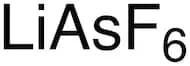
CAS:Platinum on activated carbon is an intermediate that is used in the production of catalysts, pharmaceuticals, and other chemicals. It can be used as a catalyst for hydrogenation reactions, such as the reduction of nitro compounds to amines. Platinum on activated carbon can also be used as a catalyst for oxidation reactions, such as the oxidation of alcohols to aldehydes or ketones. This product is often used in research and development laboratories because it can be applied to many different reactions. Platinum on activated carbon has a CAS number of 7440-06-4.Fórmula:PtCPureza:Min. 95%Forma y color:Brown PowderPeso molecular:206.96479Lithium Hexafluoroarsenate(V)
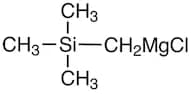
CAS:Fórmula:LiAsF6Pureza:>98.0%(T)Forma y color:White to Almost white powder to crystalPeso molecular:195.85Trimethylsilylmethylmagnesium Chloride (ca. 18% in Tetrahydrofuran, ca. 1mol/L)
CAS:Fórmula:C4H11ClMgSiForma y color:LiquidPeso molecular:146.97Zinc silicofluoride
CAS:<p>Zinc silicofluoride is a mixture of zinc and silicofluoride that has been used as a detergent additive. It is marketed in the United States under the trade name Zepel®. The chemical stability of this product is enhanced by adding amides, such as tetraphenyl and diphenyl ethers. Zinc silicofluoride also has antimicrobial properties and can be used to inhibit growth of bacteria, fungi, and algae. Zinc silicofluoride may react with calcium carbonate in hard water to form insoluble zinc carbonate, which precipitates out on metal surfaces such as copper pipes. This reaction may interfere with the effectiveness of the product.</p>Fórmula:ZnSiF6Pureza:Min. 95%Forma y color:PowderPeso molecular:207.46 g/molRuthenium(II) Nitrosyl Chloride
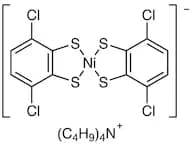
CAS:Fórmula:RuCl3NOPureza:>97.0%(T)Forma y color:Yellow to Amber to Dark red powder to crystalPeso molecular:255.45Tetrabutylammonium Bis(3,6-dichloro-1,2-benzenedithiolato)nickelate
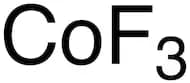
CAS:Fórmula:C28H40Cl4NNiS4Pureza:>98.0%(T)Forma y color:Green to Dark green powder to crystalPeso molecular:719.37Cobalt(III) Fluoride
CAS:Fórmula:CoF3Pureza:>90.0%(T)Forma y color:Orange to Brown powder to crystalPeso molecular:115.93Iron(II) chloride
CAS:<p>Iron(II) chloride is a compound with the formula FeCl2. It is a light yellow solid, but samples often appear greenish due to impurities. Iron(II) chloride is poorly soluble in water and alcohols. Iron(II) chloride reacts violently with strong acids such as hydrochloric acid, releasing hydrogen chloride and producing iron metal. The reaction with sodium salts yields anhydrous iron(II) chloride. Iron(II) chloride can be used to produce iron oxide pigments for paint or rubber, or as a reagent in organic synthesis.</p>Fórmula:Cl2FePureza:Min. 95%Forma y color:PowderPeso molecular:126.75 g/mol[NH2Me2][(RuCl((R)-segphos®))2(μ-Cl)3]
CAS:Fórmula:C78H64Cl5NO8P4Ru2Forma y color:Orange to Brown powder to crystalPeso molecular:1,646.65


![[N-[α-[2-(Piperidinoacetamido)phenyl]benzylidene]glycinato]nickel](/_next/image/?url=https%3A%2Fstatic.cymitquimica.com%2Fproducts%2F3B%2Fthumb-webp%2FP1737.webp&w=3840&q=75)

![[RuCl(p-cymene)((S)-xylbinap)]Cl](/_next/image/?url=https%3A%2Fstatic.cymitquimica.com%2Fproducts%2F3B%2Fthumb-webp%2FR0151.webp&w=3840&q=75)



![[NH2Me2][(RuCl((R)-segphos®))2(μ-Cl)3]](/_next/image/?url=https%3A%2Fstatic.cymitquimica.com%2Fproducts%2F3B%2Fthumb-webp%2FN1021.webp&w=3840&q=75)