


Metales
Los metales son elementos conocidos por sus propiedades características, como alta conductividad eléctrica y térmica, maleabilidad, ductilidad y brillo, lo que los hace esenciales en una amplia gama de aplicaciones industriales y de investigación. Estos elementos, incluyendo hierro, cobre, aluminio y oro, juegan roles críticos en sectores como la construcción, la electrónica, el transporte y la manufactura. En CymitQuimica, ofrecemos una diversa selección de metales de alta pureza diseñados para cumplir con los estrictos requisitos de las aplicaciones tanto de investigación como industriales. Nuestro catálogo incluye metales puros, aleaciones metálicas y compuestos metálicos, todos rigurosamente probados en cuanto a calidad y rendimiento. Al proporcionar metales de alta calidad, apoyamos a los investigadores y profesionales de la industria en la consecución de resultados precisos y eficientes en sus proyectos, facilitando avances en tecnología, ciencia de materiales e ingeniería.
Subcategorías de "Metales"
Se han encontrado 4493 productos de "Metales"
Ordenar por
Pureza (%)
0
100
|
0
|
50
|
90
|
95
|
100
Dichlorobis(dicyclohexylphenylphosphine)nickel(II)
CAS:Fórmula:C36H54Cl2NiP2Pureza:95%Forma y color:SolidPeso molecular:678.3609Ref: IN-DA003TX2
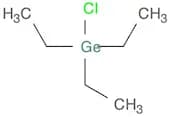
Producto descatalogadoTRIETHYLGERMANIUM CHLORIDE
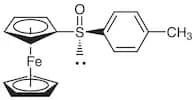
CAS:Fórmula:C6H15ClGePureza:>97.0%(GC)Forma y color:LiquidPeso molecular:195.2763(S)-(p-Toluenesulfinyl)ferrocene
CAS:Fórmula:C17H16FeOSPureza:>97.0%(T)(HPLC)Forma y color:Light yellow to Brown powder to crystalPeso molecular:324.22Zinc germanium phosphide
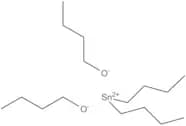
CAS:Producto controlado<p>Zinc germanium phosphide is a semiconductor material that has been used as an effective cancer therapy. It is created by the reaction of zinc with germanium and phosphorus. This material has a high absorption coefficient in the infrared spectrum, which makes it useful for the treatment of skin cancers due to the cancer cells' increased absorption of infrared radiation. Zinc germanium phosphide can be grown at room temperature and has a constant refractive index over a range of wavelengths. The optical properties are determined by its lattice parameters, which can be changed to meet different needs. Techniques such as optical imaging and optical spectroscopy have been successfully employed to study this material's behavior.</p>Fórmula:ZnGeP2Pureza:Min. 95%DI-n-BUTYLDI-n-BUTOXYTIN, 95%
CAS:Fórmula:C16H36O2SnPureza:95%Forma y color:Pale Yellow LiquidPeso molecular:379.15Ref: 3H-SND3180
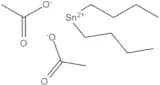
Producto descatalogadoDI-n-BUTYLDIACETOXYTIN, tech
CAS:Fórmula:C12H24O4SnPureza:95%Forma y color:Pale Yellow LiquidPeso molecular:351.01Ref: 3H-SND3160
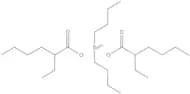
Producto descatalogadoDI-n-BUTYLBIS(2-ETHYLHEXANOATE)TIN, tech
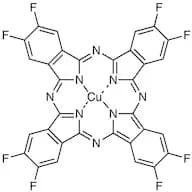
CAS:Fórmula:C24H48O4SnPureza:95%Forma y color:White SolidPeso molecular:519.34Copper(II) 2,3,9,10,16,17,23,24-Octafluorophthalocyanine (purified by sublimation)
CAS:Fórmula:C32H8CuF8N8Pureza:>98.0%(T)(N)Forma y color:Dark red to Dark purple to Dark blue powder to crystalPeso molecular:720.01Bis[di-tert-butyl(4-dimethylaminophenyl)phosphine]palladium(0)
CAS:Fórmula:C32H56N2P2PdPureza:>98.0%(T)Forma y color:Light yellow to Brown powder to crystalPeso molecular:637.18[RuCl(p-cymene)((R)-xylbinap)]Cl
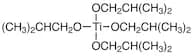
CAS:Fórmula:C62H62Cl2P2RuForma y color:Light yellow to Brown powder to crystalPeso molecular:1,041.10Tetraisobutyl Orthotitanate (contains Isopropoxide)
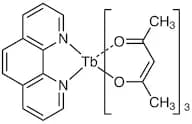
CAS:Fórmula:C16H36O4TiForma y color:Colorless to Light orange to Yellow clear liquidPeso molecular:340.33Tris(acetylacetonato)(1,10-phenanthroline)terbium(III)
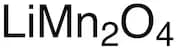
CAS:Fórmula:C27H29N2O6TbPureza:>98.0%(T)Forma y color:White to Almost white powder to crystalPeso molecular:636.46Lithium Manganese(III,IV) Oxide (contains ca. 5% Aluminum at maximum as a dopant)
CAS:Fórmula:LiMn2O4Pureza:>99.5%Forma y color:Black powder to crystalPeso molecular:180.81Poly[[N-isopropylacrylamide-co-[N-[3-(dodecyldimethylammonio)propyl]acrylamide]-co-(1,3,5-triacryloylhexahydro-1,3,5-triazine)]perruthenate]
Forma y color:Black powder to crystalIron (ii) iodide
CAS:<p>Iron (II) iodide is a heterogeneous, alkylated compound that has been used in acetonitrile as an electron donor. Iron (II) iodide is soluble in water and hydrolyzes to form iron hydroxide and hydrogen iodide. It has been shown to reduce chloride ions and desulfurize organic compounds. The crystal x-ray diffraction patterns of iron (II) iodide crystals show the presence of a ligand, which may be due to crystallite aggregation or the presence of cyclic ligands. Iron (II) iodide also exhibits thermochromism, meaning it changes color depending on temperature. Iron (II) iodide is superparamagnetic, which means it can be magnetized by an external magnetic field and then demagnetized by removing the external field.</p>Fórmula:FeI2Pureza:Min. 95%Peso molecular:309.65 g/mol






![Bis[di-tert-butyl(4-dimethylaminophenyl)phosphine]palladium(0)](/_next/image/?url=https%3A%2Fstatic.cymitquimica.com%2Fproducts%2F3B%2Fthumb-webp%2FB4837.webp&w=3840&q=75)
![[RuCl(p-cymene)((R)-xylbinap)]Cl](/_next/image/?url=https%3A%2Fstatic.cymitquimica.com%2Fproducts%2F3B%2Fthumb-webp%2FR0150.webp&w=3840&q=75)
![Poly[[N-isopropylacrylamide-co-[N-[3-(dodecyldimethylammonio)propyl]acrylamide]-co-(1,3,5-triacryl…](/_next/image/?url=https%3A%2Fstatic.cymitquimica.com%2Fproducts%2F3B%2Fthumb-webp%2FP1698.webp&w=3840&q=75)
