Monosacáridos
Los monosacáridos son la forma más simple de los carbohidratos y sirven como bloques fundamentales para azúcares más complejos y polisacáridos. Estas moléculas de azúcar única juegan roles críticos en el metabolismo energético, la comunicación celular y los componentes estructurales de las células. En esta sección, encontrará una amplia variedad de monosacáridos esenciales para la investigación en bioquímica, biología molecular y glicociencia. Estos compuestos son cruciales para estudiar las rutas metabólicas, los procesos de glucosilación y el desarrollo de agentes terapéuticos. En CymitQuimica, ofrecemos monosacáridos de alta calidad para apoyar sus necesidades de investigación, asegurando precisión y fiabilidad en sus investigaciones científicas.
Subcategorías de "Monosacáridos"
- Allosas(11 productos)
- Arabinosas(21 productos)
- Eritrosas(11 productos)
- Fructosas(9 productos)
- Fucosas(36 productos)
- Galactosamina(41 productos)
- Galactosa(260 productos)
- Glucosas(365 productos)
- Ácidos glucurónicos(51 productos)
- Glico-sustratos para enzimas(77 productos)
- Gulosas(6 productos)
- Idosas(4 productos)
- Inositoles(15 productos)
- Lyxosas(4 productos)
- Manosas(65 productos)
- O-glicanos(48 productos)
- Psicosas(3 productos)
- Ramnosas(10 productos)
- Ribosas(61 productos)
- Ácidos siálicos(100 productos)
- Sorbosas(4 productos)
- Azúcares(173 productos)
- Tagatosis(4 productos)
- Taloses(8 productos)
- Xilosas(20 productos)
Mostrar 17 subcategorías más
Se han encontrado 6088 productos de "Monosacáridos"
Ordenar por
Pureza (%)
0
100
|
0
|
50
|
90
|
95
|
100
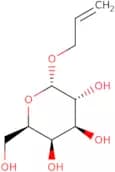
Allyl α-D-galactopyranoside
CAS:<p>Allyl α-D-galactopyranoside is a colorimetric reagent that reacts with the polysaccharides to form a colored product. The reaction is based on the transfer of an allyl group from the reagent to the polysaccharide. This reaction can be performed using atomic force microscopy and microscopy techniques, as well as using light and UV-visible spectroscopy. The reaction can also be used to measure glycopolymer concentrations. A titration procedure has been developed for this purpose, in which an excess of allyl α-D-galactopyranoside is added to a solution containing galactose and ammonium sulfate. Allyl α-D-galactopyranoside reacts with galactose to produce an insoluble precipitate that can be measured by weighing or using optical density measurements at a certain wavelength.</p>Fórmula:C9H16O6Pureza:Min. 97 Area-%Forma y color:White Off-White PowderPeso molecular:220.22 g/molMethyl β-D-maltopyranoside
CAS:<p>Methyl β-D-maltopyranoside is a disaccharide that is an aglycon of maltosides. It has been shown to bind to the active site of alpha-d-glucopyranosidases, which are enzymes that hydrolyze alpha-d-glucopyranosides. Methyl β-D-maltopyranoside has also been shown to interact with dihedral angles and hydroxyl groups in the enzyme binding region, which may be due to conformational changes in the enzyme's active site. The kinetic constants for methyl β-D-maltopyranoside have been calculated by using an algorithm.</p>Fórmula:C13H24O11Pureza:(%) Min. 98%Forma y color:PowderPeso molecular:356.32 g/mol4,6-O-Benzylidene-D-glucal
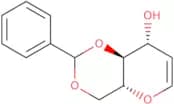
CAS:<p>Glucal is a carbohydrate that is used as a synthon in organic synthesis. It has been shown to be anomeric and can be synthesized by acetylation of the corresponding aldose, or by the glycosidic bond reaction with borohydride reduction. Glucal is not stable at high pH and can undergo ring-opening reactions with nucleophiles such as sodium borohydride. Glucal also reacts with glycoconjugates to form new molecules, which are called glycosidic products.</p>Fórmula:C13H14O4Pureza:Min. 95%Forma y color:White PowderPeso molecular:234.25 g/molD-Rhamnose
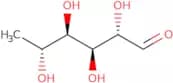
CAS:<p>Chiral-pool sugar used to mirror syntheses based on natural L-Rha</p>Fórmula:C6H12O5Pureza:Min. 97 Area-%Forma y color:White PowderPeso molecular:164.16 g/molL-Ribonic acid-1,4-lactone
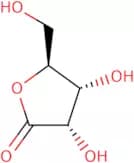
CAS:<p>L-Ribonic acid-1,4-lactone is a synthetic process that is used as an antiviral agent. It is a sugar reactant in the production of riboflavin. L-Ribonic acid-1,4-lactone has been shown to inhibit the synthesis of viral RNA and DNA, which prevents replication of the virus. The mechanism of L-ribonic acid lactone's antiviral activity is not currently known.</p>Fórmula:C5H8O5Pureza:(%) Min. 90%Forma y color:PowderPeso molecular:148.12 g/molMethyl 3,4,6-tri-O-acetyl-2-deoxy-2-phthalimido-β-D-glucopyranoside
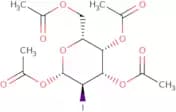
CAS:<p>Methyl 3,4,6-tri-O-acetyl-2-deoxy-2-phthalimido-b-D-glucopyranoside is a high purity natural carbohydrate. It is an oligosaccharide that can be custom synthesized to meet your requirements. Methyl 3,4,6-tri-O-acetyl-2-deoxy-2-phthalimido b D glucopyranoside has many modifications including click and fluorination. Its CAS number is 76101 13 8. This product can be used for modification, glycosylation and fluorination in the synthesis of complex carbohydrates.<br>!-- <br>--><br>!-- <br>--></p>Fórmula:C21H23NO10Pureza:Min. 95%Forma y color:White to off-white solid.Peso molecular:449.41 g/mol1,3,4,6-Tetra-O-acetyl-2-deoxy-2-iodo-β-D-galactopyranose
CAS:<p>Synthetic carbohydrate building block</p>Fórmula:C14H19IO9Pureza:Min. 95%Peso molecular:458.2 g/molDL-Glyceraldehyde 3-phosphate - 45-55 mg/mL aqueous solution
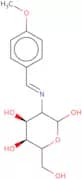
CAS:<p>Glyceraldehyde 3-phosphate (G3P) is an intermediate in the glycolytic pathway. It is also a component of polysaccharides and glycosaminoglycans. G3P is synthesized from glucose by the enzyme triose phosphate isomerase. The synthesis of G3P can be achieved by a number of methods, including methylation, fluorination, and click chemistry. This product contains 45-55 mg/mL of Glyceraldehyde 3-phosphate in water solution at pH 7.0 and at a temperature range of 2-8°C.</p>Fórmula:C3H7O6PPureza:Min. 95 Area-%Peso molecular:170.06 g/mol2-Deoxy-2-(4-methoxybenzyliden)imino-D-glucose
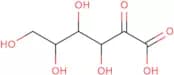
CAS:<p>2-Deoxy-2-(4-methoxybenzyliden)imino-D-glucose is a modified carbohydrate that is used for the synthesis of oligosaccharides, polysaccharides, and glycosaminoglycans. This compound is also used as a substrate for methylation reactions. It can be synthesized from D-glucose by the addition of a 2-(4-methoxybenzylidene) group to the 2′ position of the carbon atom on the anomeric carbon. The structure of this compound has been determined by X-ray crystallography.</p>Fórmula:C14H19NO6Pureza:Min. 95%Forma y color:White to off-white solid.Peso molecular:297.3 g/mol2-Keto-L-galactonic acid
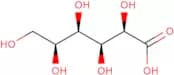
CAS:<p>2-Keto-L-galactonic acid is a chemical compound that belongs to the group of fatty acids. It is produced by the degradation of polyunsaturated fatty acids and has been shown to be a potential control agent for hepatic steatosis. 2-Keto-L-galactonic acid also inhibits the synthesis of dinucleotide phosphate in rat liver cells, leading to an accumulation of intracellular potassium ion. This compound inhibits the uptake of glucose by activating ATPase, which leads to an increase in intracellular pH. The uptake of 2-keto-L-galactonic acid into cells has been shown using cell culture experiments with wild type and mutant strains.</p>Fórmula:C6H10O7Pureza:Min. 95%Peso molecular:194.14 g/molL-Idonic acid sodium
CAS:<p>L-Idonic acid sodium is a plant hormone that regulates carbohydrate metabolism. It has been shown to regulate the synthesis of galacturonic acid and malic acid, which are important for the production of glucose. L-Idonic acid sodium also regulates the synthesis of fatty acids, which are important for cell membrane formation. L-Idonic acid sodium is an intermediate in the biosynthesis of l-tartaric acid, which is an enzyme substrate. The gene product that encodes this molecule has been characterized as a protein with a molecular weight of approximately 9,000 daltons and a hydroxyl group on C-3.</p>Fórmula:C6H11O7NaPureza:Min. 95%Forma y color:PowderPeso molecular:218.15 g/molMethyl 2-acetamido-2-deoxy-b-D-glucopyranoside
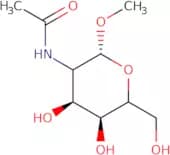
CAS:<p>Methyl 2-acetamido-2-deoxy-b-D-glucopyranoside is a xylose sugar that is found in the leaves of Nepeta cataria. It has shown to inhibit bacterial growth by binding to DNA and RNA, as well as inhibit transcription, translation, and replication. Methyl 2-acetamido-2-deoxy-b-D-glucopyranoside also binds to cardiac channels and inhibits their activity. This compound has been shown to have anti cancer effects on prostate cancer cells in mice. Furthermore, it inhibits microbial metabolism in vitro by inhibiting the enzyme acetolactate synthase. Methyl 2-acetamido-2-deoxy-b-D -glucopyranoside has also been shown to be an effective treatment for autoimmune diseases such as multiple sclerosis and rheumatoid arthritis in mice.</p>Fórmula:C9H17NO6Pureza:Min. 95%Forma y color:White Off-White PowderPeso molecular:235.24 g/molAcetobromo-D-glucose - 2% CaCO3
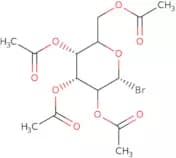
CAS:<p>Intermediate for β-glucosides; potential PET surface modification reagent</p>Fórmula:C14H19BrO9Pureza:Min. 95%Forma y color:White PowderPeso molecular:411.2 g/molPhenyl 2,3,4,6-tetra-O-acetyl-a-D-thiomannopyranoside
CAS:<p>Phenyl 2,3,4,6-tetra-O-acetyl-a-D-thiomannopyranoside is an analog of a sugar molecule. This compound can be synthesized by the metathesis reaction between phenyl 2,3,4,6-tetra-O-acetyl-α-(2′→3′)-D-thiomannopyranoside and bis(trimethylsilyl) sulfate in the presence of polyphosphoric acid and potassium sulfate. The yield of this synthesis is high and can be increased with the addition of potassium sulfonate as a cofactor.</p>Fórmula:C20H24O9SPureza:Min. 98%Forma y color:PowderPeso molecular:440.46 g/mol2,3,4,6-Tetra-O-benzoyl-α-D-glucopyranosyl bromide
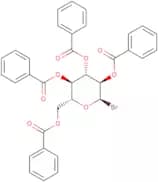
CAS:<p>2,3,4,6-Tetra-O-benzoyl-α-D-glucopyranosyl bromide is a derivative of vitamin A. It has been used as a carbonate for the synthesis of retinol, tetrabenzoate and other related compounds. The compound is soluble in water and has shown growth promoting activity in studies with Salmonella typhimurium. 2,3,4,6-Tetra-O-benzoyl-α-D-glucopyranosyl bromide is metabolized to retinol by hydrolysis or oxidation. It can also be converted into tetrabenzoate by oxidation followed by reduction of the 4′ position hydroxyl group.</p>Fórmula:C34H27BrO9Pureza:Min. 95%Forma y color:PowderPeso molecular:659.48 g/mol2-[(1E)-2-[6-(β-D-Galactopyranosyloxy)-2,3-dihydro-1H-xanthen-4-yl]ethenyl]-3,3-dimethyl-1-propyl-3H-indolium iodide
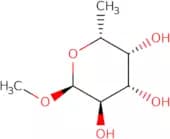
CAS:<p>Please enquire for more information about 2-[(1E)-2-[6-(β-D-Galactopyranosyloxy)-2,3-dihydro-1H-xanthen-4-yl]ethenyl]-3,3-dimethyl-1-propyl-3H-indolium iodide including the price, delivery time and more detailed product information at the technical inquiry form on this page</p>Fórmula:C34H40NO7•IPureza:Min. 95%Peso molecular:701.59 g/molMethyl a-D-fucopyranoside
CAS:<p>Methyl a-D-fucopyranoside is a monoclonal antibody that binds to the O-antigen of the polysaccharide chain. It is a synthetic trisaccharide consisting of an o-antigen, an α-linked D-fucose residue, and an α-linked galactose residue. This antibody interacts with the serologic subtypes of Group A Streptococcus, but not with other serogroups. Methyl a-D-fucopyranoside utilizes conformational epitopes and disaccharides which are not accessible to other antibodies in order to bind to the o-antigen. The o-antigen is composed of two serologically distinct regions: one region for binding by anti-A antibodies, and another for binding by anti-B antibodies.</p>Fórmula:C7H14O5Pureza:Min. 98 Area-%Forma y color:White Off-White PowderPeso molecular:178.18 g/molPolysucrose 400
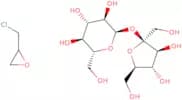
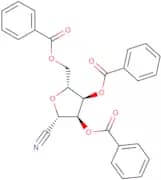
CAS:<p>Water-soluble, nontoxic, enzyme-resistant polymer for biological applications</p>Forma y color:White PowderPeso molecular:400.02,3,5-Tri-O-benzoyl-β-D-ribofuranosyl cyanide
CAS:<p>Building block for C-nucleoside synthesis</p>Fórmula:C27H21NO7Pureza:Min. 98 Area-%Forma y color:White PowderPeso molecular:471.46 g/molIsosorbide dinitrate - 60% lactose and 40% Isosorbide dinitrate
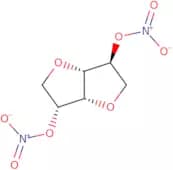
CAS:<p>Isosorbide dinitrate is used to treat chronic bronchitis and congestive heart failure. It dilates blood vessels, allowing more oxygen-rich blood to reach the heart. Isosorbide dinitrate is also used to relieve chest pain (angina) and reduce complications after a heart attack. Isosorbide dinitrate is a prodrug that is converted in vivo to its active form, isosorbide mononitrate, by the enzyme nitric oxide synthase in response to hypoxia. In addition, it has been shown that this drug reduces levels of low-density lipoprotein cholesterol (LDL-C) and may be useful for the treatment of high cholesterol.<br>The mechanism of action for reducing LDL-C levels is not known but may be due to increased clearance of LDL-C from plasma or decreased production of very low density lipoproteins (VLDL). This medication does not affect triglycerides or high density lip</p>Fórmula:C6H8N2O8Pureza:Min. 95%Forma y color:White PowderPeso molecular:236.14 g/mol





![2-[(1E)-2-[6-(β-D-Galactopyranosyloxy)-2,3-dihydro-1H-xanthen-4-yl]ethenyl]-3,3-dimethyl-1-propyl-…](/_next/image/?url=https%3A%2Fstatic.cymitquimica.com%2Fproducts%2F3D%2Fthumb-webp%2FMG183953.webp&w=3840&q=75)