


Sales de metal
En esta sección, puede encontrar diversas sales metálicas, que son compuestos caracterizados por contener átomos metálicos y no metálicos. Esencialmente, las sales metálicas están compuestas por cationes que son uno o más átomos metálicos. Estas sales desempeñan un papel crucial en numerosas reacciones y aplicaciones químicas, sirviendo como catalizadores, reactivos o intermediarios en varios procesos industriales y de investigación. En CymitQuimica, ofrecemos una amplia selección de sales metálicas de alta calidad para satisfacer sus necesidades de investigación e industriales, asegurando un rendimiento fiable y efectivo en sus aplicaciones.
Se han encontrado 2870 productos de "Sales de metal"
Ordenar por
Pureza (%)
0
100
|
0
|
50
|
90
|
95
|
100
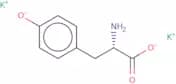
L-Tyrosine dipotassium
CAS:<p>L-Tyrosine dipotassium salt is a high quality, reagent, complex compound, useful intermediate and fine chemical. It is a useful scaffold that can be used in the synthesis of various important natural products. L-Tyrosine dipotassium salt is a versatile building block that has been widely applied in research on the development of new drugs, such as antiviral agents and antibiotics. L-Tyrosine dipotassium salt can act as a reaction component for many organic reactions. It also has applications in many areas such as medicine, food production, and environmental protection.</p>Fórmula:C9H11NO3•K2Pureza:Min. 95%Peso molecular:259.39 g/molH-Tyr(SO3H)-OH sodium salt
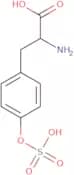
CAS:<p>Please enquire for more information about H-Tyr(SO3H)-OH sodium salt including the price, delivery time and more detailed product information at the technical inquiry form on this page</p>Fórmula:C9H11NO6SPureza:Min. 95%Peso molecular:261.25 g/molCalcium-Like Peptide
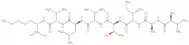
CAS:<p>Please enquire for more information about Calcium-Like Peptide including the price, delivery time and more detailed product information at the technical inquiry form on this page</p>Fórmula:C40H75N9O10Pureza:Min. 95%Peso molecular:842.08 g/molPhosphoramidon sodium
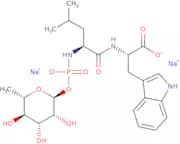
CAS:<p>Phosphoramidon sodium is a chemical inhibitor that is used in wastewater treatment. It has been shown to decrease bronchial reactivity in humans by modulating the activity of peptidases, which are enzymes that break down proteins. Phosphoramidon sodium has also been shown to reduce pain responses in animal models by inhibiting the release of fatty acids from nerve cells. This drug also decreases inflammation and swelling by preventing the production of prostaglandins and leukotrienes.</p>Fórmula:C23H34N3O10P·xNaPureza:Min. 95%Forma y color:PowderPeso molecular:587.47 g/molSodium ferriceddha
CAS:<p>Sodium ferriceddha is a chemical compound that belongs to the family of ferrocenes. It has been used in research as a useful building block and reagent, as well as in the synthesis of various compounds. Sodium ferriceddha is a versatile building block that can be used in the synthesis of complex compounds, such as pharmaceuticals, agricultural chemicals, and other specialty chemicals. It can also be used as an intermediate or scaffold for drug discovery.</p>Fórmula:C18H16FeN2NaO6Forma y color:PowderPeso molecular:435.16 g/molZinc oxalate dihydrate
CAS:<p>Zinc oxalate hydrate is a skin condition treatment that is made of zinc oxide and oxalic acid. It is used to treat acne, eczema, and psoriasis by inhibiting bacterial growth. The reaction solution is prepared by adding sodium citrate to a solution of vitamin B3 in dextrose. The mixture is heated until the crystals dissolve and then cooled down. The final product has a liquid phase synthesis and contains ZnO, Na2C6H5O7, C6H12O6, and H2O. Other uses for this compound include its use as an antibacterial agent for biomineralization or as a dextrose substitute in the manufacture of cyclic hydrocarbons. This product also has the ability to form nanowires when it is dehydrated under high temperatures.</p>Fórmula:ZnC2O4•2H2OPureza:Min. 95%Forma y color:Powder2,7-Naphthalenedisulfonic acid disodium salt
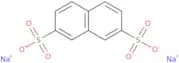
CAS:<p>2,7-Naphthalenedisulfonic acid disodium salt is a heteronuclear molecule that is synthesized by the reaction of 2,7-naphthalenedisulfonyl chloride with sodium sulfite in water. It has been used in the manufacture of dyes and pigments, as a corrosion inhibitor for steel and aluminum, and as an intermediate in the synthesis of pharmaceuticals. The compound has been detected in groundwater samples at concentrations up to 10 mg/L. The compound is also found in geothermal waters at concentrations up to 0.6 mg/L.</p>Fórmula:C10H6Na2O6S2Pureza:Min. 95%Peso molecular:332.26 g/molSodium 2-mercaptobenzothiazole - 50% aqueous solution
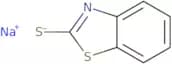
CAS:<p>2-Mercaptobenzothiazole is a white crystalline powder that is soluble in water and insoluble in organic solvents. It has an odor threshold of 1.5 ppm and a melting point of 158°C. 2-Mercaptobenzothiazole is used as an absorption enhancer for ultraviolet light, infrared radiation, or X-rays. It is also used to improve the efficiency of chemical reactions, such as the synthesis of polyurethane resins and other polymers. The most common application for 2-mercaptobenzothiazole is as a cationic surfactant, which is often used in textile processing and oil refining. This compound can be prepared by reacting sodium carbonate with hydrochloric acid and glycol ether, followed by the addition of water vapor to produce hydrogen chloride gas.<br>2-Mercaptobenzothiazole can be synthesized using a liquid chromatography method with electrochemical impedance spectroscopy (</p>Fórmula:C7H4NNaS2Pureza:Min. 95%Forma y color:Yellow To Brown LiquidPeso molecular:189.24 g/mol1-Naphthylphosphoric acid calcium
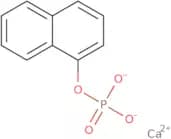
CAS:<p>1-Naphthylphosphoric acid calcium salt (1NPAC) is a fine chemical that has been used as a building block in the synthesis of complex organic compounds. 1NPAC has been shown to be useful in the production of research chemicals and speciality chemicals. It is also employed as an intermediate for the production of high quality reagents. 1NPAC has versatile uses, as it can be used to synthesize other compounds, such as pharmaceuticals and agrochemicals.</p>Fórmula:C20H18O8P2•CaPureza:Min. 95%Forma y color:PowderPeso molecular:488.38 g/molSodium-O-pantothenate
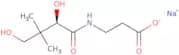
CAS:<p>Sodium-O-pantothenate is a natural form of vitamin B5. It is the sodium salt of pantothenic acid, which is used in the synthesis of coenzyme A and acetylcholine. Sodium-O-pantothenate has been shown to be nontoxic in animals and humans when ingested as an additive in food. In vitro studies have shown that this compound inhibits the production of epidermal growth factor, an effect that may be due to its ability to inhibit phospholipase A2 activity. Sodium-O-pantothenate also has been found to enhance the production of erythrocytes, platelets, and leukocytes in human serum. This compound is used as a cofactor for many enzyme reactions involving pyridoxine hydrochloride (B6) and calcium pantothenate.</p>Fórmula:C9H16NNaO5Pureza:Min. 95%Forma y color:White PowderPeso molecular:241.22 g/molZinc pivalate
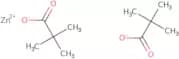
CAS:<p>Zinc pivalate is a coordination complex that has been shown to be an effective metal-based catalyst for amine-mediated cross-coupling reactions. It has also been used as a ligand in the synthesis of metal complexes. Zinc pivalate is soluble in water and its molecular weight is 198.2 daltons. It has two functional groups, carboxylate and formyl group, and can be synthesized by reacting zinc chloride with pivalic acid. The molecule contains a water molecule that acts as a base to deprotonate the carboxylate group on the zinc atom, forming an alcohol group which reacts with amines to produce an aminoglycoside. Zinc pivalate is also capable of forming coordination complexes with palladium, which catalyzes cross-coupling reactions with chlorides under mild conditions.</p>Fórmula:C5H9O2ZnPureza:Min. 95%Peso molecular:166.5 g/molBiotin 3-sulfo-N-hydroxysuccinimide ester sodium salt
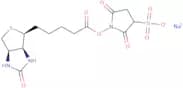
CAS:<p>Biotin 3-sulfo-N-hydroxysuccinimide ester sodium salt (BSHES) is a reactive molecule that can be used as a pharmacological agent. It has been shown to have biological properties in vivo models and in vitro cell lysis experiments. BSHES has also been shown to bind to the receptor molecule epidermal growth factor, which may account for its toxicity. In addition, this drug has been shown to bind dna binding domains, such as streptavidin or monoclonal antibodies. This drug is often used experimentally with an apical electrochemical impedance spectroscopy model.</p>Fórmula:C14H19N3S2O8NaPureza:Min. 95%Forma y color:White PowderPeso molecular:444.44 g/mol2-Hydroxy-4-(methylthio)butyric acid calcium salt
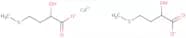
CAS:<p>2-Hydroxy-4-(methylthio)butyric acid calcium salt (2HMBAC) is a fatty acid that is found in malic acid. It is an important industrial chemical used for the preparation of other chemicals such as acetic anhydride, adipic acid, and butyric acid. 2HMBAC has been shown to have various biological functions including the inhibition of protein synthesis and the reduction of chloride ion transport. The dietary administration of 2HMBAC has been shown to relieve diarrhoea in rats.</p>Fórmula:C10H18CaO6S2Pureza:Min. 95%Peso molecular:338.46 g/mol(1S,2S)-N,N'-Bis(2-acetyl-3-oxo-2-butenylidene)-1,2-dimesitylethylenediaminato Cobalt(II)
CAS:<p>(1S,2S)-N,N'-Bis(2-acetyl-3-oxo-2-butenylidene)-1,2-dimesitylethylenediaminato Cobalt(II) is a catalyst in cycloaddition reactions. It is soluble in organic solvents and has been used as a catalyst for the synthesis of imines and aryl ketones. This compound also catalyzes the reduction of borohydride to form borane.</p>Fórmula:C32H38CoN2O4Pureza:Min. 95%Peso molecular:573.59 g/molDisodium clodronate tetrahydrate
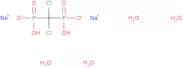
CAS:<p>Disodium clodronate tetrahydrate is a water-soluble salt of the active form of clodronic acid, which has been shown to have anti-inflammatory activity. It is used in the treatment of breast cancer, as well as bowel disease. Disodium clodronate tetrahydrate inhibits basic protein synthesis and the production of pro-inflammatory cytokines by toll-like receptor 4 (TLR4) on polymorphonuclear leucocytes (PMN). This drug has also been shown to inhibit the enzyme activities of sodium salts, but not other enzymes such as phosphofructokinase or lactate dehydrogenase. Disodium clodronate tetrahydrate is also used in analytical methods that are based on measuring changes in the migration rate of proteins.</p>Fórmula:CH2Cl2Na2O6P2·4H2OForma y color:White PowderPeso molecular:360.92 g/molZinc trifluoromethanesulfonate
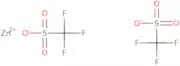
CAS:<p>Zinc trifluoromethanesulfonate is a catalyst that catalyses the reaction of amines with coumarin derivatives, producing an electrochemical impedance spectroscopy. It has been shown to have a redox potential that is higher than ferrocenecarboxylic acid. Zinc trifluoromethanesulfonate has been used in asymmetric synthesis, which involves substituting a hydrogen atom with another atom or group, and in salt metathesis, which is the process of forming new chemical compounds from reactants without using any energy. The zinc trifluoromethanesulfonate can also be activated by light or heat. This makes it possible for this compound to release the corrosive sulfur dioxide gas when heated to high temperatures, producing a synergic effect with other substances such as potassium permanganate (KMnO4).</p>Fórmula:C2F6O6S2ZnPureza:Min. 95%Forma y color:White PowderPeso molecular:363.52 g/molCesium bicarbonate
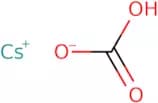
CAS:<p>An inorganic cesium salt</p>Fórmula:CsHCO3Pureza:Min. 95%Forma y color:PowderPeso molecular:193.92 g/molTetrakis(4-Fluorophenyl)-Borate Sodium (1:1)
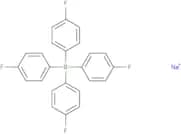
CAS:<p>Tetrakis(4-fluorophenyl)borate sodium (1:1) is a solid that is soluble in organic solvents. It has been used as an adsorbent for nuclear waste and organic molecules. Tetrakis(4-fluorophenyl)borate sodium (1:1) has been shown to adsorb hydrophobic molecules such as polycyclic aromatic hydrocarbons, which are difficult to remove from the environment. Tetrakis(4-fluorophenyl)borate sodium (1:1) can be prepared by reacting tetraphenylborate with 4-fluoroboric acid. This reaction produces a mixture of products, of which tetrakis(4-fluorophenyl)borate sodium (1:1) is the most common. Tetrakis(4-fluorophenyl)borate sodium (1:1), like other borate salts, is used in zeolites to</p>Fórmula:C24H16BF4NaPureza:Min. 95%Peso molecular:414.18 g/molSodium stearate
CAS:<p>Sodium stearate is a sodium salt that is commonly used as a surfactant and emulsifying agent in the food industry. The drug interactions with sodium stearate are not well known, but it has been shown to have an effect on fetal bovine serum (FBS) cell viability at concentrations above 10%. Sodium stearate typically shows a thermal expansion of 5–6% per degree Celsius. It is also used in conjunction with CO2 flow to produce anhydrous sodium carbonate and sodium bicarbonate. Sodium stearate can be found in foods such as margarine, shortening, and baking powder. It also has metabolic effects such as promoting the production of insulin and reducing blood sugar levels. It has also been shown to inhibit tumor growth in bone cancer cell lines.</p>Fórmula:C18H35NaO2Pureza:Min. 95%Forma y color:White/Off-White SolidPeso molecular:306.46 g/mol[4,4'-Di-t-butyl-2,2'-bipyridine][bis[5-(t-butyl)-2-[4-(t-butyl)-2-pyridinyl-kN]phenyl-kC]iridium(III) hexafluorophosphate
CAS:<p>Please enquire for more information about [4,4'-Di-t-butyl-2,2'-bipyridine][bis[5-(t-butyl)-2-[4-(t-butyl)-2-pyridinyl-kN]phenyl-kC]iridium(III) hexafluorophosphate including the price, delivery time and more detailed product information at the technical inquiry form on this page</p>Fórmula:C56H72F6IrN4PPureza:Min. 95%Peso molecular:1,138.38 g/mol





![[4,4'-Di-t-butyl-2,2'-bipyridine][bis[5-(t-butyl)-2-[4-(t-butyl)-2-pyridinyl-kN]phenyl-kC]iridium(…](/_next/image/?url=https%3A%2Fstatic.cymitquimica.com%2Fproducts%2F3D%2Fthumb-webp%2FFD159336.webp&w=3840&q=75)