Sales de metal
En esta sección, puede encontrar diversas sales metálicas, que son compuestos caracterizados por contener átomos metálicos y no metálicos. Esencialmente, las sales metálicas están compuestas por cationes que son uno o más átomos metálicos. Estas sales desempeñan un papel crucial en numerosas reacciones y aplicaciones químicas, sirviendo como catalizadores, reactivos o intermediarios en varios procesos industriales y de investigación. En CymitQuimica, ofrecemos una amplia selección de sales metálicas de alta calidad para satisfacer sus necesidades de investigación e industriales, asegurando un rendimiento fiable y efectivo en sus aplicaciones.
Se han encontrado 2870 productos de "Sales de metal"
Ordenar por
Pureza (%)
0
100
|
0
|
50
|
90
|
95
|
100
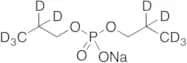
Di(propyl-d5) Sodium Phosphate
CAS:Producto controladoFórmula:C6D10H4NaO4PForma y color:NeatPeso molecular:214.198Acetyl Coenzyme A Trisodium Salt
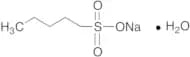
CAS:<p>Applications Acetyl Coenzyme A Trisodium Salt is used in skin-lightening cosmetics.<br></p>Fórmula:C23H38N7O17P3S·3NaForma y color:NeatPeso molecular:878.54Sodium 1-Pentanesulfonate Monohydrate
CAS:Producto controlado<p>Applications Sodium 1-Pentanesulfonate Monohydrate serves as a reagent (conversion reagent) for the simple and accurate photometric determination of the content of hemoglobin in the blood.<br>References Wolf, H. U., PCT Int. Appl. (2007), WO 2007071377 A1 20070628<br></p>Fórmula:C5H11O3S·Na·H2OForma y color:NeatPeso molecular:192.209Silver Acetate
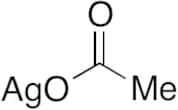
CAS:Producto controlado<p>Applications Silver Acetate is used as a reagent in chemical synthesis in reaction such as carbonylation of primary and secondary amines as well as in woodward cis-hydroxylation converting alkenes into cis-diols. Also used in gum, lonzenges and sprays that are targeted to assist people in quitting the habit of smoking since it produces a bad taste when combined with cigarettes.<br> Not a dangerous good if item is equal to or less than 1g/ml and there is less than 100g/ml in the package<br>References Wright, L., et al.: J. Phys. Chem., 59, 1060 (1955); Woodward, R., et al.: J. Am. Chem. Soc., 80, 209 (1958); Lancaster, T., et al.: Cochrane DB Syst. Rev., 2, 191 (2000);<br></p>Fórmula:C2H3AgO2Forma y color:NeatPeso molecular:166.91Sodium Propionate-d5
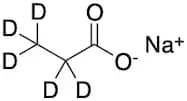
CAS:Producto controlado<p>Applications Sodium Propionate-d5 (CAS# 202529-18-8) is a useful isotopically labeled research compound.<br></p>Fórmula:C3D5NaO2Forma y color:NeatPeso molecular:101.091Phospho(enol)pyruvic Acid Monopotassium Salt
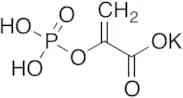
CAS:Producto controlado<p>Applications Phospho(enol)pyruvic Acid Monopotassium Salt is a reactant used in the preparation of substrate analogs of creatine kinase with anticancer activity.<br>References Bergnes, G., et. al.: Oncol. Res., 8, 121 (1996);<br></p>Fórmula:C3H4O6P·KForma y color:NeatPeso molecular:206.13Copper(I) Trifluoromethanethiolate
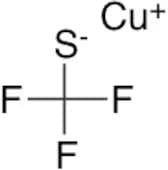
CAS:Producto controlado<p>Applications COPPER(I) TRIFLUOROMETHANETHIOLATE (cas# 3872-23-9) is a useful research chemical.<br></p>Fórmula:CCuF3SForma y color:NeatPeso molecular:164.62Potassium propionate
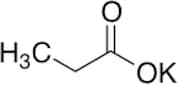
CAS:Producto controlado<p>Stability Hygroscopic<br>Applications Potassium propionate 98% (cas# 327-62-8) is a useful research chemical.<br></p>Fórmula:C3H5KO2Forma y color:NeatPeso molecular:112.17Lithium Hydroxide Monohydrate
CAS:Producto controlado<p>Applications Lithium hydroxide is a reagent that is used in the synthesis of O-Desmethyl Mebeverine Acid O-β-D-Glucuronide.<br> Not a dangerous good if item is equal to or less than 1g/ml and there is less than 100g/ml in the package<br></p>Fórmula:HLiO·H2OForma y color:Off-WhitePeso molecular:23.95 + (18.02)2-Nitro-5-(sulfothio)benzoic Acid Monosodium Salt
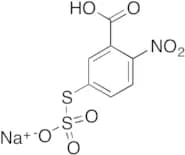
CAS:Producto controladoFórmula:C7H4NO7S2·NaForma y color:NeatPeso molecular:301.229Lithium sulfate, anhydrous
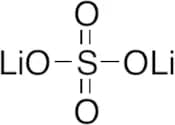
CAS:Producto controlado<p>Applications Lithium sulfate, anhydrous (cas# 10377-48-7) is a useful research chemical.<br></p>Fórmula:Li2SO4Forma y color:NeatPeso molecular:109.95Sodium Hexadecanoate-16,16,16-d3
CAS:Producto controlado<p>Applications Sodium Hexadecanoate-16,16,16-d3 (CAS# 347841-37-6) is a useful isotopically labeled research compound.<br></p>Fórmula:C16H28D3NaO2Forma y color:NeatPeso molecular:281.433-Hydroxypropionic Acid-13C3 Sodium Salt
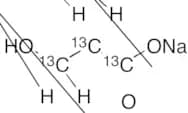
CAS:<p>Applications 3-Hydroxypropionic Acid-13C3 Sodium Salt is isotope labelled analogue of 3-Hydroxypropionic Acid Sodium Salt (H952480), which is beta hydroxy acid derived from plants and crops such as corn. 3-Hydroxypropionic Acid is used in the preparation of acrylates and biodegradable polymer polyester.<br>References Wang, Y. et al.: Biomacromol., 3, 828 (2002); Jiang, X. et al.: Appl. Microbiol. Biotech., 82, 995 (2009);<br></p>Fórmula:C3H5NaO3Forma y color:NeatPeso molecular:115.04Chlorotriethoxytitanium (Contains <10% Chlorotriisopropoxytitanium)
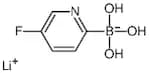
CAS:Producto controlado<p>Stability Moisture Sensitive<br>Applications Chlorotriethoxytitanium is an intermediate in the synthesis of D-erythro-Sphingosine-1-phosphate-13C2,D2 (S681502), which is a labelled putative lipid second messenger; found to inhibit cellular mobility of melanoma cells at very low concentrations with no toxic effects thereby making it a possible agent for prevention of tumor cell metastasis and inflammatory processes; mobilizes intracellular calcium stores; decreases cellular cAMP; activates phospholipase D; does not inhibitprotein kinase C.<br> Not a dangerous good if item is equal to or less than 1g/ml and there is less than 100g/ml in the package<br>References Zhang, H., et al.: J. Cell Biol., 114, 155 (1991) Sadahira, Y., et al.: Proc. Natl. Acad. Sci. USA (1992), Cuvillier, O., et al.: Nature, 381, 800 (1996)<br></p>Fórmula:C6H15ClO3TiForma y color:NeatPeso molecular:218.5Lithium (5-fluoropyridin-2-yl)trihydroxyborate
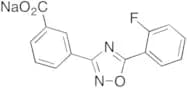
CAS:Producto controladoFórmula:C5H6BFNO3·LiForma y color:NeatPeso molecular:164.856PTC-124 Sodium Salt
CAS:Producto controlado<p>Applications 3-[5-(2-Fluorophenyl)-1,2,4-oxadiazol-3-yl]benzoic Acid Sodium Salt, is a compound containing 1,2,4-Oxadiazole Benzoic Acid, having therapeutic activities.<br></p>Fórmula:C15H8FN2NaO3Forma y color:NeatPeso molecular:306.2244,4'-(1Z)-Diaminostilbene-2,2'-disulfonic Acid Disodium Salt
CAS:Producto controlado<p>Applications 4,4'-(1Z)-Diaminostilbene-2,2'-disulfonic Acid Disodium Salt is a reactant in the synthesis of (arylamino)triazinylamino-substituted stilbenedisulfonic acid, to be used as an optical brightener.<br>References Okuom, Macduff, et al.: Inter. J. of Org. Chem., 3(4), 256-261 (2013)<br></p>Fórmula:C14H12N2Na2O6S2Forma y color:NeatPeso molecular:414.364Potassium Dodecyl Xanthate
CAS:Producto controladoFórmula:C13H25KOS2Forma y color:NeatPeso molecular:300.565Calcium Sulfate Dihydrate
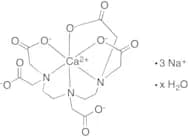
CAS:<p>Applications Calcium Sulfate Dihydrate is obtained from gypsum, a naturally occurring compound. Also used in the preparation of calcium sulfate and calcium sulfoaluminate.<br>References Strydom, C. et al.: J. Therm. Anal., 49, 1501 (1997); Winnefeld, F. et al.: DGCh-Monograph., 44, 30 (2011);<br></p>Fórmula:Ca·O4S·2H2OForma y color:NeatPeso molecular:172.17Diethylenetriamine-pentaacetic Acid Calcium Trisodium Salt
CAS:Producto controlado<p>Applications Diethylenetriamine-pentaacetic acid calcium trisodium salt<br></p>Fórmula:C14H18CaN3O10•3Na•x(H2O)Forma y color:NeatPeso molecular:428.39+3(22.99)+x(18.02)2-Ethoxyethanol 1-(Dihydrogen Phosphate) Sodium Salt (1:2)
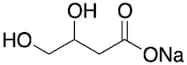
CAS:Producto controlado<p>Applications 2-Ethoxyethanol 1-(Dihydrogen Phosphate) Sodium Salt (1:2), can be used as an intermediate for the synthesis of pharmaceutical compounds such as Fosfomycin (F727500), which is an antibiotic.<br>References Goto, M., et al.: Antimicrob. Agents Chemother., 20, 393 (1981),<br></p>Fórmula:C4H9Na2O5PForma y color:NeatPeso molecular:214.0653,4-Dihydroxybutanoic Acid Sodium Salt
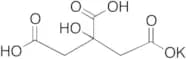
CAS:Producto controlado<p>Applications 3,4-Dihydroxybutanoic Acid Sodium Salt, has been shown to have weak hexenal-induced anesthesia effect.<br>References Uspenskii, A. E. et al.: Farmakologiya i Toksikologiya , Vol.36, P:185-91 (1973);<br></p>Fórmula:C4H7NaO4Forma y color:NeatPeso molecular:142.086Potassium Citrate Monobasic
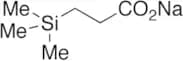
CAS:Producto controlado<p>Applications Potassium Citrate Monobasic is a buffering agent and chelator.<br></p>Fórmula:C6H7KO7Forma y color:NeatPeso molecular:230.213-(Trimethylsilyl)propionic Acid Sodium Salt
CAS:Producto controladoFórmula:C6H13O2Si·NaForma y color:NeatPeso molecular:168.242Mono[2-(perfluorodecyl)ethyl] Sulfate Potassium Salt
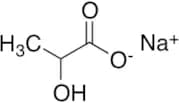
CAS:Producto controladoFórmula:C12H4F21O4S·KForma y color:Off-WhitePeso molecular:682.288Sodium DL-Lactate (60% w/w in H2O)
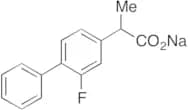
CAS:<p>Applications The sodium salt of lactic acid (L113490). It acts as a preservative, acidity regulator, and bulking agent.<br>References Kim, Y., et al.: ?Food. Nutr. Res., 10, 588-605 (2019)<br></p>Fórmula:C3H5O3·NaForma y color:ColourlessPeso molecular:112.06Flurbiprofen Sodium
CAS:Producto controlado<p>Applications Sodium salt of Flurbiprofen (F598700) an anti-inflammatory used as an analgesic.<br>References Chalmers, et al.: Ann. Rheum. Dis., 31, 319 (1972), Nishizawa, et al.: Thromb. Res., 3, 577 (1973)<br></p>Fórmula:C15H12FO2·NaForma y color:NeatPeso molecular:266.24Mercury(II) Acetate
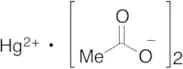
CAS:Producto controlado<p>Applications Mercury(II) acetate is a reagent that is used in the investigation of diastereoselective acyclic α-alkoxydithioacetal substitutions involving thiacarbenium intermediates.<br> Not a dangerous good if item is equal to or less than 1g/ml and there is less than 100g/ml in the package<br>References Prevost, M., et al.: J. Org. Chem. 79, 10504 (2014);<br></p>Fórmula:C4H6HgO4Forma y color:NeatPeso molecular:318.685-Cyanonicotinic Acid
CAS:Producto controlado<p>Applications 5-Cyanonicotinic Acid is a useful reagent for the preparation of substituted cyclobutylpyridine and cyclobutylpyrimidine compounds as indoleamine 2,3-dioxygenase inhibitors.<br>References White, C. M., et al.: PCT Int. Appl. (2019), WO 2019074749 A1<br></p>Fórmula:C7H4N2O2Forma y color:NeatPeso molecular:148.125,6-Dihydroxy-Des(dimethoxy) Bosutinib
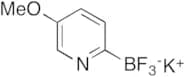
CAS:Producto controladoFórmula:C24H25Cl2N5O3Forma y color:NeatPeso molecular:502.393Potassium Trifluoro(5-methoxy-2-pyridinyl)-borate
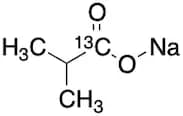
CAS:Producto controladoFórmula:C6H6BF2NO·F·KForma y color:NeatPeso molecular:215.023Sodium 2-Methylpropionate-1-13C
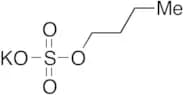
CAS:Producto controlado<p>Applications Sodium 2-Methylpropionate-1-13C (CAS# 71105-51-6) is a useful isotopically labeled research compound.<br></p>Fórmula:C3C)H7NaO2Forma y color:NeatPeso molecular:111.08Butyl Potassium Sulfate
CAS:Producto controladoFórmula:C4H9KO4SForma y color:NeatPeso molecular:192.275Lithium Chloride
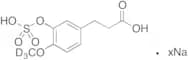
CAS:<p>Applications Lithium Chloride is primarily used in the synthesis of lithium metal by electrolysis. Also acts as a prescribed drug for bipolar mood disorder, it may also exhibit anti-inflammatory properties. Anti-cancer agent.<br>References Tsao, N. et al.: Antimicrob. Agents Chemother., 59, 1525 (2015); Cockle, J. et al.: 112, 693 (2015);<br></p>Fórmula:Cl·LiForma y color:NeatPeso molecular:42.394Dihydro Isoferulic Acid-d3 3-O-Sulfate Sodium Salt
CAS:Producto controlado<p>Applications Labelled Dihydroisoferulic Acid 3-O-Sulfate, the sulfate conjugate of Dihydroisoferulic Acid (H946365). Dihydroisoferulic Acid 3-O-Sulfate is a minor circulating metabolite in human plasma after coffee consumption.<br>References Fumeaux, R. et al.: Org. Biomol. Chem., 8, 5199 (2010); Redeuil, K. et al.: J. Chrom. A, 1218, 4678 (2011);<br></p>Fórmula:C10H9D3O7S·xNaForma y color:NeatPeso molecular:279.283,3,4,4,5,5,6,6,7,7,8,8,8-Tridecafluorooctane-1-sulphonic Acid Sodium Salt-13C
CAS:Producto controladoFórmula:CC7H4F13NaO3SForma y color:NeatPeso molecular:451.142Ferrocenecarboxaldehyde
CAS:<p>Ferrocenecarboxaldehyde is a fatty acid with a ferrocene carboxylic acid group. It has been shown to have antimicrobial activity against bacteria, fungi, and yeast when it was mixed with nitric acid. Ferrocenecarboxaldehyde can be synthesized by reacting ferrocene with glycerol in the presence of sulfuric acid. The reaction mechanism of this synthesis is as follows: The structural analysis of ferrocenecarboxaldehyde has been studied using FT-IR spectroscopy and NMR spectroscopy. The chemical structure of ferrocenecarboxaldehyde is as follows: The asymmetric synthesis of ferrocenecarboxaldehyde is shown below:</p>Fórmula:C11H10FeOPureza:Min. 95%Forma y color:PowderPeso molecular:214.04 g/mol1,1'-Diacetylferrocene
CAS:Producto controlado<p>1,1'-Diacetylferrocene is an organic compound that has been synthesized by a reaction of ferrocene with benzoylhydrazone. Ferrocenes are compounds containing a ferrocene unit, a cyclic system with alternating double bonds and single bonds. The hydroxyl group on 1,1'-diacetylferrocene can be replaced by other substituents such as carboxylic acids or alcohols to produce different derivatives. 1,1'-Diacetylferrocene is soluble in water and solvents such as acetonitrile. It reacts with peroxide to form the corresponding hydroperoxides. This product has been shown to have the ability to interact specifically with ferrocenes when introduced into the solution.</p>Fórmula:C14H14FeO2Pureza:Min. 95%Peso molecular:270.1 g/molSodium decyl sulfate
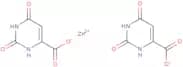
CAS:<p>Sodium decyl sulfate is a surfactant used in the preparation of biological samples for analysis using mass spectrometry. This compound forms a disulfide bond with cysteine residues on proteins, which can be cleaved by reducing agents such as dithiothreitol or mercaptoethanol. Sodium decyl sulfate also has potent antitumor activity and is used to treat autoimmune diseases such as multiple sclerosis. The thermal expansion of this compound is proportional to the vapor pressure of water over the range from 0-100°C, and it has been shown to have a constant pressure at temperatures below 100°C. Furthermore, sodium decyl sulfate has been found to be chiral and binds to receptor molecules that are hydrophobic in nature.</p>Fórmula:C10H21O4SNaPureza:Min. 95%Forma y color:White PowderPeso molecular:260.33 g/molZinc orotate
CAS:<p>Zinc orotate is a mineral supplement that contains elemental zinc in the form of an orotate salt. It is used to treat or prevent zinc deficiency and for the prevention and treatment of various conditions, such as liver lesions, antimicrobial agents, brain functions, and energy metabolism. Zinc is an essential mineral that is required for normal growth and development. Zinc also plays a role in maintaining healthy skin and hair. The physiological levels of zinc are 10-20 mg per day for adults. Zinc orotate provides 100% of the daily requirement (15 mg) in just one tablet.</p>Fórmula:C10H6N4O8Zn·2H2OPureza:Min. 95%Forma y color:White PowderPeso molecular:411.59 g/molTetrakis[N-tetrachlorophthaloyl-(S)-tert-leucinato]dirhodium Bis(ethyl Acetate) Adduct
CAS:<p>Please enquire for more information about Tetrakis[N-tetrachlorophthaloyl-(S)-tert-leucinato]dirhodium Bis(ethyl Acetate) Adduct including the price, delivery time and more detailed product information at the technical inquiry form on this page</p>Fórmula:C56H40Cl16N4O16Rh2·C8H16O4Pureza:Min. 95%Peso molecular:1,974.2 g/molLithium Tetrakis(pentafluorophenyl)borate - Ethyl Ether Complex
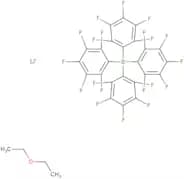
CAS:Producto controlado<p>Lithium tetrakis(pentafluorophenyl)borate - ethyl ether complex is a ligand that has the ability to bind to magnesium. The complex is highly soluble in organic solvents such as ethylene and ether, but not in water. It can be used to produce high yields of ethylene with magnesium as a co-catalyst. The complex binds to magnesium by forming a six-membered ring with the borate group and two oxygen atoms from the ether molecule. The crystal structure of this complex was determined using x-ray crystallography. This complex has been found naturally in plants such as spinach and beets, although it is not yet known what role it plays in these plants.</p>Pureza:70%NmrBis(methyldiphenylphosphine)palladium(II) Dichloride
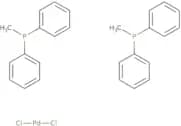
CAS:Producto controlado<p>Bis(methyldiphenylphosphine)palladium(II) chloride is an aryl halide catalyst that is used in the preparation of aryl chlorides. It can be used for the synthesis of pharmaceuticals, agrochemicals, perfumes and other chemical compounds. This catalyst has been shown to be effective in the presence of chloride as well as aryl halides. The reaction can be performed in either the presence or absence of solvent. Methyldiphenylphosphine is soluble in organic solvents such as ether, benzene, and toluene.</p>Fórmula:C26H26Cl2P2PdPureza:Min. 95%Peso molecular:577.76 g/molSodium percarbonate
CAS:<p>Sodium percarbonate is a chemical compound that has a high degree of chemical stability. It is a white, crystalline solid with an appearance similar to table salt. Sodium percarbonate can be used for wastewater treatment by reacting with the hydrogen peroxide in wastewater to produce carbon dioxide and sodium sulfate. The reaction mechanism is based on the oxidation of p-hydroxybenzoic acid by hydrogen peroxide. Sodium percarbonate can also be used as an oxidizing agent in organic synthesis reactions, such as ester hydrolysis, nitro reduction, and decomposition of boron compounds. Optimum concentrations range from 1% to 3%.</p>Fórmula:C2H6Na4O12Pureza:Min. 95%Peso molecular:314.02 g/molCarbonylbis(triphenylphosphine)rhodium(I) Chloride
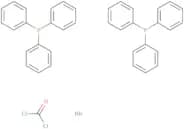
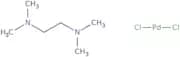
CAS:Producto controlado<p>Carbonylbis(triphenylphosphine)rhodium(I) Chloride is a carbonyl compound that is prepared by reacting alcohols with diethyl ether in the presence of rhodium chloride. It is used as a reagent for alkylation, recrystallization, and purification of organic compounds. Carbonylbis(triphenylphosphine)rhodium(I) Chloride has been used to synthesize formaldehyde from ethylene glycol and formaldehyde-based resins. It also has been used as a catalyst in the conversion of aliphatic hydrocarbons to alcohols. This compound is insoluble in water and crystallizes yellow when dried.</p>Fórmula:C37H30ClOP2RhPureza:Min. 95%Peso molecular:690.94 g/molcis-Dichloro(N,N,N',N'-tetramethylethylenediamine)palladium(II)
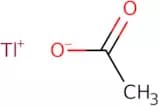
CAS:Producto controlado<p>Please enquire for more information about cis-Dichloro(N,N,N',N'-tetramethylethylenediamine)palladium(II) including the price, delivery time and more detailed product information at the technical inquiry form on this page</p>Fórmula:C6H16Cl2N2PdPureza:Min. 95%Peso molecular:293.53 g/molThallium(I) acetate
CAS:<p>Used as a selective agent against gram-negative bacteria in selective media</p>Fórmula:C2H3O2TlPureza:Min. 95%Peso molecular:263.43 g/molSodium thiocyanate
CAS:<p>Sodium thiocyanate is a salt that is used as an injection solution and reaction solution in the chemical laboratory. It reacts with water vapor to form sodium carbonate and hydrogen cyanide, which are then converted into sodium salts. The biological properties of this compound are not well-known, but it has been shown to be toxic to cells at high concentrations. Sodium thiocyanate is a salt that is used as an injection solution and reaction solution in the chemical laboratory. It reacts with water vapor to form sodium carbonate and hydrogen cyanide, which are then converted into sodium salts. The biological properties of this compound are not well-known, but it has been shown to be toxic to cells at high concentrations.</p>Fórmula:CNNaSPureza:Min. 95%Forma y color:White PowderPeso molecular:81.07 g/molCobalt(II) oxide
CAS:<p>Cobalt is a transition metal with the atomic number 27. It has an oxidation state of +2 and belongs to group 8 on the periodic table. Cobalt(II) oxide (CoO) is a black solid that can be formed by heating cobalt metal at temperatures greater than 1400°C. The electrochemical impedance spectroscopy of CoO shows that it has high resistivity and good electrical conductivity, making it useful for corrosion protection. Cobalt oxide is also used as a catalyst in chemical reactions, such as oxidation and reduction, due to its redox potential. Cobalt oxide can be produced from the reaction between hydrochloric acid and zirconium oxide by electrolysis, which produces an electric current. This process can be done in two ways: either by using an electrochemical cell or by laser ablation. The latter method is more efficient because it requires less energy input than using an electrochemical cell. In addition, CoO particles are spherical in shape, have</p>Fórmula:CoOPureza:75%MinForma y color:PowderPeso molecular:74.93 g/mol









![Mono[2-(perfluorodecyl)ethyl] Sulfate Potassium Salt](/_next/image/?url=https%3A%2Fstatic.cymitquimica.com%2Fproducts%2FTR%2Fthumb-webp%2FM566785.webp&w=3840&q=75)







![Tetrakis[N-tetrachlorophthaloyl-(S)-tert-leucinato]dirhodium Bis(ethyl Acetate) Adduct](/_next/image/?url=https%3A%2Fstatic.cymitquimica.com%2Fproducts%2F3D%2Fthumb-webp%2FFT60020.webp&w=3840&q=75)