Sales de metal
En esta sección, puede encontrar diversas sales metálicas, que son compuestos caracterizados por contener átomos metálicos y no metálicos. Esencialmente, las sales metálicas están compuestas por cationes que son uno o más átomos metálicos. Estas sales desempeñan un papel crucial en numerosas reacciones y aplicaciones químicas, sirviendo como catalizadores, reactivos o intermediarios en varios procesos industriales y de investigación. En CymitQuimica, ofrecemos una amplia selección de sales metálicas de alta calidad para satisfacer sus necesidades de investigación e industriales, asegurando un rendimiento fiable y efectivo en sus aplicaciones.
Se han encontrado 2870 productos de "Sales de metal"
Ordenar por
Pureza (%)
0
100
|
0
|
50
|
90
|
95
|
100
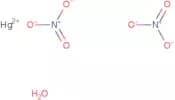
Mercury(II) nitrate monohydrate
CAS:Producto controlado<p>Mercury(II) nitrate monohydrate (HgNO3·H2O) is a salt that is used in the synthesis of other mercury compounds. It is activated by reaction with ammonia or ammonium chloride to yield the mercury(II) nitrate. This compound can be used as a fluorescence probe for identification and quantification of nitrogen atoms in biological molecules. Monoclonal antibodies against human serum proteins can be prepared from HgNO3·H2O-treated mouse ascites fluid, which are then used for immunological detection of picolinic acid in human serum. The reaction solution for this procedure should contain benzalkonium chloride, light emission reagents, and halides. The IUPAC name for this compound is mercuric nitrate monohydrate and it has a kinetic data available.</p>Fórmula:Hg(NO3)2•H2OPureza:Min. 95%Peso molecular:342.62 g/molRef: 3D-FM43031
Producto descatalogadoDicobalt Octacarbonyl (stabilized with 1-10% Hexane)
CAS:<p>Dicobalt octacarbonyl is a carbonylative agent that converts alkenes to epoxides. It is used in the synthesis of cyclopentenones, as well as in the conversion of benzylic alcohols to aldehydes. Dicobalt octacarbonyl has been shown to react with glycosyl compounds, such as glycosides and cyclitols, to form carbon dioxide and water. This reaction produces very little hydrogen gas and no free radicals, which makes it useful for applications where these byproducts are undesirable.</p>Fórmula:C8Co2O8Pureza:Min. 95%Peso molecular:341.95 g/molRef: 3D-FD60932
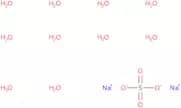
Producto descatalogadoSodium sulphate decahydrate
CAS:Producto controlado<p>Sodium sulphate decahydrate is an inorganic salt that is a salt of sodium and sulfuric acid. It is used as a food additive, preservative, and to control the pH of water. Sodium sulfate decahydrate has been shown to be effective for the treatment of diarrhoea caused by infectious diseases such as rotavirus and enterotoxigenic Escherichia coli. This drug also has inhibitory effects on bacterial growth and may be useful for the prevention or treatment of bowel diseases such as Crohn's disease and ulcerative colitis. The intermolecular hydrogen bonding between the anions in this compound make it highly reactive, which can result in toxic side effects. However, this drug has not exhibited any toxic side effects at concentrations below 0.5%.</p>Fórmula:H22Na2O14SPureza:Min. 95%Forma y color:PowderPeso molecular:324.21 g/molRef: 3D-FS35057
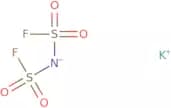
Producto descatalogadoPotassium bis(fluorosulfonyl)imide
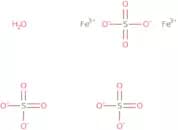
CAS:<p>Potassium bis(fluorosulfonyl)imide (K2FSI) is a reactive chemical that can be used to remove sulfur from petroleum products. It is also used in the manufacturing of ethylene and perovskite solar cells. K2FSI reacts with potassium ions to form potassium hexafluorophosphate (KHF2). This reaction reduces the vapor pressure of KHF2 and increases its solubility in water. The use of K2FSI can reduce the amount of energy needed for desulfurization, as it does not require heating. The following are some uses for potassium bis(fluorosulfonyl)imide: - As a catalyst for production of ethylene - In organic solvent to produce perovskite solar cells - To remove sulfur from petroleum products - To make hydrogen fluoride - For desulfurization</p>Fórmula:F2NO4S2•KPureza:Min. 95%Forma y color:White PowderPeso molecular:219.23 g/molIron(III) sulfate hydrate
CAS:<p>Iron(III) sulfate hydrate is a chemical compound that is used as a coagulant in wastewater treatment. It reacts with hydrogen ions to form ferric hydroxides, which are insoluble and settle out of the water. Iron sulfate also has been used to identify the presence of bacteria in histological preparations by staining. The optimum concentration for this reaction is 1%. The reaction mechanism for this process is not known and it is difficult to determine the optimal pH range because it depends on the type of bacteria being studied. Iron(III) sulfate hydrate has a carcinogenic potential, but this risk can be minimized by adding an acidic substance such as caproic acid or citric acid to the solution. Iron(III) sulfate hydrate also has been shown to have nutrient-rich properties and can be used as a nutrient solution in conditions where other nutrients are unavailable. When heated, iron sulfate undergoes a redox reaction, producing water vapor and fer</p>Fórmula:Fe2(SO4)3•(H2O)xPureza:Min. 95%Forma y color:Off-White To Yellow To Beige SolidPeso molecular:399.88 g/molRef: 3D-FI166723
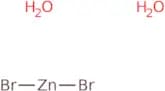
Producto descatalogadoZinc bromide dihydrate
CAS:<p>Zinc bromide dihydrate is a crystalline compound that is used as a catalyst for the conversion of metalloporphyrins to hydroporphyrins. This process is used in the production of vitamin B12. Zinc bromide dihydrate can also be used to inhibit the function of ion pumps, which are proteins that pump ions across membranes. The inhibition of these pumps may lead to a decrease in intracellular calcium levels and an increase in free radicals.<br>Zinc bromide dihydrate has been shown to react with chlorophylls, vinylated heterostructures, and polyvinyl nonmetals. These reactions produce morphology changes in zinc bromide dihydrate crystals</p>Fórmula:ZnBr2•2H2OPureza:Min. 95%Forma y color:PowderPeso molecular:261.22 g/molIndium - 99.999% trace metals basis
CAS:<p>Indium-99.999% trace metals basis is a radioactive metal whose atomic number is 49, and it is the heaviest element in Group 3 of the periodic table. Indium-99.999% trace metals basis can be used in the treatment of bowel disease, such as inflammatory bowel disease (IBD) and Crohn's disease. It may also be used to diagnose other diseases that are not visible through medical imaging techniques, such as cancer or inflammatory diseases of the bowel. It can be used to measure cell nuclei and nuclear DNA for disease activity, or identify response elements for autologous stem-cell transplantation. It has been shown that this metal can cause long-term toxicity to cells when combined with injury models. This toxicity may be due to its coordination geometry, which causes a disruption in electron flow during oxidation reactions.</p>Fórmula:InPureza:Min. 95%Peso molecular:114.82 g/molRef: 3D-FI158340
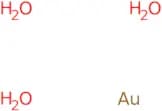
Producto descatalogadoGold(III) hydroxide
CAS:<p>Gold(III) hydroxide is a yellow solid that is soluble in acidic and alkaline solutions. It can be prepared by the reaction of gold(III) nitrate with sodium hydroxide, or by the reaction of hydrochloric acid with sodium chloride and ferrous sulfate. Gold hydroxide can be used in a number of techniques such as nature, hydrolysis, synthons, and high yield. Gold hydroxide has been shown to have luminescent properties when mixed with nitrate. The synthesis of gold nanoparticles is also possible using gold hydroxide at temperatures below 100°C. The yields for this process are variable depending on the conditions used, but it has been shown to produce approximately 10% of the theoretical yield. Gold hydroxide will react with deionized water to form a gel-like substance, which is due to its interaction with water molecules. This compound also has nucleation properties that allow it to act as an initiator for</p>Fórmula:AuH3O3Pureza:Min. 95%Peso molecular:247.99 g/molIron oxide black
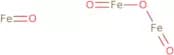
CAS:Producto controlado<p>Iron oxide black is a reactive dye that is used in wastewater treatment. It is an oxide of iron that can be synthesized from sodium carbonate and langmuir adsorption isotherm. Iron oxide black has been shown to have a colloidal gold-like color, chemical stability, and constant pressure. The particle size of this compound ranges from 10-1000 nm and it reacts with a solution containing anhydrous sodium carbonate to form magnetite nanoparticles. Iron oxide black also has an asymmetric synthesis reaction with ferric chloride and nitric acid, which produces magnetic nanoparticles.</p>Fórmula:Fe3O4Pureza:Min. 95%Forma y color:PowderPeso molecular:231.53 g/molRef: 3D-FI41084
Producto descatalogadoPalladium on activated carbon - 10% Pd
CAS:<p>Palladium on activated carbon - 10% Pd is a palladium-containing chemical product. It can be used as a catalyst, reagent, or scaffold in chemical synthesis. Palladium on activated carbon - 10% Pd is useful as a reaction component, useful for research and development of new products, and has high quality. This product can be used as an intermediate in organic synthesis to create complex compounds that are often used as speciality chemicals or fine chemicals. Palladium on activated carbon - 10% Pd has CAS No. 7440-05-3.</p>Fórmula:PdPureza:(As Pd) 9 To 11%Forma y color:PowderPeso molecular:106.42 g/molIron(II) tetrafluoroborate - 40-45% aqueous solution
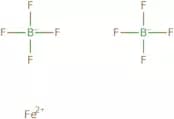
CAS:<p>Iron(II) tetrafluoroborate is a green-yellow crystalline solid that is soluble in water. It has been shown to have structural and optical properties that are similar to those of ferric chloride, but with the advantage of being less toxic. Iron(II) tetrafluoroborate is used as a homogeneous catalyst for organic reactions such as the hydrogenation of nitroarenes and the reduction of ketones. The catalytic activity of Iron(II) tetrafluoroborate arises from its ability to form hydrogen bonding interactions with other molecules and ions in solution.<br>Iron(II) tetrafluoroborate undergoes a number of reactions with other compounds, including cleavage products such as hydrogen sulfate and nitrogen atoms, which may be due to its chelate ligand. In coordination chemistry, Iron(II) tetrafluoroborate can form coordination complexes by reacting with potassium dichromate or calcium carbonate. These complexes are</p>Fórmula:B2F8FePureza:About 45%Forma y color:Slightly Green Clear LiquidPeso molecular:229.45 g/molRef: 3D-FI105721
Producto descatalogadoSodium phosphate dibasic dodecahydrate
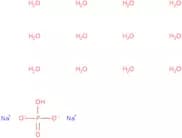
CAS:<p>Sodium phosphate dibasic dodecahydrate is a sodium salt that has been used in analytical chemistry, water treatment, and as a buffering agent. It is also used as a synergistic agent with other sodium salts to increase their bioavailability. This substance has been studied extensively for its effects on cancer tissues and has shown promise in inhibiting the growth of cancer cells. Sodium phosphate dibasic dodecahydrate is not very soluble in water but is highly permeable through human serum membranes. It can be administered orally or intravenously and will have different effects depending on the route of administration.</p>Fórmula:H3PO4·Na2·12H2OPureza:Min. 95%Peso molecular:358.14 g/molAluminum magnesium silicate
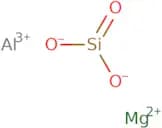
CAS:<p>Magnesium aluminum silicate is a film-forming polymer that can be used in the formulation of skin care products, such as sunscreens. It has been shown to have a thermal expansion coefficient similar to that of human skin and also prevents moisture loss by forming a protective barrier on the surface of the skin. Magnesium aluminum silicate also possesses antioxidant properties and has been shown to inhibit tyrosinase activity in analytical chemistry experiments. This polymer is soluble in water, but is not soluble in organic solvents such as ethanol or acetone. The water solubility can be increased by adding an alkylthio group. Magnesium aluminum silicate is insoluble in water at room temperature and must be heated up to 200°C for dissolution. The viscosity of magnesium aluminum silicate increases with increasing concentration and reaches a maximum at about 2% concentration. This polymer shows uptake of water vapor and will form a gel when exposed to high humidity environments, which makes it useful as</p>Fórmula:AlMgO3SiPureza:Min. 95%Forma y color:PowderPeso molecular:127.37 g/molRef: 3D-FA162345
Producto descatalogadoSodium orthovanadate
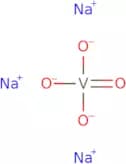
CAS:<p>Sodium orthovanadate is a vanadium compound that is often used as a model system for studying the properties of other transition metal compounds. It has been shown to have hypoglycemic effects in mice, and has also been shown to have synergic effects with other drugs such as clofibrate, troglitazone, and metformin. The coordination geometry of sodium orthovanadate is octahedral, with one vanadium atom at the center and six oxygen atoms around it. It is an ionic compound that dissolves well in water. Sodium orthovanadate can be found in nature as a mineral called meta-vanadinite or vanadic acid. The crystal structure of sodium orthovanadate has been studied using x-ray diffraction data, which revealed that its structure changes from cubic to hexagonal when heated to temperatures above its phase transition temperature (approximately 300°C).</p>Fórmula:Na3VO4Pureza:Min. 95%Forma y color:White Off-White PowderPeso molecular:183.91 g/molTin(IV) oxide
CAS:<p>Tin(IV) oxide is a chemical compound that can be used in the treatment of cancer. It is a white powder with a low melting point and is soluble in water, alcohols, and ethers. Tin(IV) oxide has been used as an additive to microscopy techniques to improve contrast. The compound has also been shown to have anticancer properties by inhibiting the growth of cancer cells. Tin(IV) oxide blocks the formation of chalcones, which are products that are formed when reactions between hydrochloric acid and aluminium take place at high temperatures. This blockage prevents the formation of hydrogen gas, thereby preventing cell death due to dehydration or exposure to infrared radiation from heat sources such as microwaves or lasers. Tin(IV) oxide also has been used in infrared spectroscopy for its ability to produce a characteristic absorption band at 3690 cm-1 and as an alternative material for the production of semiconductors when producing thin films.</p>Fórmula:SnO2Pureza:95%NmrForma y color:Off-White To Grey SolidPeso molecular:150.71 g/molPotassium hexafluorophosphate
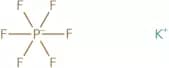
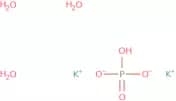
CAS:<p>Potassium hexafluorophosphate is a chemical compound that is used as an antimicrobial agent in the laboratory. It reacts with hydroxyl groups on various surfaces to form potassium hexafluorophosphate and water. The reaction solution can be used to disinfect equipment and surfaces, and is stable at room temperature. Potassium hexafluorophosphate has been shown to have biological properties such as inhibiting the growth of bacteria and fungi, but not viruses. This chemical compound has been shown to be effective against E. coli, Klebsiella pneumoniae, Staphylococcus aureus, Proteus vulgaris, Bacillus subtilis, Pseudomonas aeruginosa, Aspergillus niger, Candida albicans, or Saccharomyces cerevisiae.</p>Fórmula:KPF6Pureza:Min. 95%Forma y color:PowderPeso molecular:184.06 g/molDipotassium hydrogen phosphate trihydrate
CAS:<p>Please enquire for more information about Dipotassium hydrogen phosphate trihydrate including the price, delivery time and more detailed product information at the technical inquiry form on this page</p>Fórmula:K2HPO4•(H2O)3Peso molecular:228.22 g/molRef: 3D-FD143178
Producto descatalogadoAluminumoxide - Partical size 40-50nm
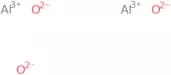
CAS:<p>Aluminum oxide is a non-toxic, inert solid that is used as a catalyst in the production of polymers and plastics. Aluminum oxide is also used for wastewater treatment, as it has high chemical stability. It can be used to remove pollutants such as hydrogen fluoride, hydrochloric acid and heavy metals from water. The particle size of aluminum oxide ranges from 40-50nm. The phase transition temperature of aluminum oxide is typically at 1,000°C which makes it suitable for use in industrial processes with high temperatures. Aluminum oxide has been shown to reduce inflammation, inhibit angiogenesis and increase vascular permeability in inflammatory diseases such as rheumatoid arthritis and asthma. Alumina can also induce apoptosis in cancer cells by disrupting their cell membranes.</p>Fórmula:Al2O3Pureza:Min. 95%Forma y color:White SolidPeso molecular:101.96 g/molPalladium hydroxide on carbon - 20 wt. % loading (dry basis)
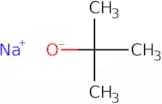
CAS:<p>Palladium hydroxide on carbon is a metal oxide with antimicrobial activity. Palladium hydroxide on carbon has been shown to have significant receptor activity against bacteria and fungi, as well as other microorganisms. It has also been shown to inhibit the growth of Helicobacter pylori, which is associated with ulcers and stomach cancer. Palladium hydroxide on carbon is used in the treatment of bowel disease and infections caused by bacteria such as Escherichia coli, Salmonella typhi, Staphylococcus aureus, Streptococcus pyogenes, Mycobacterium tuberculosis, and Helicobacter pylori. Palladium hydroxide on carbon has also been shown to be effective in the treatment of autoimmune diseases such as rheumatoid arthritis and multiple sclerosis.</p>Fórmula:H2O2PdPureza:Min. 95%Peso molecular:140.43 g/molSodium tert butoxide
CAS:<p>Please enquire for more information about Sodium tert butoxide including the price, delivery time and more detailed product information at the technical inquiry form on this page</p>Fórmula:C4H9NaOPureza:Min. 95%Forma y color:PowderPeso molecular:96.1 g/molRef: 3D-FS03425
Producto descatalogado