Sales de metal
Se han encontrado 2872 productos de "Sales de metal"
Zinc oxide
CAS:Zinc oxide is a white, crystalline solid that has been used as an antimicrobial agent in the past. It is effective against bacteria, fungi, and viruses. The inhibitory properties of zinc oxide are due to its ability to disrupt energy metabolism. Zinc oxide also has been shown to be toxic to neurons in vitro and is under investigation for use in the treatment of neurodegenerative diseases such as Alzheimer's and Parkinson's disease. Zinc oxide is also used in wastewater treatment because it can bind up metal ions such as copper chloride or zirconium oxide. Zinc oxide nanoparticles have been shown to be effective at killing bacteria in water vapor when irradiated with laser light.
Fórmula:ZnOPureza:Min. 95%Forma y color:White Clear LiquidPeso molecular:81.38 g/molChloro[2-(di-tert-butylphosphino)-2',4',6'-triisopropyl-1,1'-biphenyl][2-(2-aminoethyl)phenyl)]palladium(II)
CAS:Producto controladoChloro[2-(di-tert-butylphosphino)-2',4',6'-triisopropyl-1,1'-biphenyl][2-(2-aminoethyl)phenyl)]palladium(II) is a molecule that inhibits the adenosine receptor in autoimmune diseases and cancer. It also has an inhibitory effect on the membrane transport of glucose, glucosan, and aziridine. This drug can be used to treat inflammatory diseases such as diabetes, asthma, and inflammatory bowel disease. The geometric isomers of this molecule are not identical in shape or size and can have different effects on the body.
Fórmula:C37H55ClNPPdPureza:Min. 95%Peso molecular:686.69 g/molRhodium 5% on Carbon (wetted with ca. 55% Water)
CAS:Rhodium 5% on Carbon (wetted with ca. 55% Water) is a catalyst that has a phase transition temperature of approximately -36 degrees Celsius. This product is used in the reaction of alkanoic acids and also for the preparation of stable complexes with metal hydroxides. Rhodium 5% on Carbon (wetted with ca. 55% Water) has been shown to have beneficial effects on autoimmune diseases, including multiple sclerosis, rheumatoid arthritis, and psoriasis. The metal-carbon bond in this product is covalent, which means it forms strong chemical bonds that are difficult to break. Rhodium 5% on Carbon (wetted with ca. 55% Water) has been shown to be an excellent catalyst for reactions involving water vapor or other molecules containing hydrogen atoms.
Fórmula:RhPureza:Min. 95%Peso molecular:102.91 g/molRef: 3D-FR60995
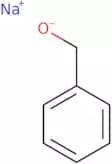
Producto descatalogadoSodium benzyloxide solution - 1.0 M in benzyl alcohol
CAS:Sodium benzyloxide is an alkanoic acid with the chemical formula CH3C6H2O2. It is used as a matrix metalloproteinase inhibitor in the synthesis of bicyclic heterocycles. It is also used in asymmetric synthesis and as a substrate for enzyme inhibitors. Sodium benzyloxide has been shown to be effective against herpes simplex virus by preventing viral replication and inducing apoptosis.
Fórmula:C6H5CH2ONaForma y color:Clear LiquidPeso molecular:130.12 g/molRef: 3D-FS165047
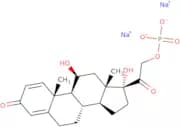
Producto descatalogadoPrednisolone disodium phosphate
CAS:Prednisolone is a corticosteroid that is used to treat inflammation and reduce the body's immune response. Prednisolone disodium phosphate (PDSP) is an enteric-coated tablet that releases prednisolone in the small intestine, where it can be absorbed into the bloodstream. It has been shown to be effective at reducing bowel disease activity in patients with inflammatory bowel disease. Prednisolone disodium phosphate may also have a role in controlling infectious diseases, such as tuberculosis, due to its ability to inhibit toll-like receptor 4 signaling. The drug has been studied as a model system for predicting drug interactions by monitoring the rate constant for benzalkonium chloride binding to human serum albumin.
Fórmula:C21H29O8P•Na2Pureza:Min. 95%Forma y color:PowderPeso molecular:486.4 g/molPotassium p-Toluenethiosulfonate
CAS:Potassium p-Toluenethiosulfonate is a functional group that contains a sulfhydryl (-SH) and a thiol (-S-H). It has been used to prepare radionuclides for cancer diagnosis, such as Tc-99m (technetium-99m), I-123 (iodine-123), and I-131 (iodine-131). This compound has been used in preparative methods for the synthesis of organic chemicals. Potassium p-Toluenethiosulfonate is also used in conjugates with drugs or other molecules, which are used in the diagnosis of cancer. The conjugates can be linked to plasma proteins or tumor cells.
Fórmula:C7H7KO2S2Pureza:Min. 95%Peso molecular:226.36 g/molRef: 3D-FP61284
Producto descatalogadoLithium hydroxide anhydrous
CAS:Lithium hydroxide is a white solid with a high melting point. It is used in the production of other lithium salts, such as lithium carbonate, lithium citrate, and lithium bromide. Lithium hydroxide reacts with acids to produce hydrogen fluoride and water vapor. The reaction is reversible and the equilibrium constant can be calculated by measuring the concentrations of reactants and products at various temperatures. The chemical biology of lithium hydroxide has been studied using different electrochemical impedance spectroscopy techniques.
Fórmula:LiOHForma y color:White PowderPeso molecular:23.95 g/molRef: 3D-FL49109
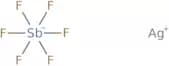
Producto descatalogadoSilver hexafluoroantimonate(V)
CAS:Silver hexafluoroantimonate is a polymeric matrix that is used for its reaction mechanism. The hydroxyl group on the surface of the silver hexafluoroantimonate reacts with hydrochloric acid to produce hydrogen fluoride and an ionic silver chloride complex. Silver hexafluoroantimonate can also be synthesized by cationic polymerization, which involves a coordination complex between the metal and the nitrogen atoms. This coordination geometry allows for hydrogen bonding interactions.
Fórmula:AgSbF6Pureza:Min. 95%Forma y color:White PowderPeso molecular:343.62 g/molLead(II) oxide
CAS:Lead(II) oxide is a chemical compound that has been shown to have biological properties. It acts as a surface glycoprotein and has been shown to be stable in various environments. Lead(II) oxide is also chemically inert, with redox potentials that are higher than those of many other compounds. When lead(II) oxide is heated, it can react with water to form lead hydroxide and hydrogen gas. Studies show that lead(II) oxide is toxic when inhaled or ingested. Lead(II) oxide has been shown to be effective in wastewater treatment due to its high solubility and low toxicity to microorganisms. Lead(II) oxide is also used in the production of thermometers, which require a material that does not expand or contract significantly with changes in temperature. Lead(II) oxide has been shown to have bioavailability in vivo and transfer reactions have been observed between this compound and other metals such as copper and zinc.
Fórmula:PbOPureza:Min. 95%Forma y color:PowderPeso molecular:223.2 g/molRef: 3D-FL145356
Producto descatalogadoSodium L-glutamate monohydrate
CAS:L-glutamic acid is a nonessential amino acid that is used as a food additive. L-glutamic acid is found in the form of sodium salt, called monosodium glutamate (MSG), and is used to enhance the flavor of foods. L-glutamic acid has been shown to be essential for the growth of certain bacteria, such as corynebacteria. The l-glutamic acid gene can be found in corynebacteria and corynebacterium glutamicum. It has been shown that l-glutamic acid can be synthesized by these organisms under conditions of low magnesium concentration, high pH, and high temperature.
Fórmula:C5H8NNaO4·H2OPureza:Min. 95%Forma y color:PowderPeso molecular:187.13 g/molRef: 3D-FS138120
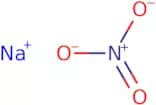
Producto descatalogadoSodium nitrate
CAS:Producto controladoSodium nitrate is a versatile compound that possesses several unique characteristics. It is commonly used as a viscosity modifier in various applications, including activated cephalosporins and glucans. Additionally, sodium nitrate exhibits metallic properties and acts as an antibiotic, making it suitable for use in polymers and other controlled products. This compound also demonstrates inhibitory effects on serine protease activity and can be combined with α-tocopherol to enhance its emission properties. Furthermore, sodium nitrate has been utilized in the production of alkaloids and as an electrode material in potassium-based systems. Its wide range of applications makes sodium nitrate a valuable ingredient in various industries.
Fórmula:NaNO3Pureza:Min. 95%Peso molecular:84.99 g/molRef: 3D-FS47121
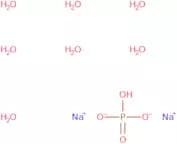
Producto descatalogadoSodium phosphate dibasic heptahydrate
CAS:The particle size of sodium phosphate dibasic heptahydrate is between 0.1 and 1.0 μm. It has a fluorescence detector that can be used to identify metabolic disorders in humans, such as autoimmune diseases and human immunoglobulin deficiency. The particle size of sodium phosphate dibasic heptahydrate is between 0.1 and 1.0 μm. It has a fluorescence detector that can be used to identify metabolic disorders in humans, such as autoimmune diseases and human immunoglobulin deficiency. The particle size of sodium phosphate dibasic heptahydrate is between 0.1 and 1.0 μm. It has a fluorescence detector that can be used to identify metabolic disorders in humans, such as autoimmune diseases and human immunoglobulin deficiency
Fórmula:Na2HPO4·7H2OPureza:Min. 95%Forma y color:White PowderPeso molecular:268.07 g/molRef: 3D-FS47163
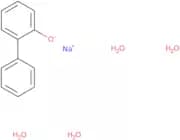
Producto descatalogado2-Hydroxybiphenyl sodium salt tetrahydrate
CAS:2-Hydroxybiphenyl sodium salt tetrahydrate is an inorganic, colorimetric mediator that is used for the determination of symbiotic N 2 fixation. It is a salt of 2-hydroxybiphenyl and sodium hydroxide. The color change from yellow to violet is indicative of the presence of nitrogenase activity. This mediator can be used to measure the efficiency of immobilized N 2 -fixing bacteria on various surfaces or to determine the uptake of nutrients by bacteria.
Fórmula:C12H17NaO5Pureza:Min. 95%Peso molecular:264.25 g/molRef: 3D-FH137345
Producto descatalogadoPotassium tetrachloroplatinate(II)
CAS:Potassium tetrachloroplatinate(II) is a metal chelate of potassium and platinum. It can be used as a catalyst for organic syntheses, such as hydrogenation reactions. Potassium tetrachloroplatinate(II) has a high affinity for the amide ligands in substrates, which allows it to be used for hydrogenation reactions. The reaction mechanism of this compound has been investigated by x-ray crystal structures and in vitro experiments. The reaction mechanism primarily involves the formation of an organometallic intermediate that subsequently reacts with the substrate via an addition-elimination process. This compound also emits light when heated and produces a dark red color due to its ability to absorb visible light.
Fórmula:K2PtCl4Pureza:Min. 95%Forma y color:PowderPeso molecular:415.09 g/molRef: 3D-FP54960
Producto descatalogadoSodium 1-Tetradecanesulfonate
CAS:Sodium 1-tetradecanesulfonate is a detergent additive that can be used in water-based cleaning compositions. It is a sodium salt and fatty acid that has been shown to provide high viscosity in the presence of water vapor. This product also provides excellent detergency on oily soils, and is compatible with other ingredients such as fatty alcohols, glycol ethers, glycerin, aluminium, dodecyl cations, and polyvinyl alcohols. Sodium 1-tetradecanesulfonate has been shown to have a wide range of applications including wastewater treatment and analytical chemistry.
Pureza:Min. 95%Ref: 3D-FS63002
Producto descatalogadoSodium percarbonate
CAS:Sodium percarbonate is a chemical compound that has a high degree of chemical stability. It is a white, crystalline solid with an appearance similar to table salt. Sodium percarbonate can be used for wastewater treatment by reacting with the hydrogen peroxide in wastewater to produce carbon dioxide and sodium sulfate. The reaction mechanism is based on the oxidation of p-hydroxybenzoic acid by hydrogen peroxide. Sodium percarbonate can also be used as an oxidizing agent in organic synthesis reactions, such as ester hydrolysis, nitro reduction, and decomposition of boron compounds. Optimum concentrations range from 1% to 3%.
Fórmula:C2H6Na4O12Pureza:Min. 95%Peso molecular:314.02 g/molRef: 3D-FS41980
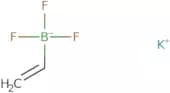
Producto descatalogadoPotassium vinyltrifluoroborate
CAS:Potassium vinyltrifluoroborate is a salt that contains the inorganic anion potassium and the organic ligand vinyltrifluoroborate. It is used as an electrolyte in electrochemical cells, such as fuel cells, to increase power output by increasing the conductivity of the electrolyte. This compound has been shown to be effective against chronic kidney disease and infectious diseases such as HIV and malaria. Potassium vinyltrifluoroborate also has anti-cancer properties due to its ability to inhibit cellular proliferation and induce apoptosis in cancer cells. The mechanism of action of this drug is still unclear but may be due to its ability to inhibit proteases, such as ns3 protease found in human erythrocytes.
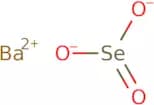
Fórmula:C2H3BF3KPureza:Min. 95%Forma y color:PowderPeso molecular:133.95 g/molBarium selenite
CAS:A barium selenite molecule has a diameter of about 3.5 nm. It is a polyvinyl compound that contains a hydroxyl group and a selenium compound, which is composed of two hydroxy groups (OH-). Barium selenite can be used in the detection and treatment of cancer cells, as well as degenerative diseases. The chemical species may be detected by plasma mass spectrometry. This molecule has an aluminium ion with a redox potential of +1.5 V.
Fórmula:BaO3SePureza:Min. 95%Peso molecular:264.29 g/molCalcium iodide
CAS:Calcium iodide is a polarizer that can be used for the analysis of metal hydroxides. It reacts with the substrate film and forms a reaction solution that can be examined by microscope or spectrophotometer. Calcium iodide has been used to study the structure of glycol ethers, alkanoic acids, and carbohydrates. This chemical is also used in nutrient solutions and as a control substance in biochemical tests.
Fórmula:CaI2Pureza:Min. 95%Forma y color:PowderPeso molecular:293.89 g/molRef: 3D-FC37898
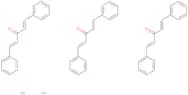
Producto descatalogadoTris(dibenzylideneacetone)dipalladium(0)
CAS:Tris(dibenzylideneacetone)dipalladium(0) (Pd2(dba)) is a monoclonal antibody that is used to treat infectious diseases. The metal complex binds to the fatty acid and inhibits the synthesis of membrane lipids, which leads to an inhibition of virus replication. Tris(dibenzylideneacetone)dipalladium(0) has been shown to have potent antitumor activity in animal models, with cytotoxic effects on mutant melanoma cells and hydrochloric acid. This drug also has potent pro-apoptotic properties, inducing apoptosis by binding to pro-apoptotic proteins. Tris(dibenzylideneacetone)dipalladium(0) has been shown to be a potent inhibitor of x-ray crystal structures at high temperatures, where it competes with water for the labile hydrogen atoms on the surface of hydroxyl groups.
Fórmula:C17H14O·Pd2Pureza:Min. 95%Forma y color:Purple PowderPeso molecular:915.72 g/mol


![Chloro[2-(di-tert-butylphosphino)-2',4',6'-triisopropyl-1,1'-biphenyl][2-(2-aminoethyl)phenyl)]pal…](/_next/image/?url=https%3A%2Fstatic.cymitquimica.com%2Fproducts%2F3D%2Fthumb-webp%2FFC156938.webp&w=3840&q=75)