Azúcares
Se han encontrado 173 productos para "Azúcares".
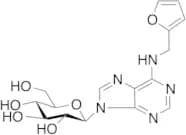
Kinetin-9-glucoside
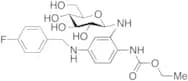
CAS:Producto controladoFórmula:C16H19N5O6Forma y color:NeatPeso molecular:377.352Retigabine N-β-D-Glucoside
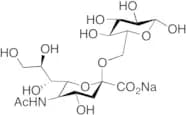
CAS:Producto controladoFórmula:C22H28FN3O7Forma y color:NeatPeso molecular:465.4726-Sialyl-D-glucose Sodium Salt (α/β mixture)
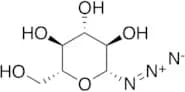
CAS:Producto controladoFórmula:C17H28NNaO14Forma y color:NeatPeso molecular:493.392b-D-Glucopyranosyl Azide
CAS:Producto controladoFórmula:C6H11N3O5Forma y color:NeatPeso molecular:205.169O-[2-(Acetylamino)-2-deoxy-α-D-galactopyranosyl]-L-threonine
CAS:Producto controladoFórmula:C12H22N2O8Forma y color:NeatPeso molecular:322.316-Deoxy-3-O-[(1,1-dimethylethyl)dimethylsilyl]-1,2-O-(1-methylethylidene)-6-nitro-α-D-glucofuranose
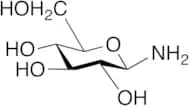
CAS:Producto controladoFórmula:C15H29NO7SiForma y color:NeatPeso molecular:363.479β-D-Glucopyranosylamine
CAS:Producto controladoApplications beta-D-Glucopyranosylamine
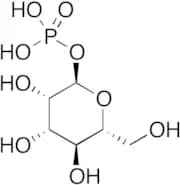
Fórmula:C6H13NO5Forma y color:NeatPeso molecular:179.17α-D-Mannose 1-Phosphate
CAS:Producto controladoApplications α-D-Mannose 1-Phosphate is used in the synthesis of non-natural mannoglucans by α-glucan phosphorylase-catalyzed enzymatic copolymerization;Also, it is derived from D-Mannose (M168000), which is a carbohydrate that is important in the glycosylation of molecules in a variety of cellular processes. It is involved in N and O glycosylation of bovine why protein products, used in infant formulas. It is also responsible for the O-glycosylation of the T helper cell-derived cytokine interlukin-17A, an important cell-signaling molecule.
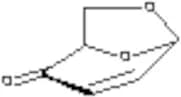
References Baba, R., et al.: Carbohydr. Polym., 151, 1034-1039 (2016); van Leeuwen, S. et al.: J. Agri. Food Chem., 60, 12553 (2012); Geoghegan, K. et al.: Prot. Express. Purif., 87, 27 (2013);Fórmula:C6H13O9PForma y color:NeatPeso molecular:260.136Isolevoglucosenone
CAS:Producto controladoApplications Isolevoglucosenone (cas# 307991-08-8) is a compound useful in organic synthesis.
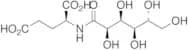
Fórmula:C6H6O3Forma y color:NeatPeso molecular:126.11N-D-Gluconoyl-L-glutamic Acid
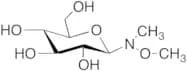
CAS:Producto controladoFórmula:C11H19NO10Forma y color:NeatPeso molecular:325.269N-Methoxy-N-methyl-β-D-glucopyranosylamine
CAS:Producto controladoApplications N-Methoxy-N-methyl-β-D-glucopyranosylamine is used in the synthesis of 6-α-D-Glucopyranosyl Maltotriose (G419100), which is the sugar composition of sake.
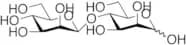
References Giri, N.Y., et al.: Arch. Biochem. Biophysics, 145, 505 (1971)Fórmula:C8H17NO6Forma y color:NeatPeso molecular:223.2244-O-β-D-Mannopyranosyl-D-mannose
CAS:Producto controladoFórmula:C12H22O11Forma y color:NeatPeso molecular:342.296Raspberry Ketone Glucoside
CAS:Producto controladoApplications Raspberry ketone glucoside (cas# 38963-94-9) is a useful research chemical.
Fórmula:C16H22O7Forma y color:NeatPeso molecular:326.34Sinapic acid acyl-beta-D-glucoside
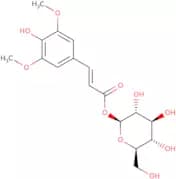
CAS:a functionalised glucosideFórmula:C17H22O10Pureza:Min. 95%Peso molecular:386.35 g/molMono-2-O-(p-toluenesulfonyl)-b-cyclodextrin hydrate
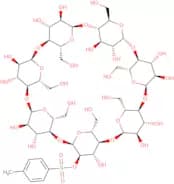
CAS:This beta-cyclodextrin (β-CD) derivative is a functionalized cyclic oligosaccharide composed of seven glucose units, characterized by a hydrophilic exterior and a lipophilic cavity (bigger than α-CD and smaller than γ-CDs), which allows it to encapsulate various guest molecules. This structural feature facilitates its use in multiple applications, including pharmaceuticals, food enhancement, and cosmetics. In the pharmaceutical industry, it enhances the solubility and stability of poorly water-soluble drugs, improving their bioavailability and efficacy while also masking unpleasant tastes. The food sector utilizes it as a stabilizer for flavors, colors, and nutrients, extending shelf life by protecting sensitive ingredients from degradation. In cosmetics, it serves as a complexing agent for fragrances and active components, ensuring their stability and controlled release. Its use expands to many other fields, including nanotechnology for drug delivery systems, environmental remediation for extracting organic pollutants, textiles for slow-release fragrances, and analytical chemistry for chiral separation.Fórmula:C49H76O37S•(H2O)xPureza:Min. 97 Area-%Forma y color:PowderPeso molecular:1,289.17 g/mol3'-methoxy apiin;Chrysoeiol-7-(2-O-apiosylglucoside)
CAS:Please enquire for more information about 3'-methoxy apiin;Chrysoeiol-7-(2-O-apiosylglucoside) including the price, delivery time and more detailed product information at the technical inquiry form on this page
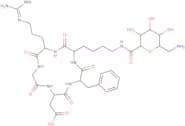
Pureza:Min. 95%Galacto-RGD trifluoroacetate salt
CAS:Please enquire for more information about Galacto-RGD trifluoroacetate salt including the price, delivery time and more detailed product information at the technical inquiry form on this pageFórmula:C34H52N10O12Pureza:Min. 95%Forma y color:PowderPeso molecular:792.84 g/molGlucose dehydrogenase
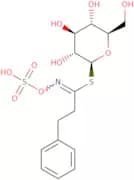
CAS:Glucose Dehydrogenase is an enzyme, which is typically derived from microbial sources such as bacteria and fungi. It functions by catalyzing the oxidation of glucose to gluconolactone, concurrently reducing a cofactor such as NAD⁺ or PQQ. This biochemical reaction is critical in various analytical applications due to its specificity and efficiency in glucose detection.Glucose Dehydrogenase is widely employed in the development of biosensors and diagnostic assays. Its primary application is in blood glucose monitoring devices, where its ability to accurately quantify glucose levels is crucial for managing diabetes. Additionally, it is utilized in research and development settings for biochemical assays that require precise glucose measurements. The enzyme's rapid and specific action on glucose molecules makes it an indispensable tool in both clinical and laboratory environments, contributing to advancements in biosensing technologies and metabolic studies.Phenethyl glucosinolate potassium salt
CAS:Phenethyl glucosinolate potassium salt is a compound found in plants belonging to the Brassicaceae family. It has been shown to be highly toxic to larvae of the cabbage butterfly and other insects that feed on brassica plants. Phenethyl glucosinolate potassium salt has been shown to inhibit the development of these insects, probably by inhibiting protein synthesis in the insect's gut. The major sulfur-containing compound in this product is gluconasturtiin, which has been shown to inhibit growth of pekinensis at high temperatures. This compound also inhibits radiation-induced DNA damage and does not show significant effects on nonsignificant organisms such as yeast and mold.Fórmula:C15H20NO9S2KPureza:Min. 95%Forma y color:PowderPeso molecular:461.55 g/mol2-ACETAMIDO-2-DEOXY-3,4,6-TRI-O-ACETYL-α-D-GALACTOPYRANOSYL CHLORIDE
CAS:Fórmula:C14H20ClNO8Pureza:97%Forma y color:SolidPeso molecular:365.7635Ref: IN-DA00BXMP
Producto descatalogadoN-azidoacetylglucosamine-tetraacylated (Ac4GlcNAz)
CAS:Fórmula:C16H22N4O10Pureza:98%Forma y color:SolidPeso molecular:430.3667Ref: IN-DA019EA2
Producto descatalogado

![O-[2-(Acetylamino)-2-deoxy-α-D-galactopyranosyl]-L-threonine](/_next/image/?url=https%3A%2Fstatic.cymitquimica.com%2Fproducts%2FTR%2Fthumb-webp%2FA168525.webp&w=3840&q=75)
![6-Deoxy-3-O-[(1,1-dimethylethyl)dimethylsilyl]-1,2-O-(1-methylethylidene)-6-nitro-α-D-glucofuranose](/_next/image/?url=https%3A%2Fstatic.cymitquimica.com%2Fproducts%2FTR%2Fthumb-webp%2FD235240.webp&w=3840&q=75)